40 years ago Khalistani terrorists kill six cops, free undertrials linked to Ramesh Chandra murder – A reminder of the dark times
On 5th April 1986, over half a dozen Khalistani terrorists ambushed and killed six Punjab Police personnel and escaped with three undertrials from the new district courts in Jalandhar. The accused were brought to the court in connection with the Ramesh Chander murder case. Ramesh Chandra was son of Lala Jagat Narain, founder of Hind Samachar media group. When Ramesh was killed on 12th May 1984, he was serving as the editor for the Hind Samachar Group that included prominent newspapers, including Punjab Kesari. Source: Indian Express According to an Indian Express report from 1986, the attack on police personnel to free Khalistani terrorists appeared to be a well-rehearsed operation. Four others, including a constable, were injured in the attack. Two constables tried to chase the jeep in which terrorists escaped and were gunned down by the escaping Khalistanis. Indian Express quoted unnamed police sources that said the terrorists used Thomson machine carbines, a .455 pistol and sten guns. At least 50 rounds were fired by the terrorists. The incident took place when three of the terrorists appearing for the case asked to go to the toilet. Three constables were waiting outside when the terrorists opened fire at them. Some eyewitnesses stated there could be over a dozen terrorists who disappeared in the crowd, making it difficult for the police to chase them. 40 years have passed since the incident but the wounds of Khalistani insurgency in Punjab are still paining. This particular incident was one of many such attacks where general public and police personnel became targets of the terrorists. It also reminded of the gruesome murder of Ramesh Chandra, son of Lala Jagat Narain. Both father and son were gunned down by terrorists for their fearless writing against Khalistani terrorists. Who was Ramesh Chandra and why he was killed Ramesh Chandra, also spelled as Romesh Chandra, was born on 24th December 1926 in Lyallpur, now known as Faisalabad in Pakistan, to parents Lala Jagat Narain and Shanti Devi. Both of his parents were freedom fighters. Ramesh himself had participated in the freedom struggle and was among the students who took part in the Quit India movement. Ramesh was arrested and subsequently sent to jail where he continued his studies. According to the website created in his memory, he was arrested and jailed several times during the freedom struggle. After the partition, Lala Jagat Narain and his family migrated to Jalandhar in 1947. Soon, they started publishing the Urdu daily named Hind Samachar. Later, in 1965, Hindi newspaper Punjab Kesari was added. In 1975, Ramesh was elected as an Independent Member of Legislative Assembly from Jalandhar North. In June 1981, he became the Director of Press Trust of India, PTI, and served as Indian Newspaper Society’s president from 1973 till his demise. Ramesh Chandra was elected MLA in 1975. Source romeshchandra.com In 1981, Lala Jagat Narain was brutally murdered by Khalistani terrorists after which Ramesh took charge of the publication house as the editor. He was immensely popular, just like his father, for his fearless writing against insurgents. Chandra denounced the Khalistani terrorists for using the Golden Temple as a “storehouse for arms”. On 12th May 1984, he was invited to speak at a meeting on communal harmony. He was returning from the meeting when he was ambushed and murdered by Khalistani terrorists. Media reports from the time noted that he was shot 64 times. His murder brought the number of persons killed in religious violence to 192 in just 11 months. On the eve of his death, Chandra wrote a prophetic note in his editorial. He wrote, “No one knows whose turn will come next. All Punjab has become a slaughterhouse.” Following his death, second son of Lala Jagat Narain, Padma Shri awardee Vijay Kumar Chopra, took charge of the editor in chief’s position which he continues to serve even at the age of 94. The murders of Lala Jagat Narain and Ramesh Chandra, followed by attack on police personnel to free accused in Ramesh’s murder case, remain stark reminders of the time when journalists, police and ordinary citizens were openly targeted for resisting Khalistani terror. These incidents are just tip of the iceberg of the scale of violence Punjab has witnessed since independence.
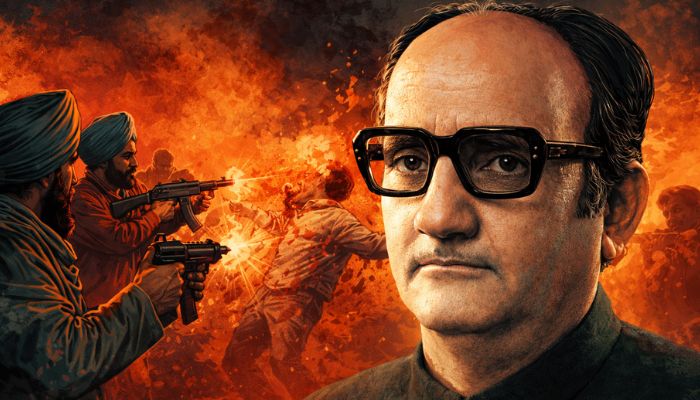
On 5th April 1986, over half a dozen Khalistani terrorists ambushed and killed six Punjab Police personnel and escaped with three undertrials from the new district courts in Jalandhar. The accused were brought to the court in connection with the Ramesh Chander murder case. Ramesh Chandra was son of Lala Jagat Narain, founder of Hind Samachar media group. When Ramesh was killed on 12th May 1984, he was serving as the editor for the Hind Samachar Group that included prominent newspapers, including Punjab Kesari.
Source: Indian Express
According to an Indian Express report from 1986, the attack on police personnel to free Khalistani terrorists appeared to be a well-rehearsed operation. Four others, including a constable, were injured in the attack. Two constables tried to chase the jeep in which terrorists escaped and were gunned down by the escaping Khalistanis.
Indian Express quoted unnamed police sources that said the terrorists used Thomson machine carbines, a .455 pistol and sten guns. At least 50 rounds were fired by the terrorists.
The incident took place when three of the terrorists appearing for the case asked to go to the toilet. Three constables were waiting outside when the terrorists opened fire at them. Some eyewitnesses stated there could be over a dozen terrorists who disappeared in the crowd, making it difficult for the police to chase them.
40 years have passed since the incident but the wounds of Khalistani insurgency in Punjab are still paining. This particular incident was one of many such attacks where general public and police personnel became targets of the terrorists.
It also reminded of the gruesome murder of Ramesh Chandra, son of Lala Jagat Narain. Both father and son were gunned down by terrorists for their fearless writing against Khalistani terrorists.
Who was Ramesh Chandra and why he was killed
Ramesh Chandra, also spelled as Romesh Chandra, was born on 24th December 1926 in Lyallpur, now known as Faisalabad in Pakistan, to parents Lala Jagat Narain and Shanti Devi. Both of his parents were freedom fighters. Ramesh himself had participated in the freedom struggle and was among the students who took part in the Quit India movement. Ramesh was arrested and subsequently sent to jail where he continued his studies. According to the website created in his memory, he was arrested and jailed several times during the freedom struggle.
After the partition, Lala Jagat Narain and his family migrated to Jalandhar in 1947. Soon, they started publishing the Urdu daily named Hind Samachar. Later, in 1965, Hindi newspaper Punjab Kesari was added.
In 1975, Ramesh was elected as an Independent Member of Legislative Assembly from Jalandhar North. In June 1981, he became the Director of Press Trust of India, PTI, and served as Indian Newspaper Society’s president from 1973 till his demise.
Ramesh Chandra was elected MLA in 1975. Source romeshchandra.com
In 1981, Lala Jagat Narain was brutally murdered by Khalistani terrorists after which Ramesh took charge of the publication house as the editor. He was immensely popular, just like his father, for his fearless writing against insurgents. Chandra denounced the Khalistani terrorists for using the Golden Temple as a “storehouse for arms”.
On 12th May 1984, he was invited to speak at a meeting on communal harmony. He was returning from the meeting when he was ambushed and murdered by Khalistani terrorists. Media reports from the time noted that he was shot 64 times. His murder brought the number of persons killed in religious violence to 192 in just 11 months.
On the eve of his death, Chandra wrote a prophetic note in his editorial. He wrote, “No one knows whose turn will come next. All Punjab has become a slaughterhouse.”
Following his death, second son of Lala Jagat Narain, Padma Shri awardee Vijay Kumar Chopra, took charge of the editor in chief’s position which he continues to serve even at the age of 94.
The murders of Lala Jagat Narain and Ramesh Chandra, followed by attack on police personnel to free accused in Ramesh’s murder case, remain stark reminders of the time when journalists, police and ordinary citizens were openly targeted for resisting Khalistani terror. These incidents are just tip of the iceberg of the scale of violence Punjab has witnessed since independence.