A politician’s gamble and the undermining of the judiciary: Arvind Kejriwal demanding recusal of HC judge hearing liquor policy case is forum shopping dressed up as justice
On April 13, 2026, Arvind Kejriwal entered the Delhi High Court not as a petitioner seeking regular relief, but as a man attempting something unusual and risky, he stood before a judge and informed her, effectively, that he did not trust her. In person before Justice Swarana Kanta Sharma, the former chief minister of Delhi filed a plea requesting her recusal from hearing the CBI’s challenge against the trial court’s ruling in the Delhi liquor policy case, which the CBI was now contesting at the High Court level after the trial court had dismissed Kejriwal and his Aam Aadmi Party coworkers. The legal plea itself, recusal applications are not unheard of, was not what made the hearing unusual, rather, it was the way it was presented. Kejriwal informed the court that he had observed a pattern in the judge’s directives, stating that every petition has been turned into a judgement and that every argument of the CBI and ED has been supported. Then he explicitly stated that Justice Sharma’s attendance at activities of the Akhil Bharatiya Adhivakta Parishad (ABAP), an organisation of advocates linked with the RSS, made him question whether he would receive justice. Opposing the petition, the CBI went further, characterising the request as based on ‘frivolous and baseless averments,’ calling these accusations an attempt to scandalise the court and lower its authority, and claiming that the behaviour amounted to contempt of court. The case at the centre of it all One must first understand the true nature of this situation in order to comprehend why it matters. The Delhi liquor policy saga, also referred to as the excise policy scam, involves claims that the AAP government’s 2021-2022 excise policy was created to favour specific liquor dealers in exchange for payments, with the purported earnings going back into the AAP’s Goa election campaign. Senior AAP leaders were accused of a huge criminal conspiracy by the CBI and the Enforcement Directorate, and Kejriwal was arrested in March 2024. However, the trial court found insufficient evidence to bring charges against Kejriwal and a number of co-accused in the CBI’s case. The Delhi High Court’s Justice Sharma has heard a challenge from the CBI about this discharge order. As a result, Kejriwal’s recusal plea comes at a crucial moment when the High Court is being asked to rule on whether or not he needs to stand a trial. The timing is not an accident, it is the whole purpose. The law of contempt: A line he may have crossed Any act that scandalises or tends to scandalise, or lowers or tends to lower the authority of, any court, or prejudices, or interferes or tends to interfere with, the due course of any judicial proceeding, is considered criminal contempt under the Contempt of Courts Act, 1971. This is not a small or obscure provision, it is the legal safeguard for the judiciary’s institutional dignity. Historically, courts have made a clear line between personal attacks on the character or ideological suitability of a sitting judge, which may be considered contempt, and valid criticism of court orders, which is permitted by the constitution. The Act’s Section 12 stipulates a maximum sentence of six months in simple imprisonment, a fine of ₹2,000, or both. A protection is added by Section 13, which states that contempt cannot be punished unless it substantially interferes, or tends to substantially interfere, with the due course of justice. In E.M.S. Namboodiripad v. T.N. Nambiar (1970), the Supreme Court ruled that even remarks that undermine public trust in the judiciary’s impartiality might be considered criminal contempt. In this case, the Kerala Chief Minister had publicly claimed that judges served class interests. The statement’s impact on public trust is more important than whether it was said inside or outside of the courtroom. Although Kejriwal’s remarks were delivered in court during a formal legal application, such protection is not unrestricted. When a plaintiff states, I fear you will not give me justice because of your ideology, in front of everyone in an open courtroom, using language that links the judge to a political organisation, the speech ceases to be only a legal submission. The CBI counsel’s description of the plea as ‘forum shopping‘ is not without merit, courts have consistently ruled that dissatisfaction with a judge’s decisions does not warrant recusal, and that combining adverse orders to claim bias is just that. The bias question: Real law, reckless use This is where things become really tricky, and intellectual integrity requires admitting that the concept of judicial prejudice exists, is acknowledged, and is significant in administrative law. The law recognises a number of different forms of bias that might taint legal proceedings. Pecuniary bias occurs when a judge has a pecuniary interest in the outcome, traditionally, even a minor investment in a company before the court has disqualified judges. When a j
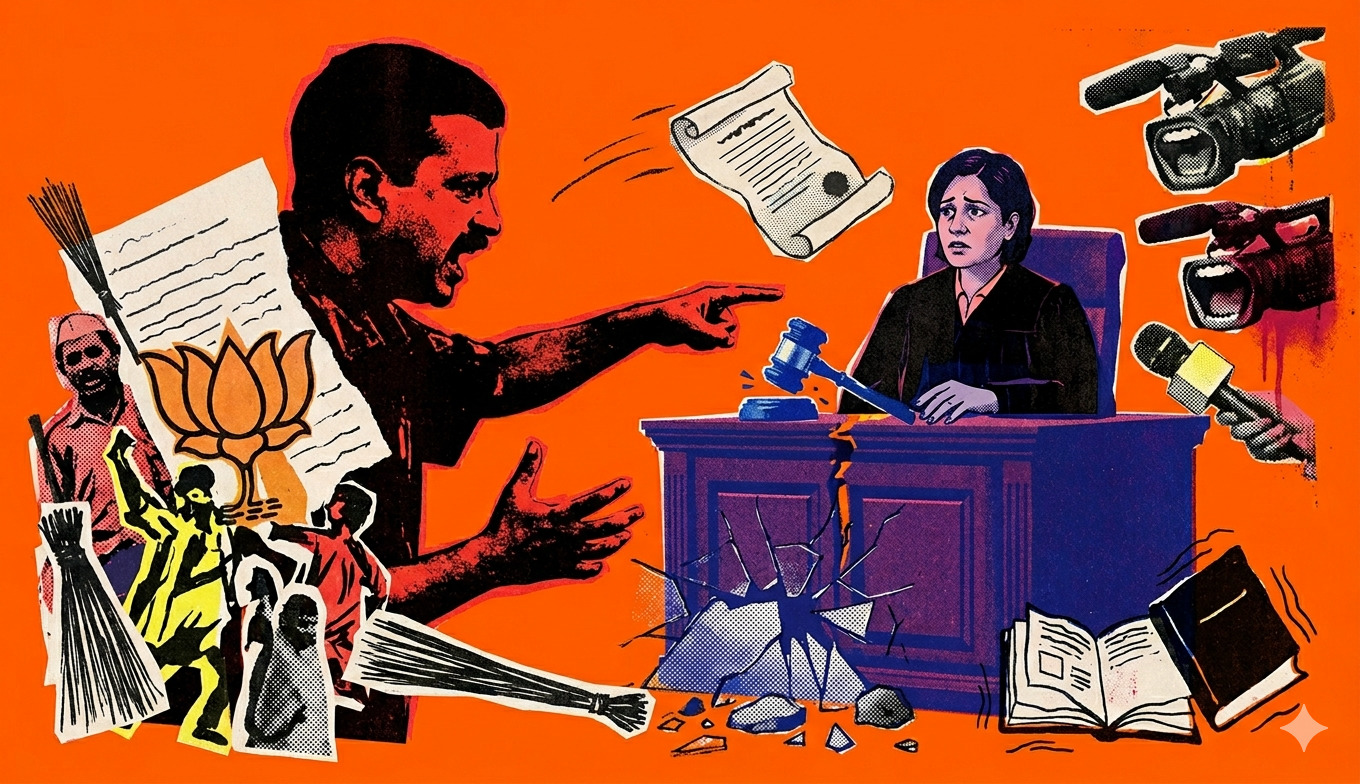
On April 13, 2026, Arvind Kejriwal entered the Delhi High Court not as a petitioner seeking regular relief, but as a man attempting something unusual and risky, he stood before a judge and informed her, effectively, that he did not trust her. In person before Justice Swarana Kanta Sharma, the former chief minister of Delhi filed a plea requesting her recusal from hearing the CBI’s challenge against the trial court’s ruling in the Delhi liquor policy case, which the CBI was now contesting at the High Court level after the trial court had dismissed Kejriwal and his Aam Aadmi Party coworkers.
The legal plea itself, recusal applications are not unheard of, was not what made the hearing unusual, rather, it was the way it was presented. Kejriwal informed the court that he had observed a pattern in the judge’s directives, stating that every petition has been turned into a judgement and that every argument of the CBI and ED has been supported. Then he explicitly stated that Justice Sharma’s attendance at activities of the Akhil Bharatiya Adhivakta Parishad (ABAP), an organisation of advocates linked with the RSS, made him question whether he would receive justice. Opposing the petition, the CBI went further, characterising the request as based on ‘frivolous and baseless averments,’ calling these accusations an attempt to scandalise the court and lower its authority, and claiming that the behaviour amounted to contempt of court.
The case at the centre of it all
One must first understand the true nature of this situation in order to comprehend why it matters. The Delhi liquor policy saga, also referred to as the excise policy scam, involves claims that the AAP government’s 2021-2022 excise policy was created to favour specific liquor dealers in exchange for payments, with the purported earnings going back into the AAP’s Goa election campaign. Senior AAP leaders were accused of a huge criminal conspiracy by the CBI and the Enforcement Directorate, and Kejriwal was arrested in March 2024.
However, the trial court found insufficient evidence to bring charges against Kejriwal and a number of co-accused in the CBI’s case. The Delhi High Court’s Justice Sharma has heard a challenge from the CBI about this discharge order. As a result, Kejriwal’s recusal plea comes at a crucial moment when the High Court is being asked to rule on whether or not he needs to stand a trial. The timing is not an accident, it is the whole purpose.
The law of contempt: A line he may have crossed
Any act that scandalises or tends to scandalise, or lowers or tends to lower the authority of, any court, or prejudices, or interferes or tends to interfere with, the due course of any judicial proceeding, is considered criminal contempt under the Contempt of Courts Act, 1971. This is not a small or obscure provision, it is the legal safeguard for the judiciary’s institutional dignity. Historically, courts have made a clear line between personal attacks on the character or ideological suitability of a sitting judge, which may be considered contempt, and valid criticism of court orders, which is permitted by the constitution.
The Act’s Section 12 stipulates a maximum sentence of six months in simple imprisonment, a fine of ₹2,000, or both. A protection is added by Section 13, which states that contempt cannot be punished unless it substantially interferes, or tends to substantially interfere, with the due course of justice. In E.M.S. Namboodiripad v. T.N. Nambiar (1970), the Supreme Court ruled that even remarks that undermine public trust in the judiciary’s impartiality might be considered criminal contempt. In this case, the Kerala Chief Minister had publicly claimed that judges served class interests. The statement’s impact on public trust is more important than whether it was said inside or outside of the courtroom.
Although Kejriwal’s remarks were delivered in court during a formal legal application, such protection is not unrestricted. When a plaintiff states, I fear you will not give me justice because of your ideology, in front of everyone in an open courtroom, using language that links the judge to a political organisation, the speech ceases to be only a legal submission. The CBI counsel’s description of the plea as ‘forum shopping‘ is not without merit, courts have consistently ruled that dissatisfaction with a judge’s decisions does not warrant recusal, and that combining adverse orders to claim bias is just that.
The bias question: Real law, reckless use
This is where things become really tricky, and intellectual integrity requires admitting that the concept of judicial prejudice exists, is acknowledged, and is significant in administrative law. The law recognises a number of different forms of bias that might taint legal proceedings.
Pecuniary bias occurs when a judge has a pecuniary interest in the outcome, traditionally, even a minor investment in a company before the court has disqualified judges. When a judge and a party or their legal counsel already have a close or hostile relationship, personal bias is present. When a judge has previously spoken strong, public views on the very legal issue at hand, this is known as Subject matter bias. The most complex and contentious of them all is pre conceived notion bias, which raises the question of whether a judge’s larger worldview might influence their judicial function in a particular case.
The last category is effectively invoked in Kejriwal’s argument. He points to Justice Sharma’s exposure to RSS-affiliated legal circles indicates an ideological bias that would hurt his case by pointing to his attendance at ABAP events. The issue is that practically every Indian judge may be recusable if this reasoning were widely accepted. Judges participate in a wide range of cultural events, religious gatherings, legal seminars, and bar association events.
The glasshouse problems
However, the story revealed an inevitable truth that every judge carries a part of themselves to the bench, including expectations from the society, a family’s ideological weight, their social network, and their political background. Pretending otherwise is dishonesty in and of itself.
Usha Ramanathan, a technology law and privacy rights expert who is well known for her critical work on Aadhaar, state surveillance, and civil liberties, positions often associated with a progressive liberal ideological orientation is Justice Muralidhar’s wife. Because of his wife’s intellectual commitments, no one seriously claimed that his decisions in support of riot victims were unconstitutional. However, those connections were constantly in the forefront of the political controversy.
The situation of former CJI N.V. Ramana is much more spectacular. In a letter to then CJI S.A. Bobde in October 2020, Andhra Pradesh Chief Minister Y.S. Jagan Mohan Reddy alleged that Justice Ramana was swaying the AP High Court’s roster in favour of the Telugu Desam Party. Ramana was reportedly a member of the Telugu Desam Party and was even considered for election to the Nandigama constituency in 1994, prior to his appointment to the bench, so the accusation held biographical weight that is hard to dismiss. After conducting an internal investigation, the Supreme Court rejected the allegations in March 2021, allowing Ramana to become India’s 48th Chief Justice.
Why Kejriwal is still wrong
The fact of previous issues regarding judicial ties does not justify Kejriwal’s approach, rather, it makes it much more necessary to oppose it. The entire history of such episodes demonstrates that the proper remedy for credible judicial bias is institutional. In-house court proceedings within the Supreme Court, collegium oversight, higher court appeals, and, as a last resort, formal proceedings that establish accountability through the law. What it is not, however, is a politician publicly expressing distrust before a sitting judge in the middle of a case, while cameras roll outside.
Every time a party leader stands up and declares, I cannot get justice here, a section of the public internalises that message, not as a legal submission, but as an outcome. The institution becomes the accused. And the accused gets away with something quite valuable, a victimhood narrative that exists fully outside of the courtroom, regardless of what transpires inside.
The law of recusal has a very particular and tough criterion because the alternative is chaos. If any plaintiff could disqualify a judge based on that judge’s attendance at events organised by organisations that the litigant dislikes, the right to a fair hearing would be replaced by the right to choose your own judge. That is not a legal principle, it is forum shopping dressed up as justice. The CBI was forthright about this, noting that a judge’s viewpoint in a judicial decision cannot be used to infer bias, and that Kejriwal’s application did exactly that.
Conclusion
If the court had decided to treat Kejriwal’s actions as criminal contempt, it might have begun Suo motu proceedings under Section 15 of the Contempt of Courts Act or submitted the case to the Attorney General for consent to prosecute. The punishment, up to six months in prison, would have been less severe than the symbolic weight of a contempt ruling against the very person attempting to avoid a criminal prosecution. The court shown restraint. It has not ruled out that option.
Finally, a bigger lesson emerges that goes beyond the facts of this case and this judge. The judiciary’s independence is not only a convenience to be invoked when it rules in your favour and attacked when it does not. A political leader who uses the recusal doctrine today establishes a precedent that can be used against any judge, liberal or conservative, activist or deferential, by anyone with a grievance and a microphone. The institutions Kejriwal promised to improve are only as strong as the culture of respect that surrounds them. What he is destroying, one news conference disguised as a legal plea at a time, is not Justice Sharma’s reputation. It is his own claim to be different.