Are Trump’s sudden announcements of escalation and ceasefire with Iran linked to US stock market manipulation? Read what we know
On 23rd March, US President Donald Trump announced a pause in military action against Iran. Minutes before the announcement, a series of high value trades across global oil and equity markets triggered serious questions over whether geopolitical messaging is being used to influence financial markets, and whether certain participants may have profited from advance knowledge or anticipation. Source: Truth Social/Donald Turmp According to fresh data and trade analysis, there is an indication that the episode was not limited to isolated oil trades. It involved a coordinated multi market strategy that may have yielded profits running into hundreds of millions of dollars within minutes. Massive coordinated bets placed before announcement According to trading data, around 6,200 Brent and West Texas Intermediate futures contracts changed hands between 6:49 am and 6:50 am New York time on Monday. This activity took place roughly 15 minutes before Trump posted on the social media platform Truth Social, where he claimed that the United States had engaged in “productive conversations” with Iran. Sources: LSEG • *Number of contracts traded | US Eastern Time The approximate value of these oil trades alone stood at around $580 million. It is significantly higher than typical activity during pre market hours. Such trades are usually characterised by thin liquidity and lower participation. However, on that particular day, these trades formed part of a much larger and more structured set of positions. Market tracking platforms indicated that traders simultaneously executed two coordinated bets across different asset classes. First, a large long position was taken in S and P 500 futures. It was valued at around $1.5 billion, which was positioned for a rally in equities in the event of easing geopolitical tensions. Sources: LSEG • *Number of contracts traded | US Eastern Time / Dall-E Second, traders sold oil futures worth around $192 million, anticipating that crude prices would fall if the perceived risk of supply disruption from the US Iran conflict declined. When combined, these trades amounted to a value of over $1.7 billion, or more than Rs 14,000 crore. These two types of trades were placed within a narrow time window before any public announcement was made by the US President. Market reaction delivers massive profits within minutes At 7:04 am New York time, Trump posted on social media, which triggered an immediate and sharp reaction across markets. Oil prices fell rapidly. Brent crude dropped from around $109 per barrel to as low as $92 per barrel. West Texas Intermediate dropped by around 6% and touched $88.70 per barrel. These prices show a sudden shift in market expectations as Trump’s announcement reduced fear of prolonged conflict and supply disruptions among traders. At the same time, equity markets showed positive markers. S and P 500 futures surged more than 2.5% before the opening bell, which added significant value in a matter of minutes. The outcome of these coordinated positions was notable. According to media reports, it could have generated profits exceeding $100 million or Rs 840 crore within just 20 minutes. Gains from the equity positions are likely to have further increased the total profit. No prior signal raises questions over timing The scale and speed of these gains have drawn attention from market experts, particularly given the absence of any visible trigger at the time when the trades were executed. When these trades happened, there were no scheduled economic data releases, no Federal Reserve speeches, and no official indication of a shift in US policy towards Iran. Pre market sessions at that hour are typically slow and dry, which made the scale of the trades even more unusual. Market experts have described this activity as difficult to explain through conventional trading logic. Some experts believe that such patterns on a quiet Monday morning without event risk were highly abnormal. Iran rejects claims, alleges “fake news” to influence markets The narrative took a sharp turn shortly after the initial market reaction, as Iranian officials publicly denied Trump’s claims of ongoing negotiations. Iran’s Parliament Speaker Mohammad Bagher Ghalibaf stated that no talks had taken place between Washington and Tehran, stating that “fake news is used to manipulate the financial and oil markets and escape the quagmire in which the US and Israel are trapped”. 2/ No negotiations have been held with the US, and fakenews is used to manipulate the financial and oil markets and escape the quagmire in which the US and Israel are trapped.— محمدباقر قالیباف | MB Ghalibaf (@mb_ghalibaf) March 23, 2026 Iran’s Foreign Ministry also confirmed that there had been no direct or indirect negotiations with the United States during the ongoing conflict, contradicting Trump’s assertion of “productive conversations”. Following these denials, market sentim
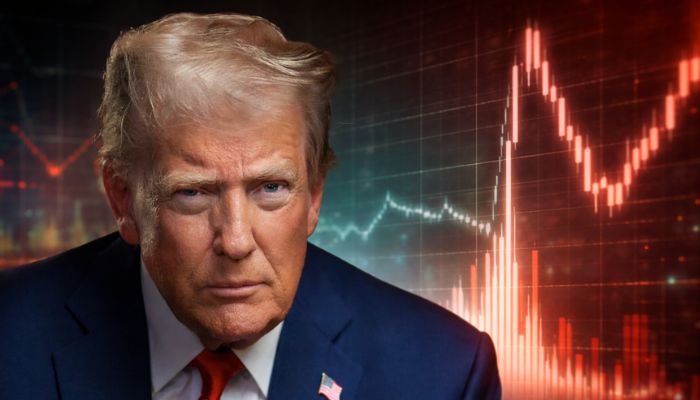
On 23rd March, US President Donald Trump announced a pause in military action against Iran. Minutes before the announcement, a series of high value trades across global oil and equity markets triggered serious questions over whether geopolitical messaging is being used to influence financial markets, and whether certain participants may have profited from advance knowledge or anticipation.
Source: Truth Social/Donald Turmp
According to fresh data and trade analysis, there is an indication that the episode was not limited to isolated oil trades. It involved a coordinated multi market strategy that may have yielded profits running into hundreds of millions of dollars within minutes.
Massive coordinated bets placed before announcement
According to trading data, around 6,200 Brent and West Texas Intermediate futures contracts changed hands between 6:49 am and 6:50 am New York time on Monday. This activity took place roughly 15 minutes before Trump posted on the social media platform Truth Social, where he claimed that the United States had engaged in “productive conversations” with Iran.
Sources: LSEG • *Number of contracts traded | US Eastern Time
The approximate value of these oil trades alone stood at around $580 million. It is significantly higher than typical activity during pre market hours. Such trades are usually characterised by thin liquidity and lower participation. However, on that particular day, these trades formed part of a much larger and more structured set of positions. Market tracking platforms indicated that traders simultaneously executed two coordinated bets across different asset classes.
First, a large long position was taken in S and P 500 futures. It was valued at around $1.5 billion, which was positioned for a rally in equities in the event of easing geopolitical tensions.
Sources: LSEG • *Number of contracts traded | US Eastern Time / Dall-E
Second, traders sold oil futures worth around $192 million, anticipating that crude prices would fall if the perceived risk of supply disruption from the US Iran conflict declined.
When combined, these trades amounted to a value of over $1.7 billion, or more than Rs 14,000 crore. These two types of trades were placed within a narrow time window before any public announcement was made by the US President.
Market reaction delivers massive profits within minutes
At 7:04 am New York time, Trump posted on social media, which triggered an immediate and sharp reaction across markets. Oil prices fell rapidly. Brent crude dropped from around $109 per barrel to as low as $92 per barrel. West Texas Intermediate dropped by around 6% and touched $88.70 per barrel. These prices show a sudden shift in market expectations as Trump’s announcement reduced fear of prolonged conflict and supply disruptions among traders.
At the same time, equity markets showed positive markers. S and P 500 futures surged more than 2.5% before the opening bell, which added significant value in a matter of minutes. The outcome of these coordinated positions was notable. According to media reports, it could have generated profits exceeding $100 million or Rs 840 crore within just 20 minutes. Gains from the equity positions are likely to have further increased the total profit.
No prior signal raises questions over timing
The scale and speed of these gains have drawn attention from market experts, particularly given the absence of any visible trigger at the time when the trades were executed.
When these trades happened, there were no scheduled economic data releases, no Federal Reserve speeches, and no official indication of a shift in US policy towards Iran. Pre market sessions at that hour are typically slow and dry, which made the scale of the trades even more unusual.
Market experts have described this activity as difficult to explain through conventional trading logic. Some experts believe that such patterns on a quiet Monday morning without event risk were highly abnormal.
Iran rejects claims, alleges “fake news” to influence markets
The narrative took a sharp turn shortly after the initial market reaction, as Iranian officials publicly denied Trump’s claims of ongoing negotiations. Iran’s Parliament Speaker Mohammad Bagher Ghalibaf stated that no talks had taken place between Washington and Tehran, stating that “fake news is used to manipulate the financial and oil markets and escape the quagmire in which the US and Israel are trapped”.
2/ No negotiations have been held with the US, and fakenews is used to manipulate the financial and oil markets and escape the quagmire in which the US and Israel are trapped.— محمدباقر قالیباف | MB Ghalibaf (@mb_ghalibaf) March 23, 2026
Iran’s Foreign Ministry also confirmed that there had been no direct or indirect negotiations with the United States during the ongoing conflict, contradicting Trump’s assertion of “productive conversations”.
Following these denials, market sentiment reversed partially. Global equities pulled back and energy markets witnessed renewed buying.
Pattern of pre announcement trades raises concerns
Several hedge funds and market participants indicated that this was not an isolated incident. According to traders and energy consultants, multiple instances in recent months where large and well timed trades were executed ahead of significant US government announcements have been noticed. These patterns have fuelled speculation about whether certain participants may be acting on early signals, expectations, or other forms of informational advantage.
An Israeli security establishment source tells me: “I’d approach this cautiously, with a grain of salt. It’s early Monday morning in the U.S., the start of the trading week. Markets opened higher, largely as expected following the weekend reports on the negotiations and the… https://t.co/2C3krvCPpD— Yalda Hakim (@SkyYaldaHakim) March 23, 2026
Similar concerns have been raised in prediction markets as well. For instance, large bets were placed on platforms such as Polymarket ahead of US actions involving countries like Iran and Venezuela, prompting questions about whether some traders may have access to insights not available to the broader market.
White House response and regulatory silence
White House spokesperson Kush Desai responded to the concerns and said that the administration remains focused on acting in the best interests of the American people. He rejected the allegations of insider profiteering and stated that the White House does not tolerate any official illegally benefiting from non public information. He added that such claims are “baseless and irresponsible” in the absence of evidence.
As of now, US regulators, including the Securities and Exchange Commission, have not issued any public statement or indicated whether an investigation into the trades is underway.
While there is no conclusive evidence at this stage linking Trump’s announcements directly to market manipulation, the sequence of events, the scale of the trades, and the conflicting claims from Iran have left several critical questions unanswered.