As the Magh Mela 2026 begins in Prayagraj, Yogi govt in UP prepares for 15 crore devotees: Read about the religious significance and Kalpavas ritual
With the beginning of the new year, the Sangam city of Prayagraj is once again poised to immerse itself in an ocean of faith. Starting on 3rd January, 2026, and continuing until 15th February, 2026, the Magh Mela 2026 is set to attract millions of devotees. Following the grand success of the Maha Kumbh 2025, this Magh Mela is another major test for the Yogi Adityanath government in Uttar Pradesh. The Yogi government has decided to organise it on the Mahakumbh model, ensuring a safe, clean, and divine experience for devotees. It is estimated that 120 to 150 million devotees will come to take a holy dip at the Sangam this time. मुख्यमंत्री @myogiadityanath जी ने अधिकारियों को निर्देश दिए कि माघ मेला– 2026 के दौरान श्रद्धालुओं के साथ किसी भी प्रकार की मनमानी न हो। इसके लिए होटल, रेस्टोरेंट, वाहन किराया एवं अन्य सेवाओं की दरें निर्धारित कर सार्वजनिक रूप से प्रदर्शित की जाएं।साथ ही मुख्यमंत्री जी ने… pic.twitter.com/EOlNYJspyU— CM Office, GoUP (@CMOfficeUP) January 1, 2026 The Magh Mela is considered a smaller version of the Kumbh Mela, but its religious significance is no less. Taking the holy dip (Snan) at the Triveni Sangam during the month of Magh bestows the same merit as performing thousands of Ashwamedha Yagyas, as per the Hindu faith. This fair is not only a festival of bathing, but also a celebration of penance, restraint, and self-purification. Religious significance of Magh Mela The month of Magh holds a special place in Hinduism. According to Hindu scriptures, bathing in the Ganga during the month of Magh washes away all sins and leads to salvation. Prayagraj’s Triveni Sangam, the confluence of the Ganga, Yamuna, and the invisible Saraswati, is considered the most sacred place in the world. Bathing here cleanses one of the sins of all past lives. The Magh Mela is held annually, while the Kumbha (Kumbh) is held every 12 years and the Ardha Kumbha (Ardh Kumbha) every six years. However, following the success of the Maha Kumbh 2025, this Magh Mela has become particularly significant. Devotees believe that taking a bath at the Sangam purifies the soul and brings happiness and peace to life. This festival symbolises restraint, charity, and devotion. Kalpavas: A unique tradition of penance The most significant part of the Magh Mela is the Kalpavas (spiritual practice of Kalpavas). Kalpavas means to stay for a long period of time. Devotees stay in tents on the banks of the Sangam from Paush Purnima (3rd January, 2026) to Mahashivratri (15th February, 2026) and perform rigorous austerities. The main rules of Kalpavas are Sleeping on the ground, on a kusha seat. Simple food once a day (fruits, milk, satvik diet). Observance of celibacy. Daily bath in the Sangam. Bhajan-Kirtan, Ramayana-Mahabharata recitation and meditation. It is said in the scriptures that by performing Kalpavas, a person reaps the fruits of 12 years of austerity at once. It is considered a direct path to salvation. Millions of Kalpavasis set up small tents on the banks of the Sangam and live a simple life for the entire period. Major Snan dates in 2026 Magh Mela The Magh Mela 2026, held at the Triveni Sangam in Prayagraj, features six main Snan festivals, including three Amrit Snans (royal baths). These dates are determined according to the Hindu calendar, and each has special religious significance. The scriptures state that bathing at the Sangam during the month of Magh bestows merit equivalent to performing thousands of Ashwamedha Yagyas and absolves the sins of past lives ( Padma Purana, Prayag Mahatmya ). These days, millions of devotees gather at the Sangam banks, where, along with a holy dip, an atmosphere of devotional singing, charity, and austerity is created. On the occasion of the Amrit Snan, a grand procession of saints and sages, featuring Naga Sadhus riding elephants and horses, flags and banners, and the resounding sound of drums, is a sight to behold. This scene offers a vibrant glimpse of the eternal tradition. There are six main dates for special Snan festivals during the Magh Mela 2026. Of these, the three most important are the Amrit Snan (Amrit Snan). 3rd January, 2026 (Paush Purnima): This marks the official beginning of the Magh Mela and Kalpavas. The first major Snan takes place on this day. Bathing during the full moon on this full moon day purifies the mind and brings spiritual peace. The Skanda Purana states that bathing in the Sangam on Paush Purnima bestows blessings from the gods. On this day, Kalpavasis set up tents and began their penance, and the Mela area came alive with devotees from all over India. 14th January, 2026 (Makar Sankranti): The first Amrit Snan takes place on this day. This festival is celebrated when the Sun enters Capricorn, which is considered the beginning of Uttarayan. According to scriptures, Snan (holy dip), donating (Daan), and consuming sesame and jaggery on this day are especially virtuous (Mahabharata, Anushasan Par

With the beginning of the new year, the Sangam city of Prayagraj is once again poised to immerse itself in an ocean of faith. Starting on 3rd January, 2026, and continuing until 15th February, 2026, the Magh Mela 2026 is set to attract millions of devotees. Following the grand success of the Maha Kumbh 2025, this Magh Mela is another major test for the Yogi Adityanath government in Uttar Pradesh.
The Yogi government has decided to organise it on the Mahakumbh model, ensuring a safe, clean, and divine experience for devotees. It is estimated that 120 to 150 million devotees will come to take a holy dip at the Sangam this time.
मुख्यमंत्री @myogiadityanath जी ने अधिकारियों को निर्देश दिए कि माघ मेला– 2026 के दौरान श्रद्धालुओं के साथ किसी भी प्रकार की मनमानी न हो। इसके लिए होटल, रेस्टोरेंट, वाहन किराया एवं अन्य सेवाओं की दरें निर्धारित कर सार्वजनिक रूप से प्रदर्शित की जाएं।
— CM Office, GoUP (@CMOfficeUP) January 1, 2026
साथ ही मुख्यमंत्री जी ने… pic.twitter.com/EOlNYJspyU
The Magh Mela is considered a smaller version of the Kumbh Mela, but its religious significance is no less. Taking the holy dip (Snan) at the Triveni Sangam during the month of Magh bestows the same merit as performing thousands of Ashwamedha Yagyas, as per the Hindu faith. This fair is not only a festival of bathing, but also a celebration of penance, restraint, and self-purification.
Religious significance of Magh Mela
The month of Magh holds a special place in Hinduism. According to Hindu scriptures, bathing in the Ganga during the month of Magh washes away all sins and leads to salvation. Prayagraj’s Triveni Sangam, the confluence of the Ganga, Yamuna, and the invisible Saraswati, is considered the most sacred place in the world. Bathing here cleanses one of the sins of all past lives.
The Magh Mela is held annually, while the Kumbha (Kumbh) is held every 12 years and the Ardha Kumbha (Ardh Kumbha) every six years. However, following the success of the Maha Kumbh 2025, this Magh Mela has become particularly significant. Devotees believe that taking a bath at the Sangam purifies the soul and brings happiness and peace to life. This festival symbolises restraint, charity, and devotion.
Kalpavas: A unique tradition of penance
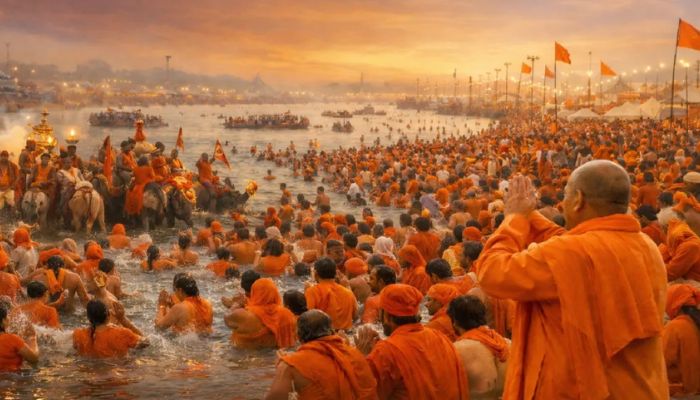
The most significant part of the Magh Mela is the Kalpavas (spiritual practice of Kalpavas). Kalpavas means to stay for a long period of time. Devotees stay in tents on the banks of the Sangam from Paush Purnima (3rd January, 2026) to Mahashivratri (15th February, 2026) and perform rigorous austerities.
The main rules of Kalpavas are
- Sleeping on the ground, on a kusha seat.
- Simple food once a day (fruits, milk, satvik diet).
- Observance of celibacy.
- Daily bath in the Sangam.
- Bhajan-Kirtan, Ramayana-Mahabharata recitation and meditation.
It is said in the scriptures that by performing Kalpavas, a person reaps the fruits of 12 years of austerity at once. It is considered a direct path to salvation. Millions of Kalpavasis set up small tents on the banks of the Sangam and live a simple life for the entire period.
Major Snan dates in 2026 Magh Mela
The Magh Mela 2026, held at the Triveni Sangam in Prayagraj, features six main Snan festivals, including three Amrit Snans (royal baths). These dates are determined according to the Hindu calendar, and each has special religious significance. The scriptures state that bathing at the Sangam during the month of Magh bestows merit equivalent to performing thousands of Ashwamedha Yagyas and absolves the sins of past lives ( Padma Purana, Prayag Mahatmya ).
These days, millions of devotees gather at the Sangam banks, where, along with a holy dip, an atmosphere of devotional singing, charity, and austerity is created. On the occasion of the Amrit Snan, a grand procession of saints and sages, featuring Naga Sadhus riding elephants and horses, flags and banners, and the resounding sound of drums, is a sight to behold. This scene offers a vibrant glimpse of the eternal tradition.
There are six main dates for special Snan festivals during the Magh Mela 2026. Of these, the three most important are the Amrit Snan (Amrit Snan).
3rd January, 2026 (Paush Purnima): This marks the official beginning of the Magh Mela and Kalpavas. The first major Snan takes place on this day. Bathing during the full moon on this full moon day purifies the mind and brings spiritual peace. The Skanda Purana states that bathing in the Sangam on Paush Purnima bestows blessings from the gods. On this day, Kalpavasis set up tents and began their penance, and the Mela area came alive with devotees from all over India.
14th January, 2026 (Makar Sankranti): The first Amrit Snan takes place on this day. This festival is celebrated when the Sun enters Capricorn, which is considered the beginning of Uttarayan. According to scriptures, Snan (holy dip), donating (Daan), and consuming sesame and jaggery on this day are especially virtuous (Mahabharata, Anushasan Parva). The most attractive event during Amrit Snan is the procession of the Akharas – Juna Akhara, Niranjani, Mahanirvani, etc. – all proceed towards the Sangam in a grand procession. Devotees offer prayers to the Sun God and then bathe.
29th January, 2026 (Mauni Amavasya): The most important bathing festival of the Magh Mela. On this day, it is customary to observe a silent fast and take the holy dip, which fosters self-control and self-reflection. The Matsya Purana states that bathing at the Sangam in Prayag on Mauni Amavasya opens the door to salvation and washes away all sins. This day is the most crowded at the fair, as it is considered the main bathing time. Kalpvasis especially await this date.
2nd February, 2026 (Basant Panchami): The second Amrit Snan. This is the festival dedicated to the worship of Goddess Saraswati, the goddess of learning, wisdom, and knowledge. Wearing yellow clothes, worshipping Saraswati, and bathing in the river Saraswati bestow wisdom and discernment. The significance of Vasant Panchami is described in the Bhagavata Purana. The procession begins again, and the Sangam banks are decorated with yellow flowers and textiles.
12th February, 2026 (Magh Purnima): The third Amrit Snan. Bathing in the full power of the moon on Magh Purnima brings happiness and prosperity. According to the Vishnu Purana, bathing in the Sangam on this day is equivalent to donating thousands of cows. The final grand procession of the Akharas takes place on this day.
15th February, 2026 (Mahashivratri): The final Snan and the conclusion of the fair. Bathing in the holy waters, accompanied by the worship of Lord Shiva, fulfils all desires. The Shiva Purana describes bathing in Prayag on Mahashivratri as highly virtuous.
The Yogi government has made grand preparations.
Following the historic success of the Maha Kumbh Mela in 2025, the Yogi Adityanath government has set a goal of organising the Magh Mela in 2026 on the same scale. Chief Minister Yogi reviewed the preparations several times and issued strict instructions to ensure all arrangements were completed by 31st December, 2025, which has been accomplished.
The main preparations are as follows-
Area Expansion: The fair area has been expanded to 800 hectares . Construction of tent cities, sectors, and ghats has progressed rapidly.
Security: Thousands of police personnel, CCTV, drones, and AI-based surveillance. VIP protocol has been completely abolished at the main bathing place.
Sanitation and Health: Deep cleaning of the Sangam banks, temporary hospitals, ambulances, and a team of doctors.
Transportation and Parking: Special trains, buses, and parking arrangements. A traffic diversion plan has been prepared.
Electricity and Water: 24-hour electricity and clean drinking water throughout the area.
Tourism Facilities: For the first time, four temporary tourist information centers will be available, providing information on guides and hotels.
Budget: ₹42 crore was initially approved, with additional arrangements made from the remaining budget of the Maha Kumbh.
Chief Minister Yogi said that the Magh Mela is a living embodiment of the eternal tradition. The government’s goal is to ensure every devotee has a safe and divine experience.

Grand tradition of Hindu festivals get highlighted under Yogi government
Under the leadership of Yogi Adityanath, Hindu festivals and religious events have reached new heights in Uttar Pradesh since 2017. Previously, these festivals were celebrated on a simpler, local scale, but now they have become world-class, record-breaking, and have been attracting millions of devotees. The government’s focus has been on respecting Sanatan culture, ensuring the safety, convenience, and comfort of devotees. This has not only strengthened faith but also significantly boosted tourism and the economy. This tradition has now become the hallmark of Uttar Pradesh.
Let us understand with some prominent examples how these events became grand and divine-
The unique splendor of Deepotsav in Ayodhya
Ayodhya‘s Diwali festival of lights is now world-famous. The Yogi government linked it to the spiritual significance of the city of Ram. Every year, millions of diyas are lit on the banks of the Saryu River. In 2025, the city was illuminated with over 2.617 million diyas, setting two Guinness World Records: the largest number of diyas lit and the collective Saryu Aarti performed by 2,128 Vedacharyas.
The event is punctuated by laser shows, Ramlila (the sacred fire of Rama), and cultural programs. While only a few thousand lamps were lit, now millions and world records demonstrate the grandeur the government has given to this timeless tradition.
Maha Kumbh 2025: The world’s largest religious gathering
The 2025 Maha Kumbh Mela in Prayagraj was historic. Over 660 million devotees took a dip in the Sangam, a world record. The Yogi government ensured the safest, cleanest, and most organised event in the world. This event generated an estimated ₹3.5 lakh crore in benefits to the state’s economy. Previously, the Kumbh Mela had limited arrangements, but now it has become a global-scale, divine event.

Kanwar Yatra: A shower of flowers in the name of faith
The Kanwar Yatra was made grand in Sawan. Chief Minister Yogi Adityanath himself was seen showering flowers on Kanwariyas from a helicopter and conducting aerial inspections of the route. This same scene was witnessed on the Meerut-Muzaffarnagar route in 2025. Thousands of CCTV cameras, lighting, water, and security arrangements have made the journey smooth. Previously, there were complaints of inconveniences, but now it has become a safe and divine festival of faith.
The lights of Dev Deepawali in Varanasi
On Kartik Purnima, the ghats of Kashi are illuminated with 2.5 million diyas. In 2025, laser shows, green fireworks, and cultural programs added to the grandeur. Chief Minister Yogi Adityanath himself witnessed the magnificent spectacle of Dev Deepawali from a cruise. It is becoming globally renowned as the Diwali of the Gods.
This tradition symbolises the revival of Sanatan culture. The Magh Mela 2026, being organised on the Maha Kumbh model, is an important part of this tradition. Prayagraj will once again send a message to the world that India’s faith and culture are immortal.
(This article is a translation of the original article published on OpIndia Hindi.)