Bangladesh PM’s Genocide Day statement calling Pakistan’s 1971 Operation Searchlight a “pre-planned massacre” signals reversal of Yunus govt’s policy of rewriting history: Read how
On the occasion of Genocide Day on 25 March 2026, Bangladesh’s Prime Minister Tarique Rahman issued a very strongly worded statement condemning the atrocities of the Pakistani forces during the liberation war. Describing 25 March 1971 as “one of the most disgraceful and brutal days” in the nation’s history, he condemned Pakistan’s Operation Searchlight as a “pre-planned massacre” – a night of indiscriminate slaughter that claimed the lives of teachers, intellectuals, students and ordinary civilians at Dhaka University, Pilkhana and Rajarbagh Police Lines. The PM wrote in the statement, “In the history of freedom-loving Bangladesh, 25 March 1971 remains one of the most disgraceful and brutal days. On that dark night, the Pakistani occupation forces carried out one of the most heinous genocides in history against the unarmed people of Bangladesh in the name of ‘Operation Searchlight”. They indiscriminately opened fire on teachers, intellectuals and innocent civilians at various places, including Dhaka University, Pilkhana and Rajarbāgh Police Lines, killing many people.” March 25, 1971 is observed as Genocide Day. On the occasion of Genocide Day, 1 pay my deepest respect to all the martyrs.In the history of freedom-loving Bangladesh, 25 March 1971 remains one of the most disgraceful and brutal days. On that dark night, the Pakistani occupation… pic.twitter.com/ENyyvnz8Tw— Tarique Rahman (@trahmanbnp) March 24, 2026 He further stated, “The genocide of 25 March was a pre-planned massacre. Why this organised killing spree could not be resisted remains a matter of historical research regarding the visible role of the political leadership of that time. However, on the night of 25 March, the 8th East Bengal Regiment in Chattogram formally initiated armed resistance against the genocide by declaring ‘We Revolt’. Through this resistance to genocide, the long nine-month armed Liberation War began.” Rahman added, “To convey the value and significance of independence to the present and future generations, it is essential to know about the genocide of 25 March as well. Let us all strive to honour the sacrifices of the martyrs by establishing in the state and society the spirit of the great Liberation War – equality, human dignity and social justice.” Rahman’s statement was not just a routine remembrance of an annual event. For the first time since the fall of Sheikh Hasina’s government in August 2024, a Bangladeshi leader has refused to forget the horrors inflicted by the Pakistani military during the Liberation War. In doing so, he has signalled a reversal of the stand taken by the interim administration led by Muhammad Yunus, an administration whose actions, whether by design or negligence, have amounted to a systematic erasure of Pakistan’s atrocities and the very memory of 1971 from history. Under Yunus, Bangladesh appeared determined to “move on” from the genocide without demanding accountability. In December 2024, Yunus urged Pakistan’s Prime Minister Shehbaz Sharif to “settle the issues” of 1971 “once and for all”, a clear stand down from the stated Bangladeshi policy of insisting on a formal apology from Pakistan for the mass killings and rapes that claimed three million lives and violated hundreds of thousands of women. Hasina’s Awami League government had made the demand for Pakistan’s official remorse the precondition for normalised ties. Yunus, by contrast, prioritised improving diplomatic ties, even as Pakistani officials continued to deny the genocide. The interim government’s eagerness to rehabilitate relations with Islamabad, while lifting the ban on Jamaat-e-Islami, the party whose collaborators had aided the Pakistani forces in 1971, spoke volumes. Nowhere was this erasure more evident than in the physical assault on the nation’s collective memory. During and immediately after the July-August 2024 student protests that toppled Hasina govt, mobs unleashed a wave of destruction on Liberation War memorials. According to reports, nearly 1,500 sculptures, murals and monuments dedicated the the independence of Bangladesh were vandalised, torched or uprooted across 59 districts. Statues of Bangabandhu Sheikh Mujibur Rahman, the founding father, were toppled; murals depicting the genocide and the nine-month struggle were defaced. Dhanmondi 32, the historic home of Bangabandhu and a shrine to the liberation struggle, was stormed, torched and finally razed by bulldozers under the watch of student groups aligned with the new order. The Liberation War Museum in Agargaon was set ablaze. The vandalism continued after the interim govt was installed after the fall of the Hasina govt. Bangabandhu Sheikh Mujibur Rehman’s house, burned and vandalised in August 2024, was again set ablaze in February 2025. Such acts often took place the tacit approval or outright inaction of the authorities. The Yunus administration did little to stop the carnage. Indeed, in some cases it appeared to
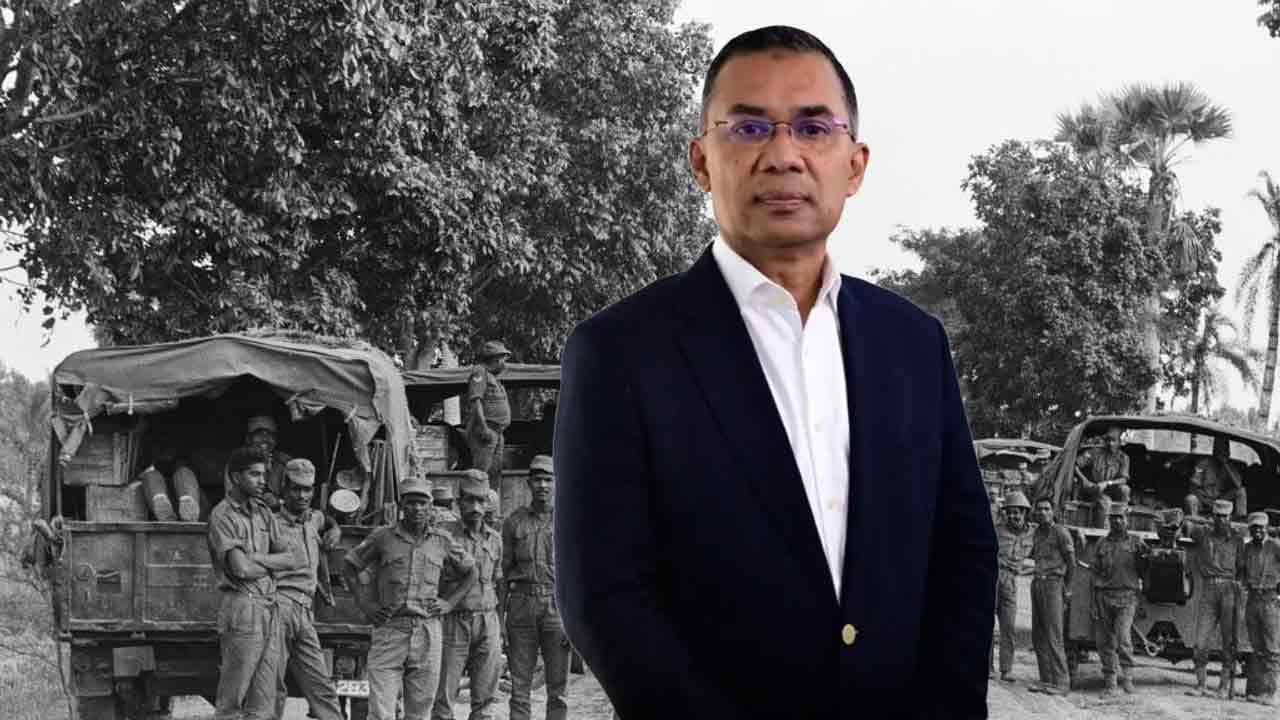
On the occasion of Genocide Day on 25 March 2026, Bangladesh’s Prime Minister Tarique Rahman issued a very strongly worded statement condemning the atrocities of the Pakistani forces during the liberation war. Describing 25 March 1971 as “one of the most disgraceful and brutal days” in the nation’s history, he condemned Pakistan’s Operation Searchlight as a “pre-planned massacre” – a night of indiscriminate slaughter that claimed the lives of teachers, intellectuals, students and ordinary civilians at Dhaka University, Pilkhana and Rajarbagh Police Lines.
The PM wrote in the statement, “In the history of freedom-loving Bangladesh, 25 March 1971 remains one of the most disgraceful and brutal days. On that dark night, the Pakistani occupation forces carried out one of the most heinous genocides in history against the unarmed people of Bangladesh in the name of ‘Operation Searchlight”. They indiscriminately opened fire on teachers, intellectuals and innocent civilians at various places, including Dhaka University, Pilkhana and Rajarbāgh Police Lines, killing many people.”
March 25, 1971 is observed as Genocide Day. On the occasion of Genocide Day, 1 pay my deepest respect to all the martyrs.In the history of freedom-loving Bangladesh, 25 March 1971 remains one of the most disgraceful and brutal days. On that dark night, the Pakistani occupation… pic.twitter.com/ENyyvnz8Tw— Tarique Rahman (@trahmanbnp) March 24, 2026
He further stated, “The genocide of 25 March was a pre-planned massacre. Why this organised killing spree could not be resisted remains a matter of historical research regarding the visible role of the political leadership of that time. However, on the night of 25 March, the 8th East Bengal Regiment in Chattogram formally initiated armed resistance against the genocide by declaring ‘We Revolt’. Through this resistance to genocide, the long nine-month armed Liberation War began.”
Rahman added, “To convey the value and significance of independence to the present and future generations, it is essential to know about the genocide of 25 March as well. Let us all strive to honour the sacrifices of the martyrs by establishing in the state and society the spirit of the great Liberation War – equality, human dignity and social justice.”
Rahman’s statement was not just a routine remembrance of an annual event. For the first time since the fall of Sheikh Hasina’s government in August 2024, a Bangladeshi leader has refused to forget the horrors inflicted by the Pakistani military during the Liberation War. In doing so, he has signalled a reversal of the stand taken by the interim administration led by Muhammad Yunus, an administration whose actions, whether by design or negligence, have amounted to a systematic erasure of Pakistan’s atrocities and the very memory of 1971 from history.
Under Yunus, Bangladesh appeared determined to “move on” from the genocide without demanding accountability. In December 2024, Yunus urged Pakistan’s Prime Minister Shehbaz Sharif to “settle the issues” of 1971 “once and for all”, a clear stand down from the stated Bangladeshi policy of insisting on a formal apology from Pakistan for the mass killings and rapes that claimed three million lives and violated hundreds of thousands of women.
Hasina’s Awami League government had made the demand for Pakistan’s official remorse the precondition for normalised ties. Yunus, by contrast, prioritised improving diplomatic ties, even as Pakistani officials continued to deny the genocide. The interim government’s eagerness to rehabilitate relations with Islamabad, while lifting the ban on Jamaat-e-Islami, the party whose collaborators had aided the Pakistani forces in 1971, spoke volumes.
Nowhere was this erasure more evident than in the physical assault on the nation’s collective memory. During and immediately after the July-August 2024 student protests that toppled Hasina govt, mobs unleashed a wave of destruction on Liberation War memorials. According to reports, nearly 1,500 sculptures, murals and monuments dedicated the the independence of Bangladesh were vandalised, torched or uprooted across 59 districts. Statues of Bangabandhu Sheikh Mujibur Rahman, the founding father, were toppled; murals depicting the genocide and the nine-month struggle were defaced.
Dhanmondi 32, the historic home of Bangabandhu and a shrine to the liberation struggle, was stormed, torched and finally razed by bulldozers under the watch of student groups aligned with the new order. The Liberation War Museum in Agargaon was set ablaze.
The vandalism continued after the interim govt was installed after the fall of the Hasina govt. Bangabandhu Sheikh Mujibur Rehman’s house, burned and vandalised in August 2024, was again set ablaze in February 2025. Such acts often took place the tacit approval or outright inaction of the authorities. The Yunus administration did little to stop the carnage. Indeed, in some cases it appeared to endorse it. A Liberation War memorial mancha in Lalmonirhat was demolished on the explicit instructions of the interim government in March 2025.
These were not isolated acts, they were targeted strikes against symbols of the very war that birthed Bangladesh. The interim authorities blamed “provocative remarks” from the exiled Hasina, but the pattern was unmistakable: the physical remnants of 1971 were being systematically dismantled.
In a clear attempt to remove the Pakistani atrocities from history, the National Curriculum and Textbook Board quietly rewrote school history books in January 2025. The new texts declared that Ziaur Rahman, founder of the Bangladesh Nationalist Party and grandfather of the current Prime Minister, had proclaimed independence in March 1971, not Sheikh Mujibur Rahman.
Mujib’s title of “Father of the Nation” was excised. References to India’s decisive military role in securing victory were curtailed in the books.
By failing to protect memorials, by rewriting textbooks to diminish the Awami League’s central role, and by courting Pakistan without insisting on an apology, the interim regime effectively signalled that the genocide of 1971 could be consigned to the footnotes of history. The collaborators of Pakistan army, those who once wore the uniforms of Razakars and Al-Badr, were quietly rehabilitated while the martyrs’ monuments were demolished.
Therefore, Tarique Rahman’s statement on Genocide Day marks more than a ceremonial formality. It is a political path correction. By naming Operation Searchlight for what it was, a “heinous genocide”, and by calling on Bangladeshis to “honour the sacrifices of the martyrs by establishing in the state and society the spirit of the great Liberation War”, he has begun the work of restoring what was being methodically erased.