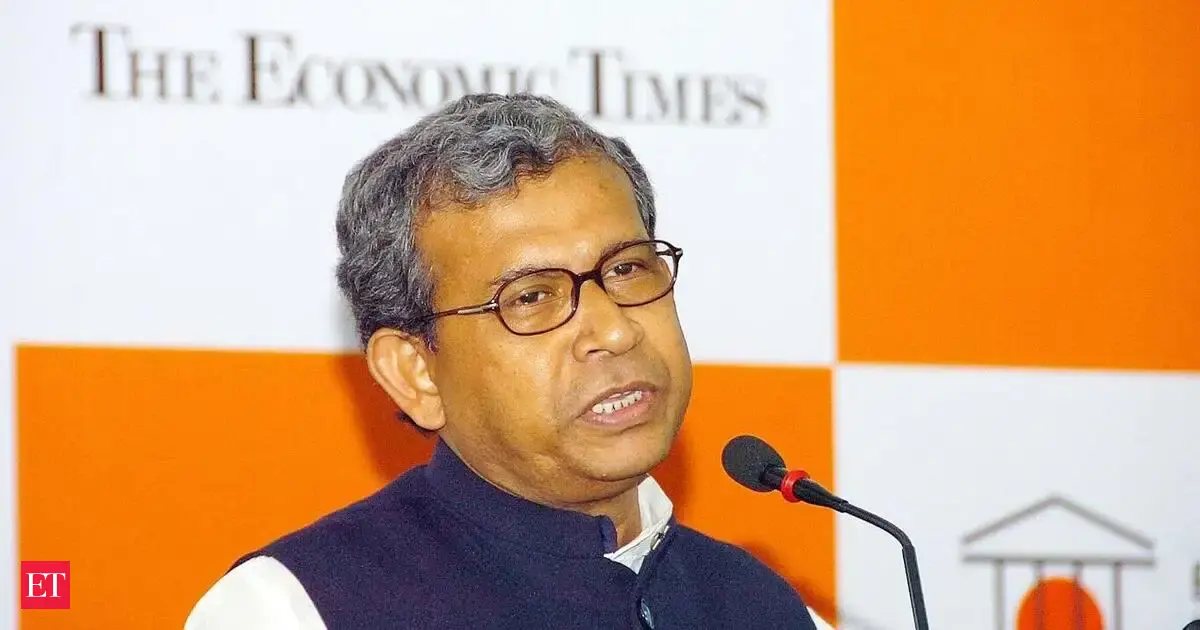
‘Every Hindu home has a potential murderer or rapist’: Apoorvanand vilifies Hindu society, paints Muslims as permanent victims and peddles false claims on Hinduism
In a recent conversation on Ashutosh-owned YouTube channel Satya Hindi, Mukesh Kumar and propagandist self-styled academic Apoorvanand went on an anti-Hindu crusade. The conversation happened under the banner “Baat Bolegi”, where Apoorvanand made a series of sweeping, disturbing and communally charged remarks against Hindus, Hinduism, the RSS, Hindu organisations, Hindu festivals, mainstream media, the judiciary, police and even ordinary Hindu households. The discussion revolved around blaming Hindus for violence and communalism in India. Apoorvanand repeatedly presented Hindu society as inherently violent, radicalised, casteist, anti-Muslim and sexually perverse. At one point, he went to the extent of saying that in every Hindu home there now exists a “potential murderer” or a “potential rapist”. Speaking about what he called the “mass radicalisation” of Hindus, Apoorvanand said in Hindi, “The mass radicalisation of Hindus in India is taking place… in which, in every home, there is now a Hindu of this kind who is a potential murderer.” He did not stop there. He further said, “If this Hindu is not a potential murderer, then he is a potential rapist. And if he is not directly committing rape, he is committing rape in his imagination or virtually.” He linked this sweeping vilification of Hindu households to Sulli Deals and Bulli Bai, the fake online marketplace that led to massive controversy a few years back. He then claimed that the rape of Muslims and the killing of Muslims are now considered acceptable in Hindu homes. Such language, if used for any other religious community, would have been immediately condemned as hate speech, collective demonisation and dehumanisation. However, when directed at Hindus, it was presented as “academic analysis”. Hindus portrayed as attackers and Muslims as victims In the beginning of the programme, it was claimed that every day hundreds of incidents are taking place where Muslims are beaten, abused and humiliated. They claimed that even children, women and elderly people are being targeted. Apoorvanand claimed that Muslims are no longer safe anywhere, including streets, neighbourhoods, schools, colleges, markets, trains and buses. He further claimed that those who spread poison and commit violence in the name of Hindus reach anywhere, act fearlessly and even commit murders. During the conversation, it was claimed that violence is justified in the name of love jihad, conversion, infiltration, cow protection, food habits, lifestyle and religious festivals. They also claimed that such elements receive protection from the government, administration and police. He went further and said that from chief ministers to the prime minister, leaders are allegedly provoking violence through hate speeches, running bulldozers and threatening people. The media, he claimed, has openly promoted this violence through prime-time debates. It was clear from the beginning of the conversation that the aim was to place Hindus in the dock and present Muslims as helpless victims of an organised radical Hindu ecosystem. Hindus collectively put on trial During the conversation, Apoorvanand claimed that the basic instincts of Hindus are inherently violent, obscene and vulgar. The crux of the topic was to claim that the protection of Hinduism has been handed over to criminals and that religious leaders themselves appear to be involved in violence. Apoorvanand claimed that these basic instincts were suppressed for years, but because of the way political and religious leaders are provoking Hindus, they have become more visible. Hindu pluralism mocked using the ‘33 crore gods’ trope Apoorvanand claimed that just because Hindus worship 33 crore Devi-Devtas, that does not mean they are tolerant, as Hinduism is neither monolithic nor based on one book. According to him, Hindus are rigid, casteist and inherently believers in a divided society. This is a shallow and misleading attack on Hindu pluralism. The phrase “33 crore Devi-Devtas” is itself widely misunderstood. In the Vedic and Upanishadic context, the reference is to 33 devas or 33 categories of deities, not a cartoonish claim that Hindus worship 330 million separate gods one after another. The traditional enumeration includes eight Vasus, eleven Rudras, twelve Adityas, Indra and Prajapati. Hindu pluralism is not based on counting deities. It is based on the idea that the divine can be approached through many forms, many names, many paths and many traditions. To reduce that civilisational idea to “33 crore deities” and then use it to claim that Hindus are not tolerant is not serious scholarship. It is polemics dressed up as analysis. Furthermore, Apoorvanand made a sweeping claim that Hindus do not have the idea of seva or service. This claim is not just wrong, it is laughably ignorant of Hindu texts, traditions and lived practice. The Bhagavad Gita repeatedly upholds lokasangraha, the welfare
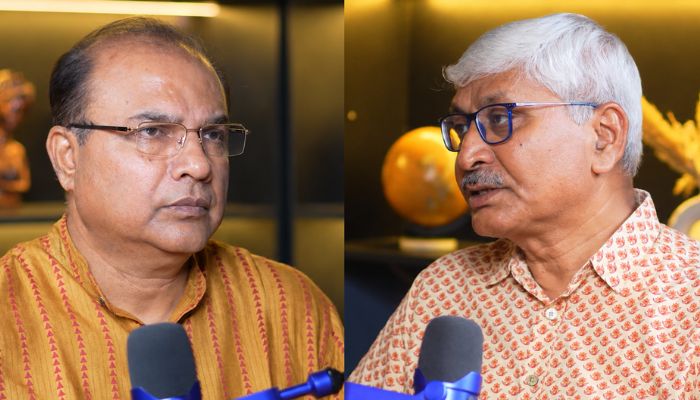
In a recent conversation on Ashutosh-owned YouTube channel Satya Hindi, Mukesh Kumar and propagandist self-styled academic Apoorvanand went on an anti-Hindu crusade. The conversation happened under the banner “Baat Bolegi”, where Apoorvanand made a series of sweeping, disturbing and communally charged remarks against Hindus, Hinduism, the RSS, Hindu organisations, Hindu festivals, mainstream media, the judiciary, police and even ordinary Hindu households.
The discussion revolved around blaming Hindus for violence and communalism in India. Apoorvanand repeatedly presented Hindu society as inherently violent, radicalised, casteist, anti-Muslim and sexually perverse. At one point, he went to the extent of saying that in every Hindu home there now exists a “potential murderer” or a “potential rapist”.
Speaking about what he called the “mass radicalisation” of Hindus, Apoorvanand said in Hindi, “The mass radicalisation of Hindus in India is taking place… in which, in every home, there is now a Hindu of this kind who is a potential murderer.”
He did not stop there. He further said, “If this Hindu is not a potential murderer, then he is a potential rapist. And if he is not directly committing rape, he is committing rape in his imagination or virtually.”
He linked this sweeping vilification of Hindu households to Sulli Deals and Bulli Bai, the fake online marketplace that led to massive controversy a few years back. He then claimed that the rape of Muslims and the killing of Muslims are now considered acceptable in Hindu homes.
Such language, if used for any other religious community, would have been immediately condemned as hate speech, collective demonisation and dehumanisation. However, when directed at Hindus, it was presented as “academic analysis”.
Hindus portrayed as attackers and Muslims as victims
In the beginning of the programme, it was claimed that every day hundreds of incidents are taking place where Muslims are beaten, abused and humiliated. They claimed that even children, women and elderly people are being targeted.
Apoorvanand claimed that Muslims are no longer safe anywhere, including streets, neighbourhoods, schools, colleges, markets, trains and buses. He further claimed that those who spread poison and commit violence in the name of Hindus reach anywhere, act fearlessly and even commit murders.
During the conversation, it was claimed that violence is justified in the name of love jihad, conversion, infiltration, cow protection, food habits, lifestyle and religious festivals. They also claimed that such elements receive protection from the government, administration and police.
He went further and said that from chief ministers to the prime minister, leaders are allegedly provoking violence through hate speeches, running bulldozers and threatening people. The media, he claimed, has openly promoted this violence through prime-time debates.
It was clear from the beginning of the conversation that the aim was to place Hindus in the dock and present Muslims as helpless victims of an organised radical Hindu ecosystem.
Hindus collectively put on trial
During the conversation, Apoorvanand claimed that the basic instincts of Hindus are inherently violent, obscene and vulgar. The crux of the topic was to claim that the protection of Hinduism has been handed over to criminals and that religious leaders themselves appear to be involved in violence. Apoorvanand claimed that these basic instincts were suppressed for years, but because of the way political and religious leaders are provoking Hindus, they have become more visible.
Hindu pluralism mocked using the ‘33 crore gods’ trope
Apoorvanand claimed that just because Hindus worship 33 crore Devi-Devtas, that does not mean they are tolerant, as Hinduism is neither monolithic nor based on one book. According to him, Hindus are rigid, casteist and inherently believers in a divided society.
This is a shallow and misleading attack on Hindu pluralism. The phrase “33 crore Devi-Devtas” is itself widely misunderstood. In the Vedic and Upanishadic context, the reference is to 33 devas or 33 categories of deities, not a cartoonish claim that Hindus worship 330 million separate gods one after another. The traditional enumeration includes eight Vasus, eleven Rudras, twelve Adityas, Indra and Prajapati.
Hindu pluralism is not based on counting deities. It is based on the idea that the divine can be approached through many forms, many names, many paths and many traditions. To reduce that civilisational idea to “33 crore deities” and then use it to claim that Hindus are not tolerant is not serious scholarship. It is polemics dressed up as analysis.
Furthermore, Apoorvanand made a sweeping claim that Hindus do not have the idea of seva or service. This claim is not just wrong, it is laughably ignorant of Hindu texts, traditions and lived practice.
The Bhagavad Gita repeatedly upholds lokasangraha, the welfare and holding together of the world, as a principle of action. It praises those who are devoted to the welfare of all beings. The idea of sarva-bhuta-hita, or welfare of all beings, is central to the dharmic imagination. Hindu traditions also emphasise daan, karuna, ahimsa, annadaan, gau seva, atithi satkar, temple kitchens, dharamshalas, water shelters, feeding pilgrims, caring for monks, serving the poor and public works done as dharmic duty.
If Hinduism had “no seva”, India would not have had centuries-old traditions of annakshetras, temple-based feeding, dharamshalas for travellers, gaushalas, mathas, akharas, pilgrimage support systems and voluntary community service linked to religious merit.
Even today, Hindu temples across India run free meals, medical camps, educational institutions, gaushalas and relief work during floods, earthquakes and other disasters. One may debate how these institutions are run, but to say that Hinduism has no concept of seva is historically and scripturally false.
Another hollow claim made by Apoorvanand was that Hinduism does not have “neighbourly dharma”. In it, he claimed that Hinduism does not contain a duty towards the neighbour.
Again, this is a narrow claim based on imposing Abrahamic vocabulary on Hindu thought. Hinduism may not always use the same phrase as “love thy neighbour”, but it contains several concepts that are wider than the neighbour. It speaks of atithi devo bhava, treating the guest as divine. As mentioned before, Hinduism speaks of sarva-bhuta-hita, welfare of all beings. It speaks of vasudhaiva kutumbakam, the world as one family. It speaks of ahimsa, daya, daan, maitri and karuna.
The Taittiriya Upanishad tells the student to treat the mother, father, teacher and guest as divine. The Gita speaks of working for the welfare of all beings. The Mahabharata and Puranic traditions repeatedly uphold feeding strangers, protecting guests, honouring sages, helping travellers, giving water, food and shelter, and supporting society.
If anything, Hindu ethics are not limited to the neighbour. They extend moral consideration to the guest, stranger, animal, nature, ancestors, gods and all beings. Apoorvanand’s claim that there is no neighbourly duty in Hinduism is therefore not a critique. It is misinformation.
Hindu society declared naturally violent because of varna
Apoorvanand then linked Hinduism to violence through the varna system. He claimed that Hindu society is a society that believes in varna. He added that many scholars who have studied Hindu society and Hindu scriptures say that if varna is removed, Hinduism itself ends.
He said that a society which believes in hierarchy and untouchability will naturally be violent. According to him, hidden violence is when one keeps another person away, while visible violence is when one kills another person.
He further said that if a Brahmin felt that someone had polluted him, that person could be killed, and added that this was already present “within us”.
The argument moved from social criticism to civilisational indictment. Hindu society was not merely criticised for caste injustices. It was painted as structurally violent and naturally inclined towards exclusion and killing.
Later in the conversation, Apoorvanand said the problem was not limited to Brahmins or upper castes. He claimed that backward castes, Dalits, Valmikis, Yadavs and Adivasis have also participated in anti-Muslim violence. According to him, anti-Muslim hatred exists in all Hindu castes.
This means the criticism first invoked Brahminism and then expanded the blame to every Hindu caste group. The final conclusion was not that a section of society is violent. The conclusion was that Hindu society as a whole is diseased.
RSS blamed for converting old prejudice into organised violence
Apoorvanand claimed that Hindus had old prejudices against Muslims, but earlier Hindus and Muslims still lived together because there was no active force constantly provoking those prejudices and converting them into violence.
He then named Hindu Mahasabha, RSS, Vinayak Damodar Savarkar’s writings, Golwalkar, Hedgewar and Syama Prasad Mukherjee as that active force. According to him, this organised ideology decided to provoke Hindu prejudice and turn it into active violence.
He claimed that violence in India used to be episodic, such as Hindu-Muslim riots around Tazia or Ram Navami. But according to him, the major change now is that people have begun to consider violence justified, shameless and acceptable.
He said that Savarkar, Hindu Mahasabha and RSS thinking, which earlier was not the dominant discourse, has now become dominant. He added that the violence is no longer episodic but is reflected daily in behaviour, language and violent acts.
He then called the criminalisation of society the biggest success of the RSS.
Bajrang Dal called terrorist-like, RSS ecosystem accused
Mukesh Kumar asked whether Bajrang Dal could be called a terrorist organisation. Apoorvanand responded that he agreed with that characterisation and said it is an organised group.
He then claimed that the RSS has created an environment in which many organisations can grow. He compared them to plants growing in a certain ecosystem. According to him, hatred now grows naturally in the environment created by the RSS.
He named Bajrang Dal, VHP, Vidya Bharati, Saraswati Shishu Mandir, Ram Sene, Rudra Sena, Hindu Vahini and other groups. He claimed that some of them may not have a formal direct link with the RSS, but they do the same work.
This is a standard left-liberal formulation. If there is a formal link, blame the RSS. If there is no formal link, call it an “ecosystem”. Either way, the RSS remains the accused.
1984 anti-Sikh riots blamed on Hindus, Congress role pushed to the background
One of the most problematic parts of the conversation came when Mukesh Kumar raised the 1984 anti-Sikh riots. Apoorvanand claimed that ordinary people participated in the violence. He said that in Delhi, if 4,000 Sikhs were killed, one must think how many thousands of people were involved in killing them. He then said, “They were all Hindus. They were all Hindus and no one else.”
He went on to say that those people may now be doctors, teachers, shopkeepers, grandfathers or elderly men, but their hands are stained with blood. He said Hindu society never admitted that Sikhs, whom Hindus called protectors of Hindu society, were surrounded and killed by them. This framing is deeply dishonest because it communalises what was a Congress-led political massacre.
The anti-Sikh violence of 1984 was not an abstract Hindu uprising against Sikhs. It followed the assassination of Indira Gandhi and took place under the political climate of the then Congress regime. Several Congress leaders were accused for decades by victims, witnesses and commissions. Former Congress leader Sajjan Kumar was convicted and sentenced to life imprisonment. Jagdish Tytler’s role has also remained under legal and investigative scrutiny. The Nanavati Commission recorded credible evidence against Congress leaders in connection with the attacks.
Therefore, to reduce 1984 to “Hindus killed Sikhs” is a dangerous communal distortion. It takes the Congress out of the centre of the frame and places collective guilt on Hindus as a religious community.
The victims of 1984 were Sikhs. The perpetrators included Congress-linked mobs and political actors. The failure was also of the state machinery, police and ruling establishment of the time. Calling it a Hindu crime rather than a Congress-led political pogrom is not analysis. It is ideological manipulation.
Muslims painted as permanently unsafe around Hindus
Apoorvanand claimed that Muslims now live in constant uncertainty because they do not know what the Hindu sitting next to them will do.
He said a Muslim travelling in a train does not know whether the person next to him will open his tiffin, call someone at the next station or get him attacked. He said a Muslim does not know whether a Railway Protection Force personnel will shoot him while he is sleeping.
He also said that a Muslim may express a political opinion during a train journey and may be killed for it. According to him, Muslims now leave their homes with suspicion and return with suspicion because the Hindu next to them may be good, but may also not be good.
This was another sweeping portrayal of Hindus as a permanent threat and Muslims as a permanently endangered community.
Bahraich killing presented as self-defence
Apoorvanand also referred to the Bahraich violence and claimed that during a procession, a person entered a Muslim house, broke the railing and removed a religious flag. He then said that “obviously” in self-defence, someone from the Muslim family or somewhere else fired and he was killed.
The reference was to the killing of Ram Gopal Mishra during the Bahraich violence. However, Apoorvanand’s framing made the killing appear like an understandable act of self-defence.
This is not just morally questionable; it also contradicts the legal outcome. A Bahraich court later awarded the death penalty to the prime accused Sarfaraz alias Rinku and life imprisonment to nine others in the Ram Gopal Mishra murder case. The court treated the crime as grave and brutal, not as some casual act of self-defence.
By presenting the killing in a way that normalises the firing as “self-defence”, Apoorvanand again fitted the incident into his larger template: Hindu aggressor, Muslim victim. Even when the dead person was a Hindu youth, the ideological framing found a way to blame the Hindu side.
Hindu festivals portrayed as violent mobilisation
Apoorvanand also attacked Hindu festivals. He said that during Ram Navami, 13- and 14-year-old children move in thousands with swords in front of Muslim homes and consider it their right. He also said that Hindu jagrans no longer sing the glory of gods and goddesses but play abusive songs about what will be done to Muslims and Muslim women. He called it the “extreme fall” of society.
Christians also presented as victims of Hindus
The conversation also painted Christians as victims of Hindu society and media. Apoorvanand said that Christians are being attacked every day in India. He claimed pastors are beaten, graves are dug up, birthday parties are attacked and gatherings are vandalised.
He said that Christian institutions are falsely accused of conversion even though generations of Indians have studied in missionary schools and used Christian hospitals without becoming Christians.
This argument ignores the fact that concerns over coercive, fraudulent or inducement-based conversions have been repeatedly raised across several Indian states. Several FIRs and investigations have alleged organised conversion networks, foreign funding and targeted religious conversion among vulnerable communities. Whether each allegation stands legally is for courts to decide, but dismissing the entire concern as Hindu paranoia is intellectually dishonest.
The recent example of The Timothy Initiative and how it has been converting Hindus to Christianity for years must be seen as a warning against such institutions and individuals like Apoorvanand, who try to paint them as innocent.
Judiciary, police, bureaucracy and army accused of majoritarian hatred
Towards the end, Apoorvanand claimed that majoritarian hatred has entered the judiciary, bureaucracy, police and army. He said that violence has now become institutional.
He cited examples of police and courts allegedly justifying hate speech by saying that Hindus were merely trying to encourage their community. He criticised judges, the Ram Janmabhoomi verdict and several judicial statements as majoritarian.
He said that if Muslims face mobs or Hindu organisations, they can still go to the police, DM or SP. But if those institutions themselves turn against Muslims, then Muslims have nowhere to go.
He claimed that Indian police have historically had anti-Muslim and anti-Christian prejudice, but now it has become active because it is protected and beneficial.
This means the programme did not stop at accusing Hindus. It accused the entire Indian state structure of becoming anti-Muslim and anti-Christian.
Apoorvanand has a history of anti-Hindu sentiments
Apoorvanand has a history of anti-Hindu rhetoric. He is also an accused of inciting anti-Hindu Delhi Riots. In May 2019, left-wing propaganda portal The Wire published an op-ed by Apoorvanand where the author called the Hindu slogan “Jai Shri Ram” an “expression of hooliganism”. Apporvanand, in his article, extended support to the bizarre incident when West Bengal Chief Minister Mamata Banerjee had referred to ‘Jai Shri Ram’ chants as abuses hurled at her.
He further insulted the Prime Minister of India by calling him an ‘instigator’. The hate is so strong that Apporanand fails to remember that while insulting the PM, he also disregards India’s most eminent position of authority.
Moreover, the professor, in his hatred, went a step ahead and referred to Veteran BJP leader LK Advani as a ‘bahurupiya’ (imposter). He believed that ‘Jai Shri Ram’ slogans were used as a political narrative by the BJP to create Muslim hatred amongst the Hindus.
In April 2023, he came out in support of Muslims and claimed that the idea of “Ghazwa-e-Hind” was evoked by Hindutvavadis to justify their violence and no Muslim talks about it. In a post on X quoting Yogendra Yadav, where he talked about the ideas of Khalistan, Gazwa-e-Hind and Hindu Rashtra, Apoorvanand said, “Found it disappointing that while discussing Khalistan and Hindu Rashtra, it is thought necessary to bring GEH. Has any Indian organisation, or any individual given a call for it like the earlier two? GEH is evoked by Hindutvavadis to justify their violence. No Muslim talks about it.”
Criticism or collective demonisation?
What was presented as academic criticism was, in reality, aimed at demonising Hindus and Hindu society as a whole. The framing of every question and the way Apoorvanand answered must be scrutinised and legally challenged, especially the claim that every Hindu house has a “murderer or rapist”.