From preventive detention to the auctioning of properties of the accused: Read about the 2 bills introduced by the BJP govt in West Bengal to stop anti-social activities
On Monday, 29th June, the newly elected Bharatiya Janata Party (BJP) government in West Bengal introduced two major Bills in the Assembly, which promise to tighten the state’s approach towards organised crime and public disorder. While the government says the proposed laws are needed to deal with criminal gangs, extortion, illegal mining and violence, the Opposition has raised concerns that they could give sweeping powers to the administration and affect civil liberties. The two proposed legislations are the West Bengal Public Safety and Control of Anti-Social Activities Bill, 2026 and the West Bengal Maintenance of Public Order (Amendment) Bill, 2026. Together, they introduce provisions for preventive detention without trial, stricter action against organised crime and even compensation through the auction of an offender’s property in certain cases. #HTEditorial | "If the bills pass and the new law does not allow a lawyer to represent a detainee before a board unless permitted and keeps the proceedings confidential, it will only make the legal process opaque and unaccountable."#WestBengalKnow more … pic.twitter.com/GWkRjbLPO1— Hindustan Times (@htTweets) June 28, 2026 New powers to stop suspected anti-social activities The main objective of the West Bengal Public Safety and Control of Anti-Social Activities Bill, 2026, is to prevent organised crime before it takes place. Under the proposed law, a District Magistrate, Commissioner of Police, or a police officer not below the rank of Deputy Inspector General (DIG), if authorised by the state government, can take action against a person if they believe that the individual is involved in or is likely to become involved in anti-social activities. West Bengal Assembly | Chief Minister and Minister-in-Charge of the Home & Hill Affairs Department will make a statement on The Uniform Civil Code, West Bengal, 2026. Four Bills to be tabled today for Introduction, Consideration and Passing-1. West Bengal Backward Classes…— ANI (@ANI) June 29, 2026 In such cases, the authorities can order that person to leave a particular area, district or even multiple districts within a specified period. They can also stop the person from returning to that area for up to one year. During this period, the individual may also be asked to regularly report his or her movements or appear before authorities at fixed intervals. Under PM @narendramodi Ji’s leadership & CM @SuvenduWB Da’s governance, New goonda Bill To be tabled will ensure BhoyMukt Bengal.Those who oppose ; have indicated their support for violence over safety Maa Maati Manush. pic.twitter.com/SCqbW7l2kU— Pradeep Bhandari(प्रदीप भंडारी) (@pradip103) June 29, 2026 The Bill also introduces preventive detention for up to 12 months without trial. If the government believes that the person continues to pose a threat after being released, or is likely to return to anti-social activities, it can issue another detention order. In other words, repeated preventive detention is also allowed under certain circumstances. Similar to the National Security Act One of the most debated provisions of the Bill is its preventive detention clause, which is similar to the National Security Act (NSA), 1980. Like the NSA, the proposed Bengal law allows authorities to detain a person for up to one year without a criminal trial if they believe the individual poses a threat to public safety or public order. Such detention is preventive in nature, meaning it is intended to stop a possible crime before it happens rather than punish someone after conviction. The Bill also gives police wide powers to conduct searches, raids, seizures and arrests, as offences under the proposed law have been classified as cognisable and non-bailable. It further makes it a punishable offence to shelter or help any person against whom an externment or detention order has already been issued. What counts as an anti-social activity? The proposed legislation also broadens the meaning of “anti-social activity” compared to existing laws. According to the Bill, an anti-social activity is any act that directly or indirectly creates fear, alarm, danger or insecurity among the public. It also includes activities that seriously threaten people’s lives or property, disturb public peace, prevent people from carrying out their lawful business or profession, or illegally take over someone else’s movable or immovable property. The definition further covers acts that cause damage to public or private property. Illegal mining, unauthorised quarrying, illegal sand extraction, smuggling of forest produce and wildlife-related offences that result in major financial losses to the government have also been included within the scope of anti-social activities. State officials say these provisions are particularly aimed at tackling illegal mining and sand extraction in districts such as Birbhum and West Burdwan, while also addressing illegal l
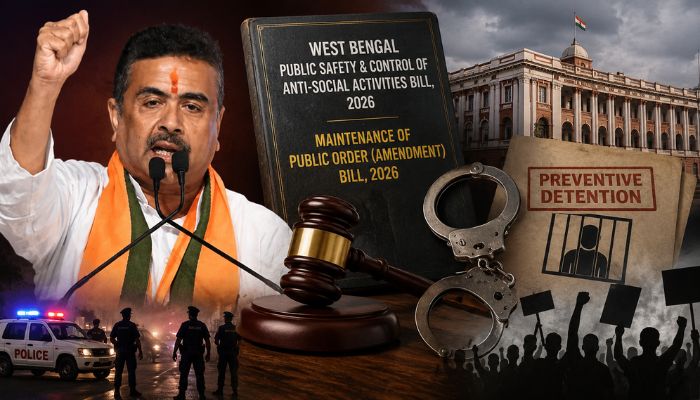
On Monday, 29th June, the newly elected Bharatiya Janata Party (BJP) government in West Bengal introduced two major Bills in the Assembly, which promise to tighten the state’s approach towards organised crime and public disorder. While the government says the proposed laws are needed to deal with criminal gangs, extortion, illegal mining and violence, the Opposition has raised concerns that they could give sweeping powers to the administration and affect civil liberties.
The two proposed legislations are the West Bengal Public Safety and Control of Anti-Social Activities Bill, 2026 and the West Bengal Maintenance of Public Order (Amendment) Bill, 2026. Together, they introduce provisions for preventive detention without trial, stricter action against organised crime and even compensation through the auction of an offender’s property in certain cases.
#HTEditorial | "If the bills pass and the new law does not allow a lawyer to represent a detainee before a board unless permitted and keeps the proceedings confidential, it will only make the legal process opaque and unaccountable."#WestBengalKnow more … pic.twitter.com/GWkRjbLPO1— Hindustan Times (@htTweets) June 28, 2026
New powers to stop suspected anti-social activities
The main objective of the West Bengal Public Safety and Control of Anti-Social Activities Bill, 2026, is to prevent organised crime before it takes place. Under the proposed law, a District Magistrate, Commissioner of Police, or a police officer not below the rank of Deputy Inspector General (DIG), if authorised by the state government, can take action against a person if they believe that the individual is involved in or is likely to become involved in anti-social activities.
West Bengal Assembly | Chief Minister and Minister-in-Charge of the Home & Hill Affairs Department will make a statement on The Uniform Civil Code, West Bengal, 2026. Four Bills to be tabled today for Introduction, Consideration and Passing-1. West Bengal Backward Classes…— ANI (@ANI) June 29, 2026
In such cases, the authorities can order that person to leave a particular area, district or even multiple districts within a specified period. They can also stop the person from returning to that area for up to one year. During this period, the individual may also be asked to regularly report his or her movements or appear before authorities at fixed intervals.
Under PM @narendramodi Ji’s leadership & CM @SuvenduWB Da’s governance, New goonda Bill To be tabled will ensure BhoyMukt Bengal.Those who oppose ; have indicated their support for violence over safety Maa Maati Manush. pic.twitter.com/SCqbW7l2kU— Pradeep Bhandari(प्रदीप भंडारी) (@pradip103) June 29, 2026
The Bill also introduces preventive detention for up to 12 months without trial. If the government believes that the person continues to pose a threat after being released, or is likely to return to anti-social activities, it can issue another detention order. In other words, repeated preventive detention is also allowed under certain circumstances.
Similar to the National Security Act
One of the most debated provisions of the Bill is its preventive detention clause, which is similar to the National Security Act (NSA), 1980.
Like the NSA, the proposed Bengal law allows authorities to detain a person for up to one year without a criminal trial if they believe the individual poses a threat to public safety or public order. Such detention is preventive in nature, meaning it is intended to stop a possible crime before it happens rather than punish someone after conviction.
The Bill also gives police wide powers to conduct searches, raids, seizures and arrests, as offences under the proposed law have been classified as cognisable and non-bailable. It further makes it a punishable offence to shelter or help any person against whom an externment or detention order has already been issued.
What counts as an anti-social activity?
The proposed legislation also broadens the meaning of “anti-social activity” compared to existing laws.
According to the Bill, an anti-social activity is any act that directly or indirectly creates fear, alarm, danger or insecurity among the public. It also includes activities that seriously threaten people’s lives or property, disturb public peace, prevent people from carrying out their lawful business or profession, or illegally take over someone else’s movable or immovable property.
The definition further covers acts that cause damage to public or private property. Illegal mining, unauthorised quarrying, illegal sand extraction, smuggling of forest produce and wildlife-related offences that result in major financial losses to the government have also been included within the scope of anti-social activities.
State officials say these provisions are particularly aimed at tackling illegal mining and sand extraction in districts such as Birbhum and West Burdwan, while also addressing illegal logging and forest-related crimes in north Bengal.
Who can be called a ‘goonda’?
The Bill also expands the legal definition of the term “goonda”.
It includes anyone who habitually commits, attempts to commit, supports, finances or helps anti-social activities, either alone or as part of a gang, group or criminal syndicate.
The definition also covers people who have already been charged under Sections 111 or 112 of the Bharatiya Nyaya Sanhita (BNS), which deal with organised crime and petty organised crime.
Apart from this, anyone involved in offences under laws such as the Arms Act, the Narcotic Drugs and Psychotropic Substances Act, the Explosive Substances Act and the Immoral Traffic (Prevention) Act may also fall under the definition if they are found to be involved in organised criminal activities.
The Bill also includes people who are generally considered desperate and dangerous to society within this category.
Advisory boards to review detention
To review detention orders, the government proposes to set up one or more three-member Advisory Boards. Each board will be headed by a serving or retired High Court judge, along with two members qualified to become High Court judges.
A detainee can make a representation before the board, but lawyers will not be allowed to appear unless the board specifically grants permission. Most proceedings of the Advisory Board will remain confidential, and if the three members disagree, the majority opinion will be treated as the final decision.
Officials say Bengal has never had such a preventive detention law before. Until now, criminal cases were largely dealt with under the Indian Penal Code earlier and now under the Bharatiya Nyaya Sanhita, along with a few older state-specific laws.
The separate bill proposes a property auction
Alongside the Public Safety Bill, the government is also bringing the West Bengal Maintenance of Public Order (Amendment) Bill, 2026.
This legislation proposes that people convicted of damaging public or private property during riots, unlawful assemblies, protests or other disturbances affecting public order can be made to compensate for the losses.
For this purpose, the government plans to establish Claims Commissions, which will assess the damage and decide the amount of compensation. The Bill states that the decision of the Claims Commission will be final, with no appeal allowed before any court.
If required, an offender’s property can be confiscated and auctioned to recover the compensation amount.
Similar laws already exist in other states
The proposed Bengal laws are not entirely new in concept and resemble legislation already in force in several other states.
For example, Uttar Pradesh has the Uttar Pradesh Control of Organised Crime Act (UPCOCA), 2017, which imposes strict bail conditions and allows longer judicial custody during investigations.
Gujarat’s Control of Terrorism and Organised Crime Act, 2015, provides for preventive detention and even permits intercepted telephone conversations to be used as evidence in court.
Tamil Nadu has long enforced its well-known Goondas Act, which allows preventive detention without trial for up to one year for various categories of offenders, including drug offenders, forest offenders, sand offenders and organised criminals.
Similarly, Maharashtra’s Control of Organised Crime Act (MCOCA), 1999, contains stringent provisions against organised crime and limits the availability of anticipatory bail during investigations.
Government defends move, Opposition attacks
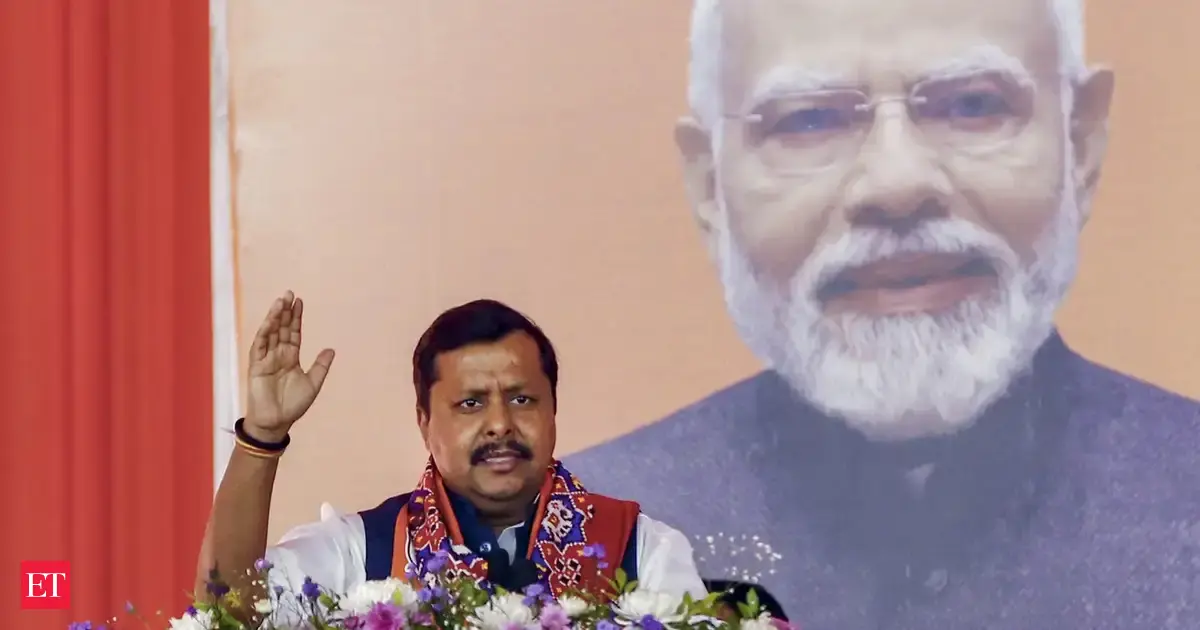
Chief Minister Suvendu Adhikari, who also heads the Home Department, has defended the proposed legislation, saying the new laws would be much stricter than the existing legal framework.
“People will think five times before violating the law,” he said while indicating that the government intends to take a tougher stand against organised crime and lawlessness.
The Opposition, however, has strongly criticised the proposed laws. The Trinamool Congress (TMC) argues that the Bills give extraordinary powers to the executive without providing adequate judicial safeguards.
TMC MP Mahua Moitra described the legislation as even more stringent than the Emergency-era Maintenance of Internal Security Act (MISA), the Unlawful Activities (Prevention) Act (UAPA) and several other tough security laws.
“It is even more stringent than the Emergency-era MISA, the UAPA and other harsh laws. Multiply all of them by 10, and only then do you arrive at this Bill,” she said.