From “regime change” to retreat: How Iran outmanoeuvred the US in the West Asia war as ceasefire hands strategic edge to Tehran
On 28th February, a major conflict erupted in the Middle East due to the assassination of Iran’s Supreme Leader Ayatollah Ali Khamenei, which was carried out by a joint operation of the United States and Israel. The subsequent events resulted in a considerable military escalation between the two parties, a severe disruption of the global energy supply chain, and a sequence of attacks and counterattacks, accompanied by violent threats. However, the growing tensions appeared to be temporarily halted after more than a month by a fragile two-week ceasefire announced between Washington and Tehran on 7th April (Tuesday). Drone raids and missile strikes in the Middle East have currently ceased as the Americans accepted Iran’s Supreme National Security Council’s 10-point proposal, which specified broad demands ranging from sanctions relief to military withdrawal and control over the “Strait of Hormuz.” Notably, the development occurred just hours after President Donald Trump threatened, “A whole civilisation will die tonight, never to be brought back again. I don’t want that to happen, but it probably will,” insinuating a more aggressive course of action. However, his administration has made a dramatic U-turn from its previously tough stance. Trump even claimed to have achieved “complete and total regime change, where different, smarter, and less radicalised minds prevail”, which could potentially lead to “revolutionary” and “wonderful” occurrences. “We will find out tonight, one of the most important moments in the long and complex history of the World,” he added. The It is evident that the recent declaration has not only invalidated all the president’s chest-thumping and repeated assertions of having the upper hand, but also shed light on the confusion surrounding his policy decisions in the confrontation. More importantly, Iran has emerged as a much stronger and, at least for the moment, the dominant rival, as the United States caved in to the pressure after making contrary statements earlier. The tenuous peace agreement: America’s loss and Iran’s gain Iran emphasised in a strong statement that the dispute has merely paused rather than resolved, and the future hinges on the complete recognition of its “workable” expectations, which are: The offensive against Iran must end entirely and permanently, with no time limit: Iran wants an official commitment of non-aggression. It is not looking for a temporary suspension, but a binding guarantee that Washington will not launch another assault on the country. This is articulated by the Islamic Revolutionary Guard Corps (IRGC) backed “mullah government,” labelled as “radical” by Trump before agreeing to a compromise with them. The “regime change” initiative he proudly touted has failed spectacularly, as no civilian government has assumed authority. On the other hand, Tehran, with its longstanding power structure, both political and military, has fortified its position and risen as the superior contender in the fight. The war in the region, including Iraq, Lebanon, and Yemen, must end permanently: Iran has called for a ceasefire to be enforced across all fronts, including “heroic Islamic Resistance of Lebanon,” where Hezbollah, Israel’s sworn enemy, is located. The group is backed by the Iranian government and has consistently launched strikes on the Jewish state even during the present altercation. “Iran no longer poses a nuclear, missile and terror threat to America, Israel, Iran’s Arab neighbours and the world,” Israeli Prime Minister Benjamin Netanyahu’s office stated while welcoming the truce, but stressed that it “does not include Lebanon.” The noticeable differences between the two close allies, Washington and Tel Aviv, have transpired during the crucial period, clearly benefiting Iran. Iran’s control over the Strait of Hormuz: The crucial chokepoint transports roughly one-fifth of the world’s oil and was closed by Tehran to retaliate against the United States, taking oil prices to over $100. Afterwards, Trump pleaded, threatened, mocked and even lambasted North Atlantic Treaty Organisation (NATO) partners for their refusal to send warships to the area for security; however, they declined. It is going to be reopened following the formation of “a safe transit protocol”, but will remain under Iran’s shadow, which indicates that the waterway could be shut down again at the regime’s discretion. The United States has not succeeded in weakening the West Asian nation’s potential to jeopardise or impact the most important energy passage, even after the deadly campaign. Trump has been unable to ensure a continuous supply of fuel to the world, despite promising. Removal of all primary and secondary sanctions: The US will lift both primary and secondary sanctions imposed on Iran. The latter are especially crucial as they target non-Iranian companies that operate with Tehran, effectively forcing them to take a stance in an unrelated conf
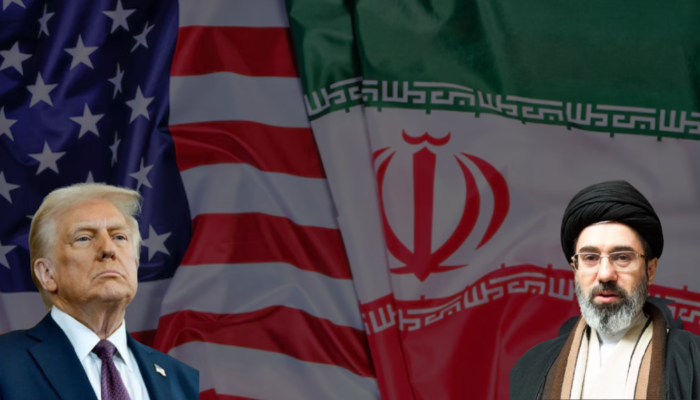
On 28th February, a major conflict erupted in the Middle East due to the assassination of Iran’s Supreme Leader Ayatollah Ali Khamenei, which was carried out by a joint operation of the United States and Israel. The subsequent events resulted in a considerable military escalation between the two parties, a severe disruption of the global energy supply chain, and a sequence of attacks and counterattacks, accompanied by violent threats. However, the growing tensions appeared to be temporarily halted after more than a month by a fragile two-week ceasefire announced between Washington and Tehran on 7th April (Tuesday).
Drone raids and missile strikes in the Middle East have currently ceased as the Americans accepted Iran’s Supreme National Security Council’s 10-point proposal, which specified broad demands ranging from sanctions relief to military withdrawal and control over the “Strait of Hormuz.”
Notably, the development occurred just hours after President Donald Trump threatened, “A whole civilisation will die tonight, never to be brought back again. I don’t want that to happen, but it probably will,” insinuating a more aggressive course of action. However, his administration has made a dramatic U-turn from its previously tough stance.
Trump even claimed to have achieved “complete and total regime change, where different, smarter, and less radicalised minds prevail”, which could potentially lead to “revolutionary” and “wonderful” occurrences. “We will find out tonight, one of the most important moments in the long and complex history of the World,” he added. The
It is evident that the recent declaration has not only invalidated all the president’s chest-thumping and repeated assertions of having the upper hand, but also shed light on the confusion surrounding his policy decisions in the confrontation. More importantly, Iran has emerged as a much stronger and, at least for the moment, the dominant rival, as the United States caved in to the pressure after making contrary statements earlier.
The tenuous peace agreement: America’s loss and Iran’s gain
Iran emphasised in a strong statement that the dispute has merely paused rather than resolved, and the future hinges on the complete recognition of its “workable” expectations, which are:
The offensive against Iran must end entirely and permanently, with no time limit: Iran wants an official commitment of non-aggression. It is not looking for a temporary suspension, but a binding guarantee that Washington will not launch another assault on the country. This is articulated by the Islamic Revolutionary Guard Corps (IRGC) backed “mullah government,” labelled as “radical” by Trump before agreeing to a compromise with them.
The “regime change” initiative he proudly touted has failed spectacularly, as no civilian government has assumed authority. On the other hand, Tehran, with its longstanding power structure, both political and military, has fortified its position and risen as the superior contender in the fight.
The war in the region, including Iraq, Lebanon, and Yemen, must end permanently: Iran has called for a ceasefire to be enforced across all fronts, including “heroic Islamic Resistance of Lebanon,” where Hezbollah, Israel’s sworn enemy, is located. The group is backed by the Iranian government and has consistently launched strikes on the Jewish state even during the present altercation.
“Iran no longer poses a nuclear, missile and terror threat to America, Israel, Iran’s Arab neighbours and the world,” Israeli Prime Minister Benjamin Netanyahu’s office stated while welcoming the truce, but stressed that it “does not include Lebanon.” The noticeable differences between the two close allies, Washington and Tel Aviv, have transpired during the crucial period, clearly benefiting Iran.
Iran’s control over the Strait of Hormuz: The crucial chokepoint transports roughly one-fifth of the world’s oil and was closed by Tehran to retaliate against the United States, taking oil prices to over $100. Afterwards, Trump pleaded, threatened, mocked and even lambasted North Atlantic Treaty Organisation (NATO) partners for their refusal to send warships to the area for security; however, they declined.
It is going to be reopened following the formation of “a safe transit protocol”, but will remain under Iran’s shadow, which indicates that the waterway could be shut down again at the regime’s discretion. The United States has not succeeded in weakening the West Asian nation’s potential to jeopardise or impact the most important energy passage, even after the deadly campaign. Trump has been unable to ensure a continuous supply of fuel to the world, despite promising.
Removal of all primary and secondary sanctions: The US will lift both primary and secondary sanctions imposed on Iran. The latter are especially crucial as they target non-Iranian companies that operate with Tehran, effectively forcing them to take a stance in an unrelated conflict. The removal of these sanctions would signify a major transformation in how the US applies economic pressure.
This move sends a significant message to the global community, as US sanctions have been employed as a vital instrument by Washington targeting nations it perceives as “threats” to the “world order.” It is also important to highlight that the US previously eased the restrictions on Iranian oil to mitigate the energy crisis, thus delivering a victory to the Islamic nation amid the conflict.
Iran has also called for the repeal of all resolutions passed by the IAEA Board of Governors and the UN Security Council. Its nuclear program has been observed and examined through the IAEA. “It is to be noted that the adoption of such a resolution shall render all these agreements binding under international law and shall constitute a significant diplomatic victory for the Iranian nation,” highlighted the Islamic Republic.
The right to Uranium enrichment: For decades, Iran’s “Uranium enrichment” has been at the centre of the standoff between these adversaries. Its stockpile of enriched uranium has neither been confiscated, destroyed, nor moved. The issue that prompted international concern remains unresolved. Meanwhile, the country has assured that it would refrain from pursuing nuclear weapons, but it has asked for formal acknowledgement of its uranium enrichment program, seeking approval of the right rather than a limitation. It has surfaced as yet another massive setback to the American goals in the war.
Full reimbursement to Iran for the costs of reconstruction: Iran attacked the Middle Eastern countries, their infrastructure and the US bases in the region, in a striking illustration of its capacity to eliminate long-range objectives well beyond its borders. Its missile forces, air defence networks and command structures were functional despite the protracted armed struggle. The downing of modern American jets, likewise, was a testament to its military prowess.
US air defence reserves were reportedly depleted and had to invest a lot of money in interceptors in the Gulf due to the intensity of Iranian missile and drone hits, as systems from Pacific allocations were taken out. Worries were expressed by US partners throughout the globe over the fall in advanced weapons.
Moreover, Tehran did not try to use sheer volume to tackle the defences of its nemesis but even mounted a counter-sensor endeavour, focusing on the fire-control and detection apparatus designed to support the defensive architecture as a whole unit.
Of course, Iran incurred losses, and the Trump administration is set to compensate for the destruction caused to the country, and, certainly, the funds will not solely be used to repair damaged roads and buildings. The regime is amusingly making Americans shoulder the financial expenses of the war.
Conclusion
A verbal spat has existed between Trump and Iran since the onset of the tensions. He persistently argued that the latter was yearning for him to broker a deal and cease military operations against them. He even fluctuated between the ultimate aim of the war, from insisting on “regime change” to clarifying that it was not on the agenda. The Iranians ridiculed him and challenged his comments regarding their submission to American might.
However, at present, Trump has proven to be much more eager to negotiate a ceasefire, opposing his own prophecy of the “end of a civilisation.” He has not only negated his lofty vows but has offered Tehran an opportunity to maximise its benefits and capitalise on the war, as the US utterly failed to meet any of its outlined purposes.
“This does not mean an end to the war, and Iran will accept an end to the war only when, in view of its acceptance of the principles envisaged in the 10-point plan, its details are also finalised in the negotiations,” the statement from the regime should adequately show who has been in command of the situation throughout and in the aftermath.