HAL out of AMCA program, private player to build 5th generation stealth fighters for the first time: Read which companies are shortlisted as the PSU denies knowledge
Hindustan Aeronautics Limited (HAL) is out of the ambitious AMCA (advanced medium combat aircraft) project, also known as the country’s fifth-generation stealth fighter jet. As per media reports, the government has shortlisted three private sector firms to develop and produce next-generation fighter jets, and the winner is set to be chosen in the upcoming three months. This means the state-owned aircraft manufacturer would not be participating in one of the nation’s most important defence initiatives for the first time. According to reports, Tata Advanced Systems Limited, Larsen & Toubro and Bharat Forge Limited of the Kalyani Group have made the cut following a review of the technical bids submitted by seven consortia of public and private sector companies who submitted bids for the program last year, while others have been eliminated from consideration. The lowest bidder is anticipated to get the contract. The trio have fulfilled the requirements and advanced to the next review step, which entails presenting cost proposals for the construction of five AMCA prototypes and one structural test specimen. HAL also joined the race with two smaller businesses, but didn’t fit the requirements, reported Hindustan Times. Now, an Indian private firm will join hands with the Aeronautical Development Agency (ADA) to build the country’s fifth-generation fighter project. India will have two separate fighter aircraft manufacturing lines because of this pivotal event, including a private company with the AMCA and HAL with the Tejas fleet. Why was HAL disqualified from the competition The program’s EoI (expressions of interest) had stated that a single business, joint venture or consortium could submit an application. Interestingly, HAL chairman DK Sunil outlined that it would be extremely difficult for the company to operate alone due to the qualifying requirements and circumstances connected with the financial performance of enterprises in the EoI issued by ADA. “There are clauses that have loaded the dice against HAL. The EoI says if a company’s order book is three times its turnover, then it will get zero marks. In HAL’s case, it is almost 8X. It means someone who has fewer orders will get more marks. I don’t know why they have done this. Still, we will go with some partnerships and pursue the project,” he mentioned while talking to the media house in 2025. The Tejas program by HAL has seen long delays, and only now has its production been streamlined with the arrival of GE engines from the USA. It is clear that the government does not want to overburden the PSU with another large project, and wants it to concentrate on producing the Tejas Mark I and Mark II fighter planes as per schedule. HAL’s omission, if true, will be the most prominent indication of an important shift in the country’s defence sector, as the aerospace and defence company has been the exclusive integrator of Indian military aircraft for many years, including the continuing Tejas Light Combat Aircraft program. The company also assembles the Sukhoi Su-30MKI fighter jets, apart from making several helicopters. However, HAL has said that it has not received any communication from the DRDO on the matter. In a submission made to BSE and NSE, the company said, “Since the official communication is yet to be received from DRDO, the Company can not comment on the said news referred in the subject,” in response to the media reports. The company added that the impact of the decision on it “can only be assessed after receipt of official communication.” The selection process and the three contenders The entities that sent their offers included Tata Advanced Systems Limited, Adani Defence and Aerospace, Larsen & Toubro (L&T) with Bharat Electronics Limited (BEL), Goodluck India along with BrahMos Aerospace Thiruvananthapuram Limited and Axiscades Technologies, and Bharat Forge Limited in collaboration with Bharat Earth Movers Limited (BEML) Limited and Data Patterns in addition to HAL. The top Indian manufacturers tried to advance to the next round, which was determined by technical proficiency, manufacturing capacity, order book and financial stability. They had to illustrate their technical capability of absorbing the AMCA design in addition to having sufficient experience in development, engineering, production, equipping and testing, as well as other expertise. Businesses with a lengthy standing order book were also discouraged. The companies prepared plans to show their ability to integrate complicated systems, use modern avionics and stealth manufacturing but only three will be able to turn in a Request for Proposal (RFP) by April 2026 because of their different approaches. Tata Advanced Systems Limited (TASL): It has chosen to put forward an independent offer by drawing on its broad understanding of international aerospace supply chains and alliances. This displayed a great deal of faith in its current inf
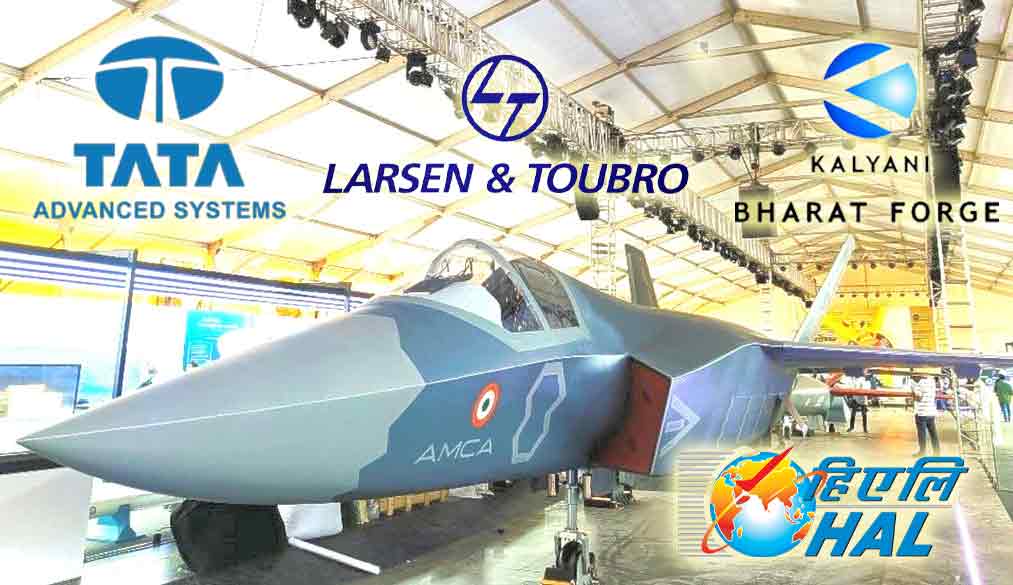

Hindustan Aeronautics Limited (HAL) is out of the ambitious AMCA (advanced medium combat aircraft) project, also known as the country’s fifth-generation stealth fighter jet. As per media reports, the government has shortlisted three private sector firms to develop and produce next-generation fighter jets, and the winner is set to be chosen in the upcoming three months. This means the state-owned aircraft manufacturer would not be participating in one of the nation’s most important defence initiatives for the first time.
According to reports, Tata Advanced Systems Limited, Larsen & Toubro and Bharat Forge Limited of the Kalyani Group have made the cut following a review of the technical bids submitted by seven consortia of public and private sector companies who submitted bids for the program last year, while others have been eliminated from consideration. The lowest bidder is anticipated to get the contract.
The trio have fulfilled the requirements and advanced to the next review step, which entails presenting cost proposals for the construction of five AMCA prototypes and one structural test specimen. HAL also joined the race with two smaller businesses, but didn’t fit the requirements, reported Hindustan Times.
Now, an Indian private firm will join hands with the Aeronautical Development Agency (ADA) to build the country’s fifth-generation fighter project. India will have two separate fighter aircraft manufacturing lines because of this pivotal event, including a private company with the AMCA and HAL with the Tejas fleet.
Why was HAL disqualified from the competition
The program’s EoI (expressions of interest) had stated that a single business, joint venture or consortium could submit an application. Interestingly, HAL chairman DK Sunil outlined that it would be extremely difficult for the company to operate alone due to the qualifying requirements and circumstances connected with the financial performance of enterprises in the EoI issued by ADA.
“There are clauses that have loaded the dice against HAL. The EoI says if a company’s order book is three times its turnover, then it will get zero marks. In HAL’s case, it is almost 8X. It means someone who has fewer orders will get more marks. I don’t know why they have done this. Still, we will go with some partnerships and pursue the project,” he mentioned while talking to the media house in 2025.
The Tejas program by HAL has seen long delays, and only now has its production been streamlined with the arrival of GE engines from the USA. It is clear that the government does not want to overburden the PSU with another large project, and wants it to concentrate on producing the Tejas Mark I and Mark II fighter planes as per schedule.
HAL’s omission, if true, will be the most prominent indication of an important shift in the country’s defence sector, as the aerospace and defence company has been the exclusive integrator of Indian military aircraft for many years, including the continuing Tejas Light Combat Aircraft program. The company also assembles the Sukhoi Su-30MKI fighter jets, apart from making several helicopters.
However, HAL has said that it has not received any communication from the DRDO on the matter. In a submission made to BSE and NSE, the company said, “Since the official communication is yet to be received from DRDO, the Company can not comment on the said news referred in the subject,” in response to the media reports.

The company added that the impact of the decision on it “can only be assessed after receipt of official communication.”
The selection process and the three contenders
The entities that sent their offers included Tata Advanced Systems Limited, Adani Defence and Aerospace, Larsen & Toubro (L&T) with Bharat Electronics Limited (BEL), Goodluck India along with BrahMos Aerospace Thiruvananthapuram Limited and Axiscades Technologies, and Bharat Forge Limited in collaboration with Bharat Earth Movers Limited (BEML) Limited and Data Patterns in addition to HAL.
The top Indian manufacturers tried to advance to the next round, which was determined by technical proficiency, manufacturing capacity, order book and financial stability. They had to illustrate their technical capability of absorbing the AMCA design in addition to having sufficient experience in development, engineering, production, equipping and testing, as well as other expertise. Businesses with a lengthy standing order book were also discouraged.
The companies prepared plans to show their ability to integrate complicated systems, use modern avionics and stealth manufacturing but only three will be able to turn in a Request for Proposal (RFP) by April 2026 because of their different approaches.
- Tata Advanced Systems Limited (TASL): It has chosen to put forward an independent offer by drawing on its broad understanding of international aerospace supply chains and alliances. This displayed a great deal of faith in its current infrastructure and its knack to provide a full-spectrum military platform without the assistance of outside consortia partners.
- Larsen & Toubro (L&T): It has forged a strong deal with Dynamatic Technologies and Bharat Electronics Limited (BEL), the state-owned electronics behemoth. This partnership offers a “holistic” airframe-and-systems solution by fusing BEL’s leadership in radar and electronic warfare systems with L&T’s background in heavy engineering and marine platforms.
- Bharat Forge: This coalition has a strategic division of tasks with Data Patterns owning 20%, BEML 30% and Bharat Forge 50% of the business. The goal is to combine specialised defensive electronics and digital systems with high-strength metallurgy and structural production.
The difficult challenge of converting early prototypes into financially feasible production plans now falls to the finalists. Moreover, they must be able to establish a manufacturing unit for the series production of AMCA. The winner is predicted to be revealed by late 2026 and must set up the jet’s entire ecosystem from final assembly and flight testing to supply chain administration and quality monitoring.
Defence Ministry’s landmark decision
The Defence Research and Development Organisation’s (DRDO) ADA asked for EoI to identify the companies that could develop prototypes, support flying tests and certify the domestic stealth fighter in June of last year and the firms had responded to the call.
The development took place merely weeks following the defence ministry’s disclosure of its hotly expected plan to expedite the production of the stealth fighter. It declared that both public and private sector enterprises would have equal opportunity under the competitive execution approach. Defence Minister Rajnath Singh’s approval of the industrial cooperation model happened when HAL, the nation’s only fighter jet maker, was believed to be the effort’s strongest contender up until that point.
A team of senior DRDO officials initially assessed the seven companies, after which a panel led by Defence Secretary Rajesh Kumar Singh reviewed the committee’s conclusions. ADA relies on an industry association to carry out the project. The EoI stipulated that the contract for development, prototyping, flight testing and certification should not last longer than eight years.
The design and prototype development, worth ₹15,000 crore, were approved by the Cabinet Committee on Security in 2024. However, the total order will be much higher after the aircraft is confirmed and ordered by the Indian Air Force. According to IAF’s modernisation plan, over 120 stealth fighters (six squadrons) will be deployed starting in 2035 to assume an extensive part in future air combat.
The number will increase dramatically as more cutting-edge varieties are created in the upcoming years. The aircraft’s production is scheduled to be finished by 2034, before it goes into production a year later. The first prototype is slated to make its first flight in 2029.
India’s aspiration for fifth-generation stealth
AMCA might be India’s largest military research and development initiative to date. It will potentially become the country’s primary aerial platform beginning in the mid-2030s. It will have the newest military technologies, such as stealth features, artificial intelligence (AI) integration, long-range targeting capabilities and joint operation with unmanned systems.
The goal is to propel India into the select group of countries that can field fifth-generation stealth aircraft, which currently consists of the United States, China and Russia. The 25-ton, twin-engine fighter will have internal weapons storage for upholding stealth profiles, a “serpentine” air intake for radar evasion and super-cruise characteristics like continuous supersonic flight without afterburners.
The Mk-1 variant with American F-414 engines shall drive the first two squadrons, while the more sophisticated Mk-2 version with an even more potent engine that will be produced in India with French aid is set to power the remaining squadrons. It will have an internal weapons bay and a diverterless supersonic intake that can carry 5,500 kilograms of external payload and 1,500 kilograms of internal payload. AMCA will also have an AI-powered electronic pilot for sophisticated decision-making.
It will also consist of an internal armament bay that would accommodate four long-range air-to-air missiles and many precision-guided munitions, along with Netcentric Warfare Systems for real-time combat coordination and Integrated Vehicle Health Management. The fighter jets will ensure smooth coordination with unmanned aerial vehicles (UAVs) and prove useful in intricate combat scenarios.
A 120-kilonewton thrust class engine fuel AMCA will be manufactured after the government authorises a joint effort between the French company Safran and DRDO’s Gas Turbine Research Establishment (GTRE). It will create nine prototypes over a 12-year period, transferring all technology and intellectual property rights to India.
The venture’s success will be a testament to the Indian private sector’s prowess in managing complex military aeronautics. The government hopes to de-risk future programs by abandoning the single-producer model, which might pave the way for the upcoming sixth-generation fighter projects.
The acceleration of the program is essential at a time when the J-20 fifth-generation fighters have already been deployed by China. It has allegedly tested two sixth-generation systems, J-36 and J-50 and is launching the J-35 stealth fighters that Pakistan wants to acquire.