Hindu faith hasn’t died in the Islamic country of Iran: Read the story behind the 134-year-old Lord Vishnu temple in Bandar Abbas
On the shores of Bandar Abbas, a historic port city in Iran, stands a quiet yet powerful symbol of faith, a 134-year-old Hindu temple dedicated to Lord Vishnu. In a country where the majority follows Islam, this temple tells a different story, one of migration, trade, belief, and cultural connection that has survived for more than a century. A story that began with sea trade Bandar Abbas has long been an important centre for trade in the Persian Gulf. For centuries, ships from India regularly arrived here, carrying goods and traders. Merchants from regions like Gujarat, Kutch, and Sindh were especially active in this trade network. Many of these Indian traders began staying in Bandar Abbas for long periods due to business. Slowly, some of them settled there. Even though they were far from home, they did not leave behind their traditions. They continued speaking their languages, celebrating festivals, and practising their religion. But living in a foreign land created a need for a place where they could gather, pray, and stay connected to their roots. This is how the idea of building a temple was born. Built in 1892, still standing strong (Photo Credits: sindhrenaissance) The temple was constructed around 1892, during a time when Bandar Abbas was growing rapidly because of trade. It was built when Mohammad Hasan Khan Saad-ol-Malek was the local administrative ruler of the region. Today, the temple is around 130 to 134 years old and still stands in much of its original form. It is not just a building, but a reflection of the life and culture of the Indian community that once lived there. Built by Indian merchants, for their faith The temple was not built by any king or government. It was the result of a collective effort by Indian traders living in the region. These merchants were financially stable and came together to fund the construction. The temple was dedicated to Lord Vishnu, who is known in Hinduism as the protector and preserver. For the Indian community, this temple became a spiritual centre, a place where they could pray, celebrate festivals, and feel at home. It also acted like a small “Little India” in Iran, where people met, shared their lives, and supported each other. A unique mix of Indian and Iranian architecture One of the most interesting things about this temple is its design. Unlike typical Indian temples, its structure shows a blend of Indian and Persian styles. The main hall of the temple is square-shaped and topped with a large dome. This dome reflects Islamic and Persian architectural influence, which makes the temple look different from traditional Hindu temples in India. Materials like coral stone, clay, lime, and mortar were used in its construction, showing the use of local resources. The dome also has small decorative elements that resemble minarets, while still keeping some Indian design touches. Inside, the walls were once decorated with colourful paintings and religious symbols. During renovation work, a painting of Lord Krishna was also discovered, showing that religious art and traditions were an important part of the temple. From a lively temple to a silent heritage site In its early days, the temple was full of life. Daily prayers, aartis, and rituals were regularly performed. Festivals like Janmashtami and Diwali were celebrated with great enthusiasm, bringing the entire Indian community together. The temple was not just a place of worship, but also a social centre where people met, discussed problems, and stayed connected. However, things began to change by the mid-20th century. Trade patterns shifted, and many Indian merchants started returning to India. As the community became smaller, activities in the temple slowly reduced. Over time, the temple stopped functioning as an active place of worship and became quiet. Today, it is preserved as a cultural and historical monument by Iran. It is now visited by tourists and people interested in history. Presence of Hindu community in Iran Iran has a population of around 90 million people, and about 99.4% of them follow Islam. Among them, nearly 89.46% are Shia Muslims and about 9.94% are Sunni Muslims. Even though the number is small, other communities like Hindus, Christians, and Jews also live in Iran. According to the Pew Research Centre, around 20,000 Hindus were living in Iran in 2010, and this number remained almost the same in 2020. Most of these Hindus are of Indian origin, traders, workers, and their families. While they are few in number, their cultural impact has been meaningful, and this temple stands as proof of that. A symbol beyond religion The Hindu temple in Bandar Abbas is more than just a religious structure. It tells a story of people who travelled far from home but kept their identity alive. It shows how culture and faith can cross borders and still survive. Even today, though it is no longer active for worship
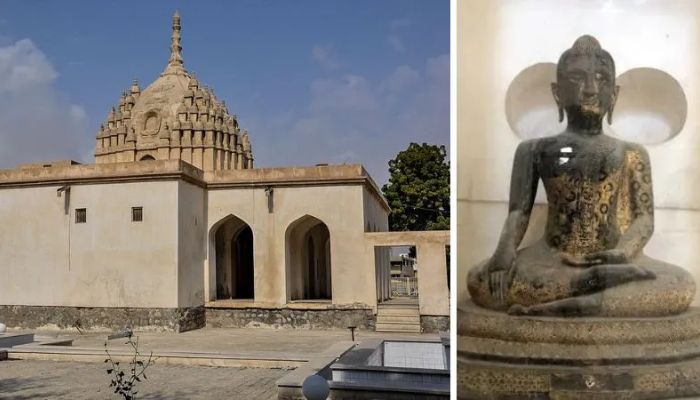
On the shores of Bandar Abbas, a historic port city in Iran, stands a quiet yet powerful symbol of faith, a 134-year-old Hindu temple dedicated to Lord Vishnu. In a country where the majority follows Islam, this temple tells a different story, one of migration, trade, belief, and cultural connection that has survived for more than a century.
A story that began with sea trade
Bandar Abbas has long been an important centre for trade in the Persian Gulf. For centuries, ships from India regularly arrived here, carrying goods and traders. Merchants from regions like Gujarat, Kutch, and Sindh were especially active in this trade network.
Many of these Indian traders began staying in Bandar Abbas for long periods due to business. Slowly, some of them settled there. Even though they were far from home, they did not leave behind their traditions. They continued speaking their languages, celebrating festivals, and practising their religion.
But living in a foreign land created a need for a place where they could gather, pray, and stay connected to their roots. This is how the idea of building a temple was born.
Built in 1892, still standing strong
(Photo Credits: sindhrenaissance)
The temple was constructed around 1892, during a time when Bandar Abbas was growing rapidly because of trade. It was built when Mohammad Hasan Khan Saad-ol-Malek was the local administrative ruler of the region.
Today, the temple is around 130 to 134 years old and still stands in much of its original form. It is not just a building, but a reflection of the life and culture of the Indian community that once lived there.
Built by Indian merchants, for their faith
The temple was not built by any king or government. It was the result of a collective effort by Indian traders living in the region. These merchants were financially stable and came together to fund the construction.
The temple was dedicated to Lord Vishnu, who is known in Hinduism as the protector and preserver. For the Indian community, this temple became a spiritual centre, a place where they could pray, celebrate festivals, and feel at home.
It also acted like a small “Little India” in Iran, where people met, shared their lives, and supported each other.
A unique mix of Indian and Iranian architecture
One of the most interesting things about this temple is its design. Unlike typical Indian temples, its structure shows a blend of Indian and Persian styles.
The main hall of the temple is square-shaped and topped with a large dome. This dome reflects Islamic and Persian architectural influence, which makes the temple look different from traditional Hindu temples in India.
Materials like coral stone, clay, lime, and mortar were used in its construction, showing the use of local resources. The dome also has small decorative elements that resemble minarets, while still keeping some Indian design touches.
Inside, the walls were once decorated with colourful paintings and religious symbols. During renovation work, a painting of Lord Krishna was also discovered, showing that religious art and traditions were an important part of the temple.
From a lively temple to a silent heritage site
In its early days, the temple was full of life. Daily prayers, aartis, and rituals were regularly performed. Festivals like Janmashtami and Diwali were celebrated with great enthusiasm, bringing the entire Indian community together.
The temple was not just a place of worship, but also a social centre where people met, discussed problems, and stayed connected.
However, things began to change by the mid-20th century. Trade patterns shifted, and many Indian merchants started returning to India. As the community became smaller, activities in the temple slowly reduced.
Over time, the temple stopped functioning as an active place of worship and became quiet. Today, it is preserved as a cultural and historical monument by Iran. It is now visited by tourists and people interested in history.
Presence of Hindu community in Iran
Iran has a population of around 90 million people, and about 99.4% of them follow Islam. Among them, nearly 89.46% are Shia Muslims and about 9.94% are Sunni Muslims.
Even though the number is small, other communities like Hindus, Christians, and Jews also live in Iran. According to the Pew Research Centre, around 20,000 Hindus were living in Iran in 2010, and this number remained almost the same in 2020.
Most of these Hindus are of Indian origin, traders, workers, and their families. While they are few in number, their cultural impact has been meaningful, and this temple stands as proof of that.
A symbol beyond religion
The Hindu temple in Bandar Abbas is more than just a religious structure. It tells a story of people who travelled far from home but kept their identity alive. It shows how culture and faith can cross borders and still survive.
Even today, though it is no longer active for worship, the temple stands as a reminder that traditions do not disappear easily. Wherever people go, they carry their beliefs with them.