Infrastructure development under Yogi Adityanath government: A leap towards developed Uttar Pradesh
Uttar Pradesh, India’s most populous state, has witnessed a remarkable transformation in recent years, transitioning from an area plagued by infrastructure constraints to a bustling hub of prosperity and opportunity. The state government, led by Chief Minister Yogi Adityanath, has prioritised infrastructure as a key component of its development program. Significant funds have been allocated to highways, airports, urban housing, industrial corridors, and digital connectivity. In addition to improving accessibility and connectedness, this emphasis has boosted employment, the economy, and the standard of living for millions of people. The unveiling of the Uttar Pradesh Budget for 2026-27 on February 11, 2026, marks a significant milestone in this journey. With an unprecedented allocation exceeding Rs 9 lakh crore, the largest in the state’s history, the budget underscores the government’s commitment to accelerating infrastructure development. During the budget’s tabling, Finance Minister Suresh Khanna emphasised how it adheres to the principle of ‘Sabka Saath, Sabka Vikas,’ guaranteeing inclusive advancement in areas such as agriculture, infrastructure, women’s welfare, and youth empowerment. Law and order improvements, infrastructural improvements, and general economic vibrancy have all contributed to the state’s 13.4% increase in Gross State Domestic Product (GSDP), which now stands at Rs 30.25 lakh crore. From bottlenecks to breakthrough In the past, Uttar Pradesh was frequently referred to as a bottleneck state because of its poor connectivity, insufficient infrastructure, and regional inequalities that impeded development. But since Yogi Adityanath took office in 2017, the state has become a breakthrough state, making noticeable progress in infrastructure, economic empowerment, and governance. Presented before the budget, the government’s first-ever Economic Survey for 2025-2026 predicts a 12% growth in GSDP of Rs 36 lakh crore, placing Uttar Pradesh among the fastest-growing economies in India. This trend is visible in the large investments received through four groundbreaking ceremonies, which totalled roughly Rs 50 lakh crore in MOUs and are expected to generate 10 lakh jobs. UP is now India’s fourth-largest startup cluster, with exports of services, especially IT and IT-enabled services, surpassing Rs 82,000 crore in 2024-2025. The state’s desire to advance toward a tech-driven future is demonstrated by initiatives like Lucknow’s AI City. A strong infrastructure architecture that has completely changed the state’s terrain supports these advancements. Roadways and Expressways: Connecting the heartland The development of road networks is among the most obvious signs of advancement under the Yogi administration. With 22 expressways in operation, proposed, or under construction, the state has emerged as a major centre for national highways. Seven of them are already operational, significantly cutting down on travel times and increasing trade. By connecting the eastern and southern regions, for example, the Purvanchal and Bundelkhand expressways have promoted balanced growth and reduced regional disparities. The government completed the construction of 161 roads totalling 1,410 km and connected the headquarters of 168 development blocks with double-lane roads. Almost 28,000 km of roads have already been renovated toward the goal of strengthening 46,600 km by 2025-2026. The administration’s emphasis on connectivity and job creation is further supported by the substantial funding of 34,468 crores allotted for highways, bridges, and expansion projects in the 2026-2027 budget. By increasing access to markets, healthcare, and education, these programs have not only improved logistics but also boosted rural economies. Airports and Aviation: Soaring to new heights The aviation sector in Uttar Pradesh has grown rapidly, which is consistent with the goal of establishing the state as a logistics powerhouse. Five international airports are among the 24 the government hopes to establish. With projects like the Jewar International Greenfield Airport slated to develop into a significant cargo and logistics gateway for North India, there are now 16 airports in operation. By drawing in investors and tourists, this growth has established UP as a major participant in India’s aviation landscape. In order to boost development and enhance essential services, the budget places a strong emphasis on bolstering infrastructure, particularly airports, by allotting 2,111 crore rupees. Increased air connectivity has benefited industries, including manufacturing and tourism, which has led to a rise in employment and economic activity. Urban development and housing: Building sustainable cities With programs like the Pradhan Mantri Awas Yojana (PMAY) delivering over 3.637 million homes in rural areas, urban infrastructure has been prioritised. Smart city initiatives in Varanasi, Lucknow, and other urb
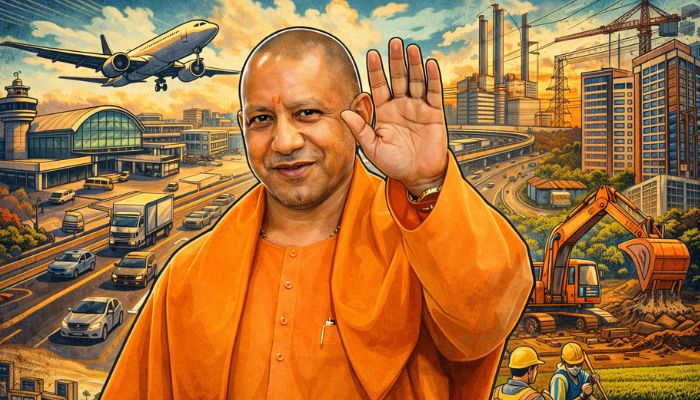

Uttar Pradesh, India’s most populous state, has witnessed a remarkable transformation in recent years, transitioning from an area plagued by infrastructure constraints to a bustling hub of prosperity and opportunity. The state government, led by Chief Minister Yogi Adityanath, has prioritised infrastructure as a key component of its development program. Significant funds have been allocated to highways, airports, urban housing, industrial corridors, and digital connectivity. In addition to improving accessibility and connectedness, this emphasis has boosted employment, the economy, and the standard of living for millions of people.
The unveiling of the Uttar Pradesh Budget for 2026-27 on February 11, 2026, marks a significant milestone in this journey. With an unprecedented allocation exceeding Rs 9 lakh crore, the largest in the state’s history, the budget underscores the government’s commitment to accelerating infrastructure development. During the budget’s tabling, Finance Minister Suresh Khanna emphasised how it adheres to the principle of ‘Sabka Saath, Sabka Vikas,’ guaranteeing inclusive advancement in areas such as agriculture, infrastructure, women’s welfare, and youth empowerment. Law and order improvements, infrastructural improvements, and general economic vibrancy have all contributed to the state’s 13.4% increase in Gross State Domestic Product (GSDP), which now stands at Rs 30.25 lakh crore.
From bottlenecks to breakthrough
In the past, Uttar Pradesh was frequently referred to as a bottleneck state because of its poor connectivity, insufficient infrastructure, and regional inequalities that impeded development. But since Yogi Adityanath took office in 2017, the state has become a breakthrough state, making noticeable progress in infrastructure, economic empowerment, and governance. Presented before the budget, the government’s first-ever Economic Survey for 2025-2026 predicts a 12% growth in GSDP of Rs 36 lakh crore, placing Uttar Pradesh among the fastest-growing economies in India.
This trend is visible in the large investments received through four groundbreaking ceremonies, which totalled roughly Rs 50 lakh crore in MOUs and are expected to generate 10 lakh jobs. UP is now India’s fourth-largest startup cluster, with exports of services, especially IT and IT-enabled services, surpassing Rs 82,000 crore in 2024-2025. The state’s desire to advance toward a tech-driven future is demonstrated by initiatives like Lucknow’s AI City. A strong infrastructure architecture that has completely changed the state’s terrain supports these advancements.
Roadways and Expressways: Connecting the heartland
The development of road networks is among the most obvious signs of advancement under the Yogi administration. With 22 expressways in operation, proposed, or under construction, the state has emerged as a major centre for national highways. Seven of them are already operational, significantly cutting down on travel times and increasing trade. By connecting the eastern and southern regions, for example, the Purvanchal and Bundelkhand expressways have promoted balanced growth and reduced regional disparities.
The government completed the construction of 161 roads totalling 1,410 km and connected the headquarters of 168 development blocks with double-lane roads. Almost 28,000 km of roads have already been renovated toward the goal of strengthening 46,600 km by 2025-2026. The administration’s emphasis on connectivity and job creation is further supported by the substantial funding of 34,468 crores allotted for highways, bridges, and expansion projects in the 2026-2027 budget. By increasing access to markets, healthcare, and education, these programs have not only improved logistics but also boosted rural economies.
Airports and Aviation: Soaring to new heights
The aviation sector in Uttar Pradesh has grown rapidly, which is consistent with the goal of establishing the state as a logistics powerhouse. Five international airports are among the 24 the government hopes to establish. With projects like the Jewar International Greenfield Airport slated to develop into a significant cargo and logistics gateway for North India, there are now 16 airports in operation.
By drawing in investors and tourists, this growth has established UP as a major participant in India’s aviation landscape. In order to boost development and enhance essential services, the budget places a strong emphasis on bolstering infrastructure, particularly airports, by allotting 2,111 crore rupees. Increased air connectivity has benefited industries, including manufacturing and tourism, which has led to a rise in employment and economic activity.
Urban development and housing: Building sustainable cities
With programs like the Pradhan Mantri Awas Yojana (PMAY) delivering over 3.637 million homes in rural areas, urban infrastructure has been prioritised. Smart city initiatives in Varanasi, Lucknow, and other urban areas have combined traditional legacy with contemporary conveniences. The government has prioritised sanitation, energy, and water delivery while guaranteeing fair access.
In order to reduce disparities in areas like Purvanchal and Bundelkhand, the 2026-2027 budget includes funding for housing and urban growth. Urban congestion has been reduced, and sustainable transportation has been encouraged by investments in metro rail systems, such as the Lucknow Metro and future developments in Kanpur and Agra. Cities are becoming thriving economic hubs thanks to these initiatives, drawing in international investors.
Industrial corridors and specialised hubs: Fostering innovation and growth
The establishment of specialised industrial hubs is part of the Yogi government’s strategic plan. Kanpur is being positioned as a drone manufacturing hub, Noida as an IT and electronics base, and Lucknow as an AI powerhouse. Manufacturing has been anchored by the Defence Industrial Corridor, which has also attracted investments and produced highly skilled jobs.
Intrastate logistics have changed as a result of seven expressways and specialised freight lanes, fostering the expansion of industry. By completing ongoing projects and introducing new ones, the budget’s emphasis on infrastructure will increase the state’s allure as a place to invest. Leading textile and electronics businesses are drawn to Uttar Pradesh, which ranks second in terms of ease of doing business.
Water, electricity and basic services: Ensuring Inclusivity
The Yogi government has been known for providing dependable access to essential services. Power cuts have decreased as a result of significant expenditures in electricity infrastructure, and rural electrification has nearly reached universal coverage. Millions of people have had access to safe drinking water because of water delivery programs like the Har Ghar Nal effort.
Millions of people have access to clean drinking water thanks to the Jal Jeevan Mission’s flagship Har Ghar Nal effort. The central government has committed ₹71,221 crore, of which ₹38,456 crore has already been released, and the state has approved 40,955 drinking water projects valued at ₹1,53,876 crore. It is anticipated that the remaining ₹33,300 crore will expedite construction and guarantee tap water connections in rural communities. The state has requested ₹6,000 crore in central help for water conservation initiatives, including the revitalisation of 60,000 ponds and grey/black water management projects, which are also supported by the budget.
The government’s objective of a dependable power supply has been in line with the notable growth of the electricity infrastructure. In support of green energy objectives, the state has installed 2,815 MW of solar power installations. Nearly all rural areas have been electrified, which powers economic activity and lowers outages. In order to guarantee power availability around the clock, the budget’s emphasis on capital investment supports continuous improvements like smart metering and grid modernisation, which have increased industrial output and improved consumer welfare.
With new hospitals and medical schools opening up in various districts, healthcare and family planning have also been strengthened. The 37,956 crores allotted to healthcare and family planning pays for expanded primary healthcare services, hostels for female medical college students, and emergency and trauma clinics in each district hospital. In addition to it, AAYUSH has been allotted 2,867 crores. These initiatives have been supplemented by Swachh Bharat sanitation drives, which guarantee hygienic living conditions. With inclusive programs that focus on women, youth, and farmers and uphold the Sabka Saath, Sabka Vikas philosophy, these investments have helped millions of people escape poverty.
Digital infrastructure: Embracing the future
By utilising technology for innovation, economic growth, and governance, the Yogi administration has established Uttar Pradesh as a digital powerhouse. This trend is maintained in the 2026-2027 budget, which supports the state’s goal of becoming a trillion-dollar economy through investments in IT ecosystems and digital connectivity.
Increased broadband adoption has made it possible for e-governance programs to be implemented, which expedite services like online property records, bill payments, and public complaints. With intentions to draw in tech investments and support entrepreneurs, Lucknow’s AI City project is a prime example of forward thinking. With exports of IT and IT-enabled services surpassing ₹82,000 crore in 2024-2025, Uttar Pradesh is now India’s fourth-largest startup cluster. As part of the larger 19.5% capital spending (about ₹1.78 lakh crore total capex), the budget allots funding for updating MSME digital capabilities and purchasing new technologies.
UP is positioned as a digital hub thanks to data centres with a 700 MW capacity that are either under development or already operating and cost over ₹22,000 crore. While skill development centres operating under the PPP approach will teach youths digital skills, the Digital Entrepreneurship Scheme seeks to foster innovation. In addition to generating highly skilled jobs in cutting-edge industries like artificial intelligence and cloud computing, these initiatives have revolutionised administration by decreasing corruption and increasing efficiency.
Economic impact and employment generation
Uttar Pradesh’s economy has doubled from ₹12-15 lakh crore to ₹30.25 lakh crore in eight years, thanks to Yogi Adityanath’s infrastructure-led growth, and its GSDP is expected to reach ₹36 lakh crore at a 12% growth rate in 2025-2026. With a 19.5% capital expenditure and a ₹9.13 lakh crore outlay, the 2026-2027 budget is expected to maintain this trend by prioritising infrastructure and jobs.
While skill-building initiatives focus on young employment, the Uttar Pradesh Skill Development Mission will increase opportunities both domestically and abroad. With 96 lakh businesses sustaining 3 crore lives, MSMEs profit from central grants. This has been supplemented by welfare and poverty alleviation programs, which have boosted rural economies and decreased deprivation.
A roadmap to self-reliance
The Yogi government’s plan for Uttar Pradesh places a strong emphasis on balanced development and rapid infrastructure in order to promote self-reliance. With sizeable allotments for finishing off ongoing initiatives and starting new ones, the 2026-2027 budget offers a starting point.
With an emphasis on Purvanchal and Bundelkhand via highways and industrial corridors, regional balance is crucial. Voter-friendly policies in the budget, such as ₹10,000 crore for MSMEs and skill centres, are intended to promote innovation and create jobs. These plans offer long-term prosperity and a key role in India’s development by 2047, as UP aims to achieve a trillion-dollar economy.