Islamabad’s double game exposed: ‘Mediator’ Pakistan allowed Iran to park military aircraft at Nur Khan Airbase to shield them from US attacks. Here’s what happened
Treachery, deception and double-dealing are the core characteristics of Pakistan. In a fresh demonstration of its true nature, Pakistan reportedly allowed Iranian military aircraft to park in its airbases while playing a ‘mediator’ between the warring nations of Iran and the US. A CBS News report has cited US officials privy to the matter, to say that Pakistan allowed Iranian military aircraft to be parked in its airfields to shield them from American attacks. “Together, the movements reflected an apparent effort to insulate some of Iran’s remaining military and aviation assets from the expanding conflict, even as officials publicly served as brokers for de-escalation,” the CBS News report published on 11th May reads. Interestingly, Iran moved its military aircraft, including an Iranian Air Force RC-130, a reconnaissance and intelligence-gathering variant of the Lockheed C-130 Hercules tactical transport aircraft, days after Trump announced a ceasefire in April this year. The Iranian aircraft were parked at Pakistan’s Nur Khan Airbase, which was severely damaged during Operation Sindoor in May 2025. ‘No contingency arrangement’: Pakistan denies the presence of Iranian military aircraft at Nur Khan Airbase Soon after the publication of the CBS News report raising questions over Pakistan’s neutrality as a ‘conduit’ between Iran and the US, an online backlash followed. Several netizens, particularly Americans, called out Pakistan for playing ‘peacemaker’ at the front while treacherously safeguarding Iranian military assets from behind. Amidst mounting criticism, Pakistan’s Ministry of Foreign Affairs issued a statement on 12th May, “categorically” rejecting the CBS report, which cited US officials to claim that Islamabad allowed Tehran to move its military aircraft to Nur Khan Airbase to shield them from American strikes. “Pakistan categorically rejects the CBS News report regarding the presence of Iranian aircraft at Nur Khan Airbase as misleading and sensationalised due to speculative narratives that appear aimed at undermining ongoing efforts for regional stability and peace,” the statement reads. PR No.1⃣1⃣6⃣/2⃣0⃣2⃣6⃣Official Response to CBS Report on Iranian Aircraft in Pakistan pic.twitter.com/ZqJw28nNaK— Ministry of Foreign Affairs – Pakistan (@ForeignOfficePk) May 12, 2026 Pakistan claimed that several Iranian and American aircraft arrived in Pakistan during ‘peace’ talks held in Islamabad to facilitate the movement of diplomatic personnel, security and administrative staff. While US officials cited by the CBS News report said that the movement of civilian and military assets to Pakistan was part of Iran’s attempt to insulate some of its remaining military and aviation assets from potential American and Israeli attacks, Islamabad claims that the Iranian aircraft parked in Pakistan has no links to any military contingency efforts. “The Iranian aircraft currently parked in Pakistan arrived during the ceasefire period and bears no linkage whatsoever to any military contingency or preservation arrangement. Assertions suggesting otherwise are speculative, misleading, and entirely detached from the factual context,” it added. Lindsay Graham seeks reevaluation of Pakistan’s role as a ‘mediator’ over news report about Islamabad granting refuge to Iranian military assets U.S. Senator Lindsay Graham published a post on X and sought a “complete reevaluation” of Pakistan’s role as a mediator between Iran, the US and Israel. “If this reporting is accurate, it would require a complete reevaluation of the role Pakistan is playing as mediator between Iran, the United States and other parties. Given some of the prior statements by Pakistani defence officials towards Israel, I would not be shocked if this were true,” Graham wrote. Islamabad prioritised American interests during the Islamabad Talks on one hand, and provided refuge to Iranian military aircraft on the other: Pakistan is not a ‘peacemaker’ but a clout chaser. Deceit comes naturally to Pakistan. No country knows this better than India, which has long been a victim of Pakistan’s two-facedness. On one hand, Pakistan granted refuge to Iranian military aircraft, though it denies involvement in any military contingency arrangement (no ‘mediator’ country would openly accept that), on the other, Islamabad always prioritised US President Donald Trump’s demands during peace talks. This accusation came not from American media or any country hostile towards Pakistan, but from Dashtestan representative and spokesperson for Iran’s national security and foreign policy commission, Ebrahim Rezaei. On 26th April, Rezaei wrote an X wherein he said that Pakistan lacks the necessary credibility to play a mediator between Iran and the US since it “always takes Trump’s interests into account and does not say a word against the Americans’ wishes.” He said that Pakistan deliberately withheld the “truth” that the US
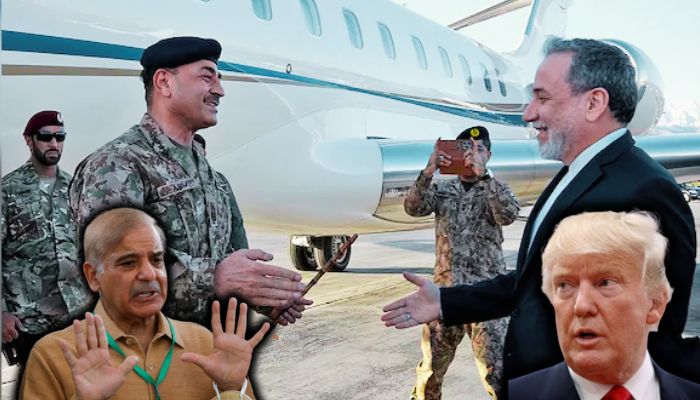
Treachery, deception and double-dealing are the core characteristics of Pakistan. In a fresh demonstration of its true nature, Pakistan reportedly allowed Iranian military aircraft to park in its airbases while playing a ‘mediator’ between the warring nations of Iran and the US. A CBS News report has cited US officials privy to the matter, to say that Pakistan allowed Iranian military aircraft to be parked in its airfields to shield them from American attacks.
“Together, the movements reflected an apparent effort to insulate some of Iran’s remaining military and aviation assets from the expanding conflict, even as officials publicly served as brokers for de-escalation,” the CBS News report published on 11th May reads.
Interestingly, Iran moved its military aircraft, including an Iranian Air Force RC-130, a reconnaissance and intelligence-gathering variant of the Lockheed C-130 Hercules tactical transport aircraft, days after Trump announced a ceasefire in April this year.
The Iranian aircraft were parked at Pakistan’s Nur Khan Airbase, which was severely damaged during Operation Sindoor in May 2025.
‘No contingency arrangement’: Pakistan denies the presence of Iranian military aircraft at Nur Khan Airbase
Soon after the publication of the CBS News report raising questions over Pakistan’s neutrality as a ‘conduit’ between Iran and the US, an online backlash followed. Several netizens, particularly Americans, called out Pakistan for playing ‘peacemaker’ at the front while treacherously safeguarding Iranian military assets from behind.
Amidst mounting criticism, Pakistan’s Ministry of Foreign Affairs issued a statement on 12th May, “categorically” rejecting the CBS report, which cited US officials to claim that Islamabad allowed Tehran to move its military aircraft to Nur Khan Airbase to shield them from American strikes.
“Pakistan categorically rejects the CBS News report regarding the presence of Iranian aircraft at Nur Khan Airbase as misleading and sensationalised due to speculative narratives that appear aimed at undermining ongoing efforts for regional stability and peace,” the statement reads.
PR No.1⃣1⃣6⃣/2⃣0⃣2⃣6⃣Official Response to CBS Report on Iranian Aircraft in Pakistan pic.twitter.com/ZqJw28nNaK— Ministry of Foreign Affairs – Pakistan (@ForeignOfficePk) May 12, 2026
Pakistan claimed that several Iranian and American aircraft arrived in Pakistan during ‘peace’ talks held in Islamabad to facilitate the movement of diplomatic personnel, security and administrative staff.
While US officials cited by the CBS News report said that the movement of civilian and military assets to Pakistan was part of Iran’s attempt to insulate some of its remaining military and aviation assets from potential American and Israeli attacks, Islamabad claims that the Iranian aircraft parked in Pakistan has no links to any military contingency efforts.
“The Iranian aircraft currently parked in Pakistan arrived during the ceasefire period and bears no linkage whatsoever to any military contingency or preservation arrangement. Assertions suggesting otherwise are speculative, misleading, and entirely detached from the factual context,” it added.
Lindsay Graham seeks reevaluation of Pakistan’s role as a ‘mediator’ over news report about Islamabad granting refuge to Iranian military assets
U.S. Senator Lindsay Graham published a post on X and sought a “complete reevaluation” of Pakistan’s role as a mediator between Iran, the US and Israel.
“If this reporting is accurate, it would require a complete reevaluation of the role Pakistan is playing as mediator between Iran, the United States and other parties. Given some of the prior statements by Pakistani defence officials towards Israel, I would not be shocked if this were true,” Graham wrote.
Islamabad prioritised American interests during the Islamabad Talks on one hand, and provided refuge to Iranian military aircraft on the other: Pakistan is not a ‘peacemaker’ but a clout chaser.
Deceit comes naturally to Pakistan. No country knows this better than India, which has long been a victim of Pakistan’s two-facedness. On one hand, Pakistan granted refuge to Iranian military aircraft, though it denies involvement in any military contingency arrangement (no ‘mediator’ country would openly accept that), on the other, Islamabad always prioritised US President Donald Trump’s demands during peace talks.
This accusation came not from American media or any country hostile towards Pakistan, but from Dashtestan representative and spokesperson for Iran’s national security and foreign policy commission, Ebrahim Rezaei.
On 26th April, Rezaei wrote an X wherein he said that Pakistan lacks the necessary credibility to play a mediator between Iran and the US since it “always takes Trump’s interests into account and does not say a word against the Americans’ wishes.”
He said that Pakistan deliberately withheld the “truth” that the US had initially accepted Iran’s 10-point proposal that included cessation of Israeli hostilities in Lebanon and defreezing of Iranian assets, but backtracked later.
Rezaei posted, “Pakistan is a good friend and neighbour of ours, but it is not a suitable intermediary for negotiations and lacks the necessary credibility for mediation. They always take Trump’s interests into account and do not say a word against the Americans’ wishes. For example, they are unwilling to tell the world that America first accepted Pakistan’s proposal but then went back on its word. They do not say that the Americans had commitments regarding the issue of Lebanon or the blocked assets, but failed to fulfil them. A mediator must be impartial, not always leaning to one side.”
The American influence on the self-declared ‘impartial’ mediator,r Pakistan, was evident when a draft version of his ceasefire announcement post on X briefly appeared online, clearly marked with the line, “Draft – Pakistan’s PM Message on X,” just minutes before the final version was published on Tuesday, 7th April.
Minutes later, a fresh post without “Draft – Pakistan’s PM Message on X” was published on X. However, Pakistan’s impartiality and seriousness as a mediator had already come under question, followed by mockery from Americans, Iranians and the world alike.
Ever since the April 8 ceasefire, Pakistan has been boasting of securing a ‘diplomatic win’, a rare occasion when Islamabad received global attention not for Islamic terrorism but for ‘peace-making’.
In fact, Pakistan’s role in the mere routing of Iran and the US’s peace proposals was also mired in controversy in April this year. While US President Donald Trump announced a temporary ceasefire after receiving Iran’s 10-point proposal, American officials later clarified that key elements such as acceptance of uranium enrichment and inclusion of Lebanon were never agreed upon.
It was reported that the Farsi version of the 10-point ceasefire proposal Iran put forth contained the phrase “acceptance of uranium enrichment” for its nuclear program. This key point was reportedly missing in the English version of the document routed through Pakistan to the US.
The Farsi and English versions of Iran’s 10-point plan, widely reported in the media, made explicit mention of Lebanon, stating: “Cessation of hostilities across all fronts, including Israel’s conflict with Hezbollah in Lebanon as well as attacks on ‘Axis of Resistance’ allies.”
This was also mentioned by Pakistan’s Prime Minister Shehbaz Sharif in his post on X, as he wrote, “I am pleased to announce that the Islamic Republic of Iran and the United States of America, along with their allies, have agreed to an immediate ceasefire everywhere, including Lebanon and elsewhere, EFFECTIVE IMMEDIATELY.”
While Pakistan had announced that the ceasefire applies to Lebanon as well, the Israeli PMO refuted Pakistan’s claim.
Pakistan claims to be an impartial mediator, and yet it was seen how Pakistani Defence Minister Khwaja Asif posted a highly inflammatory X post against Israel, which is a party in the Iran war, ahead of the Islamabad talks.
Asif referred to the country as “evil,” “curse for humanity”, and “cancerous” as well as lashed out at those who created it to “get rid of European Jews” to “burn in hell”.
“Israel is evil and a curse for humanity, while peace talks are underway in Islamabad, genocide is being committed in Lebanon. Innocent citizens are being killed by Israel, first in Gaza, then in Iran and now in Lebanon; bloodletting continues unabated. I hope and pray people who created this cancerous state on Palestinian land to get rid of European Jews, burn in hell,” he wrote.
He was forced to delete the post after the severe backlash. Israeli authorities had also strongly reacted against Khwaja Asif’s online vitriol. The Israeli PMO had directly raised questions over Pakistan’s role as a ‘neutral arbiter for peace’ when its top leader harbours such deep-rooted hatred for Israel.
Towards the end of April, Pakistan further showed its true colours and opened six trade routes to Iran, offering a major workaround to the naval blockade in the Strait of Hormuz ordered by Donald Trump. Ever since Trump announced a counterblockade of the Strait of Hormuz, US naval action in the Strait of Hormuz has choked Iran’s sea trade, targeting ships linked to Iranian ports and restricting both exports and imports. The blockade disrupted a key global shipping lane that usually carries around 20% of the world’s oil.
Trump’s whole idea of a counterblockade was to dry out Iran’s revenues and stop oil exports. It was reported by Kpler that Iran exported around 1.84 million barrels of crude a day in March this year, which is about 100,000 barrels a day extra, compared to the last three months.
If, with Pakistan’s assistance, Iran can find alternate transit routes and bypass US-imposed disruptions, then the US’s counterblockade is as futile as Islamabad’s talks were. This is because if Iran continues to bring in revenues and sustain its distraught economy, why would it succumb to American demands?
If the context is ignored, what Pakistan did was a smart trade facilitation, as it managed to clear thousands of stranded containers and bolster the China-Pakistan Economic Corridor’s westward reach into Central Asia.
However, what sort of a mediator seeking quick and lasting peace between two warring nations exploits the crisis for its own benefit. Is Pakistan even a mediator when it is playing from both sides, giving refuge to Iranian military assets while pushing American demands in talks? Pakistan is not a mediator or peacemaker but a beneficiary of the Iran war. Islamabad has got an economic lifeline by securing billions of dollars in loans from Saudi Arabia amidst the looming threat of the resumption of the war in West Asia.
With such a mediator, it is not surprising that peace in West Asia remains fragile. It appears that Pakistan is trying to keep the ‘peace’ process alive while delivering nothing much. For Pakistan, mediation is not about securing a peace agreement between Iran and the US but about milking the opportunity to gain clout and make gains from both the warring nations, giving some concessions to each