Mamata Banerjee’s undignified rejection of electoral defeat and brazen insult to Bengal’s public mandate exposes the real face of fascism that the Left always pretended to oppose
For years, India’s political discourse has been dominated by one accusation hurled repeatedly at Prime Minister Narendra Modi and the BJP by the Congress-Left ecosystem: fascism. Every electoral victory of the BJP was portrayed as a “threat to democracy”, every assertion of state authority was painted as authoritarianism, and every attempt to enforce political accountability was equated with the rise of dictatorship. Yet, when genuine displays of authoritarian behaviour emerge from leaders aligned with the anti-BJP camp, the same ecosystem suddenly discovers the virtues of silence, nuance, and selective outrage. The conduct of outgoing West Bengal Chief Minister Mamata Banerjee following the BJP’s landslide victory in the 2026 Bengal Assembly elections is perhaps the clearest demonstration yet of this hypocrisy. Mamata Banerjee’s “stolen mandate” rhetoric mirrors Donald Trump’s post-2020 playbook The BJP’s victory in Bengal was decisive and emphatic. With 207 seats in the 294-member assembly, the electorate delivered an unmistakable verdict against the Trinamool Congress and ended Mamata Banerjee’s 15-year reign over the state. In any functioning democracy, such a result would have compelled an outgoing chief minister to concede defeat gracefully, congratulate the winning side, and facilitate a smooth constitutional transition. Instead, Mamata Banerjee chose confrontation over constitutional propriety. At her press conference on May 5, Banerjee struck a defiant tone and declared that she would not resign because she did not “believe” that her party had lost the election. She further alleged that the Election Commission worked at the behest of the BJP and implied that the electoral process itself had been compromised. Predictably, no substantial evidence accompanied these allegations. The parallels with Donald Trump and the aftermath of the 2020 US Presidential election are impossible to ignore. Following his defeat to Joe Biden, Trump repeatedly claimed that the election had been “stolen” by Democrats through institutional manipulation and voter fraud. Despite courts rejecting those claims and officials finding no evidence of widespread fraud capable of overturning the result, Trump continued fuelling suspicion among his supporters. Critics and media observers argued that this relentless narrative helped convince a significant section of his voter base that he had been denied power through collusion between the Democratic Party and the American establishment. Four years later, Trump returned politically stronger, powered by a support base that believed he had been wronged. Mamata Banerjee appears to be attempting a similar political script in Bengal. Her refusal to accept the verdict is not merely a political denial. It is an attempt to delegitimise democratic institutions when those institutions produce an outcome unfavourable to her party. The message being sent to TMC workers is dangerous and unmistakable: the BJP did not truly win, the Election Commission cannot be trusted, and therefore the transfer of power lacks moral legitimacy. The Congress-Left ecosystem’s selective outrage over “fascism” This is precisely how genuinely authoritarian political movements behave. Ironically, these are the same behavioural patterns that the Left-liberal ecosystem has spent a decade attributing to Modi and the BJP without evidence. Yet when Mamata Banerjee openly questions the legitimacy of a democratic verdict and signals reluctance to vacate office, the outrage is either muted or absent. That silence is not accidental. Mamata Banerjee represents a political tendency that much of the Left ecosystem is unwilling to criticise because she occupies the same anti-BJP ideological camp. Her authoritarian tendencies, political violence, and institutional subversion have long been tolerated because she serves as a counterweight to Modi politically. This is why Bengal’s record of post-poll violence rarely receives the scrutiny it deserves from the same commentators who routinely speak about democratic backsliding elsewhere. Bengal’s long record of political violence is conveniently ignored The aftermath of the 2021 Bengal Assembly elections should have permanently shattered the moral pretensions of the so-called secular-progressive ecosystem. Reports emerged of systematic attacks on BJP workers and their families. Several Hindu women and female relatives of BJP supporters allegedly faced abduction, sexual assault, and gang rape. Entire localities witnessed targeted violence. Families fled villages in fear. Yet these stories never received sustained national outrage from the same media establishment that amplifies every allegation against BJP-ruled states. There were no prime-time morality lectures every evening. No coordinated celebrity activism. No sustained international concern about democratic collapse in Bengal. The victims simply did not fit the preferred polit
For years, India’s political discourse has been dominated by one accusation hurled repeatedly at Prime Minister Narendra Modi and the BJP by the Congress-Left ecosystem: fascism. Every electoral victory of the BJP was portrayed as a “threat to democracy”, every assertion of state authority was painted as authoritarianism, and every attempt to enforce political accountability was equated with the rise of dictatorship. Yet, when genuine displays of authoritarian behaviour emerge from leaders aligned with the anti-BJP camp, the same ecosystem suddenly discovers the virtues of silence, nuance, and selective outrage.
The conduct of outgoing West Bengal Chief Minister Mamata Banerjee following the BJP’s landslide victory in the 2026 Bengal Assembly elections is perhaps the clearest demonstration yet of this hypocrisy.
Mamata Banerjee’s “stolen mandate” rhetoric mirrors Donald Trump’s post-2020 playbook
The BJP’s victory in Bengal was decisive and emphatic. With 207 seats in the 294-member assembly, the electorate delivered an unmistakable verdict against the Trinamool Congress and ended Mamata Banerjee’s 15-year reign over the state. In any functioning democracy, such a result would have compelled an outgoing chief minister to concede defeat gracefully, congratulate the winning side, and facilitate a smooth constitutional transition.
Instead, Mamata Banerjee chose confrontation over constitutional propriety.
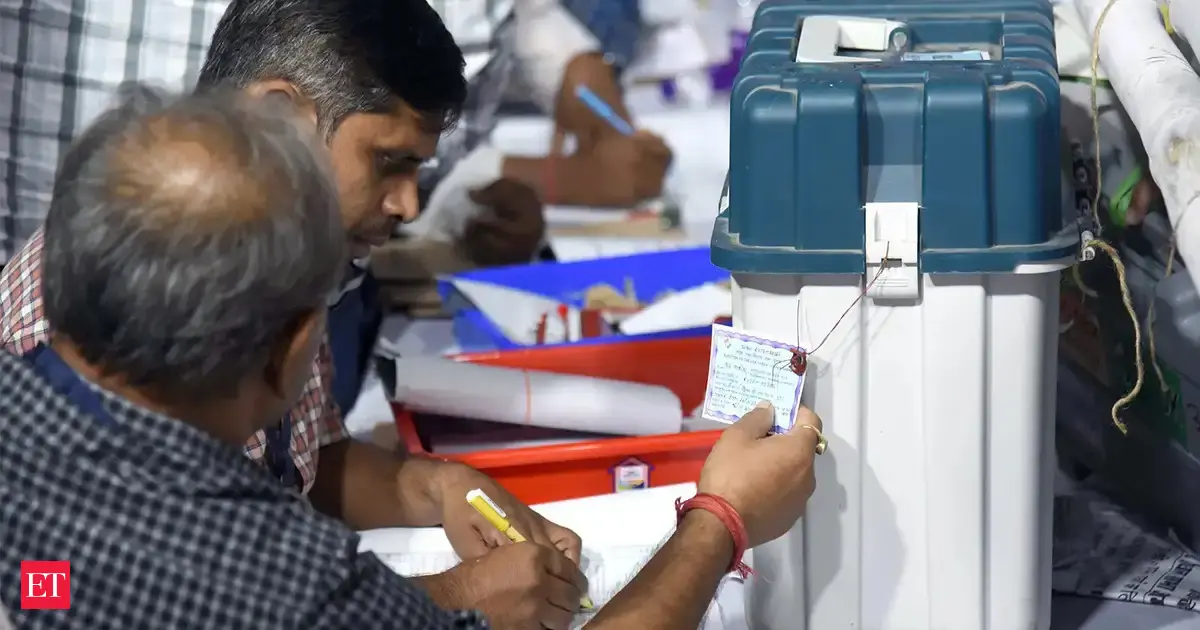
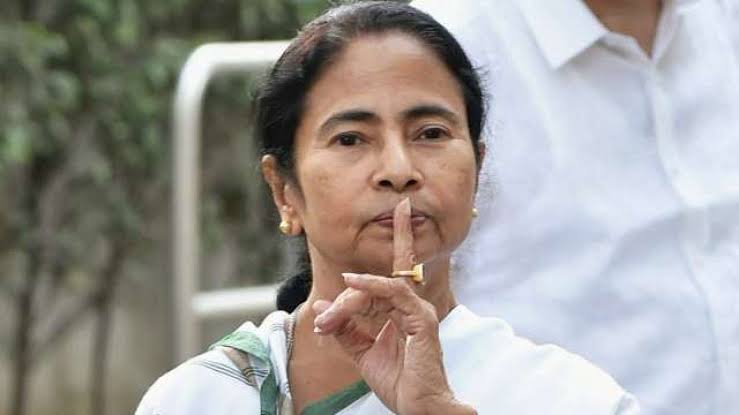
At her press conference on May 5, Banerjee struck a defiant tone and declared that she would not resign because she did not “believe” that her party had lost the election. She further alleged that the Election Commission worked at the behest of the BJP and implied that the electoral process itself had been compromised. Predictably, no substantial evidence accompanied these allegations.
The parallels with Donald Trump and the aftermath of the 2020 US Presidential election are impossible to ignore.
Following his defeat to Joe Biden, Trump repeatedly claimed that the election had been “stolen” by Democrats through institutional manipulation and voter fraud. Despite courts rejecting those claims and officials finding no evidence of widespread fraud capable of overturning the result, Trump continued fuelling suspicion among his supporters. Critics and media observers argued that this relentless narrative helped convince a significant section of his voter base that he had been denied power through collusion between the Democratic Party and the American establishment.
Four years later, Trump returned politically stronger, powered by a support base that believed he had been wronged.
Mamata Banerjee appears to be attempting a similar political script in Bengal.
Her refusal to accept the verdict is not merely a political denial. It is an attempt to delegitimise democratic institutions when those institutions produce an outcome unfavourable to her party. The message being sent to TMC workers is dangerous and unmistakable: the BJP did not truly win, the Election Commission cannot be trusted, and therefore the transfer of power lacks moral legitimacy.
The Congress-Left ecosystem’s selective outrage over “fascism”
This is precisely how genuinely authoritarian political movements behave.
Ironically, these are the same behavioural patterns that the Left-liberal ecosystem has spent a decade attributing to Modi and the BJP without evidence. Yet when Mamata Banerjee openly questions the legitimacy of a democratic verdict and signals reluctance to vacate office, the outrage is either muted or absent.
That silence is not accidental.
Mamata Banerjee represents a political tendency that much of the Left ecosystem is unwilling to criticise because she occupies the same anti-BJP ideological camp. Her authoritarian tendencies, political violence, and institutional subversion have long been tolerated because she serves as a counterweight to Modi politically.
This is why Bengal’s record of post-poll violence rarely receives the scrutiny it deserves from the same commentators who routinely speak about democratic backsliding elsewhere.
Bengal’s long record of political violence is conveniently ignored
The aftermath of the 2021 Bengal Assembly elections should have permanently shattered the moral pretensions of the so-called secular-progressive ecosystem. Reports emerged of systematic attacks on BJP workers and their families. Several Hindu women and female relatives of BJP supporters allegedly faced abduction, sexual assault, and gang rape. Entire localities witnessed targeted violence. Families fled villages in fear.
Yet these stories never received sustained national outrage from the same media establishment that amplifies every allegation against BJP-ruled states. There were no prime-time morality lectures every evening. No coordinated celebrity activism. No sustained international concern about democratic collapse in Bengal.
The victims simply did not fit the preferred political narrative.
The same pattern was visible in Sandeshkhali, where women came forward with disturbing allegations against a TMC strongman and his network. The allegations involved land grabbing, intimidation, sexual exploitation, and terror carried out under political protection. Yet even such horrifying testimonies failed to trigger the kind of moral panic the Left ecosystem routinely manufactures over far smaller allegations elsewhere.
Then came the Murshidabad riots, where attempts were allegedly made in sections of the commentary space to invert victimhood itself, portraying aggressors as victims and victims as aggressors in service of ideological convenience.
None of this is surprising when viewed through the lens of Mamata Banerjee’s political conduct over the years.
Constitutional morality requires defeated leaders to step aside
A leader who repeatedly demonstrates contempt for institutional accountability eventually creates a political ecosystem in which party workers come to believe they are above constitutional limits. Political violence becomes normalised. Administrative neutrality collapses. State machinery begins functioning as an extension of partisan interests.
Her refusal to accept electoral defeat is therefore not an isolated emotional reaction. It is a culmination of a political culture that has steadily undermined democratic norms in Bengal.
The Indian Constitution, as envisioned by B. R. Ambedkar, was never merely a legal document. It depended fundamentally upon constitutional morality, the willingness of political actors to respect democratic verdicts, institutional processes, and peaceful transfers of power, even when outcomes are personally humiliating.
That moral framework requires defeated leaders to step aside.
Mamata Banerjee’s refusal to do so signals exactly the opposite. By suggesting that the mandate itself lacks legitimacy, she is effectively encouraging party cadres to treat constitutional transition as negotiable rather than binding.
The implications are serious.
In a state already scarred by decades of political violence, such rhetoric can embolden TMC workers and local strongmen to resist administrative transition, undermine law and order, and justify intimidation under the belief that they are protecting a “stolen” government. Once leaders communicate that a democratic defeat is illegitimate, political extremism among supporters becomes easier to rationalise.
Other defeated chief ministers accepted the public mandate with grace
What makes Mamata’s conduct even more indefensible is that Indian politics offers multiple examples of leaders accepting defeat with maturity and constitutional grace.
Down in Tamil Nadu, M. K. Stalin suffered an electoral setback at the hands of actor-turned-politician Vijay. Yet Stalin did not declare the election fraudulent or refuse to step down.
In Kerala, Pinarayi Vijayan and the Left government lost a crucial electoral contest to the Congress-led UDF. There was no melodrama about constitutional illegitimacy. Ironically, the Congress party and its ecosystem, which routinely cast aspersions on the integrity of the Election Commission, celebrated victory in Kerala with no complaints whatsoever.
Back in 2017, Akhilesh Yadav accepted defeat after the BJP swept Uttar Pradesh. He publicly acknowledged the verdict and stated that his party would introspect on the reasons behind the loss.
Similarly, after the 2025 Bihar elections, Tejashwi Yadav did not accuse institutions of conspiracy merely because the results were unfavourable to the RJD.
Naveen Patnaik showed the democratic civility Mamata Banerjee lacks
Perhaps the sharpest contrast comes from Odisha.
Naveen Patnaik had governed Odisha for over 24 years before the BJP defeated the BJD in the 2024 elections. Few regional leaders in India enjoyed the longevity, control, and political stature that Naveen Patnaik possessed. Yet after his defeat, he accepted the people’s mandate with composure.
More significantly, Naveen Patnaik personally attended the BJP swearing-in ceremony and congratulated Laxman Majhi, the relatively lesser-known BJP MLA who defeated him from Kantabanji. That is what democratic civility looks like. That is what constitutional maturity looks like.
The contrast with Mamata Banerjee could not be starker.
One accepted defeat with dignity after nearly a quarter-century in power. The other appears unwilling to acknowledge defeat after 15 years.
Mamata Banerjee today embodies the very authoritarianism the Left warns about
For all the rhetoric about “saving democracy” and “fighting fascism”, it is Mamata Banerjee today who most visibly embodies the authoritarian instincts that India’s Left-liberal establishment claims to fear. A leader unwilling to accept electoral defeat, eager to delegitimise institutions, dismissive of constitutional morality, and politically enabled by a partisan ecosystem that refuses accountability. That is not resistance to fascism; it is its textbook expression.
The tragedy is not merely Mamata Banerjee’s conduct. The greater tragedy is the intellectual dishonesty of those who spent years weaponising the language of democracy while remaining silent when actual anti-democratic behaviour emerged from within their own ideological camp.
Bengal’s verdict was not merely a defeat for the TMC. It was also a rejection of a political culture built on intimidation, selective outrage, institutional erosion, and ideological impunity.
Whether Mamata Banerjee accepts it or not, the people already have.