Modi govt boosts Defence sector spending by 15¯ter successful execution of Operation Sindoor, Intelligence Bureau budget increased by over 50%
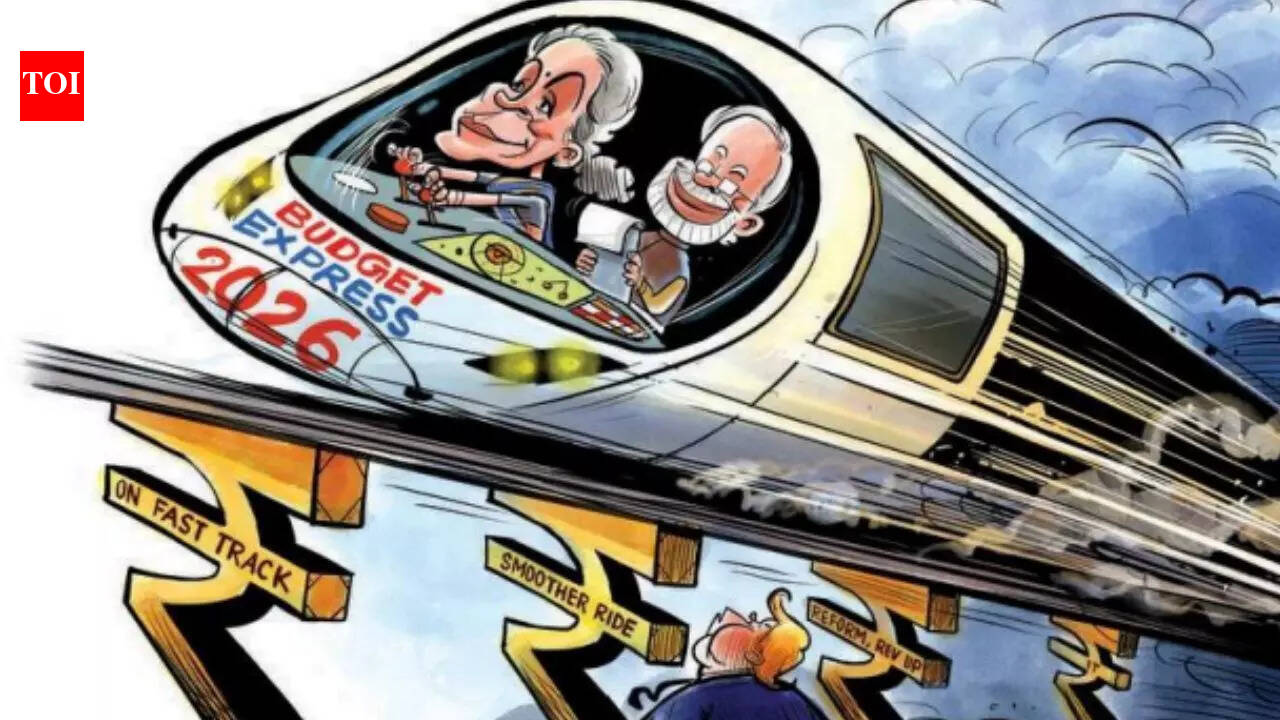
The Modi government presented the Union Budget for the fiscal year 2026-27 on 1st February 2026, with Finance Minister Nirmala Sitharaman announcing a massive hike in defence spending. India’s successful military action, Operation Sindoor, against Pakistan in May 2025, shaped national security priorities. Building on the success of Operation Sindoor, the Modi government allocated an all-time high of Rs 7.85 lakh crore for the defence sector, marking a historic 15% hike. The Union Budget 2026-27 will help in further strengthening India’s defence capabilities. I thank PM Shri @narendramodi for allocating a record Rs 7.85 Lakh crores towards Defence sector. pic.twitter.com/WhrSmOxFDn— Rajnath Singh (@rajnathsingh) February 1, 2026 Success of Operation Sindoor, defence budget increase and a renewed resolve to strengthen national security In the four-day military action in May 2025, in response to the Pakistan-sponsored Islamic terror attack in Pahalgam, Indian forces dismantled terror infrastructure deep inside Pakistan, rendered several of their airbases defunct, destroyed Pakistan’s Chinese air defence systems, and inflicted massive damage. When Pakistan dared to strike back, India’s indigenous air defence systems effectively thwarted the hostile neighbour’s drones and missiles. Operation Sindoor not only demonstrated the effectiveness of indigenous systems but also helped India further bolster its military readiness by filling the gaps. For the financial year 2026-27, the Modi government presented the highest-ever defence budget. The defence allocation stood at ₹7.85 lakh crore (approximately $86 billion), marking a 15.9% increase over the 2025-26 budget estimates of ₹6.81 lakh crore. This accounts for about 2% of India’s estimated GDP for the year and around 14.67% of the Central government’s total expenditure. This year, defence received the largest budget allocation among all ministries, reflecting the Modi government’s focus on bolstering national security and defence in a volatile world and rising regional threats. Modernisation of the Indian Armed Forces remains a central focus of the Defence Ministry. The Central government says that in the current geo-political scenario, a quantum jump in the modernisation budget is a “strategic imperative”. If we look at the capital outlay breakdown, of the ₹2.19 lakh crore, ₹1.85 lakh crore is allocated for capital acquisition, marking a 24% hike, focusing on new lethal weapons, aircraft, aero engines, ships, submarines, missiles, drones, artillery, and Unmanned Aerial Vehicles (UAVs), etc. The Central government has consistently been working for the modernisation of the armed forces, and during FY 2025-26, up to 3rd quarter, the Defence Ministry concluded contracts worth ₹2.10 lakh crore. In addition, the MoD also gave Acceptance of Necessity approval for more than ₹3.50 lakh crore. In a major boost to the Atmanirbhar Bharat initiative, about 75% of this amount is earmarked for domestic procurement. Out of the total allocation made to the Ministry of Defence (MoD), a share of 27.95% is for capital expenditure, 20.17% for revenue expenditure on sustenance and operational preparedness, 26.40% for revenue expenditure on pay and allowances, 21.84% for Defence Pensions and 3.64% for civil organisations. “Through such earmarking of funds, domestic players have been reassured about their investment and their increasingly greater role in capability development of the Armed Forces. Enhanced allocation for Capital Acquisition, especially for domestic industries, will have long term positive impact on the national economy and will lead to the development of many ancillary industries, creating job opportunities in the country,” the MoD said. The Defence Budget 2026-27 has provided for ₹3,65,478.98 crore for spending under revenue heads, marking a 17.24% increase from the allocation for Budgetary Estimates 2025-26. Of the ₹3,65,478.98, ₹1,58,296.98 crore has been allocated for operation and sustenance-related expenditure, and the remaining for salary and allowances. This is meant to facilitate procurement of operationally important stores, spare parts, etc., in addition to ensuring maintenance of vital platforms and catering for their day-to-day requirements. The Central government has also focused on the development of border areas. To provide better infrastructure in border areas, the Modi government has made a higher allocation to the Border Roads Organisation (BRO). The budgetary allocation to BRO under Capital for BE 2026-27 has been enhanced to ₹7,394 crore from ₹7,146.50 crore for FY 2025-26. Besides weapons procurement and immediate modernisation of the armed forces, the Central government has also prioritised Research and Development (R&D). In this direction, the budgetary allocation to the Defence Research and Development Organisation (DRDO) has been increased to Rs 29,100.25 crore in FY 2026-27 from Rs 26,816.82 crore
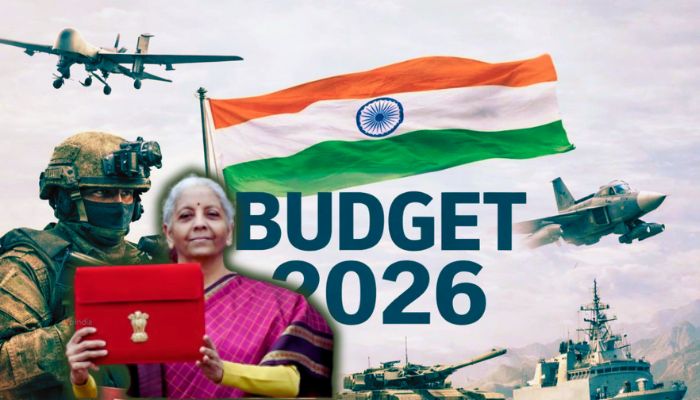

The Modi government presented the Union Budget for the fiscal year 2026-27 on 1st February 2026, with Finance Minister Nirmala Sitharaman announcing a massive hike in defence spending. India’s successful military action, Operation Sindoor, against Pakistan in May 2025, shaped national security priorities. Building on the success of Operation Sindoor, the Modi government allocated an all-time high of Rs 7.85 lakh crore for the defence sector, marking a historic 15% hike.
The Union Budget 2026-27 will help in further strengthening India’s defence capabilities. I thank PM Shri @narendramodi for allocating a record Rs 7.85 Lakh crores towards Defence sector. pic.twitter.com/WhrSmOxFDn
— Rajnath Singh (@rajnathsingh) February 1, 2026
Success of Operation Sindoor, defence budget increase and a renewed resolve to strengthen national security
In the four-day military action in May 2025, in response to the Pakistan-sponsored Islamic terror attack in Pahalgam, Indian forces dismantled terror infrastructure deep inside Pakistan, rendered several of their airbases defunct, destroyed Pakistan’s Chinese air defence systems, and inflicted massive damage. When Pakistan dared to strike back, India’s indigenous air defence systems effectively thwarted the hostile neighbour’s drones and missiles. Operation Sindoor not only demonstrated the effectiveness of indigenous systems but also helped India further bolster its military readiness by filling the gaps.
For the financial year 2026-27, the Modi government presented the highest-ever defence budget. The defence allocation stood at ₹7.85 lakh crore (approximately $86 billion), marking a 15.9% increase over the 2025-26 budget estimates of ₹6.81 lakh crore. This accounts for about 2% of India’s estimated GDP for the year and around 14.67% of the Central government’s total expenditure. This year, defence received the largest budget allocation among all ministries, reflecting the Modi government’s focus on bolstering national security and defence in a volatile world and rising regional threats.
Modernisation of the Indian Armed Forces remains a central focus of the Defence Ministry. The Central government says that in the current geo-political scenario, a quantum jump in the modernisation budget is a “strategic imperative”.
If we look at the capital outlay breakdown, of the ₹2.19 lakh crore, ₹1.85 lakh crore is allocated for capital acquisition, marking a 24% hike, focusing on new lethal weapons, aircraft, aero engines, ships, submarines, missiles, drones, artillery, and Unmanned Aerial Vehicles (UAVs), etc.
The Central government has consistently been working for the modernisation of the armed forces, and during FY 2025-26, up to 3rd quarter, the Defence Ministry concluded contracts worth ₹2.10 lakh crore. In addition, the MoD also gave Acceptance of Necessity approval for more than ₹3.50 lakh crore.
In a major boost to the Atmanirbhar Bharat initiative, about 75% of this amount is earmarked for domestic procurement.
Out of the total allocation made to the Ministry of Defence (MoD), a share of 27.95% is for capital expenditure, 20.17% for revenue expenditure on sustenance and operational preparedness, 26.40% for revenue expenditure on pay and allowances, 21.84% for Defence Pensions and 3.64% for civil organisations.
“Through such earmarking of funds, domestic players have been reassured about their investment and their increasingly greater role in capability development of the Armed Forces. Enhanced allocation for Capital Acquisition, especially for domestic industries, will have long term positive impact on the national economy and will lead to the development of many ancillary industries, creating job opportunities in the country,” the MoD said.
The Defence Budget 2026-27 has provided for ₹3,65,478.98 crore for spending under revenue heads, marking a 17.24% increase from the allocation for Budgetary Estimates 2025-26.
Of the ₹3,65,478.98, ₹1,58,296.98 crore has been allocated for operation and sustenance-related expenditure, and the remaining for salary and allowances. This is meant to facilitate procurement of operationally important stores, spare parts, etc., in addition to ensuring maintenance of vital platforms and catering for their day-to-day requirements.
The Central government has also focused on the development of border areas. To provide better infrastructure in border areas, the Modi government has made a higher allocation to the Border Roads Organisation (BRO). The budgetary allocation to BRO under Capital for BE 2026-27 has been enhanced to ₹7,394 crore from ₹7,146.50 crore for FY 2025-26.
Besides weapons procurement and immediate modernisation of the armed forces, the Central government has also prioritised Research and Development (R&D). In this direction, the budgetary allocation to the Defence Research and Development Organisation (DRDO) has been increased to Rs 29,100.25 crore in FY 2026-27 from Rs 26,816.82 crore in FY 2025-26. Out of this allocation, a major share of Rs. 17,250.25 crore is allocated for capital expenditure.
It must be recalled that India is proceeding towards a ₹3.25 lakh crore worth mega deal with France for the procurement of 114 Rafale jets. If the deal is cleared, under a government-to-government agreement, most of the jets would be manufactured in India, with 30% Indian content. This percentage is likely to rise up to 60% during production. The proposal also includes the provision of 12 to 18 Rafale jets in fly-away condition to meet India’s immediate operational requirement since the indigenous Advanced Medium Combat Aircraft (AMCA) is still in the developmental stage.
If all goes well, this deal would take the number of Rafales in the Indian services to 176, including the 36 fighter jets already inducted by the IAF, and the 26 Rafale-Marine jets ordered for the Indian Navy. India’s trust in French Rafales stems from the fighter jets’ effective performance during Operation Sindoor.
Besides Rafale, India is also in advanced technical talks with Russia for a potential licensed production of fifth-generation Su-57 stealth fighter jets in India, and obtaining technology inputs for AMCA. In addition, India is focusing on indigenous avionics as 180 LCA-Tejas Mk-1A have been contracted, with deliveries ongoing and emphasis on faster production.
In the long run, the IAF’s fighter fleet is likely to comprise an expanded fleet of Rafales, Su-39 MKI upgrades, LCA-Mk1A, and the indigenous AMCA (after 2035), with the 2026-27 defence budget being a decisive factor in turning this vision into reality.`
Other than aircraft, India is also working on empowering itself with advanced missile and air defence systems. Surface-to-air missiles, particularly medium and short-range SAMs, QRAD systems remain in special focus to counter drones, cruise missiles and saturation attacks.
If we talk about precision-guided munitions, India is laying emphasis on domestic production of Beyond-Visual-Range (BVR) air-to-air missiles and stand-off weapons. In this direction, key projects include the Safran-BEL joint venture to produce HAMMER missiles, the 100 km range Smart Anti-Airfield Weapon (SAAW), and the Brahmos supersonic cruise missiles.
As drones have become a key focus in modern warfare, India has expedited procurement of UAVs and ISR drones across all services, and is focusing on long-endurance platforms, secure datalinks and autonomous operations. India is also obtaining weaponised unmanned surface vessels for the navy and has contracted 12 autonomous fast interceptor crafts, with the induction of the first batch. India is also expediting the induction of counter-drone systems for borders, air bases, and naval installations.
For the Indian Navy, a contract is likely to be signed in March 2026, with Germany’s ThyssenKrupp Marine Systems (TKMS) and Mazagon Dock Shipbuilders Ltd (MDL) for the procurement of six Air Independent Propulsion (AIP) diesel-electric submarines worth ₹70,000-72,000 ($8 billion). India is also set to procure large amphibious warships and upgrade naval fleets with shipborne missiles, sensors, combat management systems, etc.
In addition, induction of Light Combat Helicopters (LCH) for the Army and the IAF is being prioritised. In December 2025, India signed a $946 million sustainment deal with the US for its fleet of 24 MH-60R “Seahawk” naval helicopters. This will help with squadron expansion and bolstering anti-submarine warfare (ASW) and maritime surveillance.
Besides, the purchase of small arms like assault rifles, LMGs from domestic manufacturers, in addition to high-mobility vehicles, protected troop carriers is also on the cards.
Centre raises budget for the Intelligence Bureau by 50% after the Pahalgam and Red Fort Islamic terror attacks
In a significant budget increase for the Intelligence Bureau (IB), the Modi government has allocated ₹6,782.43 crore, marking a 63% increased over the Revised Estimate (RE) of ₹4,159 crore for 2025-26. This represents a massive 74% surge compared to the Budget Estimate of ₹3,893 crore for 2025-26.
The biggest jump is in capital expenditure, which is meant for infrastructure, technology, surveillance, cyber capabilities, data analytics, etc. This has surged from nearly ₹230-257 crore in 2025-26 (RE) to ₹2,549.54 crore, marking an approximate 892% growth in capex. This makes the Intelligence Bureau one of the biggest gainers within the Ministry of Home Affairs.
Meanwhile, revenue expenditure makes up the rest, backing overall administrative and intelligence functions.
Overall, the Modi government has demonstrated its security-first approach in the 2026-27 budget, balancing financial priorities with enhanced capabilities for not only military but also intelligence domains. The defence budget indicates a post-Sindoor pivot towards a more dominant, assertive, self-sufficient military posture, although its success remains contingent on efficient and timely execution in an increasingly volatile security landscape.