
‘Outing’ the NYT boss ‘Pinch’ Sulzberger: Epstein emails resurface as The New York Times downplays new DOJ documents
A fresh controversy has erupted after WikiLeaks shared a long post on X on Wednesday, 4th February, highlighting previously released emails that expose the connection between the convicted sex offender Jeffrey Epstein and The New York Times. The email is discussing the possibility of “outing” Arthur Ochs ‘Pinch’ Sulzberger Jr., the former publisher of The New York Times. The post has once again brought attention to Epstein’s behind-the-scenes connections with powerful media companies and the tone in which he spoke about influence, leverage, and elite institutions. Epstein Email: “outing” New York Times publisher Sulzberger will see “the end of the establishment.”One month before the abrupt departure of Arthur Ochs ‘Pinch’ Sulzberger Jr as publisher of the New York Times, Epstein wrote to attorney Brad Karp: “How about Sulzberger would… pic.twitter.com/8pv9k4kGca— WikiLeaks (@wikileaks) February 4, 2026 In its post, WikiLeaks cited an email trail that took place about a month before Sulzberger abruptly stepped down as publisher of The New York Times in December 2017. His retirement became official two weeks later. Emails that sparked the debate According to the details highlighted by WikiLeaks, one month before Sulzberger’s retirement, Epstein wrote to attorney Brad Karp asking, “How about Sulzberger? Would that be funny?” Karp reportedly responded, “That would be pretty ironic and give whole new meaning to his nickname ‘pinch’.” The exchange appeared to suggest that Epstein was considering publicly exposing Sulzberger in some way. The following day, Epstein had a conversation with journalist Michael Wolff about a potential sex scandal that, in their words, could mean “the end of the establishment as we know it.” Epstein asked, “If Bannon outed Charlie and Pinch Sulzberger, then what?” Wolff replied, “The end of the establishment as we know it.” Epstein responded, “That’s the way I see it. ‘Pinch’ = sulz your silver bullet.” The discussion referenced Charlie Rose, the veteran television journalist who was fired from CBS just three weeks later following allegations of sexual misconduct. While the emails do not prove coordination or direct involvement in subsequent events, they reveal how Epstein privately framed scandals involving powerful media figures as tools capable of shaking the elite establishment. In another exchange dated 11th December 2017, Wolff wrote to Epstein about “Big names on the horizon” for potential sexual abuse scandals and mentioned Arthur Sulzberger as his “favourite.” Epstein replied in a casual tone, “You and I are old news? :)” On 13th December 2017, The New York Times officially announced that 66-year-old Sulzberger would retire as publisher. His departure took effect two weeks later. The day after the announcement, Epstein emailed Landon Thomas Jr., then a journalist at the Times, writing, “Sulzberger – told you.” When Thomas asked for proof of what was driving the retirement, Epstein responded with a single word: “Wait.” Apparently Epstein casually joked about “outing” ‘Pinch’ Sulzberger Jr., saying it would be “the end of the establishment,” with Brad Karp replying that it would be “pretty ironic and give a whole new meaning to his nickname ‘pinch’.”Then literally the next day, Jeffrey and… https://t.co/CozlV7lg7Q pic.twitter.com/WXpUuBXr8d— Mario Nawfal (@MarioNawfal) February 5, 2026 Epstein’s relationship with the Sulzberger family reportedly dated back to the 1970s, when he spent time at the family’s country estate. This detail was mentioned in a draft profile written by Landon Thomas Jr. for New York Magazine in 2015, though the profile was never published. The New York Times has also downplayed the significance of the latest document release, stating that the materials “reveal a bygone elite” and are “steeped in a clubby world that is all but gone.” This has raised questions about whether Arthur Ochs “Pinch” Sulzberger Jr. had any direct connection with convicted sex offender Jeffrey Epstein. Today, the paper is led by A.G. Sulzberger, son of “Pinch” Sulzberger and the fifth generation of the family to run the newspaper since it was acquired in 1896. While there is no direct evidence showing that Epstein’s conversations resulted in action against Sulzberger, the tone of the emails has fueled speculation. Who is Arthur Ochs Sulzberger Jr. Arthur Ochs Sulzberger Jr., born on 22nd September 1951, is an American journalist and longtime leader of The New York Times. He served as publisher of the newspaper from 1992 to 2018 and as chairman of The New York Times Company from 1997 to 2020. In December 2017, he announced that he would step aside as publisher, appointing his son, A.G. Sulzberger, to lead the company beginning 1st January, 2018. Born in Mount Kisco, New York, Sulzberger is the son of Arthur Ochs “Punch” Sulzberger Sr. and the grandson of Arthur Hays Sulzberger. He is also the great-grandson of Adolph Ochs, who purc
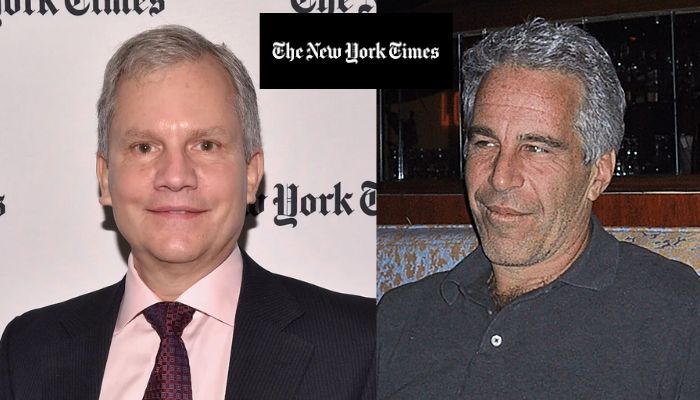

A fresh controversy has erupted after WikiLeaks shared a long post on X on Wednesday, 4th February, highlighting previously released emails that expose the connection between the convicted sex offender Jeffrey Epstein and The New York Times.
The email is discussing the possibility of “outing” Arthur Ochs ‘Pinch’ Sulzberger Jr., the former publisher of The New York Times. The post has once again brought attention to Epstein’s behind-the-scenes connections with powerful media companies and the tone in which he spoke about influence, leverage, and elite institutions.
Epstein Email: “outing” New York Times publisher Sulzberger will see “the end of the establishment.”
— WikiLeaks (@wikileaks) February 4, 2026
One month before the abrupt departure of Arthur Ochs ‘Pinch’ Sulzberger Jr as publisher of the New York Times, Epstein wrote to attorney Brad Karp: “How about Sulzberger would… pic.twitter.com/8pv9k4kGca
In its post, WikiLeaks cited an email trail that took place about a month before Sulzberger abruptly stepped down as publisher of The New York Times in December 2017. His retirement became official two weeks later.
Emails that sparked the debate
According to the details highlighted by WikiLeaks, one month before Sulzberger’s retirement, Epstein wrote to attorney Brad Karp asking, “How about Sulzberger? Would that be funny?” Karp reportedly responded, “That would be pretty ironic and give whole new meaning to his nickname ‘pinch’.” The exchange appeared to suggest that Epstein was considering publicly exposing Sulzberger in some way.
The following day, Epstein had a conversation with journalist Michael Wolff about a potential sex scandal that, in their words, could mean “the end of the establishment as we know it.” Epstein asked, “If Bannon outed Charlie and Pinch Sulzberger, then what?” Wolff replied, “The end of the establishment as we know it.” Epstein responded, “That’s the way I see it. ‘Pinch’ = sulz your silver bullet.”
The discussion referenced Charlie Rose, the veteran television journalist who was fired from CBS just three weeks later following allegations of sexual misconduct. While the emails do not prove coordination or direct involvement in subsequent events, they reveal how Epstein privately framed scandals involving powerful media figures as tools capable of shaking the elite establishment.
In another exchange dated 11th December 2017, Wolff wrote to Epstein about “Big names on the horizon” for potential sexual abuse scandals and mentioned Arthur Sulzberger as his “favourite.” Epstein replied in a casual tone, “You and I are old news? :)”
On 13th December 2017, The New York Times officially announced that 66-year-old Sulzberger would retire as publisher. His departure took effect two weeks later. The day after the announcement, Epstein emailed Landon Thomas Jr., then a journalist at the Times, writing, “Sulzberger – told you.” When Thomas asked for proof of what was driving the retirement, Epstein responded with a single word: “Wait.”

Related Posts









From H'wood to hard reality: How a modern 'Fire Sale' would...
Once a Hollywood fantasy, a nation's digital paralysis is now a real threat. Modern...
Blake Miguez, who said Sen. Cassidy 'sucks,' drops Senate...
Louisiana state Sen. Blake Miguez abandoned his U.S. Senate bid, switching to run...

Curiosity Corner: Who invented school?
Education has traversed an incredible path, from the storytelling of ancient civilizations...

Who is performing at the Turning Point USA Halftime Show?...
The TPUSA Halftime Show will spotlight rock and country artists known for patriotic,...

Pariksha Pe Charcha 2026: When and where to watch PM Modi’s...
Students across India are gearing up for Pariksha Pe Charcha 2026, Prime Minister...

Baba Vanga Gold, Silver, Copper Price Prediction 2026:...
Bulgarian mystic Baba Vanga, dubbed the 'Nostradamus of the Balkans,' reportedly...


After IPL exclusion, Lahore Qalandars sign Bangladesh pacer...
Lahore Qalandars have secured Bangladesh fast bowler Mustafizur Rahman for the 2026...

'Peddi': Ram Charan and Janhvi Kapoor starrer postpones...
Ram Charan and Janhvi Kapoor's highly anticipated film, 'Peddi,' has officially...
