Pakistan accused of passing different versions of agreement to Iran and US after White House said they didn’t agree to Lebanon ceasefire and uranium enrichment: Here is what happened
The desperate attempt of Pakistan to gain global attention and praise by ‘mediating’ between the warring nations of Iran and the US has backfired monumentally into a diplomatic embarrassment. From quick violations of the ceasefire announced by US President Donald Trump, Pakistan PM Shehbaz Sharif and confirmed by Iranian Foreign Minister Seyed Abbas Araghchi, open contradictions over the “acceptance of uranium enrichment” demand, and the obvious discrepancies in proposal texts have left the ‘unexpected mediator’ expectedly red-faced. Yestreday White House confirmed that the 10-point plan released by Iran differs from the plan referred to by President Trump. Trump has confirmed he never agreed to some points mentioned in the plan floating in the media, including the extension of the ceasefire in Lebanon and agreeing to enrichment by Iran. US also disagreed with Iran’s claim of permanent control over the Strait of Hormuz. White House Press Secretary Karoline Leavitt also said that President Trump threw Iran’s 10-point plan in the garbage, saying that it was “fundamentally unserious, unacceptable and completely discarded.” She rejected media reports that Trump accepted Iran’s wish list, making it clear that the 10-point list released by Iran to the media was different from the agreed-upon list. “Acceptance of Uranium enrichment” included in Farsi version, missing in the English versions passed by Pakistan to the US Pakistan was not even done gloating over rare emergence as a ‘drafted’ peacemaker, when reports emerged that the ‘mediator’ passed different versions of the same Iranian 10-point ceasefire proposal to Washington. As per an Associated Press report, the Farsi version of the 10-point ceasefire proposal Iran put forth contained the phrase “acceptance of uranium enrichment” for its nuclear program. This key point was reportedly missing in the English version of the document routed through Pakistan to the US. It must be noted that Iran’s Supreme National Security Council has maintained that the continuation of uranium enrichment is its core and non-negotiable demand and sought foreign acceptance of the same. In simple terms, media reports suggest that ‘mediator’ Pakistan provided the US a version different from the one it received from Iran, and handed Iran a different version from what it received from Washington. JD Vance confirms Iran misunderstood that Lebanon was a part of the ceasefire agreement It is interesting to note that discrepancies in the Farsi and English versions of Iran’s 10-point proposal routed to Iran and the US respectively, are not confined only to the uranium enrichment point. Another major confusion pertains to the Lebanon conflict, wherein Israel is fighting against the Iran-backed Hezbollah and regularly bombing the country. The Farsi and English versions of Iran’s 10-point plan, widely reported in the media, made explicit mention of Lebanon, stating: “Cessation of hostilities across all fronts, including Israel’s conflict with Hezbollah in Lebanon as well as attacks on ‘Axis of Resistance’ allies.” This was also mentioned by Pakistan’s Prime Minister Shehbaz Sharif in his post on X, as he wrote, “I am pleased to announce that the Islamic Republic of Iran and the United States of America, along with their allies, have agreed to an immediate ceasefire everywhere including Lebanon and elsewhere, EFFECTIVE IMMEDIATELY.” With the greatest humility, I am pleased to announce that the Islamic Republic of Iran and the United States of America, along with their allies, have agreed to an immediate ceasefire everywhere including Lebanon and elsewhere, EFFECTIVE IMMEDIATELY. I warmly welcome the…— Shehbaz Sharif (@CMShehbaz) April 7, 2026 However, President Trump’s original ceasefire announcement post on Truth Social made no mention of Lebanon despite acknowledging the reception of the 10-point proposal and accepting it as a “workable basis to negotiate”. This baffled Israel, and it quickly issued a clarification that the Lebanon conflict is not a part of the ceasefire agreement between Iran and the US. Just hours after the ceasefire announcement, Israel launched a fresh wave of attacks in southern Lebanon and targeted the Tyre and Nabatieh areas in southern Lebanon. On 8th April, Israeli forces targeted over 100 Hezbollah sites in 10 minutes in Lebanon. The United States has told Israel that it is committed to achieving these goals, shares by the US, Israel and Israel's regional allies, in the upcoming negotiations.The two-weeks ceasefire does not include Lebanon.— Prime Minister of Israel (@IsraeliPM) April 8, 2026 Israeli PMO refuted Pakistan’s claim that the ceasefire it supposedly mediated also included cessation of hostilities in Lebanon, although Lebanese President Joseph Aoun welcomed the ceasefire between Iran and the US. When asked about it, Donald Trump told a journalist that the Israel-Lebanon conflict is a “separate sk
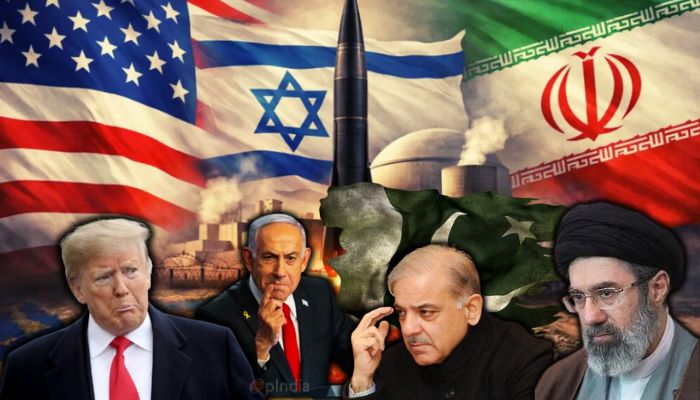
The desperate attempt of Pakistan to gain global attention and praise by ‘mediating’ between the warring nations of Iran and the US has backfired monumentally into a diplomatic embarrassment. From quick violations of the ceasefire announced by US President Donald Trump, Pakistan PM Shehbaz Sharif and confirmed by Iranian Foreign Minister Seyed Abbas Araghchi, open contradictions over the “acceptance of uranium enrichment” demand, and the obvious discrepancies in proposal texts have left the ‘unexpected mediator’ expectedly red-faced.
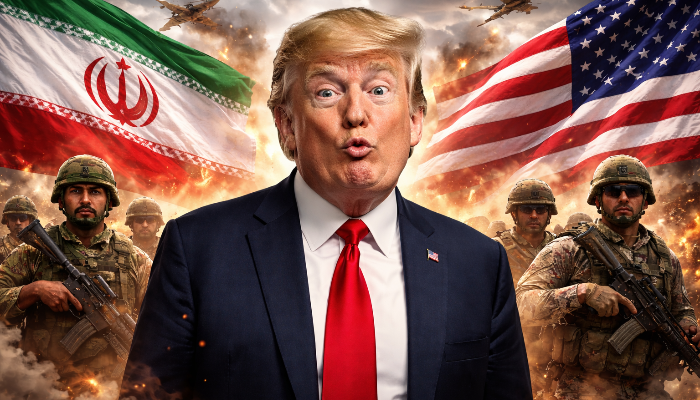
Yestreday White House confirmed that the 10-point plan released by Iran differs from the plan referred to by President Trump. Trump has confirmed he never agreed to some points mentioned in the plan floating in the media, including the extension of the ceasefire in Lebanon and agreeing to enrichment by Iran. US also disagreed with Iran’s claim of permanent control over the Strait of Hormuz.
White House Press Secretary Karoline Leavitt also said that President Trump threw Iran’s 10-point plan in the garbage, saying that it was “fundamentally unserious, unacceptable and completely discarded.” She rejected media reports that Trump accepted Iran’s wish list, making it clear that the 10-point list released by Iran to the media was different from the agreed-upon list.
“Acceptance of Uranium enrichment” included in Farsi version, missing in the English versions passed by Pakistan to the US
Pakistan was not even done gloating over rare emergence as a ‘drafted’ peacemaker, when reports emerged that the ‘mediator’ passed different versions of the same Iranian 10-point ceasefire proposal to Washington.
As per an Associated Press report, the Farsi version of the 10-point ceasefire proposal Iran put forth contained the phrase “acceptance of uranium enrichment” for its nuclear program. This key point was reportedly missing in the English version of the document routed through Pakistan to the US.
It must be noted that Iran’s Supreme National Security Council has maintained that the continuation of uranium enrichment is its core and non-negotiable demand and sought foreign acceptance of the same.
In simple terms, media reports suggest that ‘mediator’ Pakistan provided the US a version different from the one it received from Iran, and handed Iran a different version from what it received from Washington.
JD Vance confirms Iran misunderstood that Lebanon was a part of the ceasefire agreement
It is interesting to note that discrepancies in the Farsi and English versions of Iran’s 10-point proposal routed to Iran and the US respectively, are not confined only to the uranium enrichment point. Another major confusion pertains to the Lebanon conflict, wherein Israel is fighting against the Iran-backed Hezbollah and regularly bombing the country.
The Farsi and English versions of Iran’s 10-point plan, widely reported in the media, made explicit mention of Lebanon, stating: “Cessation of hostilities across all fronts, including Israel’s conflict with Hezbollah in Lebanon as well as attacks on ‘Axis of Resistance’ allies.”
This was also mentioned by Pakistan’s Prime Minister Shehbaz Sharif in his post on X, as he wrote, “I am pleased to announce that the Islamic Republic of Iran and the United States of America, along with their allies, have agreed to an immediate ceasefire everywhere including Lebanon and elsewhere, EFFECTIVE IMMEDIATELY.”
With the greatest humility, I am pleased to announce that the Islamic Republic of Iran and the United States of America, along with their allies, have agreed to an immediate ceasefire everywhere including Lebanon and elsewhere, EFFECTIVE IMMEDIATELY. I warmly welcome the…— Shehbaz Sharif (@CMShehbaz) April 7, 2026
However, President Trump’s original ceasefire announcement post on Truth Social made no mention of Lebanon despite acknowledging the reception of the 10-point proposal and accepting it as a “workable basis to negotiate”.
This baffled Israel, and it quickly issued a clarification that the Lebanon conflict is not a part of the ceasefire agreement between Iran and the US. Just hours after the ceasefire announcement, Israel launched a fresh wave of attacks in southern Lebanon and targeted the Tyre and Nabatieh areas in southern Lebanon. On 8th April, Israeli forces targeted over 100 Hezbollah sites in 10 minutes in Lebanon.
The United States has told Israel that it is committed to achieving these goals, shares by the US, Israel and Israel's regional allies, in the upcoming negotiations.The two-weeks ceasefire does not include Lebanon.— Prime Minister of Israel (@IsraeliPM) April 8, 2026
Israeli PMO refuted Pakistan’s claim that the ceasefire it supposedly mediated also included cessation of hostilities in Lebanon, although Lebanese President Joseph Aoun welcomed the ceasefire between Iran and the US.
When asked about it, Donald Trump told a journalist that the Israel-Lebanon conflict is a “separate skirmish”, and Lebanon was not included in the agreement because of Hezbollah. He said that the Israel-Hezbollah fight is a separate skirmish, and everyone was aware of it.
However, Ibrahim Moussawi, a Hezbollah member of parliament, stressed that the Iran-US ceasefire would fall apart if the Lebanon-Israel conflict is not made a part of it. He said that if Iran does not comply with the ceasefire, both Hezbollah and Iran will launch fresh attacks.
This indicates that even Lebanese politicians and authorities were under the impression that the Pakistan-mediated Iran-US ceasefire included cessation of hostilities for a two-week time period, not only in Iran but also in the Middle East, and Lebanon.
Amidst Iran claiming victory and boasting that it has “forced” the US to accept its 10-point plan, essentially its demands for continuation of uranium enrichment and cessation of hostilities in Lebanon, US Vice President JD Vance said that Lebanon was never a part of the ceasefire agreement and that Iranians had a ‘misunderstanding’.
“I think this comes from a legitimate misunderstanding. I think the Iranians thought the ceasefire included Lebanon, and it just didn’t. We never made that promise; we never indicated that was gonna be the case. What we said was that the ceasefire would be focused on Iran and America’s allies, Israel and the Gulf states,” Vance told the media.
JD Vance: "I think this comes from a legitimate misunderstanding. I think the Iranians thought the ceasefire included Lebanon, and it just didn't. We never made that promise, we never indicated that was gonna be the case." pic.twitter.com/XMEMrDvxe1— Aaron Rupar (@atrupar) April 8, 2026
Trump called Iran’s 10-point proposal “a workable basis to negotiate”, White House said the US President threw the original 10-point plan in the garbage
Just hours after prophesying the ‘death’ of the Iranian civilisation, Trump took a dramatic U-turn and announced a ceasefire and informed about the reception of a 10-point plan from Iran. He called the proposal a “workable basis on which to negotiate”.
“…We received a 10-point proposal from Iran, and believe it is a workable basis on which to negotiate. Almost all of the various points of past contention have been agreed to between the United States and Iran, but a two week period will allow the Agreement to be finalized and consummated,” Trump posted, adding that he was honoured to represent the US as President, and the Gulf countries affected by the war, in bringing the “problem close to resolution.”
Trump had also reposted Iranian Foreign Minister Seyed Abbas Araghchi’s statement, which mentioned both the US’s 15-point proposal and Iran’s 10-point “general framework”. Araghchi mentioning this, and Trump acknowledging the same, indicates that either Trump was under the impression that Iran had given up on its uranium enrichment ambition, while Iran thought that Trump had accepted this demand.
The Pakistan-orchestrated ‘discrepancy’ allegations make even more sense when it is recalled that Trump had on Monday (a day before the ceasefire announcement) called the Iranian proposal a “significant step” but “not good enough”. It came as a shock to US-Israel supporters, and a pleasant surprise to Iranian Mullah regime backers, that Trump accepted Iran’s “acceptance of uranium enrichment” demand, which essentially was the reason why Israel and the US launched a joint attack on Iran. Acceptance of this demand essentially meant a US betrayal of its ally Israel, which sees a nuclear-armed Iran as an “existential threat”.
It is an interesting note that White House spokesperson Karoline Leavitt, while addressing a press conference on Wednesday, said that the version of the 10-point plan Iran had released publicly was very different from the one President Trump and the US had agreed to. She added that the original version, apparently, the one containing “uranium enrichment acceptance” demand and call for “cessation of hostilities in Lebanon” was “unacceptable” and relegated to garbage by President Trump.
“So let me be clear and correct the record. The Iranians originally put forward a 10-point plan that was fundamentally unserious, unacceptable and completely discarded. It was literally thrown in the garbage by President Trump and his negotiating team,” Leavitt said while reprimanding the American legacy media for reporting that Trump was wildly accepting Iran’s 10-point proposal that mentioned its uranium enrichment-related demands.
JUST IN: Karoline Leavitt says Iran's initial ten point plan was "fundamentally unserious, unacceptable and completely discarded.""It was literally thrown in the garbage by President Trump and his negotiating team.""The idea that President Trump would ever accept an Iranian… pic.twitter.com/pr9dqFdsMo— Fox News (@FoxNews) April 8, 2026
Leavitt, however, did not delve into the details of the “different version” of Iran’s 10-point proposal that Trump agreed to, accepted as “workable”, announced a ceasefire based on it, and went on to float plans of launching a joint US-Iran venture to charge tolls in the Strait of Hormuz and make “big money”.
Leaving Pakistan’s Shehbaz Sharif red-faced, Donald Trump stated on Wednesday that the ceasefire agreement does not extend to Lebanon, where Israeli forces continue operations against Hezbollah. Talking to a journalist, Trump said that the Israel-Lebanon conflict is a “separate skirmish”, and Lebanon was not included because of Hezbollah.
It is essential to recall that in an X post, Sharif declared that Iran, the US and their allies had agreed to “an immediate ceasefire everywhere, including Lebanon and elsewhere, EFFECTIVE IMMEDIATELY”. He also invited delegations to Islamabad for further talks.
With American leadership confirming that uranium enrichment and the Lebanon conflict were not a part of the version of the 10-point plan Iran that was routed to them through Pakistan, Iran threatened to abandon the ceasefire if Israel continues strikes on Hezbollah.
All of this confusion and even more confusing ‘clarifications’ suggest that the ‘mediator’ Pakistan created a big mess. As the messenger passing proposals between the US and Iran, Pakistan was essentially the conduit. Either Pakistan deliberately passed tailored versions to each side to make the “deal” work, with the English version being softer on uranium enrichment for the US, and the Farsi version stronger for Iranian domestic consumption.
Or, Pakistan, in its desperation to capitalise on the rare opportunity to depart from its reputation as a global Islamic-terror sponsor to a global ‘peacemaker’, failed to detect and flag the discrepancy during backchannel talks.
There is another possibility that the Iranian regime took Pakistan into confidence and employed a dual-texted strategy to secure a reprieve from Trump’s threat to annihilate the Iranian civilisation.
The episode has inflicted a massive blow to Pakistan’s reputation. Even before Islamabad could relish fully in the joy of being called a ‘saviour’ and ‘peacemaker’, the country began to be called incompetent and duplicitous, although the ‘draft’ fiasco already brought Pakistan’s mediation and seriousness into question. Pakistan enjoyed its two seconds of fame, but at the cost of bringing a lasting disrepute and embarrassment to Islamabad.
Going by the details that have emerged so far, it would be appropriate to conclude that a ceasefire between Iran and the US would never have happened if Pakistan had routed real, untailored Farsi and English versions of Iran’s ceasefire plan.
The US, however, should release the version of the 10-point Iranian plan it received and agreed to build up negotiation talks on.
The White House staged Pakistan’s ‘peacemaker’ gimmick: Did Iran betray the ceasefire terms agreed upon during talks, or has America changed tone after Israeli pressure and global embarrassment?
Trump chose Pakistan as a useful idiot to advance ceasefire talks with Iran. A Financial Times report says that Pakistan’s volunteering to be a peacemaker was staged by the White House. While Trump was giving open threats and deadlines to Iran to pressure it to open the Strait of Hormuz, behind the scenes, it was pushing Pakistan to convince Iran to accept a temporary ceasefire.
The report claims that shortly after Trump issued his first ultimatum to Iran, Pakistan’s top officials, including Asim Munir, started passing messages between Iranian political and military figures and the White House, pitching Islamabad as a venue for a peace summit. They shared the US’s 15-point proposal and Iran’s five and 10-point responses. They also mediated a discussion on the period of temporary ceasefire, ranging from 45 days to two weeks.
While both sides initially stuck to their demands, subsequently, Iran reportedly became compliant on diluting and accepting limits on its stockpile of uranium. Later on, Araghchi and other Iranian leaders agreed to a temporary ceasefire-for-Hormuz deal in principle days ago, following weeks of heavy US and Israeli strikes.
Now, either Iran has betrayed the ceasefire terms by agreeing to accept limits on its stockpile of uranium, only to publicise a “acceptance of uranium enrichment” phrase-containing 10-point plan post ceasefire announcement. Or, America initially yielded to Iran’s intransigence about becoming a nuclear-armed state, only change the tone only after Israel pushed back hard against the US, agreeing to those concessions and intensified attacks on Lebanon to deliberately puncture the ceasefire. Now Washington has forced Pakistan to absorb the global embarrassment aimed at Trump and the US, effectively throwing its credulous accomplice, Shehbaz Sharif, under the bus.
Or perhaps, Pakistan has simply bitten off far more than it can chew and is now choking on the ignominious consequences of its diplomatic overreach.