Pakistan restricts Al Jazeera over PoK protests coverage: Islamabad irked over losing narrative control?
The Pakistan-occupied Jammu and Kashmir (PoJK) has been on a boil ever since the local people rose in protests against the oppressive Pakistan Army-controlled regime. On one hand, Pakistan is killing the protestors in PoJK to crush the agitation. On the other hand, media outlets covering the horrific ground realities are targeted with digital censorship. In this vein, Pakistan’s Ministry of Information and Broadcasting has reportedly restricted access to the Qatar-based news outlet Al Jazeera English nationwide over its coverage of the Muzaffarabad election boycott and state crackdown in PoK. pic.twitter.com/02rWnuZmrC— Sohaib Khan (@iamsardarsohaib) August 3, 2026 The Pakistani government has accused Al Jazeera of doing ‘yellow journalism’ over highlighting the public boycott of elections in PoK’s Muzaffarabad Division and for 12 seats allocated for ‘refugees’ settled in Pakistan. Ever since the protests began in PoJK on 5th June 2026, Al Jazeera has covered the protests and highlighted local claims of high casualties in police crackdowns while the Pakistani authorities continued downplaying their brutal actions in Rawalakot and other areas of PoK. Recently, Al Jazeera reported about the residents of Muzaffarabad boycotting the farcical elections. Irked over losing control over the narrative, Pakistani authorities claimed that Al Jazeera’s coverage was ‘selective’ and ‘scripted’. “We have taken note of Al Jazeera’s selective reporting from handpicked polling stations in Muzaffarabad today. Through carefully chosen timings and scripted statements from selected individuals, the channel has sought to misrepresent the AJK elections and the voting process. Such yellow journalism only confirms the agenda of external actors with vested interests who are attempting to delegitimise this electoral exercise and undermine the popular will of the people of Muzaffarabad and AJK, clearly demonstrated today in their rejection of anarchy and coercion,” Pakistan’s Ministry of Information and Broadcasting stated on X. Notably, Al Jazeera is not the only digital media outlet to be targeted by Pakistan’s censorship measures over reported uncensored truth of PoJK. Pakistan has reportedly blocked numerous local and regional digital news domains. The digital channels being targeted in or at risk of being blocked include those belonging to the main opposition party, Pakistan Tehreek-e-Insaf, its founder, jailed former Pakistan PM Imran Khan, and journalists critical of the PM Shehbaz Sharif-led government. Earlier, the judicial magistrate court in Islamabad said that it seeks a ban on several media outlets after the National Cyber Crime Investigation Agency submitted a report on 2nd June, accusing various YouTube channels of “sharing highly intimidating, provocative and derogatory contents against state institutions and officials of the state of Pakistan.” The protests, the crackdown and Pakistan’s pattern of controlling coverage of dissent in PoK The street protests in Pakistan-occupied Jammu and Kashmir began on 5th June 2026, after the Pakistan authorities banned the Joint Awami Action Committee (JAAC) under the Anti-Terrorism Act 2014, declaring it a proscribed organisation, citing threats to peace and security. Soon after, internet and mobile services were also suspended in parts of the region. The unrest in PoJK began with a dispute over 12 assembly seats in the 45-seat PoK Legislative Assembly, which are reserved for refugees from Indian Jammu and Kashmir. Local groups allege that Islamabad uses these seats to influence elections and install governments of its choice, essentially diluting local representation. On 7th June, the PoK ‘Supreme Court’ ruled that the 12 seats are ‘constitutionally protected’ and cannot be abolished without a constitutional amendment. Since the Pakistani regime uses these 12 reserved seats for installing its puppets in the PoK Assembly to retain strong control over the region, they are reluctant to accept the JKAAC’s demand. On 8th June, violent clashes erupted in Rawalakot in Poonch district between local protestors and occupying Pakistani forces, resulting in the killing of several locals. On 9th June, the Jammu and Kashmir Awami Action Committee called a region-wide strike, resulting in the closure of markets, transport, and institutions in major cities including Muzaffarabad. After guns failed to silence the people of PoK, Islamabad resorted to blocking the region’s food, fuel, and healthcare supplies. While the protests in PoK have been ongoing for two months now, the recently held elections there turned violent after the Pakistani army opened fire on protesters, leaving at least 19 people dead and more than 30 seriously injured. Among those killed were Usman Nazir, the brother of Jammu and Kashmir Joint Awami Action Committee (JAAC) leader Sardar Umar Nazir. The lower estimates of the protestors killed in the Pakistani crackdown in PoJK st
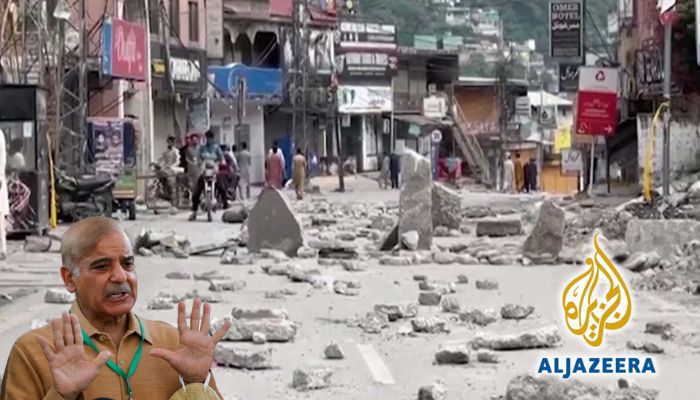
The Pakistan-occupied Jammu and Kashmir (PoJK) has been on a boil ever since the local people rose in protests against the oppressive Pakistan Army-controlled regime. On one hand, Pakistan is killing the protestors in PoJK to crush the agitation. On the other hand, media outlets covering the horrific ground realities are targeted with digital censorship. In this vein, Pakistan’s Ministry of Information and Broadcasting has reportedly restricted access to the Qatar-based news outlet Al Jazeera English nationwide over its coverage of the Muzaffarabad election boycott and state crackdown in PoK.
pic.twitter.com/02rWnuZmrC— Sohaib Khan (@iamsardarsohaib) August 3, 2026
The Pakistani government has accused Al Jazeera of doing ‘yellow journalism’ over highlighting the public boycott of elections in PoK’s Muzaffarabad Division and for 12 seats allocated for ‘refugees’ settled in Pakistan.
Ever since the protests began in PoJK on 5th June 2026, Al Jazeera has covered the protests and highlighted local claims of high casualties in police crackdowns while the Pakistani authorities continued downplaying their brutal actions in Rawalakot and other areas of PoK.
Recently, Al Jazeera reported about the residents of Muzaffarabad boycotting the farcical elections. Irked over losing control over the narrative, Pakistani authorities claimed that Al Jazeera’s coverage was ‘selective’ and ‘scripted’.
“We have taken note of Al Jazeera’s selective reporting from handpicked polling stations in Muzaffarabad today. Through carefully chosen timings and scripted statements from selected individuals, the channel has sought to misrepresent the AJK elections and the voting process. Such yellow journalism only confirms the agenda of external actors with vested interests who are attempting to delegitimise this electoral exercise and undermine the popular will of the people of Muzaffarabad and AJK, clearly demonstrated today in their rejection of anarchy and coercion,” Pakistan’s Ministry of Information and Broadcasting stated on X.
Notably, Al Jazeera is not the only digital media outlet to be targeted by Pakistan’s censorship measures over reported uncensored truth of PoJK. Pakistan has reportedly blocked numerous local and regional digital news domains. The digital channels being targeted in or at risk of being blocked include those belonging to the main opposition party, Pakistan Tehreek-e-Insaf, its founder, jailed former Pakistan PM Imran Khan, and journalists critical of the PM Shehbaz Sharif-led government.
Earlier, the judicial magistrate court in Islamabad said that it seeks a ban on several media outlets after the National Cyber Crime Investigation Agency submitted a report on 2nd June, accusing various YouTube channels of “sharing highly intimidating, provocative and derogatory contents against state institutions and officials of the state of Pakistan.”
The protests, the crackdown and Pakistan’s pattern of controlling coverage of dissent in PoK
The street protests in Pakistan-occupied Jammu and Kashmir began on 5th June 2026, after the Pakistan authorities banned the Joint Awami Action Committee (JAAC) under the Anti-Terrorism Act 2014, declaring it a proscribed organisation, citing threats to peace and security. Soon after, internet and mobile services were also suspended in parts of the region.
The unrest in PoJK began with a dispute over 12 assembly seats in the 45-seat PoK Legislative Assembly, which are reserved for refugees from Indian Jammu and Kashmir. Local groups allege that Islamabad uses these seats to influence elections and install governments of its choice, essentially diluting local representation.
On 7th June, the PoK ‘Supreme Court’ ruled that the 12 seats are ‘constitutionally protected’ and cannot be abolished without a constitutional amendment. Since the Pakistani regime uses these 12 reserved seats for installing its puppets in the PoK Assembly to retain strong control over the region, they are reluctant to accept the JKAAC’s demand.
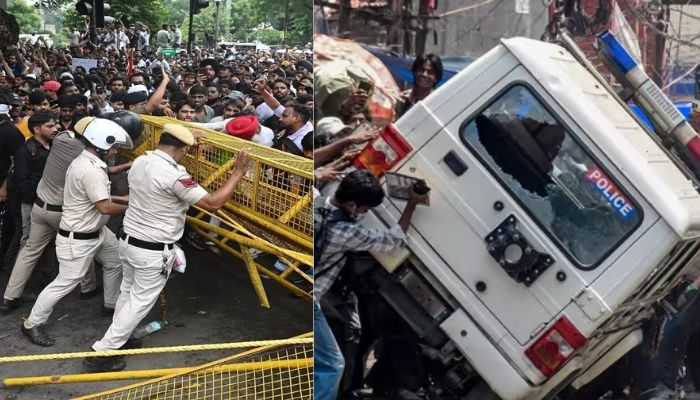
On 8th June, violent clashes erupted in Rawalakot in Poonch district between local protestors and occupying Pakistani forces, resulting in the killing of several locals. On 9th June, the Jammu and Kashmir Awami Action Committee called a region-wide strike, resulting in the closure of markets, transport, and institutions in major cities including Muzaffarabad.
After guns failed to silence the people of PoK, Islamabad resorted to blocking the region’s food, fuel, and healthcare supplies.
While the protests in PoK have been ongoing for two months now, the recently held elections there turned violent after the Pakistani army opened fire on protesters, leaving at least 19 people dead and more than 30 seriously injured. Among those killed were Usman Nazir, the brother of Jammu and Kashmir Joint Awami Action Committee (JAAC) leader Sardar Umar Nazir.
The lower estimates of the protestors killed in the Pakistani crackdown in PoJK stand at 80. In response to the Pakistani government’s apathy and violent suppression, the residents of PoK’s Muzaffarabad boycotted the election.
The locals questioned how elections could be held after all the unrest that has killed dozens of local Kashmiris.
Such is Pakistan’s tolerance of dissent and demands for basic rights and dignity, that it declares the dissenters “enemies” of the same rank as India.
In late July 2026, Pakistan’s Defence Minister Khawaja Asif branded protesters in Pakistan-occupied Kashmir as “enemies like India” while defending Islamabad’s violent crackdown on anti-government demonstrations that reportedly left at least 14 activists dead.
“I put the protesters in the same category as India and consider them also as enemies like India. They were enemies of Pakistan,” Asif said.
Earlier, Khwaja Asif had called the residents of PoK’s Rawalakot and Mirpur “not proper Kashmiris” just because they demand basic rights and dignity.
The Islamic Republic of Pakistan is behaving like a true fascist state. Islamabad has long treated PoJK as a sensitive zone wherein independent scrutiny is tightly managed. Internet and communication blackouts are imposed, and ground access for media reporters are restricted to prevent the flow of raw and real information to the world.
First, Pakistan designated the JAAC as a terrorist organisation and criminalised association with it, and is now targeting local and international media over not amplifying the state propaganda regarding PoJK protests. Several journalists are reported to have faced arrests or cases under the Prevention of Electronic Crimes Act (PECA) and other local laws.
Such is the fear of state action that many local news outlets are either blindly toeing the Pakistani government’s line of narrative or self-censoring the truth of state crackdown against protestors in PoJK.
Ironically, the same Pakistan that calls Indian Kashmir its ‘jugular vein’, and wants to ‘liberate’ it from India, is killing Kashmiris in the region under its occupation. Pakistan maintains a tight and exploitative control over PoJK, the region it calls ‘Azad Kashmir’.
There is nothing ‘Azad’ about the Pakistan-occupied Kashmir. Pakistan maintains a tight control over not only the Kashmiri people and institutions but also the narrative about the occupied territory.
Pakistani authorities have on many occasions facilitated media junkets for pro-Pakistan local reporters as well as foreign journalists to selected sites in PoK, often to counter the Indian allegations of the presence of Islamic terror infrastructure.
While the realities remain violent and grim, Pakistan indulges in narrative control measures to project normalcy, development, and promote its lie that somehow PoK Kashmiris are living freer and more dignified lives in ‘Azad Kashmir than those living on the Indian side of Jammu and Kashmir.
Pakistan facilitates controlled access to PoK for positive propaganda, while restricting media access and crushing dissent amidst brutal suppression of critical voices. When India attacked state-sponsored Islamic terror infrastructure inside Pakistan-controlled territories in May last year, Islamabad quickly invited foreign journalists on the ground to play victim, but when the international media covers the collapse of law and order in PoK and Pakistan’s violent crackdown on Kashmiris, the same media is hounded, restricted, and their coverage declared ‘yellow journalism’.