Protests demanding Dharmendra Pradhan’s resignation in the UK not organic: Before you fall for The Wire’s propaganda, read how SFI is mobilising crowds
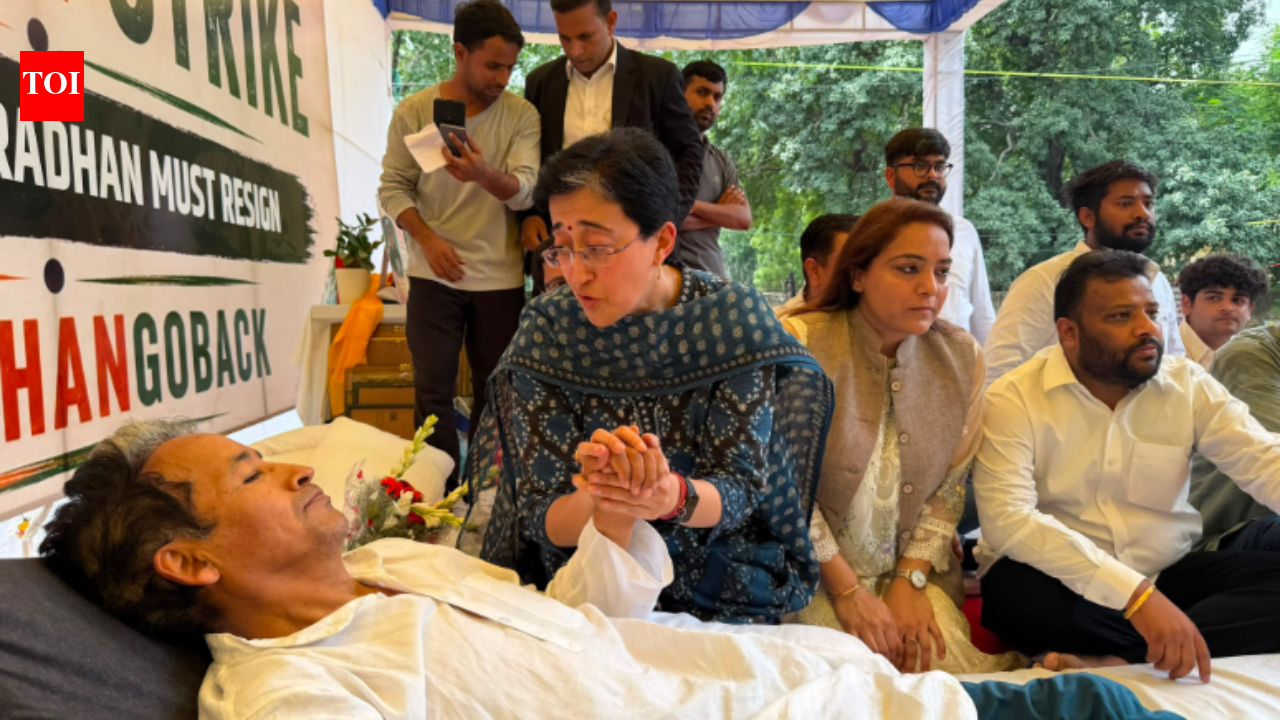
On 20th July, leftist propaganda portal The Wire claimed that the student protest in India had “reached London” and shared photographs of people gathering outside the Indian High Commission after reports of police action against the Cockroach Janta Party-led (CJP) protest in Delhi. Notably, Delhi Police had not granted permission for the protest, and the protesters had turned violent, indulging in stone-pelting and attacking police personnel before the police retaliated. Source: X In its post on social media, The Wire declared, “Youth protest reaches London as protesters show up at Indian High Commission.” It claimed that people had appeared “in big numbers” outside the High Commission as news spread about the police action in Delhi and other cities. The portal presented the gathering as a spontaneous response from Indians living in Britain and completely omitted the fact that the Students’ Federation of India’s (SFI) UK chapter had called for the protest outside the High Commission of India in London. The protest had been announced in advance by SFI UK, and details were all over its social media platforms. The organisation fixed the venue and time, circulated promotional material, listed the demands and called upon supporters to participate. SFI committees had also been holding similar protests at other locations in the UK, including Leeds and Edinburgh, for weeks. A social media user who participated in the Manchester protest later confirmed that the demonstration there had also been organised by SFI UK. The Wire presents an SFI protest as a spontaneous diaspora gathering The way The Wire presented the SFI protest outside the High Commission as a response to reports of the confrontation in Delhi is concerning, as the protest had already been announced on 19th July, a day before the march towards Parliament in Delhi. Source: X Its poster carried the call, “Cockroaches of London unite” and asked people to “rise in protest” outside India House in London at 6 pm on 20th July. The poster listed three main demands. It asked supporters to stand with students on hunger strike, support activist Sonam Wangchuk and demand the resignation of Union Education Minister Dharmendra Pradhan. At the bottom, it explicitly stated that the London gathering was being organised “in solidarity with 20 July march to Parliament in Delhi”. Therefore, people did not simply “show up” after watching the news, as The Wire suggested. They had been called to a pre-announced protest by a structured political organisation. After the gathering, SFI UK itself wrote that thousands of Indians in London had answered “our call for action”. It said the demonstration had been organised in solidarity with the Indian student movement and saluted the struggle of its “comrades in India”. While SFI UK claimed that “thousands” of people had gathered, the video it shared showed a much smaller number of protesters crammed into a small space. At the protest outside the Indian Embassy, SFI UK Secretary Comrade Somiha expressed our solidarity with SFI comrades waging a hunger strike and protesting in millions across India against sustained police brutality.Dharmendra Pradhan must resign. Scrap the NTA. pic.twitter.com/sSgjfLya8L— Students' Federation of India – United Kingdom (@sfi_uk) July 20, 2026 While those who attended the protest in the UK may or may not have been members of SFI, the call, publicity, venue, messaging and speeches came from SFI UK. The Wire removed all of that context and transformed an SFI-organised event into what appeared to be an organic uprising by the Indian diaspora. SFI UK had been mobilising supporters for weeks The London demonstration was not an isolated protest planned after the confrontation at Jantar Mantar. SFI UK had been running a coordinated campaign against Union Education Minister Dharmendra Pradhan since at least the beginning of June. On 4th June, the organisation posted photographs from a protest organised by its Leeds committee against what it called the mismanagement of national examinations, including NEET, CUET, UGC NET and CBSE examinations. The organisation said the gathering reflected anger and disillusionment among young people over the Indian education system. Source: X Another post from the same day said that SFI UK Secretary Somiha and other members had demanded the immediate resignation of Dharmendra Pradhan. The organisation promised to continue its protests until its demands were accepted. SFI’s central leadership had issued a nationwide ultimatum The overseas mobilisation was taking place alongside a campaign by SFI’s central organisation in India. On 9th June, the SFI Central Executive Committee issued a ten-day ultimatum to the Union Government. Its demands included the resignation of Dharmendra Pradhan, the scrapping of the National Testing Agency and the decentralisation of examinations. Source: X It also demanded the cancellation o
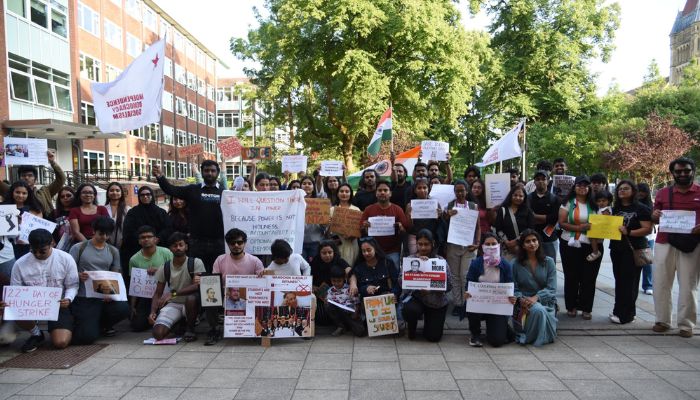
On 20th July, leftist propaganda portal The Wire claimed that the student protest in India had “reached London” and shared photographs of people gathering outside the Indian High Commission after reports of police action against the Cockroach Janta Party-led (CJP) protest in Delhi. Notably, Delhi Police had not granted permission for the protest, and the protesters had turned violent, indulging in stone-pelting and attacking police personnel before the police retaliated.
Source: X
In its post on social media, The Wire declared, “Youth protest reaches London as protesters show up at Indian High Commission.” It claimed that people had appeared “in big numbers” outside the High Commission as news spread about the police action in Delhi and other cities. The portal presented the gathering as a spontaneous response from Indians living in Britain and completely omitted the fact that the Students’ Federation of India’s (SFI) UK chapter had called for the protest outside the High Commission of India in London.
The protest had been announced in advance by SFI UK, and details were all over its social media platforms. The organisation fixed the venue and time, circulated promotional material, listed the demands and called upon supporters to participate. SFI committees had also been holding similar protests at other locations in the UK, including Leeds and Edinburgh, for weeks.
A social media user who participated in the Manchester protest later confirmed that the demonstration there had also been organised by SFI UK.
The Wire presents an SFI protest as a spontaneous diaspora gathering
The way The Wire presented the SFI protest outside the High Commission as a response to reports of the confrontation in Delhi is concerning, as the protest had already been announced on 19th July, a day before the march towards Parliament in Delhi.
Source: X
Its poster carried the call, “Cockroaches of London unite” and asked people to “rise in protest” outside India House in London at 6 pm on 20th July. The poster listed three main demands. It asked supporters to stand with students on hunger strike, support activist Sonam Wangchuk and demand the resignation of Union Education Minister Dharmendra Pradhan.
At the bottom, it explicitly stated that the London gathering was being organised “in solidarity with 20 July march to Parliament in Delhi”. Therefore, people did not simply “show up” after watching the news, as The Wire suggested. They had been called to a pre-announced protest by a structured political organisation.
After the gathering, SFI UK itself wrote that thousands of Indians in London had answered “our call for action”. It said the demonstration had been organised in solidarity with the Indian student movement and saluted the struggle of its “comrades in India”. While SFI UK claimed that “thousands” of people had gathered, the video it shared showed a much smaller number of protesters crammed into a small space.
At the protest outside the Indian Embassy, SFI UK Secretary Comrade Somiha expressed our solidarity with SFI comrades waging a hunger strike and protesting in millions across India against sustained police brutality.Dharmendra Pradhan must resign. Scrap the NTA. pic.twitter.com/sSgjfLya8L— Students' Federation of India – United Kingdom (@sfi_uk) July 20, 2026
While those who attended the protest in the UK may or may not have been members of SFI, the call, publicity, venue, messaging and speeches came from SFI UK. The Wire removed all of that context and transformed an SFI-organised event into what appeared to be an organic uprising by the Indian diaspora.
SFI UK had been mobilising supporters for weeks
The London demonstration was not an isolated protest planned after the confrontation at Jantar Mantar. SFI UK had been running a coordinated campaign against Union Education Minister Dharmendra Pradhan since at least the beginning of June.
On 4th June, the organisation posted photographs from a protest organised by its Leeds committee against what it called the mismanagement of national examinations, including NEET, CUET, UGC NET and CBSE examinations. The organisation said the gathering reflected anger and disillusionment among young people over the Indian education system.
Source: X
Another post from the same day said that SFI UK Secretary Somiha and other members had demanded the immediate resignation of Dharmendra Pradhan. The organisation promised to continue its protests until its demands were accepted.
SFI’s central leadership had issued a nationwide ultimatum
The overseas mobilisation was taking place alongside a campaign by SFI’s central organisation in India. On 9th June, the SFI Central Executive Committee issued a ten-day ultimatum to the Union Government. Its demands included the resignation of Dharmendra Pradhan, the scrapping of the National Testing Agency and the decentralisation of examinations.
Source: X
It also demanded the cancellation of the OSM evaluation system in CBSE examinations and an independent judicial inquiry into the NEET and CBSE examination controversies.
The organisation warned, “See you on the streets.”
On 14th June, SFI claimed that protests had taken place at 623 centres across 22 states. It claimed that 753 people had been arrested and 16 had been jailed. SFI UK reposted the message while declaring that the organisation’s “spirit” remained unbowed.
Source: X
These posts show a continuing organisational campaign. The protests in Britain were part of that wider mobilisation, not an unplanned reaction by disconnected individuals.
Source: X
Leeds and Edinburgh committees organised separate demonstrations
SFI UK’s social media activity also shows how its local committees were mobilised around the same demands. On 14th July, its Leeds committee issued a call for a protest outside Parkinson’s Building. The poster carried the hashtag “PradhanGoBack” and declared, “Cockroaches gather at Parkinson’s Leeds.” The promotional material included photographs of protesters, SFI symbols and the demand for the resignation of the Education Minister.
On 18th July, SFI UK said that its Edinburgh committee had organised a protest in solidarity with the Jantar Mantar hunger strike and the student movement in India. The organisation identified its Edinburgh president, Swarna, as one of the speakers and said that the gathering had stressed the need for collective and organised movements.
Source: X
The same day, its Leeds committee organised another demonstration at the University of Leeds. SFI UK said that the protesters demanded accountability from the government and the resignation of Dharmendra Pradhan.
Source: X
It also identified Secretary Somiha and Leeds Secretary Gayathri as speakers at the gathering. The organisation said that its solidarity would continue until the demands were met. These were not crowds that independently assembled after coming across news about Delhi. They were committee-led demonstrations with named office-bearers, common banners and repeated political demands.
Manchester protester confirms that SFI UK organised the gathering
A social media user named Kamal also posted footage of a demonstration in Manchester and demanded the resignation of Dharmendra Pradhan.
At Manchester today, Dharmendra Pradhan needs to resign. And next modi pic.twitter.com/PdXUAi3tny— Kamal (@justthatcool10) July 20, 2026
When another user asked whether a similar protest could be organised in Birmingham, Kamal responded that the Manchester gathering had been organised by SFI UK and suggested following its Instagram account for further updates.
Source: X
This provides further confirmation that SFI was using its network to organise demonstrations in multiple British cities.
SFI UK is not an informal group created after the Delhi protest
SFI UK describes itself as the first international committee of the Students’ Federation of India. Its website claims that it has over 600 members in Britain and more than ten subcommittees. It also claims to operate active units across British universities and says that it regularly organises campaigns, cultural programmes, fundraising activities and student welfare initiatives.
Its constitution states that SFI aims to organise students in India, as well as Indian students studying abroad, under one banner. It calls for building a “democratic and socialist society”, organising students alongside workers, peasants and other “progressive forces”, and extending solidarity to movements seeking socialism across the world.
The constitution also provides for overseas units, membership fees, affiliation to the SFI Central Executive Committee and committees at several organisational levels.
SFI is student wing of the Communist Party of India (Marxist) or CPI(M). Several senior CPI(M) leaders, including former general secretary Sitaram Yechury, emerged through the organisation and held senior positions in it before joining the party leadership.
Therefore, SFI UK is not an informal WhatsApp group of students that emerged during the Jantar Mantar agitation. It is part of an established Left-wing political network with members, committees, office-bearers and an ideological programme.
BBC and Al Jazeera frame the agitation as a Gen Z uprising
While The Wire removed SFI from its portrayal of the London demonstration, international media organisations framed the agitation in Delhi as a wider Gen Z rebellion against the Modi government.
The BBC promoted an explainer “Jantar Mantar: What is the Gen Z CJP protest in Delhi about?” Its accompanying social media post asked why thousands of people were protesting in the capital.
In another report, the BBC described CJP as a youth-led protest movement seeking education and employment reforms. It called the agitation one of the most visible expressions of public dissent against Prime Minister Narendra Modi in recent years.
Al Jazeera used the dramatic headline “‘Now or never’: Students defy Delhi lockdown to march on India’s parliament”.
It described CJP as a major challenge to the Modi government and claimed that thousands had answered the organisation’s call. The report highlighted police action, quoted protesters and cited commentators who sought to portray the agitation as evidence of deeper dissatisfaction over education, employment, inflation and poverty.
Amnesty International and HRW amplify the crackdown narrative
Amnesty International USA also declared that peaceful dissent was being suppressed in India. Its statement relied on “images and reports” from Jantar Mantar and alleged unnecessary and excessive force by Delhi Police. It demanded an investigation into allegations involving batons, tear gas and stone-throwing by police personnel.
Source: X
Amnesty identified CJP as the organisation leading the protests and repeated its demands concerning examination irregularities, compensation and the resignation of Dharmendra Pradhan.
Human Rights Watch similarly called the agitation one of the biggest anti-government protests in recent years. It asked the authorities to exercise restraint, restore mobile internet services near the protest and ensure that people could demonstrate peacefully.
Source: X
The framing by Amnesty and HRW contributed to an international narrative in which the agitation was presented almost entirely as an organic uprising of young Indians being suppressed by the government.
A well-orchestrated attempt to build a narrative against the Indian government
The manner in which SFI UK, left-liberal Indian media, international media outlets and NGOs such as Amnesty International and Human Rights Watch have presented the protests creates an impression that they were entirely organic. It also helps build a narrative that the Indian government is opposed to students’ welfare. Before accepting this narrative, it is essential to examine how these protests were organised and presented.
Not all students at Jantar Mantar were part of the propaganda, but innocent students ultimately face lathi charges and legal cases for participating in unlawful protests. The so-called leaders, including Abhijeet Dipke, Saurav Das and others, were either standing far away from the batons and tear gas or were not even present at the protest sites.
Amid all this, the narrative being pushed on international platforms needs to be scrutinised and countered.