Same old lies of ‘vote chori’, ‘civil war’ and institutional collapse: How Rahul Gandhi used his Germany visit to push regime-change narrative, again
Rahul Gandhi’s latest attack on India’s democratic institutions during his five-day visit to Germany was neither spontaneous nor novel. It was the continuation of a carefully constructed political narrative, one that seeks to convert repeated electoral rejection into an allegation of systemic fraud. While addressing audiences in Berlin and later at the Hertie School, Rahul Gandhi once again alleged that Indian elections are “not fair,” asserting that the Congress had actually won the Haryana Assembly elections and that the 2024 Maharashtra Vidhan Sabha elections were compromised. These claims, delivered on foreign soil, were presented as evidence of a “full-scale assault on India’s institutional framework.” However, far from being whistleblower revelations, Gandhi’s allegations rest on arguments that have already been repeatedly dismantled, most comprehensively by OpIndia, using official data and the Election Commission of India’s own records. Remarks in Germany merely recycled these discredited claims for an international audience less familiar with India’s electoral processes. One of the elections Rahul Gandhi repeatedly cites to bolster his claim that “India’s democracy is compromised” is Maharashtra. During his Germany visit, he again alleged that the Maharashtra Assembly elections were “not fair.” This assertion is demonstrably false and has been debunked several times, most recently in June this year, after Gandhi authored a misleading opinion piece in The Indian Express titled “Match-fixing Maharashtra.” At the very outset of that article, Gandhi alleged “industrial-scale rigging,” claiming that official statistics themselves revealed a “step-by-step playbook” of fraud. Yet, when examined closely, each pillar of his argument collapses under factual scrutiny. The Election Commissioner’s appointment lies Rahul Gandhi first attempted to cast suspicion on the appointment of Election Commissioners, claiming that the Modi government “rigged the panel for the appointment of umpires” by removing the Chief Justice of India and ensuring a 2:1 majority in favour of the ruling party. What Gandhi conveniently omitted is a historical fact. From India’s first general election in 1951–52 until March 2023, Election Commissioners were appointed exclusively by the President on the recommendation of the Union Cabinet, meaning 100% control rested with the ruling party of the day. The 2023 Election Commissioners Appointment Act, enacted by the Modi government, actually diluted the executive’s own power by mandating the inclusion of the Leader of Opposition in the selection panel. Rahul Gandhi’s outrage, therefore, is not about fairness; it is about losing the unilateral privilege that Congress once enjoyed. The irony is sharpened by the fact that during Congress rule, even Sonia Gandhi, who held no constitutional post, was widely acknowledged as exercising decisive influence over institutional appointments. The myth of ‘inflated’ voter registration Gandhi’s second claim revolved around allegedly inflated voter registration in Maharashtra. He falsely asserted that the number of registered voters exceeded the number of adults in the State, citing an increase from 9.29 crore voters in the May 2024 Lok Sabha elections to 9.70 crore voters in the November 2024 Vidhan Sabha elections. This argument collapses once historical data is examined. Across the past five election cycles, the increase in voter registration between Lok Sabha and Assembly elections has consistently hovered around 4%. In fact, the 4.26% increase in 2024 was not anomalous; it was lower than the 4.69% increase recorded in 2004 and comparable to previous cycles in 2009 and 2014. More importantly, the Election Commission categorically dismissed these allegations immediately after the elections. It clarified that all political parties, including Congress, had full access to voter lists throughout the revision process. The exercise was overseen by 97,000 Booth Level Officers and 1.03 lakh Booth Level Agents, 27,099 of whom were appointed by the Congress party itself. If voter rolls were indeed “inflated,” the first question Rahul Gandhi should answer is why his own party’s booth-level machinery failed to detect it or whether he is implicitly accusing his own agents of complicity. The recycled lie about voter turnout Rahul Gandhi also resurrected a long-debunked claim regarding voter turnout, alleging fraud because turnout rose from 58.22% at 5 pm to a final figure of 66.05%. According to him, this 7.83 percentage point increase, equivalent to 76 lakh voters, was “unprecedented.” The Maharashtra Chief Electoral Officer had already dismantled this claim in November 2024. He explained that voters queued at polling stations until closing time and that evening voting surges are common in urban and semi-urban constituencies. In fact, similar increases were recorded in the 2019 Maharashtra elections. The CEO further clarif
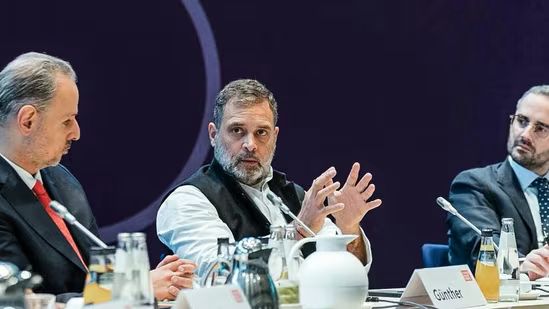

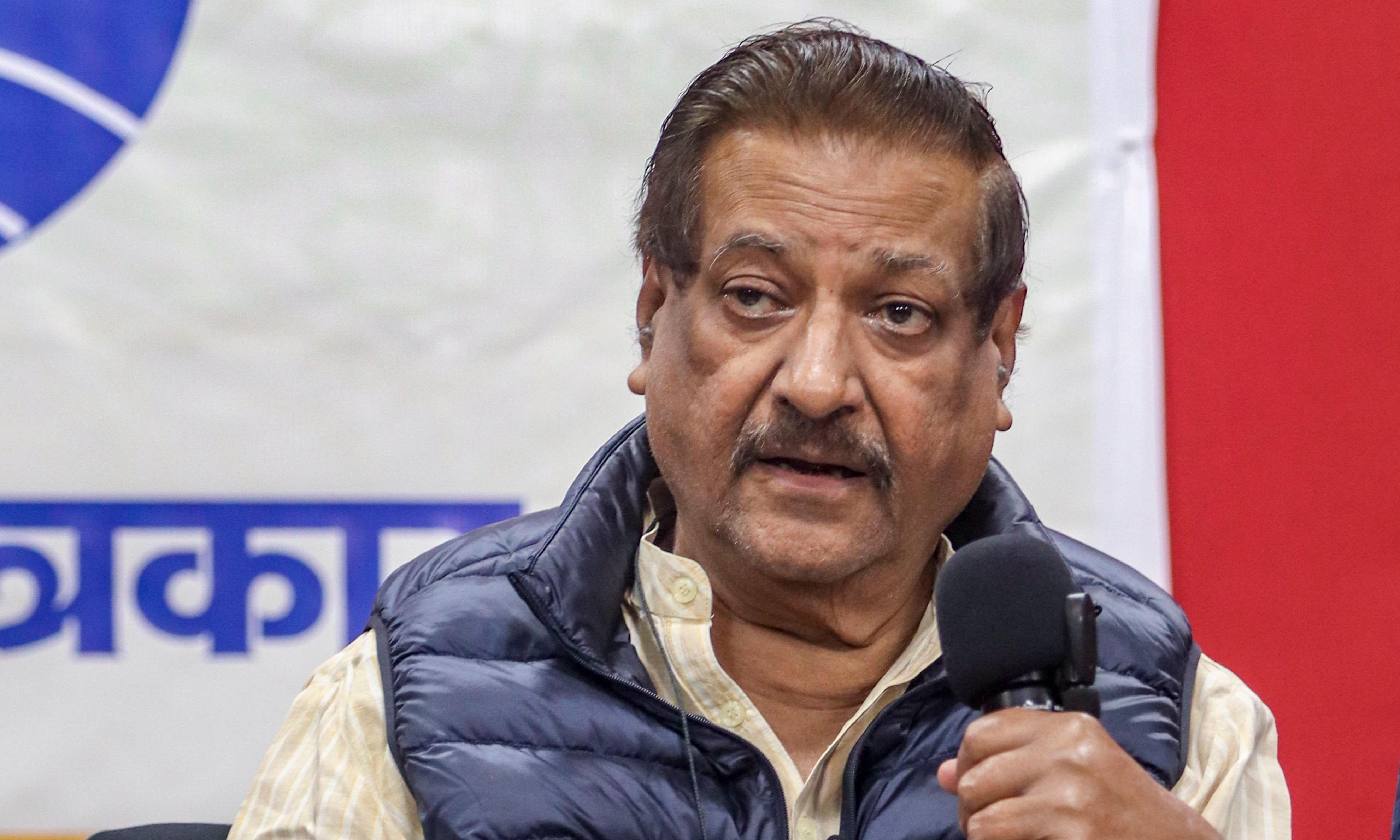
Rahul Gandhi’s latest attack on India’s democratic institutions during his five-day visit to Germany was neither spontaneous nor novel. It was the continuation of a carefully constructed political narrative, one that seeks to convert repeated electoral rejection into an allegation of systemic fraud.
While addressing audiences in Berlin and later at the Hertie School, Rahul Gandhi once again alleged that Indian elections are “not fair,” asserting that the Congress had actually won the Haryana Assembly elections and that the 2024 Maharashtra Vidhan Sabha elections were compromised. These claims, delivered on foreign soil, were presented as evidence of a “full-scale assault on India’s institutional framework.”
However, far from being whistleblower revelations, Gandhi’s allegations rest on arguments that have already been repeatedly dismantled, most comprehensively by OpIndia, using official data and the Election Commission of India’s own records. Remarks in Germany merely recycled these discredited claims for an international audience less familiar with India’s electoral processes.
One of the elections Rahul Gandhi repeatedly cites to bolster his claim that “India’s democracy is compromised” is Maharashtra. During his Germany visit, he again alleged that the Maharashtra Assembly elections were “not fair.” This assertion is demonstrably false and has been debunked several times, most recently in June this year, after Gandhi authored a misleading opinion piece in The Indian Express titled “Match-fixing Maharashtra.”
At the very outset of that article, Gandhi alleged “industrial-scale rigging,” claiming that official statistics themselves revealed a “step-by-step playbook” of fraud. Yet, when examined closely, each pillar of his argument collapses under factual scrutiny.
The Election Commissioner’s appointment lies
Rahul Gandhi first attempted to cast suspicion on the appointment of Election Commissioners, claiming that the Modi government “rigged the panel for the appointment of umpires” by removing the Chief Justice of India and ensuring a 2:1 majority in favour of the ruling party.
What Gandhi conveniently omitted is a historical fact. From India’s first general election in 1951–52 until March 2023, Election Commissioners were appointed exclusively by the President on the recommendation of the Union Cabinet, meaning 100% control rested with the ruling party of the day.
The 2023 Election Commissioners Appointment Act, enacted by the Modi government, actually diluted the executive’s own power by mandating the inclusion of the Leader of Opposition in the selection panel. Rahul Gandhi’s outrage, therefore, is not about fairness; it is about losing the unilateral privilege that Congress once enjoyed. The irony is sharpened by the fact that during Congress rule, even Sonia Gandhi, who held no constitutional post, was widely acknowledged as exercising decisive influence over institutional appointments.
The myth of ‘inflated’ voter registration
Gandhi’s second claim revolved around allegedly inflated voter registration in Maharashtra. He falsely asserted that the number of registered voters exceeded the number of adults in the State, citing an increase from 9.29 crore voters in the May 2024 Lok Sabha elections to 9.70 crore voters in the November 2024 Vidhan Sabha elections.
This argument collapses once historical data is examined. Across the past five election cycles, the increase in voter registration between Lok Sabha and Assembly elections has consistently hovered around 4%. In fact, the 4.26% increase in 2024 was not anomalous; it was lower than the 4.69% increase recorded in 2004 and comparable to previous cycles in 2009 and 2014.
More importantly, the Election Commission categorically dismissed these allegations immediately after the elections. It clarified that all political parties, including Congress, had full access to voter lists throughout the revision process. The exercise was overseen by 97,000 Booth Level Officers and 1.03 lakh Booth Level Agents, 27,099 of whom were appointed by the Congress party itself. If voter rolls were indeed “inflated,” the first question Rahul Gandhi should answer is why his own party’s booth-level machinery failed to detect it or whether he is implicitly accusing his own agents of complicity.
The recycled lie about voter turnout
Rahul Gandhi also resurrected a long-debunked claim regarding voter turnout, alleging fraud because turnout rose from 58.22% at 5 pm to a final figure of 66.05%. According to him, this 7.83 percentage point increase, equivalent to 76 lakh voters, was “unprecedented.”
The Maharashtra Chief Electoral Officer had already dismantled this claim in November 2024. He explained that voters queued at polling stations until closing time and that evening voting surges are common in urban and semi-urban constituencies. In fact, similar increases were recorded in the 2019 Maharashtra elections. The CEO further clarified that turnout figures reported during polling hours are based on oral telephonic updates, whereas the final turnout is calculated using Form 17C, signed by polling agents of all candidates and verified during counting.
The ECI also pointed out that Maharashtra’s average voting rate is approximately 58 lakh votes per hour, meaning up to 1.16 crore votes could be cast in the final two hours. In 2024, only about 65 lakh votes were recorded during that period, well below the average. Despite these clarifications, Rahul Gandhi continues to propagate the same falsehoods, now even abroad.
Conflating Lok Sabha and assembly elections
Another intellectually dishonest tactic employed by Gandhi was conflating Lok Sabha and Vidhan Sabha results. He argued that the BJP’s higher strike rate in the Assembly elections compared to the Lok Sabha elections five months earlier was evidence of rigging.
This ignores a basic political reality: voters routinely differentiate between national and state elections. Even when elections are held simultaneously, outcomes often diverge sharply. The 2019 Odisha elections offer a textbook example, BJP won 38% of Lok Sabha seats but only 15.6% of Assembly seats, despite voting occurring on the same days. In Maharashtra’s case, the elections were separated by five months, making Gandhi’s comparison even more untenable.
Fabricating an ‘evidence trail’
Gandhi further alleged that the Election Commission suppressed evidence and denied access to voter rolls with photographs. This claim is demonstrably false. Detailed constituency-wise voter data is publicly available on the Maharashtra Chief Electoral Officer’s website. The EC engaged with Congress’s complaints from the outset, contradicting Gandhi’s portrayal of an opaque and hostile institution.
Perhaps the most farcical claim was his argument that increased voter numbers at certain booths mathematically proved fraud. Gandhi asserted that 600 additional voters per booth would require 10 extra hours of voting, an argument that betrays either ignorance or bad faith. Voting in India does not take one minute per voter, nor does each booth operate with a single machine or room. Multiple polling rooms function simultaneously, allowing several voters to vote at the same time.
Even worse for Gandhi’s case, his claim that the BJP won “most” seats where voter numbers increased is flatly false. In 53 such seats, the BJP did not win at all. Congress itself won 16 of them, including Mumbadevi, Palus Kadegaon, Nagpur North and Dharavi, often by margins several times larger than the increase in voters. The logical implication of Gandhi’s argument would be that the BJP “rigged” elections to help Opposition parties win, a conclusion so absurd that it exposes the hollowness of his narrative.
From domestic lies to foreign platforms
Despite these comprehensive debunkings, Rahul Gandhi carried the same allegations to Germany, presenting them as settled facts before foreign audiences. This is not an accident. It is a pattern. When faced with repeated electoral defeat in 2014, 2019, and 2024, Gandhi has chosen not introspection, but institutional vilification and the internationalisation of domestic politics.
Ironically, the same democratic system he maligns is the one that made him Leader of the Opposition, gave the Congress party power in several states, and continues to provide constitutional avenues for challenge and reform. What Rahul Gandhi calls an “assault on democracy” is, in truth, the electorate’s refusal to endorse his leadership.
The Maharashtra “vote chori” claim stands exposed as a patchwork of half-truths, selective data, and outright falsehoods. Repeating it in Germany does not resurrect its credibility. It only underscores a deeper problem: Rahul Gandhi’s inability to accept democratic verdicts unless they favour him.
What Rahul Gandhi calls an “assault on democracy” is, in reality, an unwillingness to accept political failure. Carrying that discredited narrative to foreign lecture halls does not strengthen democracy; it undermines India’s institutions for personal political cover.
Democracy does not erode when leaders lose elections; it erodes when they refuse to accept the verdict. Rahul Gandhi’s Germany claim, much like his earlier foreign interventions, reveals less about the health of Indian democracy and far more about the Congress leadership’s inability to come to terms with repeated rejection by the Indian electorate.
The regime change ecosystem and Rahul Gandhi’s useful alignment.
Rahul Gandhi’s persistent effort to portray India as a democracy in decline cannot be viewed in isolation from the global ecosystem that thrives on such narratives. Over the past decade, “democratic backsliding” has become the preferred entry point for external political pressure, economic coercion, and soft regime-change operations, particularly against countries that resist Western strategic or ideological alignment.
Modern regime-change operations rarely resemble overt coups or military interventions. Instead, they operate through a layered framework: delegitimising electoral outcomes, questioning institutional credibility, amplifying minority persecution narratives, and repeatedly asserting that the incumbent government lacks democratic legitimacy. Once these claims gain traction, they are weaponised through international media, NGOs, academic institutions, multilateral bodies, and “early warning” indices that present subjective political assessments as empirical risk analysis.
India has increasingly found itself in the crosshairs of this ecosystem, especially as it asserts strategic autonomy, resists alignment pressures in the Indo-Pacific, maintains independent positions on Russia, and refuses to subordinate domestic governance to Western moral policing. Unsurprisingly, India’s democracy is now routinely portrayed as “at risk” by organisations that rely on datasets, funding streams, or ideological frameworks rooted in interventionist liberalism.
Rahul Gandhi’s foreign speeches fit seamlessly into this architecture. By repeatedly alleging “vote theft,” “institutional capture,” and “assault on democracy” on international platforms, he lends domestic political legitimacy to narratives that external actors are eager to promote. These claims then circulate back into global discourse as citations, “India’s Leader of Opposition asserts democracy is compromised, creating a self-reinforcing loop of delegitimisation.
This is precisely how soft regime-change narratives are normalised: internal political grievances are internationalised, selectively amplified, and reframed as moral emergencies requiring global attention. The irony is that while Rahul Gandhi presents himself as a victim of institutional oppression, he simultaneously empowers external actors who have a documented history of advocating political interference, sanctions, and even military intervention in the name of democracy and human rights.
In fact, Rahul Gandhi’s recent claims in Germany cannot be dismissed as isolated slip of the tongue. They form part of a consistent and traceable pattern that stretches back several years, most notably to his 2021 visit to the United States and his unexplained October 2023 trip to Uzbekistan. Together, these episodes reinforce the argument that Gandhi has systematically internationalised India’s domestic politics in a manner that aligns with regime-change narratives.
During his 2021 visit to the United States, Rahul Gandhi openly courted American political and academic opinion by portraying India as a democracy under siege. Speaking at multiple forums, he urged the US establishment to “stand up for democratic values” in India, language that went far beyond diplomatic concern and bordered on an invitation for intervention. At the time, Gandhi repeatedly framed the Modi government as authoritarian, alleged the erosion of institutional independence, and suggested that minorities were unsafe. The messaging was unmistakable: India, under its elected leadership, had deviated from democratic norms and required external moral pressure.
These remarks were made even as India was grappling with the COVID-19 crisis, a period when national unity and responsible opposition were paramount. Instead, Gandhi chose to amplify internal political disputes on foreign soil, feeding into a global ecosystem already predisposed to viewing India through the lens of democratic backsliding. This was among the earliest clear signals that international platforms were becoming a preferred arena for Congress’s domestic political battles.
That trajectory resurfaced under far more intriguing circumstances in October 2023, when Rahul Gandhi undertook a sudden and largely unexplained visit to Uzbekistan, at a time when India was in the midst of crucial Assembly elections. No official purpose was outlined, no structured engagements were publicly disclosed, and no clarity was offered about the timing or intent of the trip. The visit might have remained a curiosity had it not coincided with high-level diplomatic activity involving Samantha Power, the Administrator of the United States Agency for International Development (USAID), who was in Uzbekistan around the same period for regional connectivity discussions.
The coincidence raised legitimate questions, particularly given Power’s well-documented role in advancing interventionist human-rights doctrines, her association with regime-change frameworks, and USAID’s historical involvement in civil-society mobilisation across multiple countries. When viewed alongside Rahul Gandhi’s repeated foreign speeches alleging democratic collapse in India, the Uzbekistan visit appeared less random and more suggestive of strategic alignment with global networks that prioritise political pressure over electoral legitimacy.
What ties the 2021 US visit, the 2023 Uzbekistan trip, and his subsequent remarks in Germany and at Harvard together is not geography, but intent. In each instance, Rahul Gandhi has chosen to portray India as a failing democracy before foreign audiences, questioned the legitimacy of its institutions, and implicitly or explicitly encouraged external actors to take notice or action. This is the hallmark of a regime-change narrative, where internal political defeat is reframed as a moral emergency requiring international validation.
It is therefore no coincidence that Gandhi’s rhetoric aligns closely with the language used by interventionist figures, NGOs, and policy bodies that routinely classify India as being on the “brink” of genocide, authoritarianism, or democratic collapse. Nor is it accidental that such narratives intensify ahead of or immediately after major Indian elections.
Whether intentional or not, Rahul Gandhi has positioned himself as a useful validator within this regime-change ecosystem. His statements abroad do not remain mere opinions; they become inputs in reports, resolutions, media editorials, and diplomatic pressure campaigns aimed at weakening India’s elected government. This is not opposition politics; it is externalisation of political failure with potential national consequences.