SHANTI Bill set to transform healthcare, agriculture, and energy through nuclear power; private sector entry allowed with strong safety safeguards: Here’s what it means for you
The SHANTI Bill, 2025, which permits private participation in India’s nuclear energy sector, is historic in more ways than one. It marks a fundamental shift in the country’s nuclear architecture and is poised to deliver benefits far beyond electricity generation, spanning healthcare, agriculture, food processing, industry, and climate action. By opening the sector to responsible private and joint-venture participation, the Bill also removes long-standing legal and investment bottlenecks that have deterred both domestic and global investors for decades. A structural reform in a sensitive sector Nuclear energy has traditionally remained under complete government control due to its strategic and sensitive nature. While that core principle remains intact, the SHANTI Bill introduces a calibrated reform. It allows private players to participate alongside public sector entities, while making it explicitly clear that highly sensitive materials and strategic controls will continue to remain exclusively with the government. Radioactive materials, nuclear fuel, and heavy water will remain under strict state oversight. Safety norms, licensing, and operational clearances will be determined by the government and enforced by an empowered regulator. In essence, the reform expands capacity and investment without compromising national security. What exactly is the SHANTI Bill? The Sustainable Harnessing and Advancement of Nuclear Energy for Transforming India (SHANTI) Bill, 2025replaces two key legislations: The Atomic Energy Act of 1962, and The Civil Liability for Nuclear Damage Act, 2010. A major institutional reform under the Bill is granting statutory status to the Atomic Energy Regulatory Board (AERB). This move significantly strengthens regulatory oversight and ensures independent, transparent, and robust supervision of radiation safety and nuclear operations, something India’s nuclear ecosystem has long required. Clearing the investment logjam Despite economic liberalisation, nuclear energy remained an exception due to rigid liability provisions, particularly supplier liability under the 2010 law. Global nuclear companies were reluctant to invest in India due to legal uncertainty and disproportionate exposure to risk. The SHANTI Bill addresses this directly by clearly defining liability structures, thereby providing legal certainty to operators and suppliers. This reform is critical if India is to attract cutting-edge nuclear technology, global partnerships, and long-term capital. Compensation, liability, and safety: addressing the criticism The opposition has alleged that the Bill dilutes compensation provisions and weakens supplier accountability while opening the door for corporate interests in a sensitive sector. These claims were categorically rejected by Union Minister Dr Jitendra Singh. The government has clarified that: Victim compensation has not been reduced. Operator liability is now linked to reactor capacity to encourage new technologies such as Small Modular Reactors (SMRs). Liability limits range from ₹100 crore to ₹3,000 crore, depending on reactor size. In addition, compensation will be ensured through: Operator liability, The government-backed Nuclear Liability Fund, and India’s participation in international nuclear compensation conventions. Crucially, the “no-fault liability” principle continues, meaning victims do not need to prove negligence. Operators are also mandated to maintain insurance equal to their liability exposure. If compensation exceeds an operator’s capacity, the Central Government will step in to cover the remainder. Penalties under the Bill range from ₹5 lakh for minor violations to ₹1 crore for serious offences, and criminal liability for negligence remains intact. Independent dispute resolution and licensing The Bill also proposes the creation of a Nuclear Energy Dispute Resolution Advisory Council to handle operational and liability-related disputes. All operators, public or private, must obtain government licences and AERB safety clearances before commencing operations. The legislation also provides for compensation in case a nuclear incident in India causes damage beyond national borders, subject to specified conditions—aligning India with international nuclear law norms. Is the public sector being weakened? The opposition has argued that encouraging private participation undermines public sector undertakings. This narrative does not withstand scrutiny. Over the past decade, the government has increased the Department of Atomic Energy’s budget by nearly 170%. India’s nuclear power contribution to the energy mix remains modest compared to peer economies. With rising demand from data centres, healthcare, manufacturing, and digital infrastructure, nuclear energy is indispensable alongside coal, hydro, wind, and solar. According to the government, the SHANTI Bill enables responsible
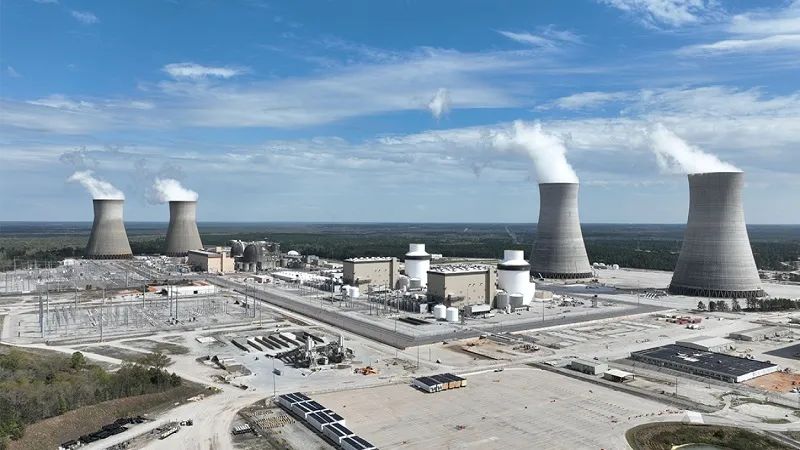

The SHANTI Bill, 2025, which permits private participation in India’s nuclear energy sector, is historic in more ways than one. It marks a fundamental shift in the country’s nuclear architecture and is poised to deliver benefits far beyond electricity generation, spanning healthcare, agriculture, food processing, industry, and climate action. By opening the sector to responsible private and joint-venture participation, the Bill also removes long-standing legal and investment bottlenecks that have deterred both domestic and global investors for decades.
A structural reform in a sensitive sector
Nuclear energy has traditionally remained under complete government control due to its strategic and sensitive nature. While that core principle remains intact, the SHANTI Bill introduces a calibrated reform. It allows private players to participate alongside public sector entities, while making it explicitly clear that highly sensitive materials and strategic controls will continue to remain exclusively with the government.
Radioactive materials, nuclear fuel, and heavy water will remain under strict state oversight. Safety norms, licensing, and operational clearances will be determined by the government and enforced by an empowered regulator. In essence, the reform expands capacity and investment without compromising national security.
What exactly is the SHANTI Bill?
The Sustainable Harnessing and Advancement of Nuclear Energy for Transforming India (SHANTI) Bill, 2025replaces two key legislations:
- The Atomic Energy Act of 1962, and
- The Civil Liability for Nuclear Damage Act, 2010.
A major institutional reform under the Bill is granting statutory status to the Atomic Energy Regulatory Board (AERB). This move significantly strengthens regulatory oversight and ensures independent, transparent, and robust supervision of radiation safety and nuclear operations, something India’s nuclear ecosystem has long required.
Clearing the investment logjam
Despite economic liberalisation, nuclear energy remained an exception due to rigid liability provisions, particularly supplier liability under the 2010 law. Global nuclear companies were reluctant to invest in India due to legal uncertainty and disproportionate exposure to risk.
The SHANTI Bill addresses this directly by clearly defining liability structures, thereby providing legal certainty to operators and suppliers. This reform is critical if India is to attract cutting-edge nuclear technology, global partnerships, and long-term capital.
Compensation, liability, and safety: addressing the criticism
The opposition has alleged that the Bill dilutes compensation provisions and weakens supplier accountability while opening the door for corporate interests in a sensitive sector. These claims were categorically rejected by Union Minister Dr Jitendra Singh.
The government has clarified that:
- Victim compensation has not been reduced.
- Operator liability is now linked to reactor capacity to encourage new technologies such as Small Modular Reactors (SMRs).
- Liability limits range from ₹100 crore to ₹3,000 crore, depending on reactor size.
In addition, compensation will be ensured through:
- Operator liability,
- The government-backed Nuclear Liability Fund, and
- India’s participation in international nuclear compensation conventions.
Crucially, the “no-fault liability” principle continues, meaning victims do not need to prove negligence. Operators are also mandated to maintain insurance equal to their liability exposure. If compensation exceeds an operator’s capacity, the Central Government will step in to cover the remainder.
Penalties under the Bill range from ₹5 lakh for minor violations to ₹1 crore for serious offences, and criminal liability for negligence remains intact.
Independent dispute resolution and licensing
The Bill also proposes the creation of a Nuclear Energy Dispute Resolution Advisory Council to handle operational and liability-related disputes. All operators, public or private, must obtain government licences and AERB safety clearances before commencing operations.
The legislation also provides for compensation in case a nuclear incident in India causes damage beyond national borders, subject to specified conditions—aligning India with international nuclear law norms.
Is the public sector being weakened?
The opposition has argued that encouraging private participation undermines public sector undertakings. This narrative does not withstand scrutiny.
Over the past decade, the government has increased the Department of Atomic Energy’s budget by nearly 170%. India’s nuclear power contribution to the energy mix remains modest compared to peer economies. With rising demand from data centres, healthcare, manufacturing, and digital infrastructure, nuclear energy is indispensable alongside coal, hydro, wind, and solar.
According to the government, the SHANTI Bill enables responsible private and joint-venture participation without compromising public sector strength, national security, or public interest. Its objective is to reduce project delays, overcome resource constraints, and achieve 100 GW of nuclear capacity by 2047, up from the current ~8.2 GW, while supporting India’s net-zero target by 2070.
Climate action and clean energy transition
For the first time, the definition of nuclear damage under Indian law explicitly includes environmental and economic harm. Nuclear energy is a low-carbon, non-intermittent power source that operates round-the-clock, unlike solar or wind.
While uranium mining, fuel processing, and plant construction are energy-intensive, lifecycle emissions from nuclear power remain among the lowest of all energy sources. Unlike coal-based plants, nuclear reactors produce no air pollution or CO₂ during operation, helping industries avoid carbon taxes and emissions penalties.
By promoting advanced technologies such as Small Modular Reactors, the Bill supports India’s transition away from coal while ensuring energy security.
Managing radioactive waste
Radioactive waste remains a legitimate concern. However, its handling, covering storage, transportation, processing, and disposal, remains strictly controlled by the government.
Waste is categorised into low-level and high-level waste, each with established and internationally accepted disposal protocols. In volume terms, nuclear waste is far smaller than waste generated by fossil fuel-based energy. This is precisely why developed economies continue to expand their reliance on nuclear power.
Agriculture and food processing: a silent revolution
Nuclear technology is already transforming Indian agriculture. Radiation-based techniques have helped develop 72 new crop varieties, including mustard, soybean, sunflower, pulses, rice, jute, and banana.
Food irradiation extends shelf life, reduces dependence on expensive cold storage, eliminates pests, and enhances food safety. These applications strengthen food security, reduce post-harvest losses, improve farmer incomes, and boost India’s competitiveness in global agricultural trade.
Healthcare and public welfare gains
The Bill must also be viewed through the lens of public health. Radiation plays a critical role in cancer diagnosis and treatment, medical imaging, and biomedical research. Expanded nuclear infrastructure will accelerate innovation, research, and access to advanced healthcare technologies.
Institutions like Bhabha Atomic Research Centre (BARC) have already deployed nuclear-based water purification technologies in flood-prone areas, significantly reducing disease outbreaks. Nuclear desalination projects are operational in states such as Gujarat, Rajasthan, and Maharashtra, addressing both water scarcity and salinity.
Private capital, global partnerships, and national ambition
To fully harness nuclear energy’s potential, India requires private capital, advanced technology, and global collaboration. Indian conglomerates such as Reliance, Tata Power, and Adani Power have shown interest, while foreign companies are also exploring opportunities under the new framework.
To achieve the vision of Viksit Bharat, India must scale up nuclear energy, not merely as a power source, but as an enabler of healthcare, agriculture, exports, industry, and technological self-reliance.
The SHANTI Bill, 2025, is therefore not just an energy reform; it is a strategic, economic, and developmental milestone. By balancing safety, sovereignty, sustainability, and growth, it lays the foundation for a cleaner, stronger, and more self-reliant India.