Sonam Wangchuk’s hunger strike: Pointless, farcical and likely to end just like Irom Sharmila’s 16-year search for relevance
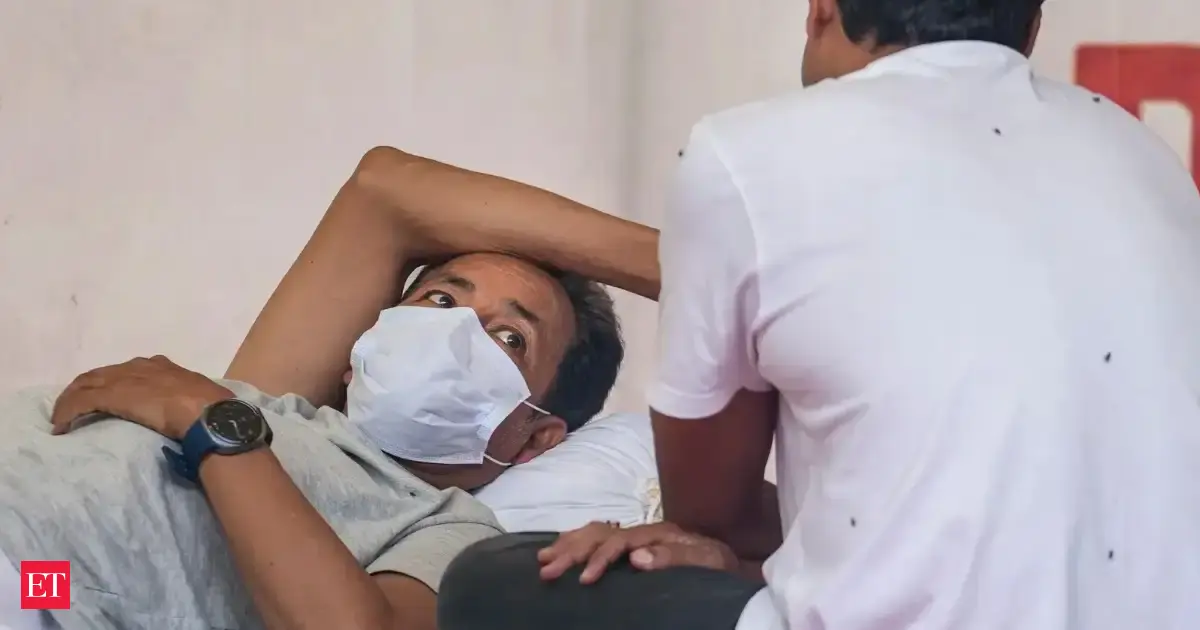
A political spectacle has been unfolding at Jantar Mantar for several days under the pretence of a youth protest. The Cockroach Janta Party (CJP) founded by Abhijeet Dipke, has been leading this demonstration allegedly to safeguard the future of Indian students and to seek accountability from the central government regarding multiple lapses in the education system, including paper leaks. However, the spotlight has been primarily on Sonam Wangchuk, who is on a hunger strike in support of the aforementioned submissions. He has been on a water-only fast since 28th June. Hence, the usual suspects, including the CJP, which is reportedly associated with the Aam Aadmi Party (AAP), other opposition parties and their entire ecosystem, are attempting to portray him as a hero for a cause that casts the Modi government as the antagonist. However, they have all intentionally ignored a crucial question. What constructive solutions, alternative proposals, or viable criticisms is he offering? It is true that the government must be scrutinised for its shortcomings, especially regarding the nation’s future. Nevertheless, these challenges are neither novel nor unprecedented. It is a systemic issue that requires a thorough and careful approach, devoid of political theatrics and genuinely focused on the students without any vested intentions or goals. However, this does not seem to apply to Wangchuk, who has a notably controversial history. There has been an evidently orchestrated effort of false glorification rather than inquiring clarity on his roadmap to tackle the problems endured by students, or what he can actually contribute to their settlement. Wangchuk, the son of a late Congress MLA, has recently been proclaimed the real-life embodiment of Phunsukh Wangdu from Rajkumar Hirani’s movie 3 Idiots despite his own earlier statement to the contrary. Furthermore, the filmmaker and Amir Khan, who took on the role, also confirmed that their movie was not inspired by Wangchuk’s life. When Leh burned amid Wangchuk’s hunger strike The gravity of the difficulties related to students has been reduced to mockery, political stunts and an obvious farce. However, this seems to be a recurring theme with Wangchuk, who has also employed similar methods previously. He initiated a hunger strike in Leh to demand statehood for Ladakh and its inclusion under the Sixth Schedule of the Indian Constitution last September. However, he had to be arrested under the National Security Act (NSA) as deadly protests erupted in which the local Bharatiya Janata Party (BJP) office was torched, and 4 people died while many others were wounded. “We arrested a Pakistan PIO (Pakistan Intelligence Operative) in the recent past who was reporting back across. We have a record of this. Wanghchuk had attended a Dawn event in Pakistan. He also visited Bangladesh. So, there is a big question mark on him. Investigation is being done,” revealed SD Singh Jamwal, who was Ladakh’s Director General of Police (DGP) at the time. He highlighted that his protest platform created an environment conducive to violence, which was planned and coordinated in advance. He added, “Wangchuk has had a history of instigating. He has referred to the Arab Spring, Nepal and Bangladesh. The investigation into his funding is going on for FCRA (Foreign Contribution Regulation Act) violation.” “Wangchuk had been indulging in activities prejudicial to the Security of the State, Maintenance of Public Order and Services essential to the community, as mentioned in the grounds of detention. I was satisfied and continue to be satisfied with the detention of the detainee,” District Magistrate of Leh had informed the Supreme Court. The Ministry of Home Affairs also pointed out how he continued his hunger strike in spite of repeated appeals from fellow leaders, akin to his present adamancy and “misled the public by making incendiary references to protests similar to the Arab Spring and Gen Z protests in Nepal.” Wangchuk was eventually released from Jodhpur jail after 170 days in March. His actions are a clear reflection of his agenda and even serve as a potential warning of what might lie ahead. There was Irom Sharmila before Sonam Wangchuk While supporters of Wangchuk are mistakenly likening him to fictional movie characters and even to the hunger strike of Anna Hazare, there exists a remarkably similar figure who engaged in such tactics to exert pressure on New Delhi for 16 years. Her name is Irom Sharmila Chanu, and she is from Manipur. On 5th November 2000, the Assam Rifles shot dead 10 civilians at a bus stop in Malom following a bomb attack by assailants that targeted a nearby paramilitary convoy. This tragedy was utilised by Irom as a platform to embark on a political charade that lasted for 16 years. She refused to eat and commenced a hunger strike against the Armed Forces Special Powers Act (AFSPA) in the sensitive state that has experienced decades
A political spectacle has been unfolding at Jantar Mantar for several days under the pretence of a youth protest. The Cockroach Janta Party (CJP) founded by Abhijeet Dipke, has been leading this demonstration allegedly to safeguard the future of Indian students and to seek accountability from the central government regarding multiple lapses in the education system, including paper leaks.
However, the spotlight has been primarily on Sonam Wangchuk, who is on a hunger strike in support of the aforementioned submissions. He has been on a water-only fast since 28th June. Hence, the usual suspects, including the CJP, which is reportedly associated with the Aam Aadmi Party (AAP), other opposition parties and their entire ecosystem, are attempting to portray him as a hero for a cause that casts the Modi government as the antagonist. However, they have all intentionally ignored a crucial question.
What constructive solutions, alternative proposals, or viable criticisms is he offering? It is true that the government must be scrutinised for its shortcomings, especially regarding the nation’s future. Nevertheless, these challenges are neither novel nor unprecedented. It is a systemic issue that requires a thorough and careful approach, devoid of political theatrics and genuinely focused on the students without any vested intentions or goals. However, this does not seem to apply to Wangchuk, who has a notably controversial history.
There has been an evidently orchestrated effort of false glorification rather than inquiring clarity on his roadmap to tackle the problems endured by students, or what he can actually contribute to their settlement. Wangchuk, the son of a late Congress MLA, has recently been proclaimed the real-life embodiment of Phunsukh Wangdu from Rajkumar Hirani’s movie 3 Idiots despite his own earlier statement to the contrary. Furthermore, the filmmaker and Amir Khan, who took on the role, also confirmed that their movie was not inspired by Wangchuk’s life.
When Leh burned amid Wangchuk’s hunger strike
The gravity of the difficulties related to students has been reduced to mockery, political stunts and an obvious farce. However, this seems to be a recurring theme with Wangchuk, who has also employed similar methods previously. He initiated a hunger strike in Leh to demand statehood for Ladakh and its inclusion under the Sixth Schedule of the Indian Constitution last September.
However, he had to be arrested under the National Security Act (NSA) as deadly protests erupted in which the local Bharatiya Janata Party (BJP) office was torched, and 4 people died while many others were wounded.
“We arrested a Pakistan PIO (Pakistan Intelligence Operative) in the recent past who was reporting back across. We have a record of this. Wanghchuk had attended a Dawn event in Pakistan. He also visited Bangladesh. So, there is a big question mark on him. Investigation is being done,” revealed SD Singh Jamwal, who was Ladakh’s Director General of Police (DGP) at the time.
He highlighted that his protest platform created an environment conducive to violence, which was planned and coordinated in advance. He added, “Wangchuk has had a history of instigating. He has referred to the Arab Spring, Nepal and Bangladesh. The investigation into his funding is going on for FCRA (Foreign Contribution Regulation Act) violation.”
“Wangchuk had been indulging in activities prejudicial to the Security of the State, Maintenance of Public Order and Services essential to the community, as mentioned in the grounds of detention. I was satisfied and continue to be satisfied with the detention of the detainee,” District Magistrate of Leh had informed the Supreme Court.
The Ministry of Home Affairs also pointed out how he continued his hunger strike in spite of repeated appeals from fellow leaders, akin to his present adamancy and “misled the public by making incendiary references to protests similar to the Arab Spring and Gen Z protests in Nepal.” Wangchuk was eventually released from Jodhpur jail after 170 days in March.
His actions are a clear reflection of his agenda and even serve as a potential warning of what might lie ahead.
There was Irom Sharmila before Sonam Wangchuk
While supporters of Wangchuk are mistakenly likening him to fictional movie characters and even to the hunger strike of Anna Hazare, there exists a remarkably similar figure who engaged in such tactics to exert pressure on New Delhi for 16 years. Her name is Irom Sharmila Chanu, and she is from Manipur.
On 5th November 2000, the Assam Rifles shot dead 10 civilians at a bus stop in Malom following a bomb attack by assailants that targeted a nearby paramilitary convoy. This tragedy was utilised by Irom as a platform to embark on a political charade that lasted for 16 years.
She refused to eat and commenced a hunger strike against the Armed Forces Special Powers Act (AFSPA) in the sensitive state that has experienced decades of violent insurgencies, deeply impacting both civilians and security personnel. Her aim was to urge the central government to repeal the law, which is important for maintaining public order and peace in such regions.
However, both the NDA (National Democratic Alliance) led by the Bharatiya Janata Party and the United Progressive Alliance headed by the Indian National Congress governments refused to buy into her ploy, which would have threatened regional security and stability as well as increased cross-border militancy and ethnic tensions.
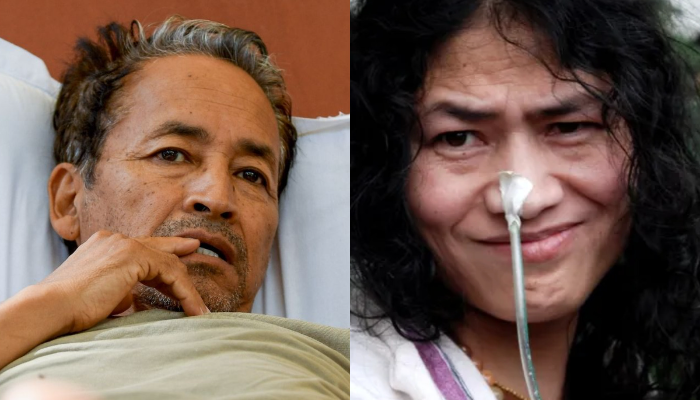
Certainly, no individual can endure even a few weeks without any sustenance. Therefore, a nasogastric tube was inserted into Irom’s nose to feed her. Interestingly, these tubes can be self-dislodged, but a narrative was created around how the government was “force-feeding” her to exalt her agitation.
Of course, this would not have reached such a point, but Irom exploited an indispensable subject to construct her public image which she later used to set her unsuccessful political career, handing a prime opportunity to global anti-India forces to intervene in its affairs.
Anyone who believes that Irom Sharmila’s fasting was genuine, needs a reality check. The Ryles tube is ridiculously easy to remove. Patients with both hands tied to the bed have managed to do it. But somehow it was “forced” on her for a dozen years without any restraints. https://t.co/ijjeAzzvA8— Amit Thadhani (@amitsurg) July 15, 2026
It is noteworthy that the special laws and provisions are imposed based on the circumstances present in particular regions. The changes in these ground realities have also led to the gradual removal of special acts over time under the Modi government. AFSPA has been considerably rolled back throughout the northeast, attributed to improved security and a substantial decrease in insurgency incidents. It has been completely rescinded in Tripura and Meghalaya, while its enforcement has been confined to particular districts and police stations in Assam, Nagaland, Manipur and Arunachal Pradesh.
However, Irom’s performative activism, which strayed significantly from the facts, persisted as she tirelessly endeavoured to make the Indian state acquiesce to her wishes. However, all facades eventually conclude sooner or later and hers was no exception after it paved the way for her political debut.
On 9th August 2016, she ended her hunger strike and stepped into the political area. She established “People’s Resurgence and Justice Alliance” (PRJA) and participated in the 2017 Manipur Legislative Assembly elections from the Thoubal constituency, where she faced off against former Chief Minister Okram Ibobi Singh.
The 54-year-old popular as the “Iron Lady of Manipur” was only able to secure 90 votes, as her aspiration to become a legislator encountered a substantial blow just a few months later in March 2017. During the campaign, she had declared her intention to run in the 2019 general elections if she did not succeed, but afterwards asserted that she was “fed up with this political system” and then exited active politics. She is married to a British national and lives a quiet life with him and their twin daughters in Bengaluru.
Conclusion
Irom’s pursuit for relevance culminated in a jarring realisation of a failed political career and Wangchuk is apparently on a similar mission to continuously grab the headlines. Otherwise, he might have begun a constructive dialogue or at least provided a positive direction to deal with the difficulties brought forth by students. However, he chose to side with CJP and turn a student matter into a political one, generating controversy and redirecting the attention that should have been on those genuinely impacted towards himself.
Wangchuk’s showmanship has only complicated the matter that should have been between the government and the students and resolved amicably without any politicisation, but it has now been reduced to one man and his shenanigans. Moreover, the sincerity of the protest has been illustrated after CJP leaders, including Dipke, were caught relishing pakodas, kachoris and other snacks while he continues to fast in their company.