Supreme Court ends more than 100-year-old old legal battle, upholds hereditary pujari right at Amogasidda temple in Karnataka: Here is what you should know about the case
On 25th February (Wednesday), the Supreme Court eventually resolved a century-long legal dispute regarding ancestral wahiwatdar pujari rights at a temple in Karnataka. A bench consisting of Justices Prashant Kumar Mishra and K Vinod Chandran dismissed the appellants’ petitions and upheld the Karnataka High Court’s October 2012 judgement. The order read, “It is neither novel nor uncertain that this court in catena of judgments has held that the jurisdiction under Article 136 of the Constitution of India should be used sparingly. More particularly, when dealing with concurrent findings of fact. Unless and until the findings rendered by the courts below are manifestly perverse, this court should be reluctant to intervene in the same.” “In the present lis before us, both, the high court as well as the First Appellate Court, have rendered concurrent findings on the aspect of the pujari rights over the subject temple and held in favour of the respondents or plaintiffs,” it added. The issue pertained to a long-running dispute that lasted more than a century, in which the appellants or defendants (Ogeppa, deceased) and the respondents or plaintiffs (Sahebgouda, deceased) made opposing assertions with regard to the ancestral pujari rights and the authority to carry out worship of Amogasidda, a saint who died 600 years ago. His samadhi was constructed in the Mamatti Gudda temple at Jalgeri, Arkeri of Karnataka. The main point of contention revolved around which of these rival families had the hereditary wahiwatdar pujari with the right to perform religious rites, accept contributions from followers and host the temple’s yearly Jatra celebrations. The court’s significant observations According to the court, the appellants outlined that since their predecessor had a ruling favourable to him in the initial suit (287/1901), they were entitled to the pujarki rights of the temple. When dealing with this specific situation, the First Appellate Court and the high court determined that, they appear to be “conspicuously silent” about the fact that they started the case (88/1944) for possession and the rights in the first place, despite their insistence. The justices mentioned, “Though the Trial Court in this suit has decreed against them, the considerable factor is that the suit was filed for possession of the temple. On the one hand, they claimed that the previous suit instituted by their predecessor was in their favour and they have been granted the possession of the temple and pujariki rights and on the other, they filed a suit seeking the same relief in 1944.” “If the appellants or defendants had a decree of possession in their favour, the question arises as to how and when they lost possession of the subject premises. This fact has been considered by both the courts and it also manifests that the written statement of the appellants or defendants is silent on this aspect,” they noted. The court stated that the First Appellate Court rightly spotted that there was no plausible reason for their predecessor to have filed the first suit for the temple’s control and an injunction if the appellants were in fact doing their duties as wahiwatdar pujaries and had a continuous and uninterrupted hold over it. It charged, “A party in settled possession does not sue for possession. The very institution of that suit is a categorical admission by the predecessor of the appellants or defendants that the possession was not with them at the relevant point in time. This inference drawn by both, the First Appellate Court and the high court, is legally sound.” No action by the appellants for a duration exceeding a decade The court emphasised that the predecessor raised a civil appeal after losing the litigation on merits before the Trial Court in 1945 and a motion was brought for the claim to be dropped with the ability to bring a new suit rather than continuing the same. The order permitting it was issued on 15th June 1946 and no new suit was opened for more than three and a half decades after that. It further chastised, “The appellants or defendants have offered no explanation, either in their pleadings or in their evidence, as to what transpired during this long interregnum. As the high court correctly observed, when a party obtains liberty to file a fresh suit and consciously refrains from doing so for thirty-six years, the inevitable inference is that it had reconciled itself to the factual reality on the ground. This conduct speaks louder than any decree of 1901 that the appellants or defendants seek to wave before this court.” The court stated that the high court extensively reviewed the documentary material after remand. The names of the ancestors of the plantiffs in relation to the lands awarded by the British government at the time in exchange for service to the Amogasidda temple are listed in the Record of Rights (RTC). However, these revenue records make absolutely no referen
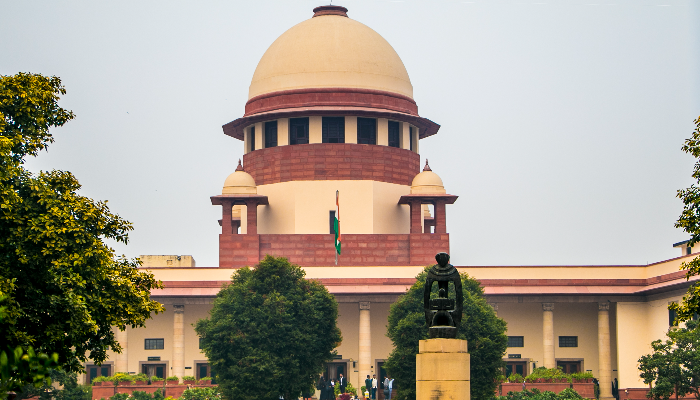
On 25th February (Wednesday), the Supreme Court eventually resolved a century-long legal dispute regarding ancestral wahiwatdar pujari rights at a temple in Karnataka. A bench consisting of Justices Prashant Kumar Mishra and K Vinod Chandran dismissed the appellants’ petitions and upheld the Karnataka High Court’s October 2012 judgement.
The order read, “It is neither novel nor uncertain that this court in catena of judgments has held that the jurisdiction under Article 136 of the Constitution of India should be used sparingly. More particularly, when dealing with concurrent findings of fact. Unless and until the findings rendered by the courts below are manifestly perverse, this court should be reluctant to intervene in the same.”
“In the present lis before us, both, the high court as well as the First Appellate Court, have rendered concurrent findings on the aspect of the pujari rights over the subject temple and held in favour of the respondents or plaintiffs,” it added.
The issue pertained to a long-running dispute that lasted more than a century, in which the appellants or defendants (Ogeppa, deceased) and the respondents or plaintiffs (Sahebgouda, deceased) made opposing assertions with regard to the ancestral pujari rights and the authority to carry out worship of Amogasidda, a saint who died 600 years ago. His samadhi was constructed in the Mamatti Gudda temple at Jalgeri, Arkeri of Karnataka.
The main point of contention revolved around which of these rival families had the hereditary wahiwatdar pujari with the right to perform religious rites, accept contributions from followers and host the temple’s yearly Jatra celebrations.
The court’s significant observations
According to the court, the appellants outlined that since their predecessor had a ruling favourable to him in the initial suit (287/1901), they were entitled to the pujarki rights of the temple. When dealing with this specific situation, the First Appellate Court and the high court determined that, they appear to be “conspicuously silent” about the fact that they started the case (88/1944) for possession and the rights in the first place, despite their insistence.
The justices mentioned, “Though the Trial Court in this suit has decreed against them, the considerable factor is that the suit was filed for possession of the temple. On the one hand, they claimed that the previous suit instituted by their predecessor was in their favour and they have been granted the possession of the temple and pujariki rights and on the other, they filed a suit seeking the same relief in 1944.”
“If the appellants or defendants had a decree of possession in their favour, the question arises as to how and when they lost possession of the subject premises. This fact has been considered by both the courts and it also manifests that the written statement of the appellants or defendants is silent on this aspect,” they noted.
The court stated that the First Appellate Court rightly spotted that there was no plausible reason for their predecessor to have filed the first suit for the temple’s control and an injunction if the appellants were in fact doing their duties as wahiwatdar pujaries and had a continuous and uninterrupted hold over it.
It charged, “A party in settled possession does not sue for possession. The very institution of that suit is a categorical admission by the predecessor of the appellants or defendants that the possession was not with them at the relevant point in time. This inference drawn by both, the First Appellate Court and the high court, is legally sound.”
No action by the appellants for a duration exceeding a decade
The court emphasised that the predecessor raised a civil appeal after losing the litigation on merits before the Trial Court in 1945 and a motion was brought for the claim to be dropped with the ability to bring a new suit rather than continuing the same. The order permitting it was issued on 15th June 1946 and no new suit was opened for more than three and a half decades after that.
It further chastised, “The appellants or defendants have offered no explanation, either in their pleadings or in their evidence, as to what transpired during this long interregnum. As the high court correctly observed, when a party obtains liberty to file a fresh suit and consciously refrains from doing so for thirty-six years, the inevitable inference is that it had reconciled itself to the factual reality on the ground. This conduct speaks louder than any decree of 1901 that the appellants or defendants seek to wave before this court.”
The court stated that the high court extensively reviewed the documentary material after remand. The names of the ancestors of the plantiffs in relation to the lands awarded by the British government at the time in exchange for service to the Amogasidda temple are listed in the Record of Rights (RTC). However, these revenue records make absolutely no reference to the identities of appellants.
It underlined that they and their forebears have been engaged in legal disputes over this very temple for more than a century and cannot pretend that they are unaware of the revenue records or assert that they are not supported by any proof in these situations.
The court points to Ogeppa’s statement, poses relevant inquiries
The justices mentioned that the admission that was taken from Defendant Witness 1 (Ogeppa) during cross-examination is quite important. The witness denied that the government had handed over land to the Amogasidda temple in Mammatigudda and offered that it was in reference to the Amogasidda temple in Jalageri village which is the subject of the contention between the two sides. He even acknowledged that the plaintiffs were cultivating the property. This confession from the witness of appellants settled the issue concerning the grant and its ties to the plaintiffs.
They expressed, “We also find ourselves in agreement with the observations made by the high court as regards the written statement filed by the appellants or defendants. A party setting up a competing claim to hereditary pujari rights is obligated to plead specifically – when they came into possession of the suit temple, when they commenced performing puja, when and how the respondents or plaintiffs began obstructing them and what steps, if any, they took to vindicate their rights during the long intervening period.”
The court outlined that the written declaration of appellants is reluctant on all of these important details and they defend themselves by citing the 1901 edict along with a simple denial which was termed as completely inadequate. It declared that the oral testimony of the witness trying to bridge these gaps must inevitably be ignored in the absence of any underlying plea. Oral testimony cannot be used in place of pleadings, and evidence cannot be used to build a case that is not presented in the same.
The decision is pronounced
The bench conveyed that it had become clear that the plaintiffs have consistently substantiated their claim through revenue records, consistent documentary evidence, the admission of the witness of the appellants and the testimony of independent witnesses, including devotees who informed that they were performing puja at the temple as hereditary wahiwatdar pujaries.
“The appellants or defendants, on the other hand, rest their claim almost entirely on a century-old decree, the effect of which was demonstrably undone by their own predecessor’s subsequent conduct in instituting a suit for possession in 1944. The concurrent findings of the First Appellate Court and the high court reflect a correct and careful ppreciation of this entire factual matrix,” the court highlighted.
It concluded, “Hence, we find no perversity in the impugned judgment of the high court dated 04.10.2012. Accordingly, the Civil Appeals are sans merit and are dismissed. No orders as to costs.”
Background of the matter
This ancient dispute began in 1944 when the predecessor-in-interest, the late Ogeppa Biradar alongside others lodged an original suit for possession of the temple and other properties. They charged that the plaintiffs had taken over the religious site against their will and had claimed the right to perform puja. However, their plea was dismissed by the Trial Court after which a First Appeal was initiated in 1945.
The appeallants introduced as application to withdraw the case with liberty to launch a new suit while their prayer was pending and the plaintiffs agreed to it. As a result, the Appellate Court granted approval and overturned the verdict, a year later. Afterwards, the the plantiffs 1967 stated that the appeallants began to interfere with the worship at the temple, leading to a lawsuit.
It sought a perpetual injunction prohibiting the latter from interfering with their peaceful ownership and enjoyment of the assets as well as pujariki and pujaries rights. They were given an ex-parte decree but it was later dismissed for lack of prosecution.
A confrontation of opposing assertions and arguments
On 24th March 1982, the current plaintiffs brought forth the original suit before the Court of the Principal Munsiff in Bijapur, requesting a permanent injunction and a declaration that they are the ancestral wahiwatdar pujargi with the jurisdiction to worship at the temple. They emphasised that they were ancestral wahiwatdar pujaries who have the privilege to perform puja of the deity. The number 1 plaintiff had eight annas of these rights while the others shared the remaining rights and exercised them alternately.
They reported to have performed regular services during the year-round puja and annual jatra at Chaity Amavasya and received donations from devotees. The plaintiffs expressed that the appellants with police assistance had blocked the daily ceremony, tried forced night entry and removed puja articles since since 20th March 1982.
They had to file a trespass complaint and a lawsuit to have their rights as temple pujaris recognised. The plaintiffs demanded to register the temple as a public trust with the Assistant Charity Commissioner of Belgaum.
The appellants cited the original litigation in which their ancestors gained a ruling granting the rights to Gurappa son of Manigeppa Poojari, rejecting the submissions of the plaintiffs. They explained that the current plaintiffs are the offspring of the defendants in the case whereas they are the plaintiff’s successors.
The appellants insisted that they continuously performed jatra celebrations, accepted tributes from the devotees and exercised their pujarki responsibilities as wahiwatdars. It was also remarked that they were the owners of the temple and the associated religious structures.
The matter was partially decreed by the Trial Court in its judgement and order dated 18th November 1986. It pornounced that the appellants and the plaintiffs are both pujargies of the temple and must offer puja and jatra in a certain proportion and rejected the call for injuction.
The appellants then launched a regular appeal before the Additional Civil Judge on 10th December 1986 and the plaintiffs also followed suit on 12th December. On 5th July 1990, the First Appellate Court junked the former’s motion while upheld the other, observing that the plantiffs were the temple’s ancestral pujari.
The conflict reaches the Karnataka High Court and the Supreme Court
The appellants preferred regular two second appeals with the Karnataka High Court which approved them, reversing the decree in their favour and setting aside the earlier verdict on 24th July 1992. It concluded that the Additional Civil Judge, Bijapur did not have the judicial power to consider the regular appeal filed by the plaintiffs because the Civil Court’s jurisdiction is prohibited by section 80 of the Bombay Public Trust Act, 1950.
The plaintiffs presented special leave applications with the Supreme Court in opposition to the ruling which were subsequently transformed into civil appeals. On 28th March 2003, the court sustained the same and remanded the case to the high court. It further highlighted that the restriction implied by section 80 of the act was not relevant and the contest needed to be decided on its merits.
The high court again heard the objection voiced by the appellants and dismissed it, supporting the plantiffs on 4th October 2012. Afterwards, the apex court was approached via civil appeals against the outcome.