US Defence Secretary Hegseth’s broker sought to invest millions in defence companies before Iran attack, says report. Read how US has been trying to profit from the war
The strife between the United States and Iran seems to be shaped by controversial interests that extend beyond just the removal of a hardline Islamic government that represses its citizens and tries to make nuclear weapons to threaten the West and its allies. According to the fresh revelation, a broker for American Defence Secretary Pete Hegseth tried to secure a substantial investment in prominent defence firms. The event took place in the weeks preceding the assault on Iran. The information was shared by three persons with insight into the matter with the Financial Times. FT has stated that Hegseth’s Morgan Stanley broker approached BlackRock about putting millions of dollars in the asset manager’s Defence Industrials Active ETF (Exchange-Traded Fund) last month just prior to the assassination of Supreme Leader Ayatollah Ali Khamenei. BlackRock internally highlighted the inquiry on behalf of the prominent prospective client. The $3.2 billion equity fund with the ticker IDEF, seeks “growth opportunities by investing in companies that might benefit from increased government spending on defence and security amid geopolitical fragmentation and economic competition,” as reported by BlackRock. Its major interests include data integration expert Palantir and defence corporations such as RTX, Lockheed Martin and Northrop Grumman, whose largest client is the US Department of defence. Why the investment did not materialise The fund debuted in May of last year and was not yet accessible for Morgan Stanley customers to acquire, thus the plan presented by the broker could not move forward. It’s uncertain if a different defence-focused company was chosen for the staggering amount. The majority of large broking and trading platforms only provide a portion of the more than 14,000 ETFs available, despite the fact that they are created to be traded much like stocks. ETFs are selected over mutual funds due to their lower fees, superior tax management and convenience in transactions. The IDEF fund, which is listed on the Nasdaq, has increased by 28% in the last year but has decreased by about 13% in the last month due to the Middle East tensions. Hegseth’s broker was eager for the investment when his department was nearly ready to begin an intense military campaign, even though the abortive nature of the approach to BlackRock probably prevented temporary losses. Furthermore, the conversation over the defence investment coincides with Wall Street experts closely scrutinising financial and prediction market trades in advance of the Trump administration’s decisions. Pentagon dismisses allegations On the other hand, chief Pentagon spokesperson Sean Parnell swiftly refuted the article as “false and fabricated.” He claimed, “Neither Secretary Hegseth nor any of his representatives approached BlackRock about any such investment. This is yet another baseless, dishonest smear designed to mislead the public,” asking for an “immediate retraction.” Parnell added that Hegseth and Department of War are steadfast in their dedication to maintain the highest ethical principles and thorough compliance with all relevant laws and regulations. This allegation is entirely false and fabricated. Neither Secretary Hegseth nor any of his representatives approached BlackRock about any such investment. This is yet another baseless, dishonest smear designed to mislead the public. We demand an immediate retraction.… https://t.co/Su8hGlBOhL— Sean Parnell (@SeanParnellASW) March 30, 2026 Hegseth is one of the primary strategists of the war in Iran and among the most outspoken supporters of the assault, frequently showcasing US military power. President Donald Trump has identified him as the first member of his national security circle to advocate for the military campaign. According to a disclosure form filed for his Senate confirmation, Hegseth’s salary at Fox News from 2022 to 2024 was $4.6 million. During these years, he also earned between $100,001 and $1 million in royalties from two book advances totalling close to $500,000. Additionally, he received about $900,000 in speaking charges. He sold shares in 29 separate companies, with values that vary from $1,001 to $50,000 each, as per to his current financial report, which was made public in June 2025. Did Trump engage in stock manipulation Trump declared a halt to military action against Iran on 23rd March (Monday) after which serious concerns were raised about whether the geopolitical messaging was meant to manipulate the oil market. It was also inquired if some individuals would have benefited from anticipation or prior knowledge. OpIndia earlier unveiled that there was evidence that the incident was not confined to specific oil deals based on new data and trade analysis. It required a well-coordinated multi-market strategy that could have produced profits in the hundreds of millions of dollars in a span of minutes. The data showed that approxi
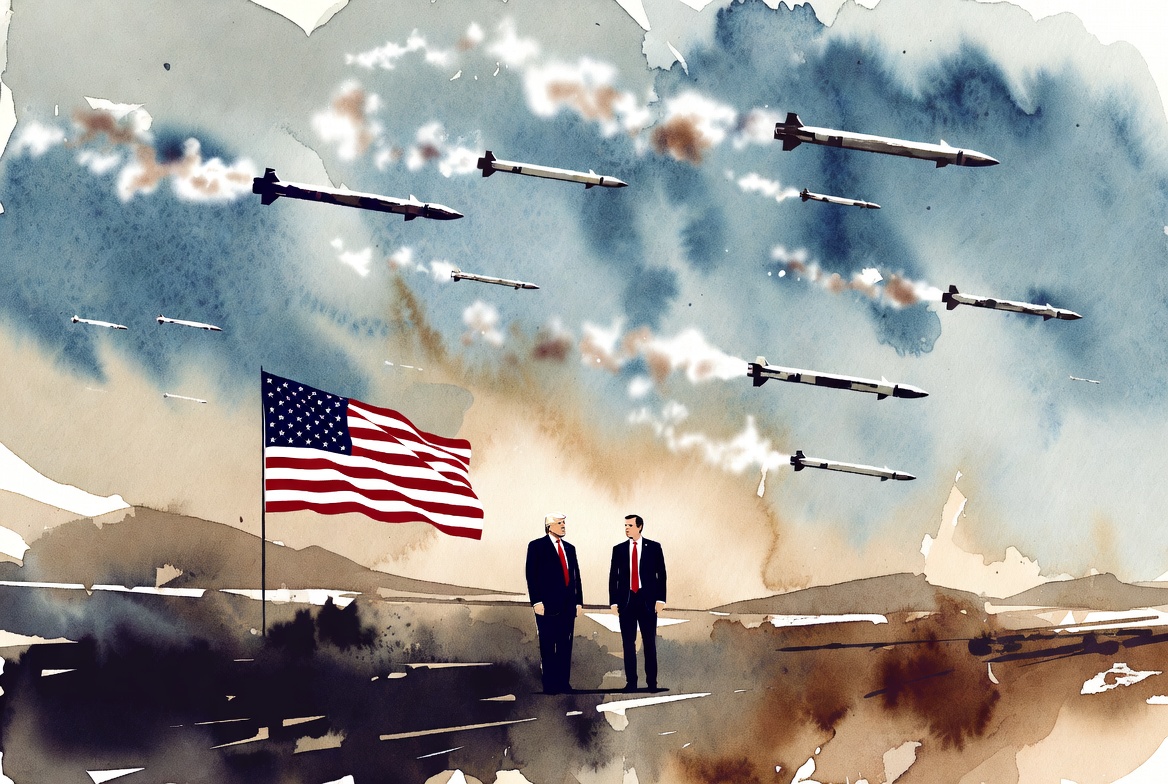
The strife between the United States and Iran seems to be shaped by controversial interests that extend beyond just the removal of a hardline Islamic government that represses its citizens and tries to make nuclear weapons to threaten the West and its allies.
According to the fresh revelation, a broker for American Defence Secretary Pete Hegseth tried to secure a substantial investment in prominent defence firms. The event took place in the weeks preceding the assault on Iran. The information was shared by three persons with insight into the matter with the Financial Times.
FT has stated that Hegseth’s Morgan Stanley broker approached BlackRock about putting millions of dollars in the asset manager’s Defence Industrials Active ETF (Exchange-Traded Fund) last month just prior to the assassination of Supreme Leader Ayatollah Ali Khamenei. BlackRock internally highlighted the inquiry on behalf of the prominent prospective client.
The $3.2 billion equity fund with the ticker IDEF, seeks “growth opportunities by investing in companies that might benefit from increased government spending on defence and security amid geopolitical fragmentation and economic competition,” as reported by BlackRock. Its major interests include data integration expert Palantir and defence corporations such as RTX, Lockheed Martin and Northrop Grumman, whose largest client is the US Department of defence.
Why the investment did not materialise
The fund debuted in May of last year and was not yet accessible for Morgan Stanley customers to acquire, thus the plan presented by the broker could not move forward. It’s uncertain if a different defence-focused company was chosen for the staggering amount.
The majority of large broking and trading platforms only provide a portion of the more than 14,000 ETFs available, despite the fact that they are created to be traded much like stocks. ETFs are selected over mutual funds due to their lower fees, superior tax management and convenience in transactions. The IDEF fund, which is listed on the Nasdaq, has increased by 28% in the last year but has decreased by about 13% in the last month due to the Middle East tensions.
Hegseth’s broker was eager for the investment when his department was nearly ready to begin an intense military campaign, even though the abortive nature of the approach to BlackRock probably prevented temporary losses. Furthermore, the conversation over the defence investment coincides with Wall Street experts closely scrutinising financial and prediction market trades in advance of the Trump administration’s decisions.
Pentagon dismisses allegations
On the other hand, chief Pentagon spokesperson Sean Parnell swiftly refuted the article as “false and fabricated.” He claimed, “Neither Secretary Hegseth nor any of his representatives approached BlackRock about any such investment. This is yet another baseless, dishonest smear designed to mislead the public,” asking for an “immediate retraction.”
Parnell added that Hegseth and Department of War are steadfast in their dedication to maintain the highest ethical principles and thorough compliance with all relevant laws and regulations.
This allegation is entirely false and fabricated. Neither Secretary Hegseth nor any of his representatives approached BlackRock about any such investment. This is yet another baseless, dishonest smear designed to mislead the public. We demand an immediate retraction.… https://t.co/Su8hGlBOhL— Sean Parnell (@SeanParnellASW) March 30, 2026
Hegseth is one of the primary strategists of the war in Iran and among the most outspoken supporters of the assault, frequently showcasing US military power. President Donald Trump has identified him as the first member of his national security circle to advocate for the military campaign.
According to a disclosure form filed for his Senate confirmation, Hegseth’s salary at Fox News from 2022 to 2024 was $4.6 million. During these years, he also earned between $100,001 and $1 million in royalties from two book advances totalling close to $500,000. Additionally, he received about $900,000 in speaking charges. He sold shares in 29 separate companies, with values that vary from $1,001 to $50,000 each, as per to his current financial report, which was made public in June 2025.
Did Trump engage in stock manipulation
Trump declared a halt to military action against Iran on 23rd March (Monday) after which serious concerns were raised about whether the geopolitical messaging was meant to manipulate the oil market. It was also inquired if some individuals would have benefited from anticipation or prior knowledge.
OpIndia earlier unveiled that there was evidence that the incident was not confined to specific oil deals based on new data and trade analysis. It required a well-coordinated multi-market strategy that could have produced profits in the hundreds of millions of dollars in a span of minutes.
The data showed that approximately 6,200 Brent and West Texas Intermediate futures contracts changed hands between 6:49 and 6:50 am New York time on Monday. This occurred around 15 minutes ahead of Trump’s post on the social media site Truth Social, in which he proclaimed that his country had “productive conversations” with Iran. These oil trades alone were estimated to be worth $580 million. The level of activity during pre-market hours was much higher than usual.
According to market monitoring websites, traders carried out two coordinated bets across various asset classes at the same time. Initially, a sizable, long position in S and P 500 futures was taken. It was estimated to be worth $1.5 billion and was set up for an upsurge in stock prices if geopolitical tensions declined.
Sources: LSEG • *Number of contracts traded/US Eastern Time/Dall-E
Traders also sold almost $192 million worth of oil futures, believing that if the perceived danger of disruption in supply from the US-Iran confrontation diminished, petroleum prices would drop. The total worth of these transactions was more than $1.7 billion or more than Rs 14,000 crore. These deals were executed in a short period of time before Trump’s message.
Meanwhile, Iran’s Parliament Speaker, Mohammad Bagher Ghalibaf, countered that no exchanges had taken place between Washington and Tehran, asserting that “fake news is used to manipulate the financial and oil markets and escape the quagmire in which the US and Israel are trapped.” The nation’s Foreign Ministry likewise affirmed that there had been no direct or indirect talks with the US during the continuing confrontation.
Trump brags about profits from oil after starting a war in Asia, Western companies reap benefits
As the international community grapples with a critical energy supply crisis and hike in prices, Trump boasted that America could potentially gain massive financial benefits from the elevated cost of oil influenced by the geopolitical turmoil. “The United States is the largest oil producer in the world, by far, so when oil prices go up, we make a lot of money. But, of far greater interest and importance to me, as president, is stopping an evil empire, Iran, from having nuclear weapons, and destroying the Middle East and, indeed, the world,” he wrote.
View this post on Instagram A post shared by The White House (@whitehouse)
Oil prices remain high with WTI (West Texas Intermediate) crude close to $102-$106 per barrel and global benchmark Brent crude between $107 and $114 per barrel due to the dispute. “The international oil benchmark remains on track for a record monthly surge of over 60%,” reported Trading Economics.
Brent crude has so far averaged almost $97 per barrel in March, jumping 33% from February and $69 in January. The value of natural gas has escalated even further in certain regions. The United States is the world’s biggest producer of Liquefied Natural Gas (LNG) and currently the biggest oil exporter after Middle East’s energy output was shut down due to Iranian attacks and the blockade of the Strait of Hormuz which is used to transport one-fifth of the global supply.
The war has hindered the production and transportation of fuels in the Persian Gulf and Western corporations that pump and process natural gas and oil are among the top winners. The weeks following the start of the fighting experienced a 65% climb in oil prices. The natural gas became pricier, especially in Asia and Europe, which rely largely on imports.
Businesses in the Persian Gulf have had to close a large number of their wells while much higher returns are enjoyed from each barrel sold by those that extract oil from parts like West Texas.
The circumstances might be similar to 2022, when Russia-Ukraine war in February shook the energy markets and oil businesses broke earnings records. They gave shareholders record dividends and share repurchases that year.
“The first quarter is going to be phenomenal for these companies. I don’t think there’s any way around that,” Reuters quoted Leo Mariani of Roth Capital Partners. American shale producers and other enterprises without major ventures in the Middle East are set to profit the most from these hikes since they won’t have to shell out money for production suspensions, stranded tankers or expensive repairs to infrastructure damaged by the hostilities.
“Month on month, we get a better check right now for our oil,” mentioned Mike Party as cited by The New York Times. He is the president of West Texas oil firm, Beryl Oil and Gas. There are initial signs that American companies are responding to the extraordinary surge in prices. Ron Guse conveyed that “there are some early signs that US companies are responding to higher prices,” and he has “started to hear from firms that are looking to prepare more of their wells to start producing oil.”
Guse is the CEO of Liberty Energy, which provides oil field services to many of the largest producers in the US. “You’re feeling a little bit of acceleration,” he pointed out.
The United States has long been acknowledged for participating in warfare in the name of promoting democracy to serve its strategic and national interests. This pattern seems to be surfacing in the current context as well. The country and its defence contractors are well-known for capitalising on similar confrontations. Now, its oil corporations are also exploiting the situation and maximising the perks of much higher energy rates, even with the unpredictability surrounding the future.