Why Ayodhya’s ‘compensatory mosque’ is struggling for funds: The ‘Babri Zinda Hai’ mindset behind the Muslim community’s disinterest
For decades, Muslims fought tooth and nail to claim ownership of the Babri Masjid site in Ayodhya. In 2019, the Supreme Court gave the Shri Ram Janmabhoomi site to the Hindus and directed the state government to allot a distant site to Muslims for the construction of a mosque. It has been over half a decade; a grand Ram Mandir has been constructed and opened for devotees; however, the compensatory mosque is not in sight. It has been reported that the alternate mosque project in Ayodhya has been drastically scaled back due to a severe funding crunch and lack of support from the Muslim community. The Indo-Islamic Cultural Foundation (IICF), the trust set up by the Uttar Pradesh Sunni Central Waqf Board, has confirmed that it has abandoned the original ambitious plans to construct a mosque on the allotted 5-acre plot in Dhannipur village. The original plan included a grand mosque, a 300-bed multi-speciality hospital, library, community kitchen, and other facilities. Scaling back from the original plan, the IICF now intends to construct only a small mosque. As per a Reuters report, the IICF Chairman Zufar Ahmad Faruqi has stated that there is “certainly a disinterest from the community and the donations received are not enough. We now plan to build a mosque much smaller than the one originally proposed.” Faruqi said that the Foundation will need Rs 3 to 5 crores for the construction of a smaller mosque. However, only Rs 1.5 crores have been collected so far. Denial of defeat: Why Muslims are not ‘interested’ in the compensatory mosque? On the surface, a Muslim lack of interest in and support for the alternate mosque in Dhannipur is amusing, and has even attracted mockery that ‘Muslims cannot even raise decent funds for their mosque’; this disinterest, however, warrants serious reflection on the depth of their Islamic fanaticism. This is not a story of mere insufficient donations. The Muslim community’s refusal to widely donate for the construction of the alternate mosque a unignorable illustration of a deeper, intransigent mindset that treats religious land claims essentially as non-negotiable zero-sum struggles. A significant section of Muslims of the Indian Subcontinent considers the creation of Pakistan, a Muslim-exclusive land, as their biggest Islamic victory in centuries. Pakistan has fought around four conventional wars against India, a Hindu-majority nation, and lost all of them. However, Pakistani Muslims do not recognise any of these clear defeats as defeats at all, including the 1971 war. Reason? The loss of land. In 1971, India, along with Bengali freedom fighters, liberated East Pakistan and created Bangladesh. Pakistanis, for long, tried to cover up the surrender of its 93,000 soldiers; however, losing control over the land claimed in the name of Islam has been a lingering wound. However, because Bangladesh remained Muslim-majority, Pakistani Islamic fanatics were content that at least the lost land did not lose Islamic dominance. Thus, it was not a defeat Islamically. In 1965, Indian forces reached Lahore and practically took over, defeating Pakistani jihad-driven forces. However, in the Tashkent Agreement, India returned the conquered land; thus, Pakistanis declared it a victory. Be Kargil war, the Balakot air strike, or the May 2025 conflict, India inflicted severe blows to Pakistan; however, since their land was not lost, Pakistan convinced its populace of a victory. For Muslims, loss of territory in possession is a bigger loss than loss of lives, since for Muslims this world is temporary, only a stoppage in the journey to the ultimate world, Akhirah or afterlife in Jannah (Jannat). For Muslims, land is the ultimate signifier of victory or victory in process, since the Islamic concept of war has no space for defeat or acknowledgement of defeat. Be it Pakistan, for which Jinnah said that “there is no power on earth that can undo Pakistan”, or Palestine, or Babri Masjid, Islamists believe in the Quranic concept that once a land, no matter as vast as a country, or a mosque, is claimed under Darul Islam or Islamic rule, it becomes the property of Allah on the day of judgment. This belief also reflects in the saying “once a Waqf, always a Waqf”. According to Islam, the property marked as Waqf is now available only for (Islamic) religious or charitable purposes, with any other use or sale prohibited. According to Sharia law, once a Waqf is established and property is dedicated to Allah, it becomes Waqf property till Qayamat. The Palestinian Islamic terror group Hamas declared Israel, the entire Jewish country, as ‘Waqf’ property in its 1988 ‘Hamas Charter’ and vowed to continue Jihad against the Jewish state until the ‘waqf of Israel’ is brought under the periphery of Darul Islam. Apparently, for this reason, Israel directly holds control of the land from the Temple Mount to Gaza, the West Bank and the Golan Heights. Many Islamic scholars boast
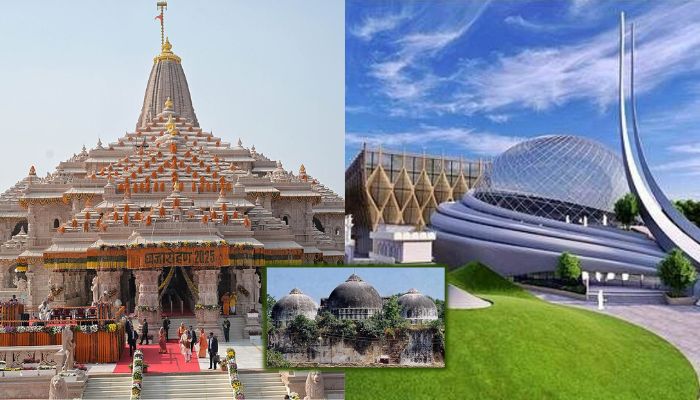
For decades, Muslims fought tooth and nail to claim ownership of the Babri Masjid site in Ayodhya. In 2019, the Supreme Court gave the Shri Ram Janmabhoomi site to the Hindus and directed the state government to allot a distant site to Muslims for the construction of a mosque. It has been over half a decade; a grand Ram Mandir has been constructed and opened for devotees; however, the compensatory mosque is not in sight.
It has been reported that the alternate mosque project in Ayodhya has been drastically scaled back due to a severe funding crunch and lack of support from the Muslim community.
The Indo-Islamic Cultural Foundation (IICF), the trust set up by the Uttar Pradesh Sunni Central Waqf Board, has confirmed that it has abandoned the original ambitious plans to construct a mosque on the allotted 5-acre plot in Dhannipur village. The original plan included a grand mosque, a 300-bed multi-speciality hospital, library, community kitchen, and other facilities.
Scaling back from the original plan, the IICF now intends to construct only a small mosque.
As per a Reuters report, the IICF Chairman Zufar Ahmad Faruqi has stated that there is “certainly a disinterest from the community and the donations received are not enough. We now plan to build a mosque much smaller than the one originally proposed.”
Faruqi said that the Foundation will need Rs 3 to 5 crores for the construction of a smaller mosque. However, only Rs 1.5 crores have been collected so far.
Denial of defeat: Why Muslims are not ‘interested’ in the compensatory mosque?
On the surface, a Muslim lack of interest in and support for the alternate mosque in Dhannipur is amusing, and has even attracted mockery that ‘Muslims cannot even raise decent funds for their mosque’; this disinterest, however, warrants serious reflection on the depth of their Islamic fanaticism.
This is not a story of mere insufficient donations. The Muslim community’s refusal to widely donate for the construction of the alternate mosque a unignorable illustration of a deeper, intransigent mindset that treats religious land claims essentially as non-negotiable zero-sum struggles.
A significant section of Muslims of the Indian Subcontinent considers the creation of Pakistan, a Muslim-exclusive land, as their biggest Islamic victory in centuries. Pakistan has fought around four conventional wars against India, a Hindu-majority nation, and lost all of them.
However, Pakistani Muslims do not recognise any of these clear defeats as defeats at all, including the 1971 war. Reason? The loss of land. In 1971, India, along with Bengali freedom fighters, liberated East Pakistan and created Bangladesh. Pakistanis, for long, tried to cover up the surrender of its 93,000 soldiers; however, losing control over the land claimed in the name of Islam has been a lingering wound. However, because Bangladesh remained Muslim-majority, Pakistani Islamic fanatics were content that at least the lost land did not lose Islamic dominance. Thus, it was not a defeat Islamically.
In 1965, Indian forces reached Lahore and practically took over, defeating Pakistani jihad-driven forces. However, in the Tashkent Agreement, India returned the conquered land; thus, Pakistanis declared it a victory.
Be Kargil war, the Balakot air strike, or the May 2025 conflict, India inflicted severe blows to Pakistan; however, since their land was not lost, Pakistan convinced its populace of a victory. For Muslims, loss of territory in possession is a bigger loss than loss of lives, since for Muslims this world is temporary, only a stoppage in the journey to the ultimate world, Akhirah or afterlife in Jannah (Jannat).
For Muslims, land is the ultimate signifier of victory or victory in process, since the Islamic concept of war has no space for defeat or acknowledgement of defeat.
Be it Pakistan, for which Jinnah said that “there is no power on earth that can undo Pakistan”, or Palestine, or Babri Masjid, Islamists believe in the Quranic concept that once a land, no matter as vast as a country, or a mosque, is claimed under Darul Islam or Islamic rule, it becomes the property of Allah on the day of judgment.
This belief also reflects in the saying “once a Waqf, always a Waqf”. According to Islam, the property marked as Waqf is now available only for (Islamic) religious or charitable purposes, with any other use or sale prohibited. According to Sharia law, once a Waqf is established and property is dedicated to Allah, it becomes Waqf property till Qayamat.
The Palestinian Islamic terror group Hamas declared Israel, the entire Jewish country, as ‘Waqf’ property in its 1988 ‘Hamas Charter’ and vowed to continue Jihad against the Jewish state until the ‘waqf of Israel’ is brought under the periphery of Darul Islam.
Apparently, for this reason, Israel directly holds control of the land from the Temple Mount to Gaza, the West Bank and the Golan Heights.
Many Islamic scholars boast and encourage Muslims in ‘kufr’ countries to convert more and more non-Muslims to Islam as a replacement for every Muslim life lost in Palestine. Basically, land claimed under Islamic rule must not be lost, while loss of Muslim lives can be compensated with luring in more converts to Islam.
Take a look at Afghanistan: for over two decades, America bombed and killed thousands of Afghan Muslims, occupied their land, and established its military settlements there. However, as soon as America made a policy blunder of withdrawing its forces from Afghanistan, the Taliban took over and declared that they never lost; rather, they defeated ‘superpower’ America since they did not lose their land.
Muslims mourn the loss of Spain even today, which in the Islamic world is better remembered as Andalusia or al-Andalus. Islamists across the world still harbour the dream that one day, either through war and conquest or through the ongoing tactic of migrate, alter, demographics, and establish Islamic dominance, they will re-Islamise Spain.
Why does Indian Jammu and Kashmir remain the ‘jugular vein’ of Pakistan? Because it is a question of territory. A Muslim-majority territory that could have been a part of the 78-year-old Islamic Republic but is governed by Hindu Kafirs.
Babri Zinda Hai: As long as Muslims cling to the concept of ‘once a waqf, always a waqf’, they will never truly accept a compromise or forfeit their claim
Islam’s definition of defeat is essentially loss of land.
This mindset is that once a land, no matter how, is claimed of and for Islam and Allah, no way it can be handed back into the hands of kafirs, and the claim, even if illegitimate, is not relinquished for any reason.
To be absolutely honest, beyond the apparent attempt at placating Islamist intransigence, it makes no sense that the Supreme Court allotted even 5-acre land to the Muslim side for a mosque.
The Indian Muslims, including the Muslim petitioners, are not descendants of Mughal invader Babur; they are not the inheritors or custodians of Mughal ‘legacy’ or structures erected in that era by virtue of being Muslims. The majority of the Muslims residing in the Indian Subcontinent, regardless of current borders, essentially are converted descendants of Hindus.
Despite this, the broader Muslim refusal to rally behind and fund the alternate or compensatory mosque, even though it is a judicially granted right, is rooted in the prioritisation of perpetual grievance and symbolic reclamation.
Intransigent Muslims would rather donate for a fake Babri Masjid in West Bengal than have any part in the construction of the “mosque of compromise” in Dhannipur.
Why? Because a significant section of Muslims, be it ordinary people in India and Pakistan or politicians, view the original Babri structure built after demolishing the Hindu temple at the Shri Ram Janmabhoomi site as inalienably theirs regardless of what the court ruled.
Babri Zinda Hai is not a mere social media trend that pops up every year on 6th December or political rhetoric or means of mass mobilisation. It is a deep belief and hope that many Muslims harbour that one day, when the Nizam will change, the Ram Mandir will be demolished and Babri Masjid will be ‘reinstated’.
This belief is rooted in the Quranic idea that Islamic sanctity of certain sites transcends secular courts, democratic processes, or archaeological evidence.
In this framework, compromise is weakness and acceptance of an alternate mosque essentially means surrender. Thus, for Islamists, they did not lose the Shri Jamnbhoomi land dispute case to Hindus; rather, they treat it as only a setback that will one day be overturned by force.
Till then, the issue must remain ‘alive’ indefinitely, since finality would amount to conceding that Islamic claims over a territory are absolute or perpetual. This would open Pandora’s box, with Hindus reclaiming all their fully or partially destroyed or repurposed-as-mosques temples, be it Kashi Vishwanath, Shri Krishna Janmabhoomi, or Sambhal’s Harihar Mandir.