7-10 years of jail for illegal conversions, up to life for mass conversions: Chhattisgarh cabinet clears Anti-Conversion Bill
The Bharatiya Janata Party (BJP) government in Chhattisgarh has taken a significant step toward introducing a stricter law against religious conversions. On Tuesday, 10th March, the state cabinet approved the draft of a new legislation titled the Chhattisgarh Freedom of Religion Bill, 2026. The proposed law aims to curb religious conversions carried out through force, inducement, fraud, misrepresentation, or undue influence. The decision was taken during a cabinet meeting held late in the evening. With the cabinet clearing the draft, the government is now expected to introduce the bill in the state assembly, which is currently in session. The proposed law comes at a time when debates around religious conversions have intensified across several states. #Chhattisgarh Cabinet approves draft of Freedom of Religion Bill, 2026. The proposed law aims to curb religious conversions through force, inducement, fraud, undue influence, or misrepresentation. The Bill will be introduced during the ongoing Budget Session. pic.twitter.com/gx4PWsg0OS— All India Radio News (@airnewsalerts) March 11, 2026 Chief Minister Vishnu Deo Sai and Deputy Chief Minister Vijay Sharma had earlier indicated that the state government was planning to bring a stronger anti-conversion law to address growing concerns. Sharma had previously said that the new law would also include provisions to curb “changai sabhas”, which some groups have accused of being used as platforms for religious conversion. VHP welcomes the government’s decision The decision of the Chhattisgarh government was welcomed by the Vishwa Hindu Parishad (VHP). On Wednesday, 11th March, the organisation expressed support for the proposed law and said it would help prevent illegal religious conversions in the state. VHP national spokesperson Vinod Bansal said, “Due to the increasing incidents of religious conversion and ‘love jihad’, governments have decided to enact constitutionally valid laws in their respective state legislatures to prevent such conversions…the number of states (including Chhattisgarh) will now exceed 12, where strict punishment will be given against religious conversion and ‘love jihad’.”. He added that the proposed legislation would help protect Hindus in the state from illegal activities of “conversion gangs” attempting to convert them and trap them in “love jihad”. “At the same time, those running conversion gangs involved in love jihad, as well as anti-national elements, will now have to remain cautious. They will have to refrain from such a mindset,” he warned. What the draft bill proposes The proposed law is intended to make the process of conversion more transparent instead of restricting a person’s freedom of religion. The government has maintained that the purpose of the proposed law is not to prevent a person from choosing their religion but to ensure that conversion is by free will only. As per the proposed law, if a person wants to convert their religion by free will, then a formal process has to be followed. The person has to give prior information to the District Magistrate (DM) before converting their religion. The information will be announced publicly. STORY | Chhattisgarh cabinet clears draft bill against forced religious conversionsThe Chhattisgarh cabinet has approved the draft of a bill aimed at preventing religious conversion through force, inducement, fraudulent means or misrepresentation.READ: https://t.co/ppL3qih6Uc pic.twitter.com/JTKBOpTs3M— Press Trust of India (@PTI_News) March 11, 2026 After announcing the information, people will have a 30-day period to raise objections if they think that the conversion is being done under pressure, by inducement, or by fraudulent means. The objections will be looked into by the authorities before the conversion process is initiated. The proposed law has also mentioned that “ghar wapsi” or returning to one’s original religion is not conversion. Another important aspect of the legislation is that it provides a list of definitions of the methods that may be employed for the illegal conversion. These include inducement, coercion, misrepresentation, and misleading information. For the first time, the draft law provides provisions for conversions through digital media. Strict punishment for illegal conversions The draft law provides for the imposition of stringent punishment on those found guilty of the offence of illegal religious conversion. The offence will be cognizable and non-bailable. The punishment provisions include: General illegal religious conversion:7 to 10 years of imprisonment and a minimum fine of ₹5 lakh. Conversion of minors, women, or members of SC/ST/OBC communities:10 to 20 years of imprisonment and a minimum fine of ₹10 lakh. Mass religious conversion:10 years to life imprisonment and a minimum fine of ₹25 lakh. To ensure effective enforcement, cases under the proposed law will be heard in special court
The Bharatiya Janata Party (BJP) government in Chhattisgarh has taken a significant step toward introducing a stricter law against religious conversions. On Tuesday, 10th March, the state cabinet approved the draft of a new legislation titled the Chhattisgarh Freedom of Religion Bill, 2026. The proposed law aims to curb religious conversions carried out through force, inducement, fraud, misrepresentation, or undue influence.
The decision was taken during a cabinet meeting held late in the evening. With the cabinet clearing the draft, the government is now expected to introduce the bill in the state assembly, which is currently in session. The proposed law comes at a time when debates around religious conversions have intensified across several states.
#Chhattisgarh Cabinet approves draft of Freedom of Religion Bill, 2026. The proposed law aims to curb religious conversions through force, inducement, fraud, undue influence, or misrepresentation. The Bill will be introduced during the ongoing Budget Session. pic.twitter.com/gx4PWsg0OS— All India Radio News (@airnewsalerts) March 11, 2026
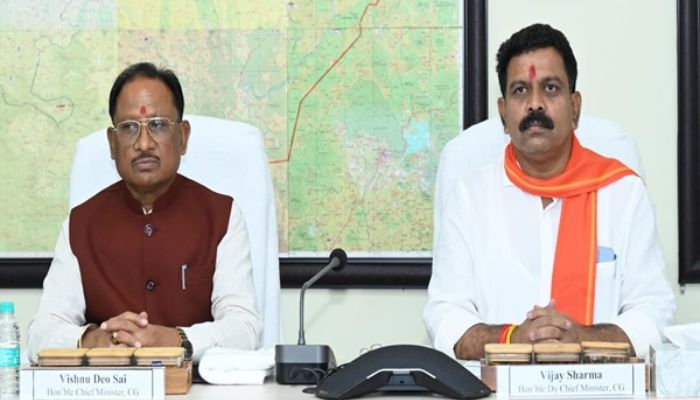
Chief Minister Vishnu Deo Sai and Deputy Chief Minister Vijay Sharma had earlier indicated that the state government was planning to bring a stronger anti-conversion law to address growing concerns.
Sharma had previously said that the new law would also include provisions to curb “changai sabhas”, which some groups have accused of being used as platforms for religious conversion.
VHP welcomes the government’s decision
The decision of the Chhattisgarh government was welcomed by the Vishwa Hindu Parishad (VHP). On Wednesday, 11th March, the organisation expressed support for the proposed law and said it would help prevent illegal religious conversions in the state.
VHP national spokesperson Vinod Bansal said, “Due to the increasing incidents of religious conversion and ‘love jihad’, governments have decided to enact constitutionally valid laws in their respective state legislatures to prevent such conversions…the number of states (including Chhattisgarh) will now exceed 12, where strict punishment will be given against religious conversion and ‘love jihad’.”.
He added that the proposed legislation would help protect Hindus in the state from illegal activities of “conversion gangs” attempting to convert them and trap them in “love jihad”.
“At the same time, those running conversion gangs involved in love jihad, as well as anti-national elements, will now have to remain cautious. They will have to refrain from such a mindset,” he warned.
What the draft bill proposes
The proposed law is intended to make the process of conversion more transparent instead of restricting a person’s freedom of religion. The government has maintained that the purpose of the proposed law is not to prevent a person from choosing their religion but to ensure that conversion is by free will only.
As per the proposed law, if a person wants to convert their religion by free will, then a formal process has to be followed. The person has to give prior information to the District Magistrate (DM) before converting their religion. The information will be announced publicly.
STORY | Chhattisgarh cabinet clears draft bill against forced religious conversionsThe Chhattisgarh cabinet has approved the draft of a bill aimed at preventing religious conversion through force, inducement, fraudulent means or misrepresentation.READ: https://t.co/ppL3qih6Uc pic.twitter.com/JTKBOpTs3M— Press Trust of India (@PTI_News) March 11, 2026
After announcing the information, people will have a 30-day period to raise objections if they think that the conversion is being done under pressure, by inducement, or by fraudulent means. The objections will be looked into by the authorities before the conversion process is initiated.
The proposed law has also mentioned that “ghar wapsi” or returning to one’s original religion is not conversion.
Another important aspect of the legislation is that it provides a list of definitions of the methods that may be employed for the illegal conversion. These include inducement, coercion, misrepresentation, and misleading information. For the first time, the draft law provides provisions for conversions through digital media.
Strict punishment for illegal conversions
The draft law provides for the imposition of stringent punishment on those found guilty of the offence of illegal religious conversion. The offence will be cognizable and non-bailable.
The punishment provisions include:
General illegal religious conversion:7 to 10 years of imprisonment and a minimum fine of ₹5 lakh.
Conversion of minors, women, or members of SC/ST/OBC communities:10 to 20 years of imprisonment and a minimum fine of ₹10 lakh.
Mass religious conversion:10 years to life imprisonment and a minimum fine of ₹25 lakh.
To ensure effective enforcement, cases under the proposed law will be heard in special courts.
How the new law differs from the existing one
Chhattisgarh already has a law addressing religious conversions. The Chhattisgarh Freedom of Religion Act, 1968, has been in force since the state’s formation in 2000.
According to a report by News18, the government believes that the existing law is outdated and does not fully address the situation. Deputy Chief Minister Vijay Sharma said that social and technological changes have introduced new challenges that need to be fully addressed through stronger legal provisions.
VIDEO | Raipur: Chhattisgarh Deputy CM Vijay Sharma (@vijaysharmacg) says, “There are provisions under the 1968 Freedom of Religion Act, but they are not sufficient for present times as circumstances and technology have changed. Therefore, efforts are being made to create… pic.twitter.com/gVrUBjjdex— Press Trust of India (@PTI_News) March 10, 2026
The new bill seeks to address some of these loopholes in the existing legislation by defining some of the terms used in religious conversions. These include inducement, coercion, mass conversion, and digital conversion.
Why was the law proposed?
The proposed legislation comes in the wake of repeated incidents of forced or induced religious conversions in the state. There have been several instances of religious conversions in the tribal-dominated regions of Bastar and Jashpur districts of the state. There have also been instances of conflicts between the people of the state and the converts on the matter of religious conversions.
One of the most recent incidents that attracted national attention was the arrest of two nuns from Kerala in the state of Chhattisgarh on charges of human trafficking and attempting to convert three tribal women. The case was registered on the complaint of a member of the Bajrang Dal.
Apart from this case, there have been several FIRs and police complaints registered on the matter of religious conversions in recent months.
The state government of Chhattisgarh claims that the motive of the proposed law is not to restrict religious freedoms. Instead, it is to prohibit illegal practices that take place through force, inducement, and deception. If the new law is approved in the assembly, it will become one of the more stringent anti-conversion laws in the country.