‘Ancient Pakistan’: Why, after decades of claiming to be Arabs, Turks, Pakistanis suddenly jumped to appropriate ancient Indian history?
Apart from hating on India, Pakistan has found a new obsession: appropriating the history of ancient India, which is inalienably Hindu. The same Pakistani state, founded on the explicit rejection of the pre-Islamic (read Hindu) past, is now frantically appropriating that same past in a bid to manufacture legitimacy and establish a non-existent civilisational continuity. From ‘Full Turkish blood’, ‘We are Arabs’ to ‘We are children of Indus’, ‘Panini, Chanakya, Porus our ancestors’: The identity crisis of Pakistan deepens For decades, the Pakistani discourse emphasised descent from Arabs, Turks, Persians, or Central Asians, the ‘Ashraf’ narrative of foreign and ‘pure’ Muslim ancestry. During the reign of General Zia-ul-Haq, Pakistan underwent significant cultural and historical rewriting. The Zia regime, which lasted for a decade, beginning in 1977, modified school curricula for Islamiat and Pakistan Studies to instil and assert an Islamic identity by enforcing a psychological and cultural alignment with Arab history, delineating pre-Islamic roots of the fourth- or fifth-generation converted Muslims whose ancestors were predominantly Hindus. Rooted in Islamic radicalisation, which essentially means purer or absolute Islamisation, the Zia regime, as well as Islamic fanatics, including terrorists, hated their Hindu past and tried every tactic at hand to sever their ties with the very same history that a section of Pakistanis now want to appropriate. From claiming custodianship and inheritance of the Indus Valley Civilisation or the Sindhu-Saraswati Civilisation, Pāṇini, Chanakya, Raja Porus/Purushottam to decoupling the Hindu aspect of these, Pakistanis are concocting a corrupted, dishonest, and desperate ‘ancient Pakistan’ identity. Before dissecting the motives behind the sudden surge in Pakistani claims to ancient Indian/Hindu history, it would be appropriate to look into the delusional and laughable narratives Pakistanis are peddling online. A Pakistani X user shared the BBC Hindi video of a Pakistani Muslim professor who teaches Sanskrit, and claimed that Sanskrit is not a Bharatiya language. “Sanskrit is NOT a Bharati – Fake India’s – Indigenous language It was formalized by Panini in Gandhara Pakistan That is why when Bharatis speak Sanskrit, they slaughter it with their nasty pronunciation – just like they slaughter English pronunciation,” the Pakistani X user wrote. Quite audaciously, a Pakistani Muslim who cannot even recite the Gayatri Mantra (would not even know what it is without Googling) without butchering it, besides the fear of Sar tan se Juda for even slight deviation from Islam, claimed that since Sanskrit was formalised by Panini in Gandhara, which now lies in northwestern Pakistan, Sanskrit is not an Indian language. This claim makes any practising Hindu Indian feel humoured and angry at the same time. The professor seen in the BBC video, Dr Rashid Shahid, called Sanskrit a “common heritage of South Asia”. Now Indians know very well what it means when Pakistanis, even supposedly well-intentioned, invoke “South Asia”. Attach a South Asia label to anything historically, culturally, or religiously Hindu, and by extension Indian, and it can easily be appropriated by Hindu-hating Pakistani and sometimes even Bangladeshi Muslims. The Pakistani people, with newfound love for the history of ancient India, conveniently forget that the Vedas were written on manuscripts in the Sanskrit language thousands of years before Pāṇini wrote Aṣṭādhyāyī. Sanskrit evolved from being an oral language of sacred Vedic hymns into a highly standardised literary and Hindu religious language over time. Pāṇini’s contribution of Sanskrit’s formalisation is undeniable; however, claiming that Sanskrit is not an Indian language just because of the Brahmin Hindu grammarian’s Gadhara connection is blatant defiance common sense and civilisational continuity. Another desperate Pakistani X user, declared Pāṇini’, a Pakistani, and wrote, “Pāṇini, the greatest grammarian of Sanskrit, was a Pakistani. The Sanskrit you kang on today was standardized by a Pakistani.” It is amusing how the same Pakistan that, by a constitutional fiat, restricts Pakistani Hindus from becoming Prime Minister, President, or Chief Justice simply because of their faith, now wants to own, claim, appropriate, de-Hinduise, and de-Indianise Pāṇini, in pursuit of adding a ‘civilisational state’ label to its 78-year-old Islamic Republic. Pāṇini described the geography of Bharat very extensively, but much to the disappointment of delusional Pakistani, he nowhere in his texts mentioned Pakistan. He described the undivided country in his era as Bharat, a term India continues to own, use, retain and glorify. In fact, the term Bharat itself first appeared as the name of a geopolitical entity in Pāṇini’s Aṣṭādhyāyī, “नद्व्यचःप्राच्यभरतेषु” (4.2.113) Pāṇini mentioned Prachya Bharat and Udichya Bharat, not once Pr
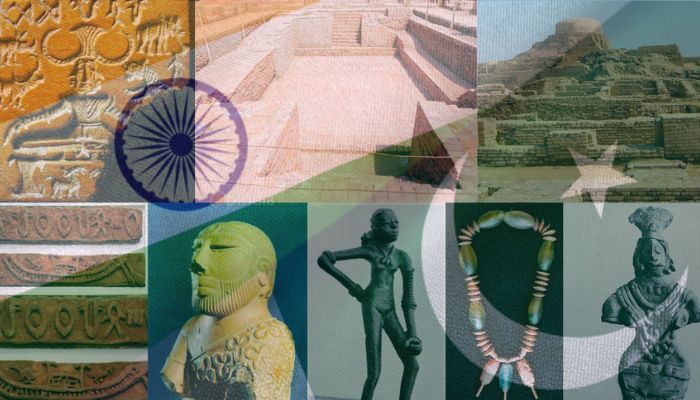
Apart from hating on India, Pakistan has found a new obsession: appropriating the history of ancient India, which is inalienably Hindu. The same Pakistani state, founded on the explicit rejection of the pre-Islamic (read Hindu) past, is now frantically appropriating that same past in a bid to manufacture legitimacy and establish a non-existent civilisational continuity.
From ‘Full Turkish blood’, ‘We are Arabs’ to ‘We are children of Indus’, ‘Panini, Chanakya, Porus our ancestors’: The identity crisis of Pakistan deepens
For decades, the Pakistani discourse emphasised descent from Arabs, Turks, Persians, or Central Asians, the ‘Ashraf’ narrative of foreign and ‘pure’ Muslim ancestry.
During the reign of General Zia-ul-Haq, Pakistan underwent significant cultural and historical rewriting.
The Zia regime, which lasted for a decade, beginning in 1977, modified school curricula for Islamiat and Pakistan Studies to instil and assert an Islamic identity by enforcing a psychological and cultural alignment with Arab history, delineating pre-Islamic roots of the fourth- or fifth-generation converted Muslims whose ancestors were predominantly Hindus.
Rooted in Islamic radicalisation, which essentially means purer or absolute Islamisation, the Zia regime, as well as Islamic fanatics, including terrorists, hated their Hindu past and tried every tactic at hand to sever their ties with the very same history that a section of Pakistanis now want to appropriate.
From claiming custodianship and inheritance of the Indus Valley Civilisation or the Sindhu-Saraswati Civilisation, Pāṇini, Chanakya, Raja Porus/Purushottam to decoupling the Hindu aspect of these, Pakistanis are concocting a corrupted, dishonest, and desperate ‘ancient Pakistan’ identity.
Before dissecting the motives behind the sudden surge in Pakistani claims to ancient Indian/Hindu history, it would be appropriate to look into the delusional and laughable narratives Pakistanis are peddling online.
A Pakistani X user shared the BBC Hindi video of a Pakistani Muslim professor who teaches Sanskrit, and claimed that Sanskrit is not a Bharatiya language.
“Sanskrit is NOT a Bharati – Fake India’s – Indigenous language It was formalized by Panini in Gandhara Pakistan That is why when Bharatis speak Sanskrit, they slaughter it with their nasty pronunciation – just like they slaughter English pronunciation,” the Pakistani X user wrote.
Quite audaciously, a Pakistani Muslim who cannot even recite the Gayatri Mantra (would not even know what it is without Googling) without butchering it, besides the fear of Sar tan se Juda for even slight deviation from Islam, claimed that since Sanskrit was formalised by Panini in Gandhara, which now lies in northwestern Pakistan, Sanskrit is not an Indian language.
This claim makes any practising Hindu Indian feel humoured and angry at the same time. The professor seen in the BBC video, Dr Rashid Shahid, called Sanskrit a “common heritage of South Asia”. Now Indians know very well what it means when Pakistanis, even supposedly well-intentioned, invoke “South Asia”.
Attach a South Asia label to anything historically, culturally, or religiously Hindu, and by extension Indian, and it can easily be appropriated by Hindu-hating Pakistani and sometimes even Bangladeshi Muslims.
The Pakistani people, with newfound love for the history of ancient India, conveniently forget that the Vedas were written on manuscripts in the Sanskrit language thousands of years before Pāṇini wrote Aṣṭādhyāyī. Sanskrit evolved from being an oral language of sacred Vedic hymns into a highly standardised literary and Hindu religious language over time. Pāṇini’s contribution of Sanskrit’s formalisation is undeniable; however, claiming that Sanskrit is not an Indian language just because of the Brahmin Hindu grammarian’s Gadhara connection is blatant defiance common sense and civilisational continuity.
Another desperate Pakistani X user, declared Pāṇini’, a Pakistani, and wrote, “Pāṇini, the greatest grammarian of Sanskrit, was a Pakistani. The Sanskrit you kang on today was standardized by a Pakistani.”
It is amusing how the same Pakistan that, by a constitutional fiat, restricts Pakistani Hindus from becoming Prime Minister, President, or Chief Justice simply because of their faith, now wants to own, claim, appropriate, de-Hinduise, and de-Indianise Pāṇini, in pursuit of adding a ‘civilisational state’ label to its 78-year-old Islamic Republic.
Pāṇini described the geography of Bharat very extensively, but much to the disappointment of delusional Pakistani, he nowhere in his texts mentioned Pakistan. He described the undivided country in his era as Bharat, a term India continues to own, use, retain and glorify. In fact, the term Bharat itself first appeared as the name of a geopolitical entity in Pāṇini’s Aṣṭādhyāyī, “नद्व्यचःप्राच्यभरतेषु” (4.2.113)
Pāṇini mentioned Prachya Bharat and Udichya Bharat, not once Prachya Pakistan and Udichya Pakistan.
A question must have come to the mind that Pakistanis know that the term Pakistan itself is not ancient; however, despite this knowledge, this explanation and slight mockery become imperative when Pakistani Muslims peddle “Panini was a Pakistani” lies.
But the Pāṇini illustration shared by the Pakistani X user reflects the underlying flaw in the contention of Pakistani Muslims that historical figures of ancient India, regardless of faith, are ‘ancient Pakistanis’ based on present-day geography of the region.
Showing a Pakistani ‘moon and star’ flag symbolising Islam on the desk of a Tripund-donning Hindu Brahmin Sanskrit grammarian who was fortunate to have lived in an era where nothing like Islam or Pakistan is ridiculous. Islam and Pakistan, a self-declared Riyasat-e-Medina, essentially hate Kafirs, especially those polytheist and idol-worshipping Hindus.
Pāṇini’s Aṣṭādhyāyī is one of the six Vedāṅgas (limbs of the Vedas), and the Vedas are Hindu Sanatan scriptures; Islamic invaders tried hard to destroy and erase them fully from the memory of time, although timeless Vedas are impossible to eradicate.
The hilarity of Pakistanis doing Pakistanisation of Hindu figures from ancient India stretched to master political strategist and Guru of Chandragupt Maurya, Chanakya as well.
In this vein, a Pakistani X user wrote, “Chanakya the Great studied at Pakistani university of Taxila, The knowledge he gained there shaped him into one of history’s greatest strategists, helping Chandragupta Maurya build the Mauryan Empire. Even today, his ideas continue to influence politics, governance, and leadership.”
Now Taxila, Takshashila in Sanskrit, became a ‘Pakistani university’ despite the fact that neither the religion of Islam nor the geographical entity called Pakistan existed in the 4th century BCE.
A Pakistani user has been so high on delusion and desperation that he declared Raja Purushottam, widely known as King Porus of Punjab, a Buddhist despite there being no such evidence.
The ancient Indian king who ruled the region between the Hydaspes (Jhelum/Vitasta) and Acesines (Chenab/Asikani) rivers and halted Macedonian conqueror Alexander on the banks of the River Hydaspes in 326 BCE. Although there is not much clarity on Raja Purushottama’s religion, historical consensus suggests that he was a follower of the Vedic religion, or Hinduism.
It is interesting how Gangetic region hater Pakistanis quickly assigned Buddhism as Raja Porus’s religion, the same faith that originated in the eastern Gangetic plain. They, however, did not realise, or rather don’t care about, the fact that Buddhism reached the northwest significantly only later (post-Ashoka era). But then, it is Pakistanis indulging in revisionist propaganda, where facts are secondary, and apocryphal narrative holds priority.
There are numerous such posts flooded by Pakistani ISPR bots in a concerted effort to concoct an ‘ancient Pakistan’ legacy by appropriating the ancient Indian/Bharatiya, essentially Hindu, history.
To further lend credence and boost their superiority complex, Pakistanis are manufacturing a non-existent Indus Valley versus Gangetic Valley rivalry, portraying the history and culture of the Ganges Valley region as inferior to that of the Indus Valley region.
This is a deliberate concoction of a ‘superior us vs inferior them’ narrative, lending legitimacy to Pakistani claims over the Indus Valley Civilisation, and essentially killing the historical, geographical, and logical concept of Ancient Bharat. The first step in this direction was replacing and normalising the term ‘South Asia’ for the Indian Subcontinent.
From disowning to appropriating: The shift in Pakistan’s approach and what is driving it
It is ironic that the subscribers of the Two-Nation Theory that birthed Pakistan in 1947, portraying Hindus and Muslims as irreconcilably separate nations, are toiling to claim that the Hindu inhabitants, particularly the accomplished ones, were ancient Pakistanis because the region they were born in or earned their accomplishments in now falls under modern-day Pakistan.
Let’s get some facts straight: some major sites of the Indus Valley Civilisation or Sindhu Saraswati Sabhyata, including Harappa and Mohenjo-daro, lie in present-day Pakistan, so do Taxila (Takshashila) and even the birthplace of Panini, Shalatula in Attock. However, despite major IVC sites falling under Pakistan, the ‘Islamic Republic’ does not appropriately preserve them. India, on the contrary, houses and properly preserves over 2,000 known Indus Valley Civilisation (IVC) settlements. It is also an interesting fact that roughly 60% of IVC sites are located within modern India.
Indian people nor the government ever denied any geographical facts in this context. The anachronism, however, lies in Pakistanis deliberately retrofitting them as farcical ‘ancient Pakistan’.
Interestingly, Pakistanis often rely on pro-Islamist ‘historians’, to extricate the deeply entrenched Hindu faith from the Indus Valley Civilisation. Pakistanis are alone in the pursuit of the agenda of cutting India from its roots, proving its civilisation borrowed, and instilling an inferiority complex in its inhabitants.
In May this year, the Indian Ministry of Culture highlighted Bharat’s civilisational continuity through the iconic Pashupati Seal, which was discovered at Mohenjo-daro in undivided India. This steatite seal, about 4,300-year-old, shows a seated figure in yogic posture (widely seen as Shiva-Pashupati) seated in Mulabandhasana, surrounded by animals.
“While ancient sites may lie across modern borders, India remains the living custodian of this heritage. The yogic posture, Shaivite symbolism, and spiritual ethos seen in the Pashupati Seal continue to thrive in India’s temples, daily worship of Shiva, yogic traditions, and cultural life even today. From the Vedic period to contemporary Bharat, this civilizational thread has remained alive and unbroken — deeply embedded in our philosophy, rituals, and collective consciousness,” the ministry said.
In no time, the Islamo-leftist ‘intellectual cabal, both in India and abroad, jumped in to decouple Vedic Hindu faith from the Indus Valley Civilisation. Notorious Hinduphobe and Mughal tyrant Aurangzeb’s fangirl, Audrey Truschke wrote, “This is not Shiva. It is more likely a figure influenced by Proto-Elamite symbols depicting a Eurasian deity, the ‘Lord of Animals.’
Relying on Truschke’s claim, many Pakistanis cried foul under the Ministry of Culture’s post. They even rejected Sir John Marshall, the historian who in his 1931 book Mohenjo-daro and the Indus Civilisation (Vol-1), described the Pashupati seal as a ‘prototype of the historic Shiva’.
Several major Harappan sites of Kalibangan (Rajasthan), Banawali and Rakhigarhi (Haryana), Dholavira and Lothal (Gujarat) lie along the River Saraswati. There are numerous Harappan sites, including Kalibangan, Rakhigarhi, and Dholavira, located along the Ghaggar-Hakra system. This suggests that a significant river supported the development of the Indus Valley Civilisation, which is also known as the Sindhu-Saraswati or Indus-Saraswati Civilisation.
Archaeologist Braj Basi Lal, the former Director-General of the ASI, argued that the distribution of these Harappan sites aligns with the course of Saraswati, not the Sindhu/Indus, suggesting that River Saraswati was a central hub of the IVC. Even in Kalibangan, excavations have uncovered Vedic ritual altars, Vedis, and Yupas, hinting at the cultural-religious continuity between the Vedic and Harappan civilisations.
However, biased historians in and outside India deliberately dismissed Saraswati as ‘mythical’ despite credible research and discoveries, to undermine the authority of Hindu scriptures, especially the Vedas, as reliable historical source.
And who takes advantage of this? Some Pakistanis are hell-bent on defying facts to separate Hindu/Vedic cultural continuity found in the archaeological remains found at various IVC or Sindhu-Saraswati Civilisation sites, including the excavation of an ancient paleochannel buried 23 metres under the Bahaj village in the Deeg district of Rajasthan.
It is not just about the name ‘Pakistan’. There existed no political entity called Pakistan before 1947. Thus, there is no question of the existence of an ‘ancient Pakistan’. The correct description is “ancient India” or history of ancient, undivided India. Indian historians rightly describe IVC sites in Pakistan, elements of ancient Indian history which now lie in the modern-day Pakistan. No amount of revisionist propaganda, retrofitting and Goebbelsian tactics of repeating a lie until it is accepted as truth will work.
Although the roots of the Two-Nation Theory are traced in Syed Ahmed Khan’s 19th-century advocacy for a separate state for Muslims, the term Pakistan was coined in 1933 by Choudhary Rahmat Ali Khan, who created an acronym for Pakistan, where P meant Punjab, A meant Afghania, K meant Kashmir, S meant Sindh, and tan represented Balochistan.
Pakistanis argue that since Pakistan’s name included the five regions mentioned above, their “ancient” history naturally belongs to Pakistan, conveniently skipping the fact that Rahmat Ali’s idea of Pakistan was not a secular nation-state but a sovereign, independent Muslim-exclusive state.
For over 70 years, Pakistani school curricula, political discourse, media, and even the entertainment industry, to some extent, celebrated Islamic conquests, falsely convincing the Pakistani Muslim populace that they are descendants of ‘warrior races’ like Turks, Arabs, everyone but Hindus, although they were just one DNA test away from discovering the ‘unsettling’ truth. They continue to present Muhammad Bin Qasim’s 8th-century invasion of Sindh as a watershed and celebratory moment for Pakistani Muslims.
In fact, Pakistani history books and patriotic songs like “Aao Bacchon Sair Karayein Tumko Pakistan Ki”, demonise Hindu Raja Dahir of Sindh and portray Bin Qasim’s invasion as a symbolic start of Pakistan’s history or the arrival of Islam as a ‘civilising force’.
Pakistani state and populace alike glorify Jihadi invaders like Muhammad Ghori ‘Butshikan’, who attacked the Somnath Temple, due to their sheer hatred for Hindus.
This hatred is so deep and rooted in their understanding of Islamic theology that even after obtaining a Muslim-exclusive land, killing, raping, discriminating against Pakistani Hindus and destroying countless temples, their hatred for Hindus, who follow the same faith their ancestors did, has not subsided.
On one hand, Pakistanis are claiming Pāṇini’, Chanakya, Raja Purushottama and other historical Hindu Sanatani figures, on the other hand, they name their missiles after Ghaznavi, Ghori, Abdali, all Islamic barbarians and invaders, who ravaged Indian lands, plundered the wealth of the region that now falls under Pakistan, rape, killed, and tortured the Hindu, Buddhist, Sikh, Jain, ancestors present-day Indian and Pakistani Muslims.
How can Pakistani Muslims even think of owning, appropriating, or embracing their Hindu past without acknowledging its Hinduness? How can Raja Purushottama, the defender of Bharat against foreign invaders, be their hero when Islamic foreign invaders, like Ghori, Ghaznavi, their Hindu ancestors, are their heroes?
For long, Pakistanis downplayed and even denied continuity with pre-Islamic, essentially Hindu, Buddhist, Jain, Sikh ancestors, by falsely claiming to be of Arab, Turkic, or Persian descent for social prestige in the Islamic republic. In fact, many Muslims claim to be Muslim Rajput since their ancestors were Hindu Kshatriya Rajput. However, who is a Rajput without a Kuldevi?
Just as Muslim Rajput is an oxymoron, ancient Pakistan is also an oxymoron.
Islamic generals in Pakistan played every tactic at hand to impose deeper and deeper Islamisation on the country’s Muslim majority, while forcibly converting Hindu and other non-Muslim minorities.
For years, Pakistani Muslims distanced themselves from what they derogatorily call ‘Hinduana culture’. From school curricula, socio-political discourse, to TV dramas, a significant section of Pakistanis have been dismissing almost anything un-Islamic as ‘Hinduana’, thus bad.
Funnily, while Pakistanis have in recent years started ‘reclaiming’ saree, the Hindu attire worn by women even before the partition of Bharat on Islamic lines, sarees faced an undeclared ban during Zia-ul-Haq’s reign. Sarees were discouraged for Muslim women because the attire was Indian and inextricably linked to Hindu culture.
The same Pakistanis who lay claim over India’s Taj Mahal, arguing that they are inheritors or custodians of Mughal ‘heritage’ by virtue of being Muslims. A lot of them live even in the delusion that they have Mughal ancestry, and that’s the source of their utterly false and laughable ‘Humne Hinduon pe 800 saal raaj kia hai’ claim.
Pakistanis want to claim and glorify accomplished Hindus from ancient Bharat by retrofitting geographical facts, lionise Islamic barbarians from medieval India to extend legitimacy and dignity to their forced Muslim identity, all in pursuit of portraying Pakistan as a civilisational state.
They have taken a page from the playbook of the Islamic Republic of Iran, which did not remember Cyrus during over three decades of Mullah rule, but when an existential crisis knocked on their doors, they remembered and glorified their pre-Islamic past.
It all becomes even more amusing when Pakistani Muslims are outraged over Indian Hindus rightly asserting custodianship of ancient Indian civilisation regardless of where its remnants lie in modern-day geographical borders.
Suddenly, Pakistan wants to embrace Sanskrit, Panini, Indus Valley Civilisation and everything rooted in or in continuance of the Vedic Sanatan civilisation, but it has been Hindus of India and, to whatever little extent possible, Hindus of Pakistan and Bangladesh who have maintained the linguistic, civilisational, religious, cultural, and scriptural continuity. Sanskrit is considered by Hindus a Devabhasha, the language of the divine; Hindus worshipped Bharat as motherland, a concept alien to Islam.
If geography alone justified claiming every site or figure whose ruins or birthplaces lie within modern borders, the Pakistanis should first and foremost acknowledge their Hindu ancestry, stop glorifying the Ghaznis and Ghoris, who victimised their Hindu ancestors and forced them into converting to Islam, and the natural eventuality will be to do a course correction and perhaps revert to Hinduism.
Hindus claim ancient Indian history rests on a strong civilisational continuity through language, texts, philosophy and archaeology spanning millennia across the modern states of not just India, Pakistan and Bangladesh, but even as far as Afghanistan.
What Pakistan is doing now is a selective embrace, a weaponisation of the pre-Islamic history for national pride while retaining the foundational ideology rooted in the divisive and hateful two-nation theory, that essentially required rejecting that the Hindu history to justify partition.
Over the decades, Pakistan has earned a global reputation as an Islamic terror hub. You name a Jihadi terrorist outfit and its Pakistani links will automatically emerge. Pakistan’s state-sponsored terrorism has inflicted a severe dent on the country’s image. Apparently, the Islamic Republic is looking to promote Mohenjo-daro, Taxila, or Indus Valley Civilisation sites to boost soft power, national pride, and attract foreign tourists.
This whole ‘ancient Pakistan’ concoction would be utilised as a counter to the “Pakistan is artificial” country reality.
With Baloch, Pashtuns, Sindhis, and several other ethnic groups seeking independence from Punjab-dominated Pakistan, pure pan-Islamic or “full Arab blood” narratives have proved insufficient as a national unifier.
However, in a country where madarsa-bred Asim Munir, who delivers speeches telling Pakistani how they must not forget the two-nation theory, holds the reins of power, even what appears to be de-Islamisation is selective, corrupt, and driven by selfish motives.
In February this year, when the Hindus across the world celebrated Vasant Panchami, a kite-flying festival, Pakistan reintroduced the Hindu festival as Basant. The country’s political leadership marketed it as a return of freedom and tolerance; however, either driven by fear of Islamist backlash or own moral indecency, they decoupled the Hindu religiosity and worship of Maa Saraswati from the festival, passing off Vasant or Basant as a ‘cultural’ or ‘regional’ festival.
Earlier this year, the Punjab government proposed restoration of pre-partition Hindu/Sikh names in Lahore, making Islampura as Krishan Nagar, Babri Masjid Chowk as Jain Mandir Chowk, etc. The ruling dispensation and many Pakistanis online widely boasted the move as ‘while India is descending into communalism, Pakistan is shining as a symbol of secularism and tolerance’. However, in the face of the slightest backlash from Islamic extremist groups, the government caved.
A country that could not even restore Hindu-rooted names of their cities wants to claim Hindu history of ancient India as their own.
All these concerted efforts, particularly laying claim over Indus Valley Civilisation and pushing an ‘ancient Pakistan’ bogey, appear to have links to the Indus Waters Treaty. The IWT has been put under abeyance by the Indian government in response to the Pakistan-sponsored Islamic terror attack in Pahalgam last year.
Pakistan has knocked on the doors of every international forum, issued ‘war’ threats to India, and even appealed to India to restore the treaty. However, the Modi government has made it clear that until Pakistan effectively stops sponsoring Islamic terrorism and harbouring Jihadis against India, the treaty shall stay consigned to the dustbin.
The Pakistani leadership knows that they cannot subdue India militarily, especially after receiving a nice battering in Operation Sindoor; thus, the country has resorted to its forte, propaganda and narrative games. It appears to be a long-term game to cry on global forums and seek the support of other countries against India by saying that the Indus River is directly linked to the Indus Valley Civilisation, and since IVC is Pakistani heritage, it is legally and morally wrong for India to deprive Pakistan of access to the present-day resources linked to its heritage.
Pakistan, however, will cease to be the Islamic Republic of Pakistan if it truly and fully abandons Islamic supremacist delusions; it will not have to appropriate Hindu history, but rather simply return to its Hindu roots. The only thing standing between ancient civilisational continuum and Pakistan is their forced Islamic identity.
But Pakistani jihadist military leadership will never allow its populace to embrace their pre-Islamic identity truly and fully. The answer to this lies in the famous saying, “If Turks leave Islam, they would still be Turks; if Arabs leave Islam, they would still be Arabs, but if Pakistanis leave Islam, they would be Indians.”
For this reason, apparently, Pakistanis are resorting to selective appropriation while clinging to the Islamic jihadist ideology that necessitated erasing and villainising the Hindu history of the region now called Pakistan.
After copying Hindu wedding rituals in Islamic weddings and classical dance forms, Pakistanis wanted to give a ‘South Asia’ spin to the Hindu history of the Indian Subcontinent. Pakistan, the 78-year-old country, has its own history and culture confined to Islamic terrorism, cousin marriage-centric TV dramas, and other expressions of Jihadist mentality.