As NIA arrests foreign nationals who came to train Myanmar militants in drone warfare, read how India’s Kuki insurgents used weaponised drones to bomb Manipur villages in 2024
In a breakthrough in anti-terror operations earlier this month, the NIA arrested seven foreign nationals, including six Ukrainians and a US mercenary, Matthew VanDyke under UAPA charges. The Ukrainians were arrested in Delhi and Lucknow, and the US citizen, Matthew Aaron VanDyke, in Kolkata. A Special NIA Court at Patiala House Court remanded them to NIA custody for interrogation. The development was significant as this was the first time that European and US nationals were taken into custody by the central agency as part of the investigation of a terror conspiracy. According to the NIA, the foreign nationals had arrived in India on tourist visas and reached Mizoram illegally, without obtaining the necessary documents (Restricted Area Permit). From there, they entered Myanmar and contacted the ethnic war groups there. The agency further revealed that these foreign nationals had brought a huge consignment of drones, supplying weapons and hardware from Europe through India. Notably, the American national Mathew Aaron VanDyke founded the non-profit security contracting company ‘Sons of Liberty International’ (SOLI) in 2014. VanDyke personally fought along the Libyan rebels against the Muammar Gaddafi regime in 2011. His company provides military training to various armed groups. The central agency submitted to the court that foreign nationals had plotted to train the ethnic armed groups in Myanmar in drone warfare, operations, assembly, jamming technology, and more. The weaponised drone attacks by Kuki militants in 2024 Now, from a plain look at these developments, one might believe that these foreign nationals were aiding insurgent activities in the neighbouring Myanmar and have no connection with India. But before reaching such a conclusion, let’s take a quick recap of the drone bombings that happened in Manipur in September 2024, in the middle of the Kuki-Meitei conflict. On September 1, 2024, the Kuki militant groups used weaponised drones to carry out attacks at Meitei villages. The incident alarmed the security agencies, as this was the first time that drones were used to drop explosives by domestic terrorist groups. Over 40 explosives were dropped using drones by Kuki militants on Meitei villages like Koutruk and Kadangband in Imphal West. Several civilians were killed and seriously injured in the drone bombings. The use of weaponised drones to deploy explosives marked a major escalation in the regional ethnic conflict, which had ignited about a year ago, in May 2023. The Manipur Police described the drone bombings amid the ethnic conflict as an “unprecedented” situation. According to the police, the Kuki militants deployed rocket-propelled grenades (RPGs) and fired them at Meitei villages using high-tech drones. Intelligence also confirmed the use of long-range sniper rifles by Kuki militants in the attack on Koutruk village. The use of advanced weapons such as the RPGs by the Kuki militants particularly alarmed the security agencies, as this was an exceptional occurrence in a local conflict. While dropping explosives using drones requires minor modifications in a drone, launching RPGs would require fully military-grade drones and specialised knowledge, which was not possible at the local level. Security agencies found a foreign hand in the 2024 Manipur drone bombings The security agencies signalled the involvement of highly trained professionals with expertise in carrying out explosions through drones in the attacks. The involvement and support of a foreign agency in carrying out the drone bombings was also not ruled out by the agencies. In a statement released after the attacks, the Manipur Police said that the use of drones to deploy explosives had never been witnessed before in the regional ethnic conflict, which has a long history. “In an unprecedented attack in Koutruk, Imphal West, alleged Kuki militants have deployed numerous RPGs using high-tech drones. While drone bombs have commonly been used in general warfare, this recent deployment of drones to deploy explosives against security forces and civilians marks a significant escalation…,” Manipur Police said in the statement. In an unprecedented attack in Koutruk, Imphal West, alleged Kuki militants have deployed numerous RPGs using high-tech drones. While drone bombs have commonly been used in general warfares, this recent deployment of drones to deploy explosives against security forces and the…— Manipur Police (@manipur_police) September 1, 2024 In the aftermath of the attack, the Assam Rifles (AR) deployed anti-drone systems in Manipur to counter such attacks in the future. After the investigation, the NIA was able to trace the supply chain through which these drones reached the conflict-ridden state. The agency identified one Khaigoulen Kipgen, alias David, of Gamngai village, Motbung, as the person who collected and brought the drones and accessories into Manipur. The drones and accessories were supp
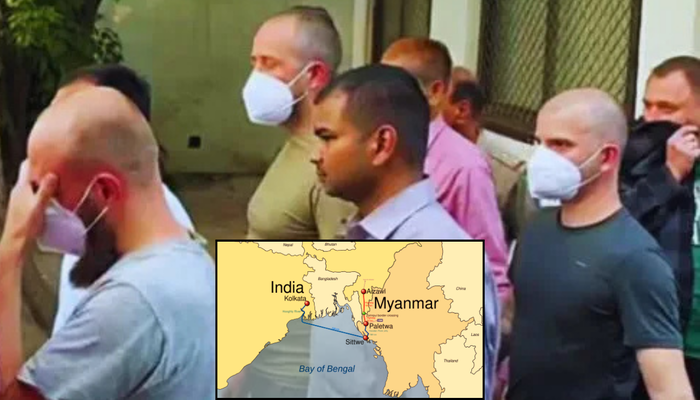
In a breakthrough in anti-terror operations earlier this month, the NIA arrested seven foreign nationals, including six Ukrainians and a US mercenary, Matthew VanDyke under UAPA charges. The Ukrainians were arrested in Delhi and Lucknow, and the US citizen, Matthew Aaron VanDyke, in Kolkata. A Special NIA Court at Patiala House Court remanded them to NIA custody for interrogation. The development was significant as this was the first time that European and US nationals were taken into custody by the central agency as part of the investigation of a terror conspiracy.
According to the NIA, the foreign nationals had arrived in India on tourist visas and reached Mizoram illegally, without obtaining the necessary documents (Restricted Area Permit). From there, they entered Myanmar and contacted the ethnic war groups there. The agency further revealed that these foreign nationals had brought a huge consignment of drones, supplying weapons and hardware from Europe through India.
Notably, the American national Mathew Aaron VanDyke founded the non-profit security contracting company ‘Sons of Liberty International’ (SOLI) in 2014. VanDyke personally fought along the Libyan rebels against the Muammar Gaddafi regime in 2011. His company provides military training to various armed groups. The central agency submitted to the court that foreign nationals had plotted to train the ethnic armed groups in Myanmar in drone warfare, operations, assembly, jamming technology, and more.
The weaponised drone attacks by Kuki militants in 2024
Now, from a plain look at these developments, one might believe that these foreign nationals were aiding insurgent activities in the neighbouring Myanmar and have no connection with India. But before reaching such a conclusion, let’s take a quick recap of the drone bombings that happened in Manipur in September 2024, in the middle of the Kuki-Meitei conflict. On September 1, 2024, the Kuki militant groups used weaponised drones to carry out attacks at Meitei villages.
The incident alarmed the security agencies, as this was the first time that drones were used to drop explosives by domestic terrorist groups. Over 40 explosives were dropped using drones by Kuki militants on Meitei villages like Koutruk and Kadangband in Imphal West. Several civilians were killed and seriously injured in the drone bombings.
The use of weaponised drones to deploy explosives marked a major escalation in the regional ethnic conflict, which had ignited about a year ago, in May 2023. The Manipur Police described the drone bombings amid the ethnic conflict as an “unprecedented” situation. According to the police, the Kuki militants deployed rocket-propelled grenades (RPGs) and fired them at Meitei villages using high-tech drones. Intelligence also confirmed the use of long-range sniper rifles by Kuki militants in the attack on Koutruk village. The use of advanced weapons such as the RPGs by the Kuki militants particularly alarmed the security agencies, as this was an exceptional occurrence in a local conflict. While dropping explosives using drones requires minor modifications in a drone, launching RPGs would require fully military-grade drones and specialised knowledge, which was not possible at the local level.
Security agencies found a foreign hand in the 2024 Manipur drone bombings
The security agencies signalled the involvement of highly trained professionals with expertise in carrying out explosions through drones in the attacks. The involvement and support of a foreign agency in carrying out the drone bombings was also not ruled out by the agencies. In a statement released after the attacks, the Manipur Police said that the use of drones to deploy explosives had never been witnessed before in the regional ethnic conflict, which has a long history.
“In an unprecedented attack in Koutruk, Imphal West, alleged Kuki militants have deployed numerous RPGs using high-tech drones. While drone bombs have commonly been used in general warfare, this recent deployment of drones to deploy explosives against security forces and civilians marks a significant escalation…,” Manipur Police said in the statement.
In an unprecedented attack in Koutruk, Imphal West, alleged Kuki militants have deployed numerous RPGs using high-tech drones. While drone bombs have commonly been used in general warfares, this recent deployment of drones to deploy explosives against security forces and the…— Manipur Police (@manipur_police) September 1, 2024
In the aftermath of the attack, the Assam Rifles (AR) deployed anti-drone systems in Manipur to counter such attacks in the future.
After the investigation, the NIA was able to trace the supply chain through which these drones reached the conflict-ridden state. The agency identified one Khaigoulen Kipgen, alias David, of Gamngai village, Motbung, as the person who collected and brought the drones and accessories into Manipur. The drones and accessories were supplied to him by Mayank Sharma from Ramesh Nagar in New Delhi and Vikram Chaudhary from Haryana’s Rohtak. Kipgen is said to have paid huge amounts of money to Sharma and Chaudhary for supplying the drones. Another individual, Laikangbam Albert Singh, was also found to have purchased drones and batteries from them.
The porous Indo-Myanmar border, a safe passage for drugs and arms
The drones used by the Kuki insurgents in September 2024 were modified to make them capable of carrying and firing grenades. This was similar to the tactics used by ethnic war groups during the 2021 coup in Myanmar, as per reports. The highly porous India-Myanmar border has been used by insurgent groups for the exchange of arms, drugs, ideas and even people. According to the NIA, the ethnic war groups in Myanmar are known to support local insurgent groups in India, particularly those active in the Northeast region.
How the Indo-Myanmar border corridor has been used by the drug mafia for pushing the drug trade in India is a well-known fact. From opium to heroin to industrial-scale methamphetamine, India’s illicit drug networks are fed through this corridor. The United Nations Office on Drugs and Crime (UNODC) identifies Myanmar’s Shan and Chin states as the epicentre of the world’s largest illicit methamphetamine and opium economy. In 2023, Myanmar surpassed Afghanistan as the world’s largest illicit opium producer after the Taliban banned poppy cultivation in the country. As per UNODC data, by 2025, Myanmar’s opium poppy cultivation spiked by 17%, the highest in the last decade, with the sharpest increases in areas bordering India directly.
The impact of Myanmar’s drug cultivation expansion on India was clearly visible. The seizures of amphetamine-type narcotics in India more than doubled from 34 quintals in 2023 to 80 quintals in 2024. The cumulative value of narcotics seized across India in 2024 rose roughly 55 per cent year-on-year. In November 2024, the Indian Coast Guard intercepted a Myanmarese fishing vessel in the Andaman Sea carrying approximately 5,500 kilograms of methamphetamine. As per the official Coast Guard release, this was the single largest drug haul in the service’s history.
In April 2024, India’s Narcotics Control Bureau Deputy Director General Monika Ashish Batra said that investigations revealed that drug proceeds were “increasingly being used to fund terrorism, and to support armed groups”. Union Home Minister Amit Shah had also flagged the threat of drug money being used to fund Naxalism, terrorism and separatism in the country.
However, according to NIA’s submissions before the court in the foreign nationals’ case, the Indo-Myanmar border is also being used by Indian insurgent groups to acquire more advanced drone warfare technology using European supply chains. The agency sought the custody of the foreign nationals to ascertain their source of funding.
Connecting the dots
In light of the facts, the presence of foreign nationals with combat experience training Myanmar’s ethnic insurgent groups and running their operations through Indian soil is a grave concern for regional security. Ethnic militant groups active in India’s North-Eastern border with Myanmar have already been getting weapons and funding through narcotics and suspected foreign organisations on the Myanmar side. The presence of foreign nationals on Indian soil does not look like a benign case of a bunch of foreigner choosing the Indian route to reach their destination in Myanmar. It hints at a larger conspiracy involving foreign powers at work to destabilise India by exploiting the country’s internal fault lines.