Ashwamit Gautam and the politics of outrage: How a 14-year-old is being turned into the Left’s propaganda mascot
There is something deeply unsettling about a society that mistakes virality for virtue and outrage for intellect. The recent glorification of 14-year-old Ashwamit Gautam by sections of the media and the usual ecosystem of left-wing influencers is a textbook example of how India’s attention economy preys on minors and rewards provocation over education. At an age when children are supposed to be in classrooms, grappling with textbooks, building foundations in mathematics, science, and language, Ashwamit Gautam is being paraded as a “fearless political voice”, armed with a smartphone, a clip-on mic, and a script carefully tailored for maximum algorithmic impact. Media houses like The Print have gone out of their way to publish hagiographic profiles, portraying him as a child-prophet of dissent, while conveniently ignoring the most basic and uncomfortable question: why is a 14-year-old being turned into a full-time political content creator in the first place? Source: The Print Is it the desperation to replace PM Modi that every and all measures are being undertaken to paint the BJP in a bad light and gaslight the public into looking for an alternative regime at the centre? Well, the helplessness of the Left, especially in more than 10 years of Modi at the helm, has acquainted us with the ecosystem willing to grasp at straws even if there is a remote possibility of a measure accomplishing their political objectives. Nevertheless, let us strip away the sentimental packaging. What we are seeing is not “courage”. It is the industrialisation of rage. Social media platforms reward the loudest, angriest, most polarising content with views, followers, and donations. A teenager, like any other human being, responds to incentives. When the incentive structure tells him that attacking the Centre, exaggerating claims, and producing rage-bait will fetch him popularity, gadgets, and celebrity treatment, that is exactly what he will do. This is not political awakening. This is behavioural conditioning by algorithms. The Left-liberal ecosystem, of course, is thrilled. A minor is the perfect political mascot: emotionally evocative, morally armoured, and largely immune to criticism. Any attempt to question the wisdom of pushing a child into the toxic arena of daily political combat is instantly reframed as “silencing dissent” or “attacking a Dalit voice”. This is intellectual dishonesty of the highest order. Caste or background cannot be used as a shield to justify pulling a child away from structured education, throwing him into the meat grinder of social media politics, and then rationalising his views as repressed public anger. In fact, if questioned about why a minor is weaned away from education, the Left can spin the narrative against the Centre, blaming it for ‘forcing’ the marginalised child to abandon education for social media activism. But make no mistake, by his own admission, he left regular schooling because he was asked to stop making political videos. In other words, this is not a case of the system denying him education; it is a case of choosing virality over studies. That distinction matters. A lot. But for the usual suspects, Kunal Kamra, Dhruv Rathee and the broader propaganda industry, this is a feature, not a bug. They have found a new symbol to weaponise: a teenager who can be showcased as “brave” while parroting the same tired, predictable talking points about the Modi government, the RSS, and “shrinking dissent”. He is invited, amplified, gifted equipment, and showered with praise. Not because this is good for him as a child, but because he is useful to them as a narrative device. There is a deeper rot here. We live in a time when a child holding a mobile phone and chasing trends is celebrated more than a child holding a book and building a future. We are told this is “democratisation of voice”. In reality, it is the commodification of childhood. The metrics of success are no longer grades, skills, or knowledge, but views, likes, and follower counts. None of this is to deny that teenagers can have opinions. They can. They should. But there is a world of difference between having opinions and being turned into a full-time political influencer before you are even legally allowed to vote. Politics is not a game. It is a brutal, cynical, high-stakes arena that even adults struggle to navigate without being consumed by it. Pushing a 14-year-old into this space and then applauding ourselves for “encouraging free speech” is not progressive. It is reckless. The real indictment here is not of the child. It is of the adults, media houses, influencers, and activists, who see a minor not as someone to protect and guide, but as content, as a tool, as a symbol to be monetised and milked for ideological mileage. A society that rewards children more for outrage than for education should not pretend it is building a better future. It is merely building a louder, angrier, and far m
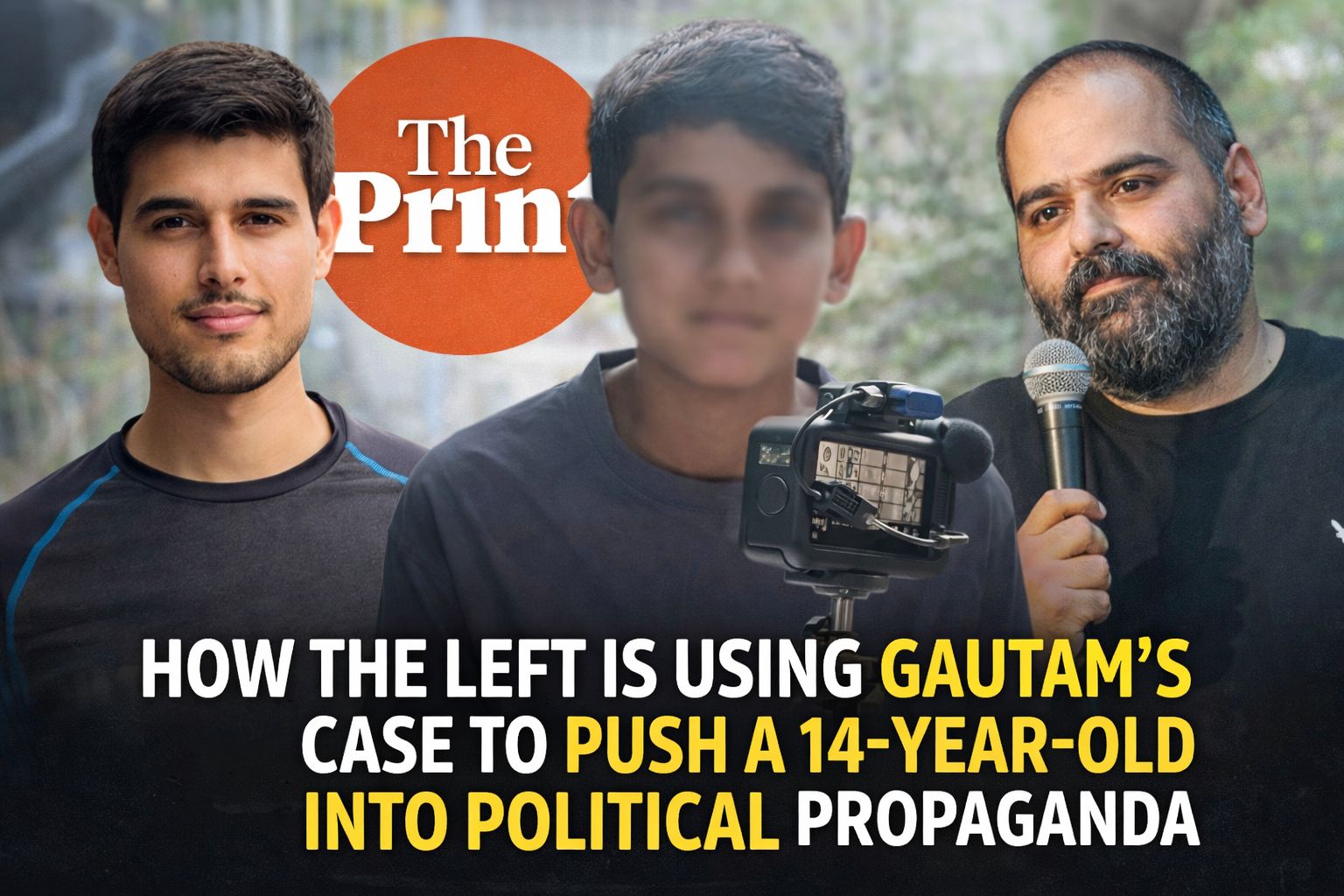
There is something deeply unsettling about a society that mistakes virality for virtue and outrage for intellect. The recent glorification of 14-year-old Ashwamit Gautam by sections of the media and the usual ecosystem of left-wing influencers is a textbook example of how India’s attention economy preys on minors and rewards provocation over education.
At an age when children are supposed to be in classrooms, grappling with textbooks, building foundations in mathematics, science, and language, Ashwamit Gautam is being paraded as a “fearless political voice”, armed with a smartphone, a clip-on mic, and a script carefully tailored for maximum algorithmic impact.
Media houses like The Print have gone out of their way to publish hagiographic profiles, portraying him as a child-prophet of dissent, while conveniently ignoring the most basic and uncomfortable question: why is a 14-year-old being turned into a full-time political content creator in the first place?
Source: The Print
Is it the desperation to replace PM Modi that every and all measures are being undertaken to paint the BJP in a bad light and gaslight the public into looking for an alternative regime at the centre? Well, the helplessness of the Left, especially in more than 10 years of Modi at the helm, has acquainted us with the ecosystem willing to grasp at straws even if there is a remote possibility of a measure accomplishing their political objectives.
Nevertheless, let us strip away the sentimental packaging. What we are seeing is not “courage”. It is the industrialisation of rage. Social media platforms reward the loudest, angriest, most polarising content with views, followers, and donations. A teenager, like any other human being, responds to incentives. When the incentive structure tells him that attacking the Centre, exaggerating claims, and producing rage-bait will fetch him popularity, gadgets, and celebrity treatment, that is exactly what he will do. This is not political awakening. This is behavioural conditioning by algorithms.
The Left-liberal ecosystem, of course, is thrilled. A minor is the perfect political mascot: emotionally evocative, morally armoured, and largely immune to criticism. Any attempt to question the wisdom of pushing a child into the toxic arena of daily political combat is instantly reframed as “silencing dissent” or “attacking a Dalit voice”. This is intellectual dishonesty of the highest order. Caste or background cannot be used as a shield to justify pulling a child away from structured education, throwing him into the meat grinder of social media politics, and then rationalising his views as repressed public anger.
In fact, if questioned about why a minor is weaned away from education, the Left can spin the narrative against the Centre, blaming it for ‘forcing’ the marginalised child to abandon education for social media activism. But make no mistake, by his own admission, he left regular schooling because he was asked to stop making political videos. In other words, this is not a case of the system denying him education; it is a case of choosing virality over studies. That distinction matters. A lot.
But for the usual suspects, Kunal Kamra, Dhruv Rathee and the broader propaganda industry, this is a feature, not a bug. They have found a new symbol to weaponise: a teenager who can be showcased as “brave” while parroting the same tired, predictable talking points about the Modi government, the RSS, and “shrinking dissent”. He is invited, amplified, gifted equipment, and showered with praise. Not because this is good for him as a child, but because he is useful to them as a narrative device.
There is a deeper rot here. We live in a time when a child holding a mobile phone and chasing trends is celebrated more than a child holding a book and building a future. We are told this is “democratisation of voice”. In reality, it is the commodification of childhood. The metrics of success are no longer grades, skills, or knowledge, but views, likes, and follower counts.
None of this is to deny that teenagers can have opinions. They can. They should. But there is a world of difference between having opinions and being turned into a full-time political influencer before you are even legally allowed to vote. Politics is not a game. It is a brutal, cynical, high-stakes arena that even adults struggle to navigate without being consumed by it. Pushing a 14-year-old into this space and then applauding ourselves for “encouraging free speech” is not progressive. It is reckless.
The real indictment here is not of the child. It is of the adults, media houses, influencers, and activists, who see a minor not as someone to protect and guide, but as content, as a tool, as a symbol to be monetised and milked for ideological mileage.
A society that rewards children more for outrage than for education should not pretend it is building a better future. It is merely building a louder, angrier, and far more hollow one.