Bangladesh on the edge: February 12 Elections, Islamist street power, and why India cannot look away
After months of uncertainty, denials, and diplomatic signalling, Bangladesh has finally announced that its national election will be held on February 12. The declaration came only after sustained political pressure, public assurances by BNP leader Tarique Rahman, and his much-discussed meeting with Muhammad Yunus in London. Yet, despite the formal announcement, there is little confidence either in Dhaka or in New Delhi that the election will actually take place as scheduled. Bangladesh today is not merely facing a routine political transition. It is staring at a dangerous convergence of political anarchy, Islamist mobilisation, targeted attacks on minorities, and renewed external interference. The vandalisation of the Awami League headquarters, followed by the attack on the residence of Bangabandhu Sheikh Mujibur Rahman, is not accidental or spontaneous. These are deeply symbolic assaults aimed at dismantling the ideological foundations of the Bangladeshi state itself. For India, this turmoil is not an abstract foreign policy concern. Bangladesh’s stability has a direct bearing on India’s national security, its Northeast, and the broader regional balance especially at a time when Pakistan and China are actively seeking strategic openings in South Asia. Attacks on minority and manufactured chaos The most alarming feature of the current unrest is the sharp rise in attacks on the Hindu minority. Temples, homes, and businesses have been targeted amid political violence, while the interim administration appears either unwilling or unable to control the situation. This is not a new pattern. Historically, whenever Islamist forces gain ground in Bangladesh, minorities become the first casualties. The attack on Bangabandhu’s residence is particularly telling. Sheikh Mujibur Rahman is not just a political figure; he represents the 1971 Liberation War, Bengali nationalism, and Bangladesh’s break from Pakistan’s Islamist-nationalist project. Assaulting his legacy is a clear message: the forces on the streets are not merely opposing Sheikh Hasina or the Awami League they are challenging the very idea of a secular Bangladesh born out of resistance to Pakistan. Who is behind the violence? While responsibility for the unrest remains officially unclear, the fingerprints of Islamic fundamentalist forces are hard to miss. Jamaat-e-Islami, Bangladesh’s largest Islamist organisation, has once again emerged as a central player. Jamaat opposed the creation of Bangladesh in 1971, collaborated with the Pakistani Army, and has never reconciled itself to the country’s secular foundations. Over the past few years, Jamaat’s ideological influence has steadily expanded, particularly among urban youth and radical student groups. With Sheikh Hasina removed from power and the Awami League barred from contesting elections, Jamaat now sees an opening to reposition itself as a mainstream political force. The BNP’s role is more ambiguous. While the party has communicated to India its desire to maintain cordial bilateral relations, its historical dependence on Jamaat and its reluctance to clearly distance itself from Islamist street power raises serious doubts. The reality is that the current unrest benefits those who thrive in instability Islamist groups, radical student fronts, and militant networks. India draws the line India’s response so far has been measured but firm. New Delhi has repeatedly stated that it does not wish to interfere in Bangladesh’s internal political process. At the same time, it has made its red lines unmistakably clear. India wants the February 12 election to be held on time, peacefully, and with genuine democratic legitimacy. The repeated emphasis on a “free, fair, inclusive, and peaceful” election is significant. The word “inclusive” is a pointed reference to the exclusion of the Awami League a party that led Bangladesh’s liberation and has commanded mass support for decades. An election without the Awami League risks being viewed as a managed transition rather than a democratic exercise. Equally critical is India’s insistence that Bangladeshi territory must not be used for anti-Indian activities. Intelligence assessments indicating that Paresh Baruah, a senior militant leader, has returned to Dhaka have revived painful memories of the early 2000s, when insurgent groups used Bangladesh as a launchpad against India’s Northeast. Those years of strategic vulnerability are not something New Delhi is prepared to relive. Pakistan’s quiet re-entry Adding to India’s concerns is Pakistan’s renewed engagement with Dhaka. The visit of the ISI chief to Bangladesh has not gone unnoticed. Pakistan has never accepted the outcome of 1971, and weakening India-Bangladesh relations has long been a strategic objective for Rawalpindi. Jamaat-e-Islami’s ideological proximity to Pakistan is well documented. The BNP’s historical alignment with Jamaat further complicates matters. While Dhaka ma

After months of uncertainty, denials, and diplomatic signalling, Bangladesh has finally announced that its national election will be held on February 12. The declaration came only after sustained political pressure, public assurances by BNP leader Tarique Rahman, and his much-discussed meeting with Muhammad Yunus in London. Yet, despite the formal announcement, there is little confidence either in Dhaka or in New Delhi that the election will actually take place as scheduled.
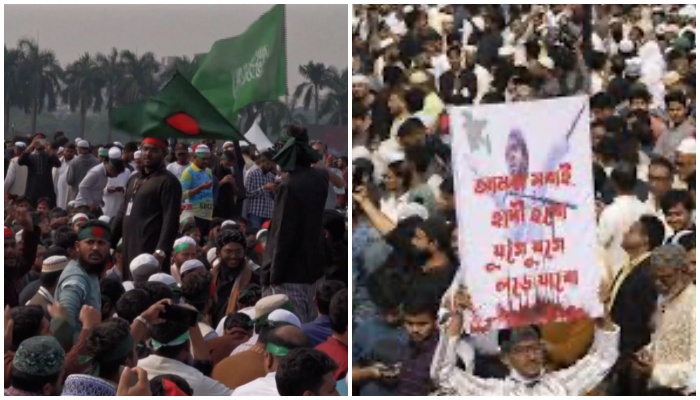
Bangladesh today is not merely facing a routine political transition. It is staring at a dangerous convergence of political anarchy, Islamist mobilisation, targeted attacks on minorities, and renewed external interference. The vandalisation of the Awami League headquarters, followed by the attack on the residence of Bangabandhu Sheikh Mujibur Rahman, is not accidental or spontaneous. These are deeply symbolic assaults aimed at dismantling the ideological foundations of the Bangladeshi state itself.
For India, this turmoil is not an abstract foreign policy concern. Bangladesh’s stability has a direct bearing on India’s national security, its Northeast, and the broader regional balance especially at a time when Pakistan and China are actively seeking strategic openings in South Asia.
Attacks on minority and manufactured chaos
The most alarming feature of the current unrest is the sharp rise in attacks on the Hindu minority. Temples, homes, and businesses have been targeted amid political violence, while the interim administration appears either unwilling or unable to control the situation. This is not a new pattern. Historically, whenever Islamist forces gain ground in Bangladesh, minorities become the first casualties.
The attack on Bangabandhu’s residence is particularly telling. Sheikh Mujibur Rahman is not just a political figure; he represents the 1971 Liberation War, Bengali nationalism, and Bangladesh’s break from Pakistan’s Islamist-nationalist project. Assaulting his legacy is a clear message: the forces on the streets are not merely opposing Sheikh Hasina or the Awami League they are challenging the very idea of a secular Bangladesh born out of resistance to Pakistan.
Who is behind the violence?
While responsibility for the unrest remains officially unclear, the fingerprints of Islamic fundamentalist forces are hard to miss. Jamaat-e-Islami, Bangladesh’s largest Islamist organisation, has once again emerged as a central player. Jamaat opposed the creation of Bangladesh in 1971, collaborated with the Pakistani Army, and has never reconciled itself to the country’s secular foundations.
Over the past few years, Jamaat’s ideological influence has steadily expanded, particularly among urban youth and radical student groups. With Sheikh Hasina removed from power and the Awami League barred from contesting elections, Jamaat now sees an opening to reposition itself as a mainstream political force.
The BNP’s role is more ambiguous. While the party has communicated to India its desire to maintain cordial bilateral relations, its historical dependence on Jamaat and its reluctance to clearly distance itself from Islamist street power raises serious doubts. The reality is that the current unrest benefits those who thrive in instability Islamist groups, radical student fronts, and militant networks.
India draws the line
India’s response so far has been measured but firm. New Delhi has repeatedly stated that it does not wish to interfere in Bangladesh’s internal political process. At the same time, it has made its red lines unmistakably clear.
India wants the February 12 election to be held on time, peacefully, and with genuine democratic legitimacy. The repeated emphasis on a “free, fair, inclusive, and peaceful” election is significant. The word “inclusive” is a pointed reference to the exclusion of the Awami League a party that led Bangladesh’s liberation and has commanded mass support for decades. An election without the Awami League risks being viewed as a managed transition rather than a democratic exercise.
Equally critical is India’s insistence that Bangladeshi territory must not be used for anti-Indian activities. Intelligence assessments indicating that Paresh Baruah, a senior militant leader, has returned to Dhaka have revived painful memories of the early 2000s, when insurgent groups used Bangladesh as a launchpad against India’s Northeast. Those years of strategic vulnerability are not something New Delhi is prepared to relive.
Pakistan’s quiet re-entry
Adding to India’s concerns is Pakistan’s renewed engagement with Dhaka. The visit of the ISI chief to Bangladesh has not gone unnoticed. Pakistan has never accepted the outcome of 1971, and weakening India-Bangladesh relations has long been a strategic objective for Rawalpindi.
Jamaat-e-Islami’s ideological proximity to Pakistan is well documented. The BNP’s historical alignment with Jamaat further complicates matters. While Dhaka may insist that its foreign policy remains unchanged, symbolism matters in geopolitics and Pakistan’s re-entry into Bangladesh’s strategic space is a development India cannot ignore.
The BNP, Jamaat, and electoral arithmetic
Initially, it was widely assumed that the BNP and Jamaat would contest the election together. Jamaat lacks the electoral strength to win power independently, while the BNP needs Jamaat’s organisational reach and street mobilisation. However, seat-sharing disputes have exposed growing tensions between the two.
Jamaat believes it can now command a substantial vote share and wants greater representation in Parliament. The BNP, wary of being overshadowed, is unwilling to concede too much ground. This rivalry is one of the reasons behind the ongoing uncertainty and street unrest.
If Jamaat emerges with significant parliamentary influence, it will embolden Islamist forces and marginalise secular voices. If the BNP dominates, Jamaat risks being sidelined but not eliminated. Either outcome has serious implications for India.
Election delays and strategic ambiguity
Tarique Rahman’s repeated delays in returning to Bangladesh have only deepened suspicions that sections of the opposition may prefer postponement. While the BNP has privately conveyed to India that elections should be held soon, its actions suggest strategic ambiguity.
There is also speculation that Muhammad Yunus may seek to delay the polls to consolidate his position and organise a student-backed political platform. Khaleda Zia’s deteriorating health has further complicated the situation, though her decision to continue treatment in Dhaka after the election announcement has removed one immediate uncertainty.
Despite these developments, there is persistent speculation in Delhi that the election could still be cancelled if law and order collapses further or communal violence intensifies.
India’s course correction
India has also engaged in some honest introspection. Its earlier policy of placing all strategic weight behind Sheikh Hasina, while understandable, contributed to the rise of anti-Indian narratives within Bangladesh. Islamist and radical groups have exploited this perception effectively.
Today, New Delhi’s approach is more balanced. It is not pressuring Sheikh Hasina to return, nor is it endorsing Jamaat or any Islamist formation. It has rejected Dhaka’s demands for Hasina’s extradition, dismissed claims of politically motivated tribunal verdicts, and reiterated that Indian soil will not be used to destabilise Bangladesh.
At the same time, India remains unequivocally opposed to Islamic fundamentalism and any attempt to constitutionally or ideologically realign Bangladesh with Pakistan.
The road ahead
Bangladesh stands at a defining moment. The February 12 election if held, will shape not just its domestic politics but its regional posture for years to come. Any attempt to dilute the legacy of the 1971 Liberation War, marginalise minorities, or provide space to extremist forces will fundamentally alter India-Bangladesh relations.
India’s expectations are neither intrusive nor unreasonable: a timely election, protection of minorities, rejection of extremism, and assurance that Bangladeshi territory will not be used against Indian interests.
Ultimately, Bangladesh must demonstrate through actions, not diplomatic assurances, that it values stability, sovereignty, and regional responsibility. New Delhi is watching closely and so is history.