Cricket or Dawat-e-Jihad? A conspiracy to introduce Islamic victimhood into the field
Cricket is essentially a game of bat and ball. It is a disciplined struggle for timing, line, and length. It is a sport shaped by team competition and sportsmanship, not by displays of an individual’s faith. But over the past few years, there has been a deliberate attempt to transform the cricket ground into a religious arena. From the pitch to the dressing room, the Islamic agenda and the Muslim victim card are being infiltrated. This transformation appears to be part of a well-planned conspiracy, not a coincidence. Be it Australian cricketer Usman Khawaja, announcing his retirement, lamenting that he faced “differences in his treatment because he is a Pakistani Muslim,” or Furqan Bhatt appearing on the field in the Jammu and Kashmir Champions League with a Palestinian flag on his helmet—these incidents don’t qualify as personal statements. They are attempts to normalise Islamic victimhood, political Islam, and religious agendas using the platform of cricket. Here, sport is the medium, the message is something else. Those with a basic understanding of cricket know that Usman Khawaja was no ordinary player. An international career spanning over a decade, 87 Tests for Australia, and his name being discussed for captaincy—neither his Muslim origins nor his birth in Islamabad hindered his remarkable journey. Don Bradman didn’t become a great cricketer because he prayed in church. Sachin Tendulkar didn’t become the God of Cricket because he was a devotee of Saint Satya Sai Baba. Wasim Akram’s reputation was built not by prayer but by swing. Virat Kohli’s identity is not due to his visits to Premanand Maharaj’s ashram, but due to his cover drive. The world knows them all for their cricketing prowess, not for their personal beliefs. Their beliefs are personal, off the field. But before he leaves, Usman Khawaja has put cricket on the back burner and Pakistan and Islam at the forefront. This isn’t just an insult to the spirit of the game; it’s a murder of the very sport that gave him the platform to make these statements. Usman Khawaja and Furqan Bhat are part of the trend set and fostered by Pakistani cricket. Prayers during matches, religious gestures in front of the cameras, the compulsion to attribute victory to Allah’s grace—each such gesture was defended in the name of ‘personal faith.’ But when it happens repeatedly, systematically, and in a camera-friendly manner, it ceases to be personal. It becomes a message. That same message inspires budding players like Furkan Bhat to establish their religious identity before their cricketing career. We’ve seen messages like ‘Victory belongs to Allah’ on jerseys. This is an attempt to adapt the language of the game to the vocabulary of a particular religion. This same language is heard in Pakistani players’ post-match presentations and repeated in TV studios. Remember how many times in cricket analysis have you heard about Yousuf Youhana’s transformation to Mohammad Yousuf after converting to Islam being described as a ‘turning point’? Have you heard discussions about Saeed Anwar’s alleged ‘miracles’ after he became a cleric, more than about his cover drive? Recall the 2014 video in which Pakistani cricketer Ahmed Shehzad was caught telling Sri Lankan player Tillakaratne Dilshan that if you convert to Islam, you will ultimately attain paradise no matter what you do in life. This wasn’t a conversation with a fellow cricketer. It was a religious intrusion. The ICC has issued warnings in some cases, but it has failed to stop the religious infiltration. The Danish Kaneria incident shows that this toxicity has spread beyond the field and into the dressing room. He openly described how he was isolated based on his religious identity and pressured to convert. This is not the suffering of one player, but evidence of a mentality where religion takes precedence over the team. The question here isn’t one of faith. The question is whether the cricket team is an extension of some religious agenda? If not, why this religious coercion? Usman Khawaja’s statement is the next step in this trend. When age, fitness, and discipline are questioned, religion is used as a shield. Pakistan is adept at this art. For years, it has dismissed its failures as “conspiracy,” criticism as “anti-faith,” and discipline as “suppression of faith.” It’s not that cricket is a purely gentleman’s game. It has been embroiled in many controversies, such as the Kerry Packer series, match-fixing, and Monkeygate, but religion has never been the agenda. When religion becomes the agenda, the neutrality of the game is lost. Team spirit is shattered. A shared religion takes the place of a shared goal. Discipline slackens, and audience confidence erodes. The solution must be clear and strict. Any political or religious display on the field should be declared completely unacceptable. If religious coercion is found in the dressing room, the entire team should be punished. If nec

Cricket is essentially a game of bat and ball. It is a disciplined struggle for timing, line, and length. It is a sport shaped by team competition and sportsmanship, not by displays of an individual’s faith.
But over the past few years, there has been a deliberate attempt to transform the cricket ground into a religious arena. From the pitch to the dressing room, the Islamic agenda and the Muslim victim card are being infiltrated. This transformation appears to be part of a well-planned conspiracy, not a coincidence.
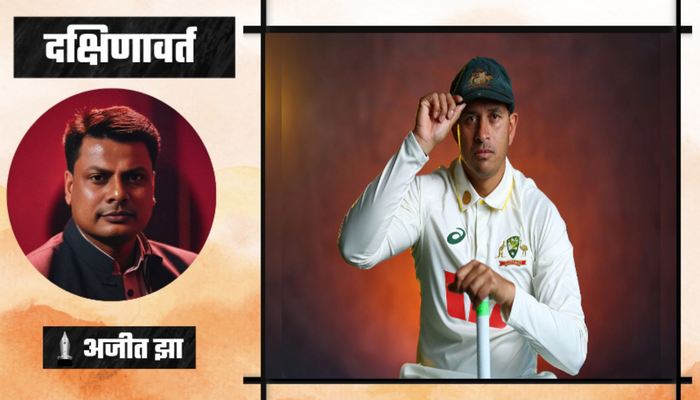
Be it Australian cricketer Usman Khawaja, announcing his retirement, lamenting that he faced “differences in his treatment because he is a Pakistani Muslim,” or Furqan Bhatt appearing on the field in the Jammu and Kashmir Champions League with a Palestinian flag on his helmet—these incidents don’t qualify as personal statements. They are attempts to normalise Islamic victimhood, political Islam, and religious agendas using the platform of cricket. Here, sport is the medium, the message is something else.
Those with a basic understanding of cricket know that Usman Khawaja was no ordinary player. An international career spanning over a decade, 87 Tests for Australia, and his name being discussed for captaincy—neither his Muslim origins nor his birth in Islamabad hindered his remarkable journey.
Don Bradman didn’t become a great cricketer because he prayed in church. Sachin Tendulkar didn’t become the God of Cricket because he was a devotee of Saint Satya Sai Baba. Wasim Akram’s reputation was built not by prayer but by swing. Virat Kohli’s identity is not due to his visits to Premanand Maharaj’s ashram, but due to his cover drive.
The world knows them all for their cricketing prowess, not for their personal beliefs. Their beliefs are personal, off the field. But before he leaves, Usman Khawaja has put cricket on the back burner and Pakistan and Islam at the forefront. This isn’t just an insult to the spirit of the game; it’s a murder of the very sport that gave him the platform to make these statements.
Usman Khawaja and Furqan Bhat are part of the trend set and fostered by Pakistani cricket. Prayers during matches, religious gestures in front of the cameras, the compulsion to attribute victory to Allah’s grace—each such gesture was defended in the name of ‘personal faith.’
But when it happens repeatedly, systematically, and in a camera-friendly manner, it ceases to be personal. It becomes a message. That same message inspires budding players like Furkan Bhat to establish their religious identity before their cricketing career.
We’ve seen messages like ‘Victory belongs to Allah’ on jerseys. This is an attempt to adapt the language of the game to the vocabulary of a particular religion. This same language is heard in Pakistani players’ post-match presentations and repeated in TV studios. Remember how many times in cricket analysis have you heard about Yousuf Youhana’s transformation to Mohammad Yousuf after converting to Islam being described as a ‘turning point’? Have you heard discussions about Saeed Anwar’s alleged ‘miracles’ after he became a cleric, more than about his cover drive?
Recall the 2014 video in which Pakistani cricketer Ahmed Shehzad was caught telling Sri Lankan player Tillakaratne Dilshan that if you convert to Islam, you will ultimately attain paradise no matter what you do in life. This wasn’t a conversation with a fellow cricketer. It was a religious intrusion.
The ICC has issued warnings in some cases, but it has failed to stop the religious infiltration. The Danish Kaneria incident shows that this toxicity has spread beyond the field and into the dressing room. He openly described how he was isolated based on his religious identity and pressured to convert. This is not the suffering of one player, but evidence of a mentality where religion takes precedence over the team.
The question here isn’t one of faith. The question is whether the cricket team is an extension of some religious agenda? If not, why this religious coercion?
Usman Khawaja’s statement is the next step in this trend. When age, fitness, and discipline are questioned, religion is used as a shield. Pakistan is adept at this art. For years, it has dismissed its failures as “conspiracy,” criticism as “anti-faith,” and discipline as “suppression of faith.”
It’s not that cricket is a purely gentleman’s game. It has been embroiled in many controversies, such as the Kerry Packer series, match-fixing, and Monkeygate, but religion has never been the agenda. When religion becomes the agenda, the neutrality of the game is lost. Team spirit is shattered. A shared religion takes the place of a shared goal. Discipline slackens, and audience confidence erodes.
The solution must be clear and strict. Any political or religious display on the field should be declared completely unacceptable. If religious coercion is found in the dressing room, the entire team should be punished. If necessary, that country should be banned from international cricket.
Remember, cricket is a game that unites civilisations, not a field to divide them. When players put their agendas before their jerseys, the game loses. The spectators lose.
Cricket must be allowed to remain cricket, free from the burden of Islam. If this doesn’t happen, the day is not far off when ideologies, not bats and balls, will clash on the field.
(This article is a translation of the original article published on OpIndia Hindi.)