Dangerous for those who force religious conversion: Union government tables FCRA Amendment bill in Parliament, read about key changes for NGOs
On 25th March (Wednesday), a bill to modify the Foreign Contribution Regulation Act (FCRA) was presented to the Lok Sabha by the Modi government. Union Minister of State for Home Nityanand Rai introduced the bill and expressed that it intends to improve transparency and guarantee appropriate use of funds acquired from overseas. He also responded to the opposition’s accusations that it is “dangerous” and countered that it is “indeed dangerous” for people who exploit the money to push for religious conversion and their own benefit. He warned, “The Modi government will not tolerate any misutilisation of foreign funding and will take strong action against such elements.” A non-governmental organisation (NGO) must register under the FCRA to obtain financial assistance from abroad. The 2010 parent act lacked a statutory structure to handle the assets generated from the resources and merely had a clause to regulate the flow. Who is the “key functionary” The bill has broadened the definition of “key functionary” within an NGO to encompass not only an office bearer or director but also directors, partners, trustees and the karta (head) of a Hindu Undivided Family alongside office-bearers or members of the governing body or managing committee of a society, trust, trade union, or association as well as any individual who possesses control over or is accountable for the operations or affairs of such an organisation. NGOs have to procure the center’s prior consent before alienating, encumbering or otherwise dealing with any asset derived from the foreign contribution. Additionally, unless they can demonstrate a lack of information or due diligence, the amendment would hold significant staff members accountable for violations under the FCRA. The certificate will be considered to have expired upon the conclusion of its validity period if the renewal application has not been submitted, denied by the central government, or not renewed prior to expiration under the new provisions. “No person whose certificate has ceased to exist shall either receive or utilise the foreign contribution unless the certificate is renewed,” the bill added. The role of “Designated Authority” The bill’s comprehensive, time-bound system to deal directly with assets gained out of outside donations in situations where an association’s FCRA registration has been suspended, terminated, surrendered, or otherwise ceased is one of its main features. A “Designated Authority” has been appointed to assume control of the same, keep track of records and inventories, safeguard their condition and secure their legitimate usage or disposal. It can employ permanently vested assets for public purposes, such as moving them to any ministry, department, authority or agency of the central government or a state government or any local entity or even sell them with the proceeds put into to the “Consolidated Fund of India” along with any left-over aide from beyond borders. When an asset or its portion that is permanently vested in the “Designated Authority” is a place of worship, then its religious character must be preserved by entrusting the management or functioning to a chosen individual in such a manner along with the terms and conditions that might be established. Its decisions can only be contested in court. If a person who was allowed to accept foreign aide no longer exists or is pronounced inoperative or defunct, the remaining key functionaries are mandated to tell the central government in the format, manner and time frame that could be specified. The “Designated Authority” will retain permanent ownership of their funds and derived assets. “The Designated authority and the Administrator, for the purposes of discharging their functions under the act shall have all the powers of a Civil Court under the Code of Civil Procedure, 1908, while trying a suit, in respect of summoning and enforcing the attendance of any person, examining them on oath, requiring the discovery and production of documents, receiving evidence on affidavits, issuing commissions and such other matters as may be prescribed,” the bill outlined. A 90-day period has been granted to approach the District Judge’s Court against the order. Jail term for the offenders The bill suggested rationalising penalties and lowered the maximum sentence for FCRA violations from previous 5 years to 1 year, a fine or both for anyone who infringes any clause or regulation by accepting or helping an individual, political party or group to take any contribution, currency or security from a foreign source. Section 43 of the parent act is also altered, requiring any law enforcement agency or state government to obtain prior clearance from the centre before beginning an inquiry into allegations pertaining to the FCRA. If any breach under this act, any rule or order made thereunder is committed by an entity other than an individual, their
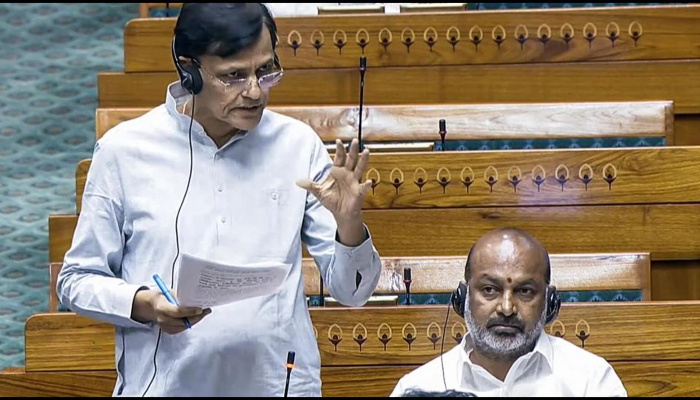
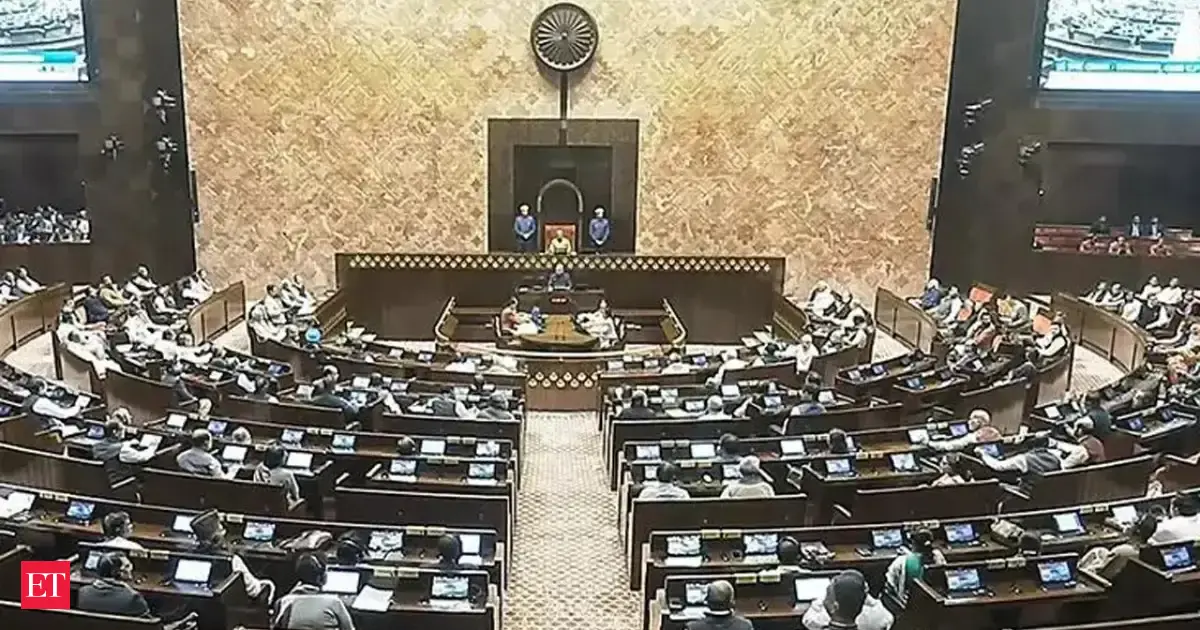
On 25th March (Wednesday), a bill to modify the Foreign Contribution Regulation Act (FCRA) was presented to the Lok Sabha by the Modi government. Union Minister of State for Home Nityanand Rai introduced the bill and expressed that it intends to improve transparency and guarantee appropriate use of funds acquired from overseas. He also responded to the opposition’s accusations that it is “dangerous” and countered that it is “indeed dangerous” for people who exploit the money to push for religious conversion and their own benefit.
He warned, “The Modi government will not tolerate any misutilisation of foreign funding and will take strong action against such elements.” A non-governmental organisation (NGO) must register under the FCRA to obtain financial assistance from abroad. The 2010 parent act lacked a statutory structure to handle the assets generated from the resources and merely had a clause to regulate the flow.
Who is the “key functionary”
The bill has broadened the definition of “key functionary” within an NGO to encompass not only an office bearer or director but also directors, partners, trustees and the karta (head) of a Hindu Undivided Family alongside office-bearers or members of the governing body or managing committee of a society, trust, trade union, or association as well as any individual who possesses control over or is accountable for the operations or affairs of such an organisation.
NGOs have to procure the center’s prior consent before alienating, encumbering or otherwise dealing with any asset derived from the foreign contribution.
Additionally, unless they can demonstrate a lack of information or due diligence, the amendment would hold significant staff members accountable for violations under the FCRA.
The certificate will be considered to have expired upon the conclusion of its validity period if the renewal application has not been submitted, denied by the central government, or not renewed prior to expiration under the new provisions. “No person whose certificate has ceased to exist shall either receive or utilise the foreign contribution unless the certificate is renewed,” the bill added.
The role of “Designated Authority”
The bill’s comprehensive, time-bound system to deal directly with assets gained out of outside donations in situations where an association’s FCRA registration has been suspended, terminated, surrendered, or otherwise ceased is one of its main features. A “Designated Authority” has been appointed to assume control of the same, keep track of records and inventories, safeguard their condition and secure their legitimate usage or disposal.
It can employ permanently vested assets for public purposes, such as moving them to any ministry, department, authority or agency of the central government or a state government or any local entity or even sell them with the proceeds put into to the “Consolidated Fund of India” along with any left-over aide from beyond borders.
When an asset or its portion that is permanently vested in the “Designated Authority” is a place of worship, then its religious character must be preserved by entrusting the management or functioning to a chosen individual in such a manner along with the terms and conditions that might be established. Its decisions can only be contested in court.
If a person who was allowed to accept foreign aide no longer exists or is pronounced inoperative or defunct, the remaining key functionaries are mandated to tell the central government in the format, manner and time frame that could be specified. The “Designated Authority” will retain permanent ownership of their funds and derived assets.
“The Designated authority and the Administrator, for the purposes of discharging their functions under the act shall have all the powers of a Civil Court under the Code of Civil Procedure, 1908, while trying a suit, in respect of summoning and enforcing the attendance of any person, examining them on oath, requiring the discovery and production of documents, receiving evidence on affidavits, issuing commissions and such other matters as may be prescribed,” the bill outlined. A 90-day period has been granted to approach the District Judge’s Court against the order.
Jail term for the offenders
The bill suggested rationalising penalties and lowered the maximum sentence for FCRA violations from previous 5 years to 1 year, a fine or both for anyone who infringes any clause or regulation by accepting or helping an individual, political party or group to take any contribution, currency or security from a foreign source.
Section 43 of the parent act is also altered, requiring any law enforcement agency or state government to obtain prior clearance from the centre before beginning an inquiry into allegations pertaining to the FCRA.
If any breach under this act, any rule or order made thereunder is committed by an entity other than an individual, their every key functionary who was in command and responsible for the conduct of the business at the time shall be considered culpable and is going to be subjected to prosecution and punishment accordingly.
The objective of the move
“The Foreign Contribution (Regulation) Act, 2010 regulates the acceptance and utilisation of foreign contribution and foreign hospitality to ensure that such inflows do not adversely affect national interest, public order or national security. The Act came into force on 1st May 2011 and has been amended in the years 2016, 2018 and 2020. At present, approximately 16,000 associations are registered under the Act and receive around ₹22,000 crore annually,” the official document mentioned.
However, a number of operational and legal deficiencies had been discovered especially with regard to the handling of foreign contributions and the assets they elicit in situations when registration is cancelled, turned in or otherwise stopped. “Further, multiplicity of investigations, inconsistency in penalties, absence of timelines for utilisation, lack of express provision for cessation of registration and ambiguity regarding treatment of assets during suspension have resulted in implementation challenges,” it highlighted.
Hence, the fresh bill aims to establish a comprehensive framework for the vesting, supervision, management, and disposal of foreign contributions and assets, including provisional and permanent vesting, as well as to regulate dealing with assets during suspension of registration, cessation of certificate upon expiration, non-renewal or refusal of renewal.
Moreover, the goal is to develop a definite “timelines for receipt and utilisation under prior permission, to provide for cessation of certificate, to regulate handling of assets during suspension, to rationalise penalties and to require prior approval of the central government for initiation of investigation.”