Debunked Aryan Invasion Theory, Identified Vedic Saraswati River: Who is Padma Shri Michel Danino, the French-born scholar banned by Supreme Court for chapter on corruption in judiciary
The Supreme Court of India on Wednesday barred three prominent academicians from working on government-funded projects over the Class 8 NCERT book that contained a chapter on corruption on judiciary. On the court’s earlier orders, the NCERT informed the court that the controversial chapter was prepared under the supervision of a visiting professor Michel Danino. Two others, Suparna Diwakar and Alok Prasanna Kumar were also involved in the process. After learning about the names behind the chapter, the court claimed that the three scholars do not have any reasonable knowledge about the judiciary, and directed that they should not be associated with any other project. The apex court had banned the book last month, and ordered the removal of all copies of the book from the market. The court said, “At the outset, we have no reason to doubt that Professor Michel Danino, along with Ms Diwakar and Mr Alok Prasanna Kumar, either does not have reasonable knowledge about the Indian judiciary or they deliberately and knowingly misrepresented the facts in order to project a negative image of the Indian judiciary before students of class 8 who are at an impressionable age. There is no reason why such persons be associated in any manner with the preparation of curriculum or finalisation of textbooks for the next generation. We direct the Government of India and all states/UTs/Universities etc. to disassociate 3 of them forthwith and not to assign any responsibility which involves public funds. This order shall be subject to their approaching this court for modification with an explanation.” As per the affidavit submitted by the NCERT, Prof. Michel Danino, a prominent French-born Indian author and scholar, was behind the sub-chapter titled “Corruption in the Judiciary” in the Class 8 social science textbook, which the court deemed a “deliberate misrepresentation” that could tarnish the judiciary’s image among young students. Journey to India Michel Danino was born on June 4, 1956, in Honfleur, a coastal town in Normandy, France. From a young age, he was drawn to Indian spirituality and philosophy, influenced by figures like Sri Aurobindo and his spiritual collaborator Mirra Alfassa, known as “The Mother”. Dissatisfied with four years of higher scientific studies in France, Danino relocated to India in 1977 at the age of 21. He initially settled in Auroville, an experimental township in Tamil Nadu founded on Sri Aurobindo’s ideals, where he immersed himself in community life and spiritual pursuits. In 1982, Danino moved to the Nilgiri Mountains in southern India, where he lived for two decades, focusing on nature conservation and independent research. By 2003, he had relocated near Coimbatore, Tamil Nadu, and formally adopted Indian citizenship, solidifying his commitment to his adopted homeland. Danino has often described this transition as a search for deeper meaning, stating in interviews that Sri Aurobindo’s worldview provided the keys he sought. Academic and Professional Career Danino identifies as a lifelong student of Indian civilisation, with no formal advanced degrees in history or archaeology but extensive self-directed scholarship. He has lectured widely on ancient Indian history, culture, and knowledge systems at institutions across India, including IIT Kanpur, IIM Ranchi, and various cultural forums. Since 2011, he has served as a guest professor at the Indian Institute of Technology (IIT) Gandhinagar, where he has played a key role in establishing the Archaeological Sciences Centre and coordinating courses on Indian Knowledge Systems (IKS). He is also a member of the Indian Council of Historical Research (ICHR), contributing to research on ancient India. In recent years, Danino has held a prominent position in educational policy, serving as the chairperson of NCERT’s social science curriculum committee. Under his oversight, NCERT has undertaken revisions to school textbooks, emphasising “balanced content” and incorporating elements of Indian heritage. However, now he has been ordered to be removed from all government-funded institutions over a textbook chapter on corruption in judiciary. Notable Works and Contributions Danino’s writings focus on ancient Indian civilisation, challenging colonial-era narratives and advocating for indigenous perspectives. His early work includes translating and publishing selections from Sri Aurobindo and The Mother’s writings, such as the 13-volume Mother’s Agenda from French to English. In 1996, he published The Invasion that Never Was, arguing against the Indo-Aryan migration theory and asserting that Aryans were indigenous to India, a view he supports with claims of genetic evidence showing unity between Aryans and Dravidians. His 2010 book, The Lost River: On the Trail of the Sarasvati, uses multidisciplinary evidence, including archaeology, hydrology, and ancient texts, to link the Vedic Sarasvati River to the modern Ghag
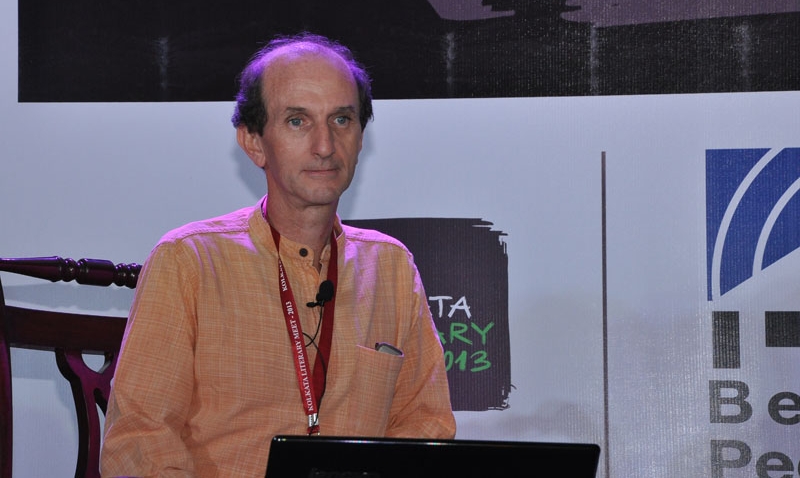
The Supreme Court of India on Wednesday barred three prominent academicians from working on government-funded projects over the Class 8 NCERT book that contained a chapter on corruption on judiciary. On the court’s earlier orders, the NCERT informed the court that the controversial chapter was prepared under the supervision of a visiting professor Michel Danino. Two others, Suparna Diwakar and Alok Prasanna Kumar were also involved in the process.
After learning about the names behind the chapter, the court claimed that the three scholars do not have any reasonable knowledge about the judiciary, and directed that they should not be associated with any other project. The apex court had banned the book last month, and ordered the removal of all copies of the book from the market.
The court said, “At the outset, we have no reason to doubt that Professor Michel Danino, along with Ms Diwakar and Mr Alok Prasanna Kumar, either does not have reasonable knowledge about the Indian judiciary or they deliberately and knowingly misrepresented the facts in order to project a negative image of the Indian judiciary before students of class 8 who are at an impressionable age. There is no reason why such persons be associated in any manner with the preparation of curriculum or finalisation of textbooks for the next generation. We direct the Government of India and all states/UTs/Universities etc. to disassociate 3 of them forthwith and not to assign any responsibility which involves public funds. This order shall be subject to their approaching this court for modification with an explanation.”
As per the affidavit submitted by the NCERT, Prof. Michel Danino, a prominent French-born Indian author and scholar, was behind the sub-chapter titled “Corruption in the Judiciary” in the Class 8 social science textbook, which the court deemed a “deliberate misrepresentation” that could tarnish the judiciary’s image among young students.
Journey to India
Michel Danino was born on June 4, 1956, in Honfleur, a coastal town in Normandy, France. From a young age, he was drawn to Indian spirituality and philosophy, influenced by figures like Sri Aurobindo and his spiritual collaborator Mirra Alfassa, known as “The Mother”.
Dissatisfied with four years of higher scientific studies in France, Danino relocated to India in 1977 at the age of 21. He initially settled in Auroville, an experimental township in Tamil Nadu founded on Sri Aurobindo’s ideals, where he immersed himself in community life and spiritual pursuits.
In 1982, Danino moved to the Nilgiri Mountains in southern India, where he lived for two decades, focusing on nature conservation and independent research. By 2003, he had relocated near Coimbatore, Tamil Nadu, and formally adopted Indian citizenship, solidifying his commitment to his adopted homeland.
Danino has often described this transition as a search for deeper meaning, stating in interviews that Sri Aurobindo’s worldview provided the keys he sought.
Academic and Professional Career
Danino identifies as a lifelong student of Indian civilisation, with no formal advanced degrees in history or archaeology but extensive self-directed scholarship. He has lectured widely on ancient Indian history, culture, and knowledge systems at institutions across India, including IIT Kanpur, IIM Ranchi, and various cultural forums.
Since 2011, he has served as a guest professor at the Indian Institute of Technology (IIT) Gandhinagar, where he has played a key role in establishing the Archaeological Sciences Centre and coordinating courses on Indian Knowledge Systems (IKS). He is also a member of the Indian Council of Historical Research (ICHR), contributing to research on ancient India.
In recent years, Danino has held a prominent position in educational policy, serving as the chairperson of NCERT’s social science curriculum committee. Under his oversight, NCERT has undertaken revisions to school textbooks, emphasising “balanced content” and incorporating elements of Indian heritage.
However, now he has been ordered to be removed from all government-funded institutions over a textbook chapter on corruption in judiciary.
Notable Works and Contributions
Danino’s writings focus on ancient Indian civilisation, challenging colonial-era narratives and advocating for indigenous perspectives. His early work includes translating and publishing selections from Sri Aurobindo and The Mother’s writings, such as the 13-volume Mother’s Agenda from French to English.
In 1996, he published The Invasion that Never Was, arguing against the Indo-Aryan migration theory and asserting that Aryans were indigenous to India, a view he supports with claims of genetic evidence showing unity between Aryans and Dravidians.
His 2010 book, The Lost River: On the Trail of the Sarasvati, uses multidisciplinary evidence, including archaeology, hydrology, and ancient texts, to link the Vedic Sarasvati River to the modern Ghaggar-Hakra River system, proposing it as a factor in the decline of the Indus Valley Civilisation. Notably,
Danino advocates for renaming the Indus Valley Civilisation as “Indus-Sarasvati” or “Sindhu-Sarasvati” in educational materials, and has added these as alternative names in some textbooks. He asserts that the new terminology used in the textbook is based on established archaeological scholarship and not any contemporary political influence.
His other key publications include Indian Culture and India’s Future (2011), which explores India’s civilisational heritage, and co-edited textbooks like Knowledge Traditions and Practices of India for CBSE classes XI and XII.
In 2018, he edited Sri Aurobindo and India’s Rebirth, compiling Aurobindo’s writings on nationalism and cultural revival.
Danino’s research has contributed to discussions on integrating India’s ancient knowledge systems into modern education, including topics like Vedic mathematics, astronomy, and ecology.
He has also been involved in environmental conservation during his time in the Nilgiris.
Awards and Recognition
In 2017, Danino was awarded the Padma Shri, India’s fourth-highest civilian honour, by the government under Prime Minister Narendra Modi, recognising his contributions to literature and education.
This accolade underscores his influence in promoting Indian cultural narratives.
Controversies and Criticisms
Danino’s scholarship has not been without controversy. As an exponent of Indian civilisation, ethos, and knowledge systems, he has been accused of historical negationism, particularly in rejecting the Indo-Aryan migration theory. His advocacy for alternative names for the Indus Valley Civilisation and claims about the Sarasvati River have been criticised by left-liberals.
In his NCERT role, Danino has overseen textbook changes that critics describe as ideologically driven, such as portraying the Maratha Empire positively while depicting the Mughal Empire negatively, and avoiding “unpleasant” topics to prevent student trauma.
Danino has denied such bias, emphasising the need for balanced, non-traumatising education.
The Supreme Court’s order barring him from NCERT and other government work adds to these debates, which have been viewed as judicial overreach by many.
Danino remains an influential figure in India’s cultural and educational landscape, bridging ancient wisdom with contemporary discourse.