Demographic resilience and smart borders as civilisational security: India’s long-term strategy for sustained rise amid geopolitical shifts
The High Power Demography Mission and the countrywide ‘Smart Border’ project, which India announced in May 2026, go well beyond conventional security upgrades. When combined, they form a complex civilisational security doctrine, a well thought out attempt to preserve India’s expanding economy, maintain its demographic balance, and facilitate the nation’s ongoing rise to prominence in the global arena. These two steps, which Union Home Minister Amit Shah revealed during the BSF Investiture Ceremony on May 22, 2026, are not reactionary actions motivated by fear. Rather, they are dynamic pillars of statecraft, technologically empowered instruments intended to safeguard the demographic dividend that is key to India’s goal of creating a Viksit Bharat (Developed India) by 2047. Opindia shows how demographic resilience serves as a facilitator of Atmanirbhar Bharat by interpreting these pronouncements in the larger context of India’s BRICS Chairmanship in 2026, Indo-Pacific maritime conflicts, and the global semiconductor and AI race. The study comes to the conclusion that India’s strategy provides a model that other developing countries might follow, safeguarding borders and maintaining demographic continuity are actions of nation building in line with long term civilisational dharma and constitutional principles, not acts of exclusion. A nation thinking ahead At the Border Security Force’s (BSF) annual Investiture Ceremony on May 22, 2026, Union Home Minister Amit Shah stood in front of gathered officers. His remarks that day went well beyond the usual speech. He unveiled two revolutionary national initiatives, the setting up of a High Power Demography Mission specifically tasked with identifying and combating ‘artificial demographic changes’ brought about by illegal infiltration across India’s porous borders, and the deployment of Smart Border technology along India’s borders with Pakistan and Bangladesh within a year. #WATCH | Delhi | Union Home Minister Amit Shah says, "Now the time has come to stop the infiltration program that has been going on for years without any restrictions… Many retired police officers told me not to undertake the Naxal-free campaign… They said the same to the… pic.twitter.com/qC6v6nYy4N— ANI (@ANI) May 22, 2026 In order to fully understand the significance of these statements, one must be aware of the world that India is in as 2026 advances. The nation has become the de facto voice of the Global South and will serve as the BRICS Chairman in 2026. At the same time, it is manoeuvring through a hostile Indo-Pacific, where maritime competition between key nations has escalated. Its young population is largely regarded as its biggest strategic asset in the upcoming decades of AI, robotics, and advanced manufacturing, and its economy is developing at one of the quickest rates in the world, at over 6.5% annually. The government has implemented both practical and innovative initiatives into this promising period. To construct an almost seamless digital border, Smart Borders use fiber optic sensors, drone surveillance, artificial intelligence based monitoring, and integrated command systems. The Demography Mission discusses a somewhat quiet but no less significant issue, the gradual, purposeful alteration of border districts’ demographics through organised infiltration, which eventually affects social harmony, national security, and election integrity. Home Minister @AmitShah has made it clear that India’s borders are now moving towards a complete “#SmartBorder” system. Advanced cameras, radars, surveillance equipment and integrated monitoring technology will be deployed across the India-Pakistan and India-Bangladesh borders,… pic.twitter.com/0NVDckS2hC— Digital Bharat (@MDigitalBharat) May 22, 2026 Both initiatives are not viewed as a controversial political decisions. Instead, it interprets them as strategic policy choices that represent an evolving Indian state that combines technological prowess, adherence to the constitution, and a clear-eyed awareness of its civilizational obligations. Historical and civilizational context: Why demographics matter to India India is more than just a nation-state in the sense of contemporary Europe. It is a civilizational state, a term used by political scientists to characterise nations whose identity is based on thousands of years of unbroken cultural, philosophical, and social history rather than just being civic or geographic. India, like China, Iran, and Egypt, has a rich national identity based on civilizational achievements, ethical frameworks, and social contracts that precede the contemporary state structure by millennia. Rajdharma, or rulers’ ethical duty to safeguard and nurture their people, is an old notion in Indian culture. There has always been an understanding that a just and stable society depends on preserving the integrity of its social fabric, from the Arthashastra of Kautilya, which described comple
The High Power Demography Mission and the countrywide ‘Smart Border’ project, which India announced in May 2026, go well beyond conventional security upgrades. When combined, they form a complex civilisational security doctrine, a well thought out attempt to preserve India’s expanding economy, maintain its demographic balance, and facilitate the nation’s ongoing rise to prominence in the global arena. These two steps, which Union Home Minister Amit Shah revealed during the BSF Investiture Ceremony on May 22, 2026, are not reactionary actions motivated by fear. Rather, they are dynamic pillars of statecraft, technologically empowered instruments intended to safeguard the demographic dividend that is key to India’s goal of creating a Viksit Bharat (Developed India) by 2047.
Opindia shows how demographic resilience serves as a facilitator of Atmanirbhar Bharat by interpreting these pronouncements in the larger context of India’s BRICS Chairmanship in 2026, Indo-Pacific maritime conflicts, and the global semiconductor and AI race. The study comes to the conclusion that India’s strategy provides a model that other developing countries might follow, safeguarding borders and maintaining demographic continuity are actions of nation building in line with long term civilisational dharma and constitutional principles, not acts of exclusion.
A nation thinking ahead
At the Border Security Force’s (BSF) annual Investiture Ceremony on May 22, 2026, Union Home Minister Amit Shah stood in front of gathered officers. His remarks that day went well beyond the usual speech. He unveiled two revolutionary national initiatives, the setting up of a High Power Demography Mission specifically tasked with identifying and combating ‘artificial demographic changes’ brought about by illegal infiltration across India’s porous borders, and the deployment of Smart Border technology along India’s borders with Pakistan and Bangladesh within a year.
#WATCH | Delhi | Union Home Minister Amit Shah says, "Now the time has come to stop the infiltration program that has been going on for years without any restrictions… Many retired police officers told me not to undertake the Naxal-free campaign… They said the same to the… pic.twitter.com/qC6v6nYy4N— ANI (@ANI) May 22, 2026
In order to fully understand the significance of these statements, one must be aware of the world that India is in as 2026 advances. The nation has become the de facto voice of the Global South and will serve as the BRICS Chairman in 2026. At the same time, it is manoeuvring through a hostile Indo-Pacific, where maritime competition between key nations has escalated. Its young population is largely regarded as its biggest strategic asset in the upcoming decades of AI, robotics, and advanced manufacturing, and its economy is developing at one of the quickest rates in the world, at over 6.5% annually.
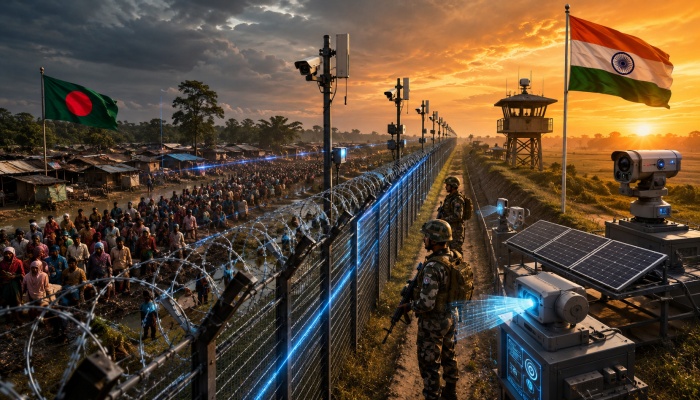
The government has implemented both practical and innovative initiatives into this promising period. To construct an almost seamless digital border, Smart Borders use fiber optic sensors, drone surveillance, artificial intelligence based monitoring, and integrated command systems. The Demography Mission discusses a somewhat quiet but no less significant issue, the gradual, purposeful alteration of border districts’ demographics through organised infiltration, which eventually affects social harmony, national security, and election integrity.
Home Minister @AmitShah has made it clear that India’s borders are now moving towards a complete “#SmartBorder” system. Advanced cameras, radars, surveillance equipment and integrated monitoring technology will be deployed across the India-Pakistan and India-Bangladesh borders,… pic.twitter.com/0NVDckS2hC— Digital Bharat (@MDigitalBharat) May 22, 2026
Both initiatives are not viewed as a controversial political decisions. Instead, it interprets them as strategic policy choices that represent an evolving Indian state that combines technological prowess, adherence to the constitution, and a clear-eyed awareness of its civilizational obligations.
Historical and civilizational context: Why demographics matter to India
India is more than just a nation-state in the sense of contemporary Europe. It is a civilizational state, a term used by political scientists to characterise nations whose identity is based on thousands of years of unbroken cultural, philosophical, and social history rather than just being civic or geographic. India, like China, Iran, and Egypt, has a rich national identity based on civilizational achievements, ethical frameworks, and social contracts that precede the contemporary state structure by millennia.
Rajdharma, or rulers’ ethical duty to safeguard and nurture their people, is an old notion in Indian culture. There has always been an understanding that a just and stable society depends on preserving the integrity of its social fabric, from the Arthashastra of Kautilya, which described complex theories of statecraft, border management, and population policy, to the constitutional vision of Dr BR Ambedkar and Jawaharlal Nehru. Economic self-sufficiency, cultural continuity, and demographic profile were all important factors in governance.
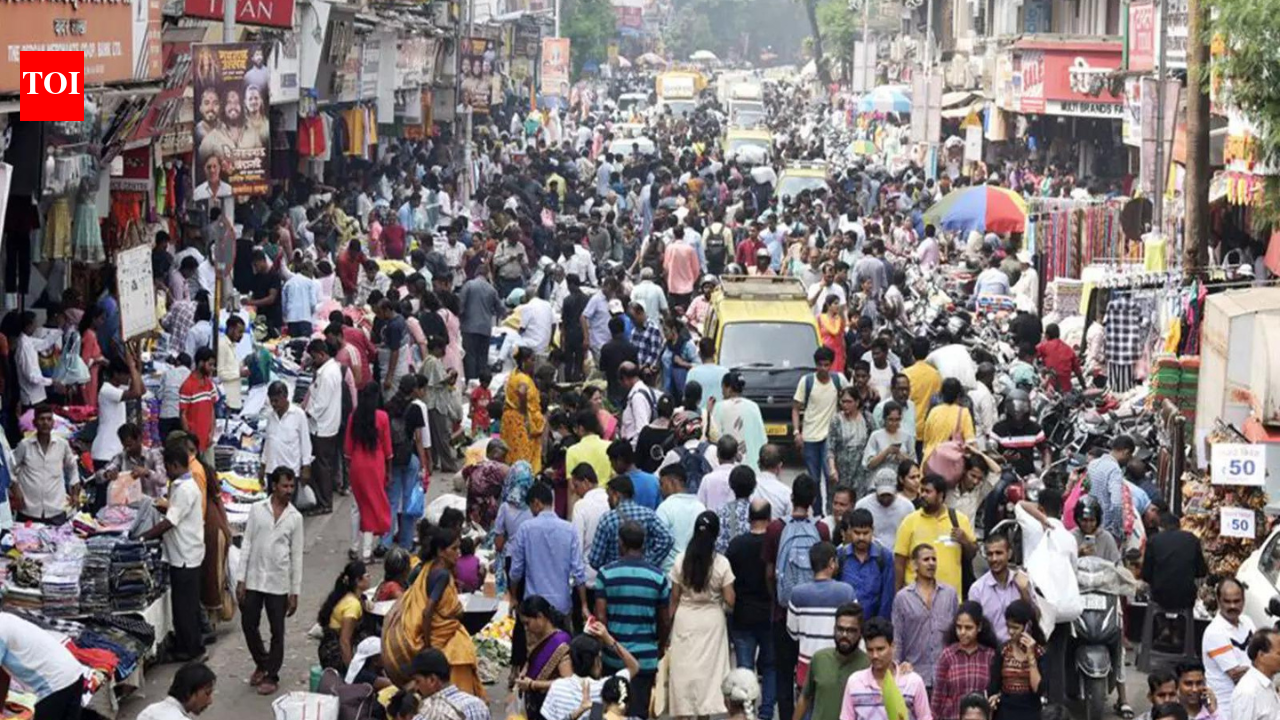
Resilience is at the core of India’s demographic narrative. The cultural and demographic core of the subcontinent has demonstrated remarkable continuity in the face of invasions, famines, colonialism, and partition. Today, this continuity manifests itself in a completely different but no less potent way: a population of almost 1.44 billion young, educated, and digitally connected individuals. India’s median age in 2026 is expected to be about 29 years old, according to demographic forecasts from NITI Aayog and the United Nations Population Division. This is a significant advantage in a world where the majority of major powers are ageing quickly.
When taking into account the fields of the future, this dividend becomes quite important. Large human labour resources are needed for artificial intelligence’s labelling, training, and supervision. Skilled engineers, technicians, and manufacturing workers are essential to the global semiconductor supply chain. Millions of installation, maintenance, and innovation experts are needed for the shift to green energy. India is ideally positioned to meet these needs both locally and internationally due to its demographic demographic profile.
However, this promise can only be achieved if the demographic basis is kept steady, consciously maintained, and shielded from disturbances that may interfere with public service delivery, social cohesion, or workforce planning. Since 2019, the Ministry of Home Affairs has documented the problem of illegal migration, especially from Bangladesh and Myanmar, and its localised effects on voter rolls, social services, land records, and border area demography in a number of papers and legislative communications. In this light, the Demography Mission is not discriminatory in nature. It is a constitutional, data driven endeavour to safeguard what India has painstakingly built.
Policy architecture: Smart borders and the demography mission
Consider India’s border problem as if your home had a very lengthy fence, thousands of kilometres in length. Some sections of this fence pass across rivers, forests, hills, and remote communities. A large number of armed patrolling troops had been working in harsh conditions, day and night, for decades to keep everything safe. There were gaps, of course. Now picture replacing a significant portion of that fence with a system that never gets tired, never sleeps, and can alert the closest patrol squad in a matter of seconds when it detects movement. The Smart Border project essentially aims to do that.
The Comprehensive Integrated Border Management System (CIBMS), which was piloted in stages along the borders of Bangladesh and Pakistan starting in 2018, is one of the earlier frameworks that the Smart Border projects build upon. With India’s increased drone manufacturing capability under the Production Linked Incentive (PLI) scheme and its growing domestic AI sector, the 2026 announcement streamlines this into a full national rollout within twelve months.
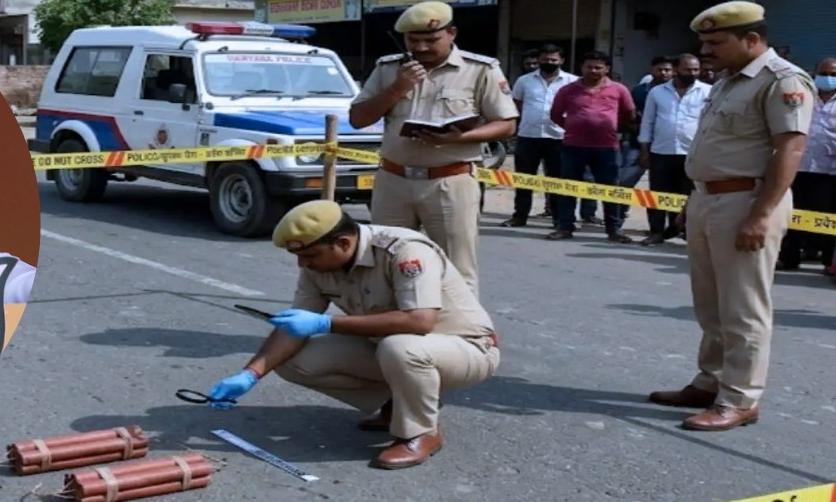
The suggested technology framework contains several layers. Real-time aerial surveillance is provided by unmanned aerial vehicles (UAVs), which can operate at night and in low visibility. Human movement causes ground vibration, which is detected by underground fibre optic sensors. Real-time data is fed into centralised command and control stations via thermal and infrared cameras mounted on smart poles along the fence line. All of this is processed by AI based pattern recognition systems that are more accurate at differentiating between human intrusion, animal activity, and weather related incidents.
Most importantly, this system is Aatmanirbhar, self-reliant. The Home Minister made it clear that the technologies used would be developed or modified indigenously. DRDO’s surveillance platforms and Indian drone manufacturers like Garuda Aerospace and ideaForge make up the hardware layer’s backbone. With integration paths built into the National Intelligence Grid (NATGRID) for backend data processing, the software layer takes advantage of India’s growing AI ecosystem.
The benefits from India’s Digital Public Infrastructure (DPI), particularly Aadhaar, are immense. Residents of border areas and registered migrants may be officially counted, their identities confirmed by biometric authentication, and their movements monitored within privacy norms and constitutional limits. This establishes a dependable data layer for the Demography Mission’s analytical functions, which include detecting demographic movements in real time, highlighting inconsistencies in voter rolls, land records, and school enrolment data, and enabling targeted administrative solutions before problems become developed.
Alongside the Mission, a zero tolerance deportation policy was announced, which is a reiteration of current law rather than an amendment to it. In general, India has long contended that illegal immigration poses a security and demographic threat. Historically, there has been a lack of institutional capacity to systematically apply this principle. That is exactly what the Mission seeks to provide, a uniform, transparent, and proportionate system of detection and deportation that is institutionally organised, supported by data, and established in law.
The human aspect of this approach must also be properly acknowledged. Anti-infiltration actions are sometimes confused by critics with an anti minority outlook. The distinction between legal residents and illegal immigrants is essential in any rule of law democracy, and it is backed by the constitutional framework that governs these measures. Unchecked infiltration strains local resources, alters land markets, and sometimes facilitates trafficking and organised crime networks, making Hindu and tribal groups in border regions of India among those most impacted. Protecting these communities is therefore a constitutional obligation rather than a communal project.
Linkages to geoeconomics and geopolitics
When you look beyond the demographic survey forms and the border fence, you find a more expansive picture of India, which is actively trying to establish itself as a stable civilisation in a world that is becoming more and more unstable. The period 2026-2030 is expected to be one of the most crucial in the post Cold War era. The strategic rivalry between the United States and China shows no signs of slowing down. The Indo-Pacific region has become a hotbed of aggressive maritime manoeuvring. Global energy and defence supply chains have been reshaped by the conflict in Ukraine, even though it may be entering a new phase. Middle East tensions are still high. In such circumstances, India’s domestic actions have a direct impact on its ability to project itself overseas.
The Reserve Bank of India (RBI) and the International Monetary Fund (IMF) predict that India’s GDP would grow at a rate of 6.5 to 7% per year until 2030, placing it among the top three economies in the world by the end of the decade. This expansion translates into geopolitical weight and is more than just a statistic. With platforms like BRICS, the India-Middle East Europe Economic Corridor (IMEC), and bilateral investment treaties, a larger, faster-growing Indian economy can finance a more capable military, make deeper investments in neighbourhood diplomacy, and provide Global South countries with credible development partnerships.
However, a steady, competent, and specifically developed workforce is essential to this trajectory. This vision is already being pursued by India’s PM Kaushal Vikas Yojana (PMKVY) skill development initiatives and its National Education Policy (NEP) 2020. The semiconductor mission, which is supported by investments in factories in Gujarat and Assam, needs a certain amount of skilled human capital in addition to capital. The implications for India’s growth story would be significant and quantifiable if demographic disturbances were to impact this planning, whether through unrestricted immigration altering the composition of the labour market or ethnic tensions in border regions diverting administrative attention.
India’s demographic management has a broader symbolic meaning in the context of the BRICS. India, the largest populated democracy in the world and the country with the fastest-growing major economy, is carefully observed by the Global South as a development model. The way it controls its borders, incorporates technology into governance, and strikes a balance between rights and security sends a message to dozens of developing countries facing comparable issues, including Peru, and Kenya. India is sending an optimistic message here, you can safeguard your demographic future without militarising your society, giving up on democratic principles, or erecting barriers that isolate your people from the outside world.
As a key component of Indo-Pacific security, essential technology supply chains have been highlighted more and more by the QUAD framework, which unites Australia, Japan, India, and the United States. The stability and targeted growth of India’s domestic workforce are essential to the country’s ability to consistently offer advanced manufacturing specialists, AI researchers, and skilled semiconductor workers to this supply chain. Demographic planning and border security are essential components of this calculation, not distinct from it.
There is also a direct connection to India’s neighbourhood policy. According to government comments, the Demography Mission and Smart Borders are accompanied by a persistent focus on development partnerships under the ‘Neighbourhood First’ ideology with Bangladesh, Nepal, Bhutan, and Sri Lanka. India wants to facilitate organised, legitimate and mutually beneficial cross-border migration rather than isolate itself from South Asia. Trade, cultural exchange, and legal migration are all encouraged. Illegal, undocumented, and frequently organised infiltration is what is being examined, this distinction is crucial to solid policy research but is easily overlooked in ideological debate.
Conclusion
In 2026, India is a country that acts with confidence rather than fear. Together, the Demography Mission and the Smart Border project mark a turning point in Indian statecraft as the largest democracy in the world starts to use the same long term strategic thinking that has traditionally defined the growth of great powers.
The essence of India’s approach is what sets it apart, instead of being militaristic, it is driven by technology and instead of being driven by ideology, it is supported by data.