Exclusive: Justice Yashwant Varma says ‘burned cash’ storehouse was accessible to domestic staff, didn’t have security, raises questions on investigation and lack of CCTV footage
The President of India has received the resignation of Justice Yashwant Varma of the Allahabad High Court. The resignation comes as Justice Varma faces an ongoing in-house inquiry by the judiciary and the threat of parliamentary removal proceedings, which had been set in motion last year. He has also withdrawn from the proceedings before the Judges Inquiry Committee constituted by the Lok Sabha to examine the charges against him in connection with the alleged recovery of cash from a storeroom at his official residence. In a 13-page letter to the Judges Inquiry Committee, Justice Varma has maintained his innocence and asserted that he wasn’t even home when the fire erupted, leading to the alleged discovery of a large amount of money inside his storeroom. “During the Holi break of the High Court in 2025, my spouse and I travelled for a short vacation with friends on 12.03.2025. While we were at a remote location with limited mobile connectivity, a fire occurred in a storeroom located within the premises,” he stated in a letter. The occurrence happened on 14th March, but he claimed to have been communicated concerning it on 15th March. Varma conveyed that some of the Delhi Fire Services and Delhi Police officers who were present at the event captured videos and pictures of the currency, but he was not made aware of it and learned about it along with the investigation that was started against him later. He added that the visuals were uploaded to the Supreme Court website, “and the entire episode was sensationally reported in the media with the clear narrative that the cash belonged to me.” ‘Storehouse a standalone unit in the premises, but used by staff and servants only’ Justice Varma has mentioned that the storeroom was a standalone facility open to his domestic staff and was devoid of any security oversight. “The undisputed factual position that I have consistently set out from the very beginning is that the storeroom was a detached structure adjacent to the staff quarters, physically separated by boundary walls from the family living quarters and my office. It was accessible from the back gate of the premises, which was not manned by any security,” the former justice stressed. He wrote that domestic workers, maintenance professionals, and others frequently utilised and accessed it for routine duties and to store ordinary products including unwanted furniture, bottles, cutlery, mattresses, soiled carpets, outdated speakers, garden tools, and CPWD material. “The storeroom was usually kept unlocked and, even when locked, the key was never in my possession or under my instructions. I myself had visited the storeroom only four or five times in the entire two years of my stay,” Varma claimed. “A CCTV camera was positioned directly facing the entry to the storeroom, with its live footage streaming to the guardroom and being recorded on equipment completely outside my control. The CRPF guards and my Personal Security Officers reported to persons other than myself, and thus, the entire security apparatus was never under my control,” he insisted, remarking that it defies reason and common sense to indicate that such a position can be used for hoarding cash. Varma than contends that he has never been subjected to such charges in his judicial career as a high court judge, which has extended over 13 years. He expressed that he was not given the opportunity to cross-examine the in-house committee witnesses, and that the preliminary report should not be considered evidence. Varma charged that all probes against him “proceeded on unstated suggestions, insinuations and imputations requiring me to disprove assumed facts and innumerable presumptions. This has resulted not only in a reversal of the burden of proof as we commonly understand but also in placing upon me the onerous obligation of proving multiple negatives.” According to him, the allegations imply that the occupier of the property should bear a substantial burden of care, requiring that they should be cognisant of and accountable for any offensive objects or supplies that might be spotted or uncovered in any section of the property, regardless of whether they were placed there voluntarily or with their knowledge. Therefore, it is demanded of the occupier to be mindful of and liable for everything that could possibly be identified in any part of the premises. Verma further insisted that the materials which were detrimental to him were extracted from the IHC record were utilised, while those beneficial to him were disregarded including 27 out of 54 witnesses which were left out. “In any event, the evidence that was actually led falls far short of establishing even a prima facie case on any of the three charges. In proceedings of this nature, which seek to determine whether a sitting Judge is guilty of misbehaviour warranting removal, it is incumbent upon those prosecuting the charges to first establish a foundationa
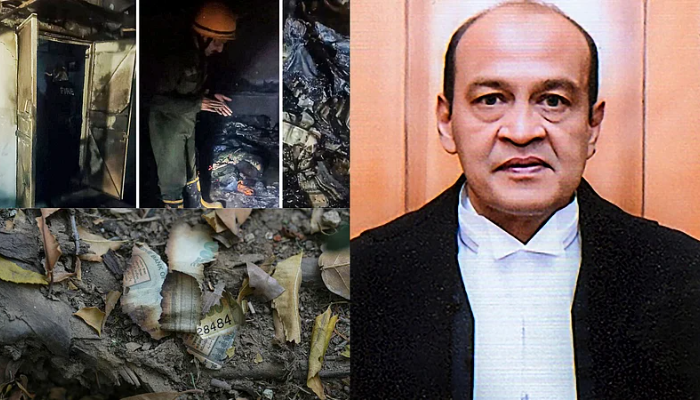
The President of India has received the resignation of Justice Yashwant Varma of the Allahabad High Court. The resignation comes as Justice Varma faces an ongoing in-house inquiry by the judiciary and the threat of parliamentary removal proceedings, which had been set in motion last year.
He has also withdrawn from the proceedings before the Judges Inquiry Committee constituted by the Lok Sabha to examine the charges against him in connection with the alleged recovery of cash from a storeroom at his official residence.
In a 13-page letter to the Judges Inquiry Committee, Justice Varma has maintained his innocence and asserted that he wasn’t even home when the fire erupted, leading to the alleged discovery of a large amount of money inside his storeroom. “During the Holi break of the High Court in 2025, my spouse and I travelled for a short vacation with friends on 12.03.2025. While we were at a remote location with limited mobile connectivity, a fire occurred in a storeroom located within the premises,” he stated in a letter. The occurrence happened on 14th March, but he claimed to have been communicated concerning it on 15th March.
Varma conveyed that some of the Delhi Fire Services and Delhi Police officers who were present at the event captured videos and pictures of the currency, but he was not made aware of it and learned about it along with the investigation that was started against him later. He added that the visuals were uploaded to the Supreme Court website, “and the entire episode was sensationally reported in the media with the clear narrative that the cash belonged to me.”
‘Storehouse a standalone unit in the premises, but used by staff and servants only’
Justice Varma has mentioned that the storeroom was a standalone facility open to his domestic staff and was devoid of any security oversight. “The undisputed factual position that I have consistently set out from the very beginning is that the storeroom was a detached structure adjacent to the staff quarters, physically separated by boundary walls from the family living quarters and my office. It was accessible from the back gate of the premises, which was not manned by any security,” the former justice stressed.
He wrote that domestic workers, maintenance professionals, and others frequently utilised and accessed it for routine duties and to store ordinary products including unwanted furniture, bottles, cutlery, mattresses, soiled carpets, outdated speakers, garden tools, and CPWD material. “The storeroom was usually kept unlocked and, even when locked, the key was never in my possession or under my instructions. I myself had visited the storeroom only four or five times in the entire two years of my stay,” Varma claimed.
“A CCTV camera was positioned directly facing the entry to the storeroom, with its live footage streaming to the guardroom and being recorded on equipment completely outside my control. The CRPF guards and my Personal Security Officers reported to persons other than myself, and thus, the entire security apparatus was never under my control,” he insisted, remarking that it defies reason and common sense to indicate that such a position can be used for hoarding cash.
Varma than contends that he has never been subjected to such charges in his judicial career as a high court judge, which has extended over 13 years. He expressed that he was not given the opportunity to cross-examine the in-house committee witnesses, and that the preliminary report should not be considered evidence.
Varma charged that all probes against him “proceeded on unstated suggestions, insinuations and imputations requiring me to disprove assumed facts and innumerable presumptions. This has resulted not only in a reversal of the burden of proof as we commonly understand but also in placing upon me the onerous obligation of proving multiple negatives.”
According to him, the allegations imply that the occupier of the property should bear a substantial burden of care, requiring that they should be cognisant of and accountable for any offensive objects or supplies that might be spotted or uncovered in any section of the property, regardless of whether they were placed there voluntarily or with their knowledge. Therefore, it is demanded of the occupier to be mindful of and liable for everything that could possibly be identified in any part of the premises.
Verma further insisted that the materials which were detrimental to him were extracted from the IHC record were utilised, while those beneficial to him were disregarded including 27 out of 54 witnesses which were left out.
“In any event, the evidence that was actually led falls far short of establishing even a prima facie case on any of the three charges. In proceedings of this nature, which seek to determine whether a sitting Judge is guilty of misbehaviour warranting removal, it is incumbent upon those prosecuting the charges to first establish a foundational case through credible evidence. Only then can any burden shift to the Judge to lead defence evidence. Here, that threshold has not been crossed on any charge,” he declared.
Varma pointed out that a standard of proof is equivalent to a criminal trial, beyond reasonable doubt, as described by earlier inquiry committees of judges. An analysis of the existing record should have resulted in the dismissal of the proceedings rather than expecting him to substantiate his defence.
‘Was it even genuine Indian currency? Why was no CCTV footage produced’, asks Justice Varma
Varma submitted that there was never any evidence that the money found in the storage on the property by the Delhi Police and Delhi Fire Services Officers was authentic Indian cash. “No CCTV footage from the premises was produced. The conclusion in the CFSL Extraction Report, that data from the CCTV hard drive could not be accessed, is highly suspect. The DVR itself was never received for forensic examination, as admitted by the CFSL Expert during cross-examination,” the letter read.
Varma asserted that there can be no assumption of his ownership, knowledge or accountability if there is no proof that the property (or the storage) was secured under his competent authority at the pertinent time. “The charge therefore fails at its very foundation,” he announced.
According to Varma, a charge was lodged that material objects and the environment at the scene were modified or taken away while he had control over the premises after the fire was put out and prior to any lawful inspection or sealing while he did not take steps to preserve the evidence, thereby allowing its disturbance. He countered that the evidence presented is opposed to this and confirmed that both the Delhi Fire Services and the Delhi Police had made independent decisions not to report or confiscate the cash long before he came to knwo about the instance.
Varma emphasised that the allegations implying he offered an “evasive explanation” and “denied” the existence of cash are inaccurate. “A plain reading of my written response dated 22.03.2025 shows no denial of the discovery of cash. I stated only that the cash did not belong to me or my family members, that neither I nor my family had any knowledge of its presence, and that no one had reported seeing any cash after the first responders left the premises. That position has remained consistent throughout. No evidence has been led to demonstrate that my knowledge or involvement was different from what I stated,” he outlined.
Varma has withdrawn from the proceedings and concluded, “I withdraw with the deepest sadness, conscious of the gravity of my decision and with the hope that history will one day record the unfairness with which a sitting High Court Judge was treated and that has marked this entire episode from its inception.”
Background of the case
The scandal erupted on 14 March 2025 when a fire broke out in a storeroom at Justice Varma’s government bungalow on Tughlak Crescent in New Delhi, while he was serving on the Delhi High Court. Firefighters and police officers who responded to the blaze reported seeing stacks of ₹500 notes, some burning, others partially burnt, scattered on the floor. Officials later confirmed to an inquiry committee that the cash was found in a room under the judge’s control.
Following the incident, the Supreme Court constituted an in-house panel, which concluded that cash had indeed been discovered and that Justice Varma exercised “covert or active control” over the storeroom. He was promptly transferred back to his parent court, the Allahabad High Court, in late March 2025. He took the oath of office there on 5 April 2025, but was not assigned any judicial work.
Justice Varma initially refused calls to resign in May 2025, prompting the Chief Justice of India to recommend his removal. An impeachment motion signed by more than 140 MPs was admitted by Lok Sabha Speaker Om Birla in August 2025, and a three-member inquiry committee was formed to examine the charges.
The Supreme Court later dismissed Justice Varma’s challenge to the removal proceedings, clearing the path for Parliament to act. Under Indian constitutional rules, removal by Parliament would have stripped him of his pension and other retirement benefits. By resigning voluntarily, he is expected to retain those entitlements.