The Wire demands reservations for ‘Dalit Christians’, attacks the Supreme Court’s verdict, accuses BJP of playing politics: The autopsy of a flawed argument
On 24th March (Tuesday), the Supreme Court upheld a decision by the Andhra Pradesh High Court stating that only Hindus, Buddhists and Sikhs can identify as members of a Scheduled Caste community and demand protection under the Scheduled Castes and Scheduled Tribes (Prevention of Atrocities) Act. It outlined that embracing any other religion, including Christianity or Islam, will result in the “immediate and complete loss of Scheduled Caste status from the moment of conversion, regardless of birth.” This, as was anticipated, displeased the leftists and liberal hypocrites who, on other occasions, claim to respect the judiciary as the paramount Constitutional institution and adhere to its rulings, but only when it is advantageous for them. This is their most crucial caveat regarding democracy, media, the Election Commission and even the Constitution. Otherwise, this faction always stands in opposition, not on the grounds of merit but ideology and vested interests. The Wire attacks the Supreme Court for sticking to the Constitution On 9th April (Thursday), “The Wire” published an article reflecting similar frustration and associated the fresh development with the “Dalit Christians” of Punjab. “In Punjab, the Supreme Court’s ruling that Christians cannot be classified as Dalit has caused unrest,” by Kusum Arora, contended that it has struck a sensitive chord throughout the nation, particularly within the community in the northern state. “The state with the highest proportion of Scheduled Castes – nearly one-third (31.9% as per Census 2011) of the population – also has a history of caste-based discrimination,” she wrote. Arora cited the recent case of Chinthada Anand vs. State of Andhra Pradesh, in which a pastor requested protection under the SC/ST (Prevention of Atrocities) Act 1989 from the Supreme Court but was refused. “The judgement denying this protection has led to widespread concern among Dalit Christians in Punjab, who primarily belong to the Valmiki, Majhbi Sikh and Ad-dharmi communities, the major Scheduled Caste groups of the state,” the piece complained. She added that approximately 1.5 percent of Punjab’s population is Christian, according to Census 211 and the number is on the rise owing to the ministries and churches emerging “in villages, towns and cities around Jalandhar, Hoshiarpur, Kapurthala, Amritsar, Tarn Taran, Gurdaspur, Ferozepur and Pathankot districts in the Majha and Doaba regions.” “The Dalit Christians mostly live in the Doaba region, a belt with over 32% of the Punjabi Dalit population across faiths. Conversely, the Majha belt has a sizeable population of the Valmiki community and Majhbi Sikhs, who, too, have a significant number of followers of the Christian faith,” she informed. The fundamental argument of the author seemed to neglect the legal stipulations of the land. In fact, she wanted the top court to violate them to accommodate conversions. It almost suggested that she wished for the judiciary to act as a facilitator in this regard. BJP wants anti-conversion law, the court fanned the fire: The article bats for illicit conversions How can any such tirade not include attacks on the Bharatiya Janata Party, and Arora did not disappoint. “Recently, Union Home Minister Amit Shah, during a ‘badlav’ (change) rally at Moga in the state, said the BJP would ban religious conversion in Punjab through a new law. In this context, the Supreme Court’s judgement has added to the fears among Dalit Christians, even though the BJP – Shah’s party – is a marginal player in Punjab’s politics,” she stated. It is crucial to recognise that Punjab has been plagued by unlawful conversions, prompting many to voice their worries. Last year, reports unveiled that 3.5 lakh individuals had converted to Christianity over the past 24 months. Notably, these figures are more related to fraudulent assurances of healing illnesses, financial and material rewards, job offers and other similar promises rather than genuine faith. The Punjab Bachao Morcha announced its intention to pursue legal action against this epidemic linked to “miracle cures” within the state. Its president, Tejasvi Minhas, advocated for the implementation of an anti-conversion bill in Punjab to curb the conversions orchestrated by “self-styled godmen and pastors.” “Around 65,000 pastors are operating in the state and engaging in conversions through enticement, coercion and fake miracle cures in violation of the Drugs and Magic Remedies (Objectionable Advertisements) Act, 1954 and several sections of the Bharatiya Nyaya Sanhita (BNS),” the organistaion informed. It also promised confidentiality and an incentive Rs 2 lakh to anybody who could produce “proof of illegal conversions.” This exemplifies the severity of the problem. However, the media house hungers for further perpetuation of these activities, which not only mislead innocent persons into abandoning their beliefs due to false a
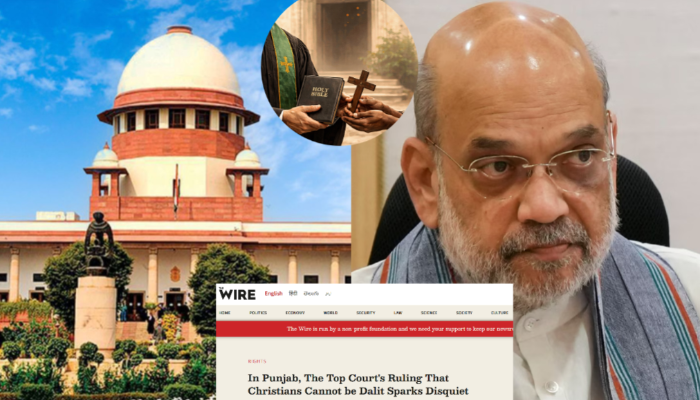
On 24th March (Tuesday), the Supreme Court upheld a decision by the Andhra Pradesh High Court stating that only Hindus, Buddhists and Sikhs can identify as members of a Scheduled Caste community and demand protection under the Scheduled Castes and Scheduled Tribes (Prevention of Atrocities) Act. It outlined that embracing any other religion, including Christianity or Islam, will result in the “immediate and complete loss of Scheduled Caste status from the moment of conversion, regardless of birth.”
This, as was anticipated, displeased the leftists and liberal hypocrites who, on other occasions, claim to respect the judiciary as the paramount Constitutional institution and adhere to its rulings, but only when it is advantageous for them. This is their most crucial caveat regarding democracy, media, the Election Commission and even the Constitution. Otherwise, this faction always stands in opposition, not on the grounds of merit but ideology and vested interests.
The Wire attacks the Supreme Court for sticking to the Constitution
On 9th April (Thursday), “The Wire” published an article reflecting similar frustration and associated the fresh development with the “Dalit Christians” of Punjab. “In Punjab, the Supreme Court’s ruling that Christians cannot be classified as Dalit has caused unrest,” by Kusum Arora, contended that it has struck a sensitive chord throughout the nation, particularly within the community in the northern state.
“The state with the highest proportion of Scheduled Castes – nearly one-third (31.9% as per Census 2011) of the population – also has a history of caste-based discrimination,” she wrote. Arora cited the recent case of Chinthada Anand vs. State of Andhra Pradesh, in which a pastor requested protection under the SC/ST (Prevention of Atrocities) Act 1989 from the Supreme Court but was refused.
“The judgement denying this protection has led to widespread concern among Dalit Christians in Punjab, who primarily belong to the Valmiki, Majhbi Sikh and Ad-dharmi communities, the major Scheduled Caste groups of the state,” the piece complained.
She added that approximately 1.5 percent of Punjab’s population is Christian, according to Census 211 and the number is on the rise owing to the ministries and churches emerging “in villages, towns and cities around Jalandhar, Hoshiarpur, Kapurthala, Amritsar, Tarn Taran, Gurdaspur, Ferozepur and Pathankot districts in the Majha and Doaba regions.”
“The Dalit Christians mostly live in the Doaba region, a belt with over 32% of the Punjabi Dalit population across faiths. Conversely, the Majha belt has a sizeable population of the Valmiki community and Majhbi Sikhs, who, too, have a significant number of followers of the Christian faith,” she informed.
The fundamental argument of the author seemed to neglect the legal stipulations of the land. In fact, she wanted the top court to violate them to accommodate conversions. It almost suggested that she wished for the judiciary to act as a facilitator in this regard.
BJP wants anti-conversion law, the court fanned the fire: The article bats for illicit conversions
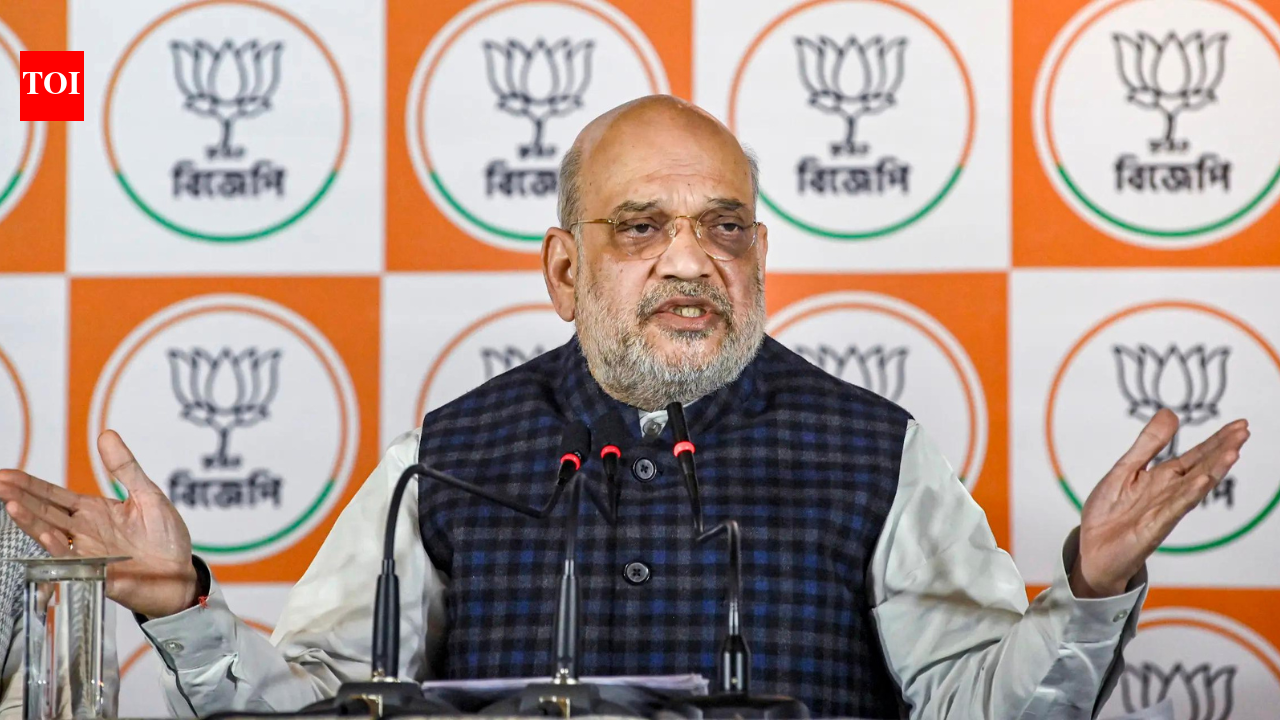
How can any such tirade not include attacks on the Bharatiya Janata Party, and Arora did not disappoint. “Recently, Union Home Minister Amit Shah, during a ‘badlav’ (change) rally at Moga in the state, said the BJP would ban religious conversion in Punjab through a new law. In this context, the Supreme Court’s judgement has added to the fears among Dalit Christians, even though the BJP – Shah’s party – is a marginal player in Punjab’s politics,” she stated.
It is crucial to recognise that Punjab has been plagued by unlawful conversions, prompting many to voice their worries. Last year, reports unveiled that 3.5 lakh individuals had converted to Christianity over the past 24 months. Notably, these figures are more related to fraudulent assurances of healing illnesses, financial and material rewards, job offers and other similar promises rather than genuine faith.
The Punjab Bachao Morcha announced its intention to pursue legal action against this epidemic linked to “miracle cures” within the state. Its president, Tejasvi Minhas, advocated for the implementation of an anti-conversion bill in Punjab to curb the conversions orchestrated by “self-styled godmen and pastors.”
“Around 65,000 pastors are operating in the state and engaging in conversions through enticement, coercion and fake miracle cures in violation of the Drugs and Magic Remedies (Objectionable Advertisements) Act, 1954 and several sections of the Bharatiya Nyaya Sanhita (BNS),” the organistaion informed. It also promised confidentiality and an incentive Rs 2 lakh to anybody who could produce “proof of illegal conversions.”
This exemplifies the severity of the problem. However, the media house hungers for further perpetuation of these activities, which not only mislead innocent persons into abandoning their beliefs due to false assurances but also endanger the lives and well-being of the impoverished and underprivileged population, who should consult medical professionals rather than Christian clergy for treatment. Arora is likewise indifferent to scientific temper or blind faith, which turns into a central issue when a Hindu dares to visit a saint or sage.
The “discriminatory” Indian state
The Wire then used interviews to claim that the court’s judgment is contrary to the sentiments of the Dalit Christian and Muslim communities staying in the country, as well as mentioned the controversial Sachar Committee report to evoke a sense of victimhood for these people.
It quoted Professor Emanual Nahar, Punjab’s former chairman of the Minority Commission, who stated, “The Majhbi Sikhs and Ravidassia were included in the list of Scheduled Castes in 1956, when parliament passed the first amendment (to the constitution), and added the Buddhists following the second amendment in 1990. Christians and Muslims were left to fend for themselves.”
He added that while the Ad-dharmi, Ravidassia, and Ramdasia Sikh communities in Punjab prospered through reservations, the Valmiki, Christians and Muslims who converted had to endure challenges and were exposed to social, educational, economic and political stagnation.
Nahar then challenged the home minister to “take action, but he should reveal the data on how many people changed their religion under pressure,” insisting “Punjab is a remarkable state, which has never bowed to such sentiments.” He expressed his plan to reach out to the Members of Parliament to request them to address the issue and seek the President’s intervention.
While the arbitrary inquiries might not yield an immediate response, the relentless support for unauthorised conversions suggests a sinister agenda. Furthermore, the “remarkable,” sensitive border region has been grappling with malicious schemes to change its demographic landscape, which could even lead to a national security threat, specifically because of outsider missionaries, which was recently witnessed in Rajasthan.
“The court does not consider Muslims and Christians as natives of India when, fact is, they have lived here since ages,” similarly voiced the President of Punjab Christian Movement, Hamid Masih and pointed out the Presidential Order of 1950, which confined the Scheduled Caste status to Hindus.
“The court overlooked the caste system and focused on religious conversions,” and asked, “will the court consider a Christian a (native) Indian citizen if they were to convert to Hinduism?” Afterwards, Masih accused Shah of divisive political actions and provoking communal sentiments before the assembly elections.
“Look – only the Dalits benefit from reservation under the Scheduled Castes category. The rest, including the Muslims and Christians, face discrimination,” he reiterated. “The Dalit Christians in Punjab are either working in the private sector or as daily wagers, leaving them with no scope of economic growth. In the church, at least they are treated equally and with respect, which they fail to get in other religions,” he alleged, lamenting “no provision of jobs for Christians under Punjab government.”
Masih emphasised that there is no discrimination in the Church and it is also the first and foremost premise peddled by Abrahamic Faiths to convert others under the guise of equality. The concept of caste is associated with Hinduism by them. Therefore, does it not undermine their submissions for reservations?
How can there be any discrimination against them when their adopted religions do not acknowledge caste? Isn’t the core of conversion and severing ties with their original roots aimed to free themselves from this practice? Thus, why they should be granted access to the perks of caste-based reservations? Are they devoid of the native religion but purport to be bound by caste? Irony indeed suffers countless deaths.
More portrayal of the “victimhood” narrative for reservations
The entire piece embodies an extensive assortment of contradictions, declaring equality following conversions and at the same time crying discrimination and soliciting reservations. It is sheer discrimination that Dalit Sikhs, Hindus and Buddhists in Punjab get the benefit of reservation, but those Dalits who convert their religion to Christianity end up in penury just because they fall under the minorities category,” conveyed Tarsem Peter, President of Pendu Mazdoor Union.
According to him, several pastors started setting up independent ministries after the Modi government ceased the overseas flow of funds for Christian missionaries. “Following this change, there has been a steep rise in the ministries, who promise and preach miraculous changes in people’s their economic and physical conditions,” he added.
Peter maintained that governments and politicians exploit the system, and then swiftly hit out at the saffron party, Rashtriya Swayamsevak Sangh, and the “Godi” media for trying to stop illegal conversions.
He confessed that investment from abroad has been directed towards converting people, which has been one of the key reasons for the introduction of the Foreign Contribution (Regulation) Amendment bill. Additionally, how are the Muslim and Christian communities qualified for the laws specially tailored for the Dalits? Can Hindus exercise their rights on regulations formed to appease the former, including the Muslim Personal Law, which allows the second-largest religious group to flout the statutes with impunity.
Hence, how can they expect to be awarded every privilege irrespective of the validity of their demands? “The government talks about Amrit Kaal and Digital India, then why this discrimination with us? They should understand our suffering,” stated Christian Jasbir Sandhu. He also talked about the serious economic hardships of Dalit Christians and charged the BJP with exploiting the issue for political purposes, showing alarm over the ruling.
“The BJP knows that largely, the minorities do not support them. As Punjab Assembly elections are due early next year, they have started raking up this issue to seek votes. Perhaps, the BJP does not know that the seed of hatred can never grow in Punjab. Punjabis have always remained together, irrespective of caste or religious preferences,” Sandhu vented out.
First off, the programs and schemes initiated by the centre are designed to steer the country towards progress, and not to enable illicit religious conversions. However, the government is obliged to address any action that could be detrimental to India’s security, social structure and national interest.
There are various groups in the country dealing with tough financial conditions who do not push for any special measures to assist them or improve their situation. In truth, they are often used as primary targets for conversions by wicked actors.
“Most Dalits do visit a church but have not adopted Christianity officially. At the same time, there are converted Christians in Punjab, who still avail benefits under Scheduled Castes category,” Sandhu then underscored, verifying how some people are abusing reservations and breaking the law.
Sandhu insisted that attending church is about social equality for a Dalit, as it did not influence their life and problems, adding “Neither has our condition improved nor have our sufferings come to an end.”
The inconsistencies are quite bewildering. If the Church has conferred equality upon them, then why do they still confront discrimination that is absent in their religion? You cannot have your cake and eat it too. While no one is denying their struggles, the weak foundation of their argument and the absurdity of their demands are evident.
However, it is imperative that the Dalit Hindus are not subjected to a grave injustice through the appropriation of their share and its transfer to others which is the goal of this cabal that feigns to be pro SC-ST.
The legal battle
The article then pointed out how Dalit Christian organisations are campaigning for the reservation quota via pleas. It also brought up the case of Christian pastor Chinthada Anand, who was admonished by the Andhra Pradesh High Court for misusing the SC/ST Act in relation to an alleged assault. It declared that the registration of the FIR (First Information Report) under act was illegal due to the complainant’s conversion to Christianity.
“Meanwhile, the Union government in October 2022 appointed a three-member Commission of Inquiry headed by Justice K.G. Balakrishnan to examine the feasibility of granting Scheduled Caste status to Dalits who choose a faith other than Hinduism, Sikhism or Buddhism, specifically focusing on Christians and Muslims,” Arora stated afterwards.
“The commission has received objections from groups such as the Dr Ambedkar Anusuchit Jati Adhikari Karmchari Manch, who have been arguing that extending Scheduled Caste status to converts will dilute the existing rights and benefits of existing beneficiaries,” she observed, highlighting the stand of the Dalit Hindu community on the matter.
The definitive verdict
A bench of Justices PK Mishra and NV Anjaria referenced Clause 3 of the Constitution (Scheduled Caste) Order 1950, which explicitly mentions that “no person professing a religion other than Hinduism” can assert Scheduled Caste status. The apex court declared that the restriction was permanent and irrevocable.
“No statutory benefit, protection or reservation or entitlement under the Constitution or enactment of parliament or state legislature can be claimed by or extended to any person who by operation of Clause 3 is not deemed to be a member of the Scheduled Caste. This bar is absolute and admits no exception. A person cannot simultaneously profess and practice a religion other than the one specified in Clause 3 and claim membership of the Scheduled Caste,” the order noted.
Why no reservations to non-Indic communities
The unlawful conversions have transmogrified into a menace throughout India, and providing Scheduled Caste status to the converts would only strengthen elements such as the predatory evangelists who view the nation as a golden spot to pressure people to embrace their faith. Likewise, the conversion bogey is driven by non-discrimination and thus how can they claim reservations that are founded on caste? These two cannot coexist parallelly.
It would be profoundly unfair to the Dalit Hindus who have chosen to remain loyal to their beliefs despite the temptations and deprive them of adequate rightful opportunities, such as in the fields of education and employment, to advance in their lives. The government exclusively taxes the wealth of Hindu temples, which could have been utilised to aid the needful members of the community. Consequently, they have to be dependent on reservations while Muslims and Christians can put all their resources for the upliftment of their communities.
Dalit Hindus are against any such move and the fears of the community that will be directly impacted cannot be overlooked. Last but not least, India is already encountering massive issues with conversions related to love jihad, changai sabhas (prayer meetings) and criminal pastors. The country can never have a law that would further strengthen their sinister ambitions.