Fixing the front door of justice: How the Supreme Court and CJI Surya Kant are reforming the oral mentioning problem
In the Supreme Court, ‘oral mentioning’ served as an unofficial pressure-valve for decades. Advocates would rise at the beginning of the day and ask for an out-of-turn listing, typically citing urgency. It was helpful in situations involving the death penalty, impending demolition, bail, habeas corpus, and eviction that were truly urgent. However, it also established a parallel path into the Court’s diary that relied more on prominence, seniority, and courtroom access than on objective standards. With a series of changes implemented under Chief Justice Surya Kant on December 1, 2025, the Supreme Court has now attempted to address that tension. The new framework The focus of attention is a Registry circular dated November 29, 2025, which states unequivocally that, except a very few, defined circumstances, no oral mentioning will be allowed before the Chief Justice of India. The same circular also adds a strict guardrail, junior lawyers may be urged to undertake whatever oral mentioning is still allowed under the new framework, but no designated Senior lawyers shall be allowed to do so before any court. This is significant because, as oral mentioning developed, it appeared to be a privilege of the most well-known speakers in Court No.1, giving the impression and occasionally the reality that the well-connected might shorten the line. Instead of delay by paperwork, a predictable, documented procedure takes the place of the previous ritual. The Court has implemented automated listing within the next two working days for new cases that fall within certain urgency categories, particularly those concerning personal liberty or urgent interim relief, after the case is verified and any defects are fixed. Both the categories and the internal timing discipline are outlined in the circular. Litigants are informed that there is no necessity to mention for inclusion in certain auto-listed categories, and verified cases (filed or cleared by the cut off) get into the Main or Supplementary List. The reform’s most citizen-centric component aims to guarantee that an individual’s freedom is not contingent upon a senior advocate’s ability to speak at 10:30 a.m. Regular bail, anticipatory bail, cancellation of bail, the death sentence, habeas corpus, eviction/dispossession, demolition, and any other matter that requires urgent interim relief are among the auto-listing categories outlined in the circular. The same circular also includes a compliance lever that, after registration, bail proceedings must be sent to the respondent’s (Union, State, or UT) Nodal Officer or Standing Counsel; otherwise, the case might not be confirmed and listed. In other words, provided the minimal fairness requirements are satisfied, the Court is working quickly to avoid “urgent” remarks that are procedurally half-baked. The second layer is as follows. The Court permits mentioning only through a Mentioning Proforma along with Letter of Urgency submitted to a Mentioning Officer within specified deadlines (usually by 3:00 p.m. the previous working day and 11:30 a.m. on Saturdays) in cases not covered by automatic listing or in which a party requests an earlier date than the scheduled date because urgent interim orders are required. The proforma and urgency letter must be sent by 10:30 a.m. for the limited range of ‘exceptionally urgent’ cases, which specifically include anticipatory bail, the death penalty, habeas corpus, eviction/dispossession, and demolition. Crucially, the system now passes the request through the Registrar (Judicial Listing) for orders and requires an urgent letter explaining why the matter cannot wait for listing on the appointed date. The third layer is an institutional disciplinary regulation that specifically targets the open ended aspect of traditional mentioning. Only topics that are included in the public Mentioning List are allowed to be stated, everything else is prohibited. Only a filed application requesting urgent relief or an early hearing may be considered for mentioning, once more via the proforma procedure; regular hearing cases cannot be mentioned for listing at all. This is not ornamental, rather, it transforms an arbitrary, personality driven moment in public court into an administrative judgment that can be tracked using standard inputs and timestamps. When taken as a whole, these actions show what CJI Surya Kant seems to be doing strategically: changing the focus from who can persuade the bench in two minutes to which cases objectively require immediate court time. Even earlier, on his first day, the public signal was given. According to reports, the CJI clarified that, unless there are exceptional circumstances, requests for urgent listings must be submitted in writing via mentioning slips, with the Registry determining the urgency first. That strategy is pro-process rather than anti-lawyer. Additionally, procedural equality is a necessity for legitimacy in a court that must distribute l
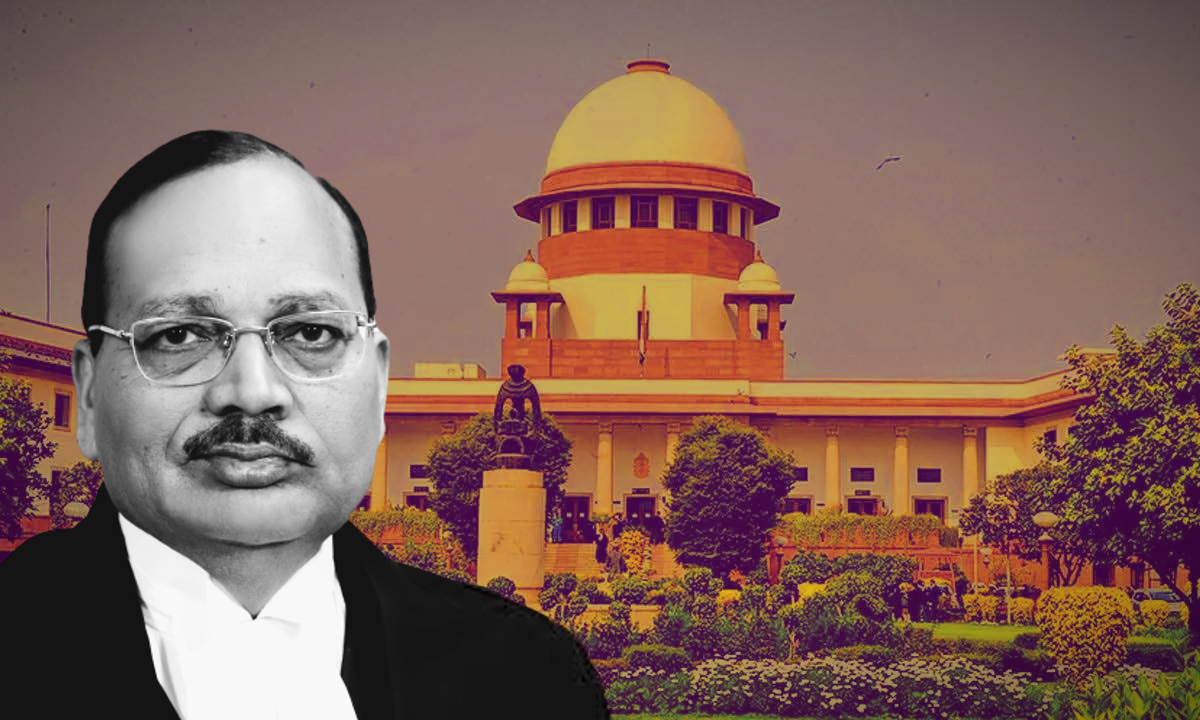

In the Supreme Court, ‘oral mentioning’ served as an unofficial pressure-valve for decades. Advocates would rise at the beginning of the day and ask for an out-of-turn listing, typically citing urgency. It was helpful in situations involving the death penalty, impending demolition, bail, habeas corpus, and eviction that were truly urgent. However, it also established a parallel path into the Court’s diary that relied more on prominence, seniority, and courtroom access than on objective standards. With a series of changes implemented under Chief Justice Surya Kant on December 1, 2025, the Supreme Court has now attempted to address that tension.
The new framework
The focus of attention is a Registry circular dated November 29, 2025, which states unequivocally that, except a very few, defined circumstances, no oral mentioning will be allowed before the Chief Justice of India. The same circular also adds a strict guardrail, junior lawyers may be urged to undertake whatever oral mentioning is still allowed under the new framework, but no designated Senior lawyers shall be allowed to do so before any court. This is significant because, as oral mentioning developed, it appeared to be a privilege of the most well-known speakers in Court No.1, giving the impression and occasionally the reality that the well-connected might shorten the line.
Instead of delay by paperwork, a predictable, documented procedure takes the place of the previous ritual. The Court has implemented automated listing within the next two working days for new cases that fall within certain urgency categories, particularly those concerning personal liberty or urgent interim relief, after the case is verified and any defects are fixed. Both the categories and the internal timing discipline are outlined in the circular. Litigants are informed that there is no necessity to mention for inclusion in certain auto-listed categories, and verified cases (filed or cleared by the cut off) get into the Main or Supplementary List. The reform’s most citizen-centric component aims to guarantee that an individual’s freedom is not contingent upon a senior advocate’s ability to speak at 10:30 a.m.
Regular bail, anticipatory bail, cancellation of bail, the death sentence, habeas corpus, eviction/dispossession, demolition, and any other matter that requires urgent interim relief are among the auto-listing categories outlined in the circular. The same circular also includes a compliance lever that, after registration, bail proceedings must be sent to the respondent’s (Union, State, or UT) Nodal Officer or Standing Counsel; otherwise, the case might not be confirmed and listed. In other words, provided the minimal fairness requirements are satisfied, the Court is working quickly to avoid “urgent” remarks that are procedurally half-baked.
The second layer is as follows. The Court permits mentioning only through a Mentioning Proforma along with Letter of Urgency submitted to a Mentioning Officer within specified deadlines (usually by 3:00 p.m. the previous working day and 11:30 a.m. on Saturdays) in cases not covered by automatic listing or in which a party requests an earlier date than the scheduled date because urgent interim orders are required. The proforma and urgency letter must be sent by 10:30 a.m. for the limited range of ‘exceptionally urgent’ cases, which specifically include anticipatory bail, the death penalty, habeas corpus, eviction/dispossession, and demolition. Crucially, the system now passes the request through the Registrar (Judicial Listing) for orders and requires an urgent letter explaining why the matter cannot wait for listing on the appointed date.
The third layer is an institutional disciplinary regulation that specifically targets the open ended aspect of traditional mentioning. Only topics that are included in the public Mentioning List are allowed to be stated, everything else is prohibited. Only a filed application requesting urgent relief or an early hearing may be considered for mentioning, once more via the proforma procedure; regular hearing cases cannot be mentioned for listing at all. This is not ornamental, rather, it transforms an arbitrary, personality driven moment in public court into an administrative judgment that can be tracked using standard inputs and timestamps.
When taken as a whole, these actions show what CJI Surya Kant seems to be doing strategically: changing the focus from who can persuade the bench in two minutes to which cases objectively require immediate court time. Even earlier, on his first day, the public signal was given. According to reports, the CJI clarified that, unless there are exceptional circumstances, requests for urgent listings must be submitted in writing via mentioning slips, with the Registry determining the urgency first. That strategy is pro-process rather than anti-lawyer. Additionally, procedural equality is a necessity for legitimacy in a court that must distribute limited hearing time among tens of thousands of pending cases.
From oral requests to written rules
Additionally, this transformation is part of a broader institutional arc. The same issue was brought up time and time again by previous Chief Justices. Queue jumping by mentioning was skewing access. In 2024, CJI Sanjiv Khanna prohibited oral mentioning and instructed advocates to submit petitions via email or printed slips or letters expressing urgency. When CJI Ranjan Gogoi took office in 2018, he prohibited urgent mentioning until parameters were established, excepting only dire situations like someone being evicted or hanged. Even CJI BR Gavai pushed in 2025 to specifically prohibit senior counsel from appearing in Court No. 1 in order to provide room for juniors and lessen the influence of the traditional voices. The combination of automatic listing, defined proforma-based mentioning, and published mentioning lists implemented simultaneously and connected to the verification discipline is what sets apart the CJI Surya Kant phase, not just the mood.
How was oral mentioning misused?
Now for the delicate but inevitable question: how and by whom was oral mentioning ‘misused’? The safest and most equitable way to describe it from a professional standpoint is that even in cases when individual remarks were genuine, the technique was fundamentally susceptible to abuse. Oral mentioning tended to favor those with (a) physical presence and familiarity in Court No.1 (b) confidence and courtroom capital, and (c) the ability to frame urgency persuasively in a matter of seconds because it took place in open court, within a limited time window, and with limited ability to verify claims on the spot.
The senior bar and well-funded litigants have a substantial correlation with that set of benefits. The technique could enable wealthy clients to obtain out-of-turn hearings by engaging senior counsel, but it would require significant judicial time each morning, according to commentary surrounding the 2024 ‘no oral mentioning’ directive.
Where does ideology fit in? Many of the most well known cause ‘PILs’ in India’s legal system, which are frequently structured around free speech, civil liberties, executive action, or governance, are defended by a select group of prominent senior advocates. Some of these individuals are thought to be ideologically conservative, others to be institutionally moderate, and yet others to be ‘left liberal aligned.’ The more crucial point is to clarify that activist litigation has natural incentives to push for immediate listing because it is intended to be urgent, high impact, and headline sensitive, and that a discretionary, personality-centric gatekeeping mechanism predictably rewards the loudest and most networked litigators.
This occasionally contributed to the public’s image of two tracks under the previous culture, one for common litigants who waited, and another for high-salience cases that made it to the Court more quickly through effective mentioning. Reducing discretion at the entry point and allowing verified urgency, particularly liberty, to drive priority are the best ways to interpret the Surya Kant changes as an institutional response to that perspective.
The legitimacy of this reform is further reinforced by a constitutional administrative context. The Chief Justice’s administrative supremacy as ‘Master of the Roster’ has been frequently upheld by the Supreme Court. Listing and roster control are administrative functions. The Court reaffirmed that roster distribution is crucial to institutional operation and cannot be undermined by conflicting allegations in Campaign for Judicial Accountability and Reforms v. Union of India (2018) 1 SCC 196) and related cases. Although oral mentioning is not the same as roster allocation, it has a direct impact on listing results, and controlling it through documented regulations is exactly the kind of administrative housekeeping that fortifies the Court’s impartiality.
Conclusion
From a governance standpoint, the changes are consistent with court administration in the digital age. For a long time, the Supreme Court’s e-Committee has promoted organised methods for urgent listing, such as online platforms that allow plaintiffs and advocates to submit urgent briefs for orders. In order to prevent courtroom theatrics from determining a litigant’s destiny, the 2025 reset applies that administrative logic to everyday practice: urgency should be prioritized with least drama, maximum documentation, and equal opportunity.
In conclusion, it would be better to describe CJI Surya Kant’s declaration stating regulation as a rebalancing rather than a crackdown. It reduces a VIP prone entryway that had become detrimental to the institution’s reputation while maintaining the Court’s responsiveness when it comes to personal liberty and urgent temporary relief. The circulars reorganize urgency rather than eliminating it. The reform’s modest strength is that it seeks to transform the Supreme Court into a constitutional court whose time is distributed according to principles rather than locality.