Guess who is representing Mamata govt after mob violence in Muslim-dominated Malda, where judicial officers wailed for their lives and SC said it was pre-planned: Kapil Sibal, of course
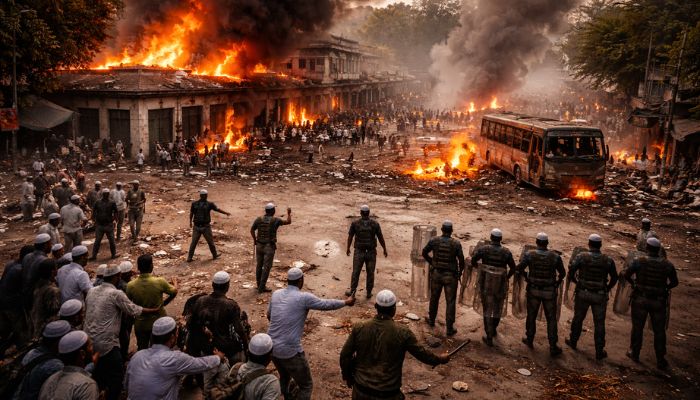
The 1st of April 2026, witnessed what could be described as a collapse of democracy and law and order in West Bengal’s Malda district as seven judicial officers, including three women, who were on election duty for the Special Intensive Revision (SIR) of electoral rolls, were gheraoed at a BDO office by a Muslim mob. Taking sou motu cognisance of the matter, the Supreme Court blasted the TMC for its abject failure in protecting the judicial officers. Among the lawyers who represented the Mamata Banerjee-led government was senior advocate Kapil Sibal. The Supreme Court bench led by Chief Justice Suryakant came down heavily on the state government. The bench described the Malda violence and the failure of the TMC government to uphold law and order as a “complete breakdown of constitutional machinery.” Kapil Sibal, however, requested the court to delete this strong observation. Interestingly, Kapil Sibal has throughout his career been a part of landmark cases, many anti-Hindu, many anti-India. Sibal has consistently been on the “wrong side”. Ram Janmabhoomi-Babri Masjid Title Dispute The Janmabhoomi-Babri Masjid Title Dispute remains one of Kapil Sibal’s most controversial legal engagements. The ex-Congress leader and UPA Minister fought the Ram Janmabhoomi case for the Sunni Waqf Board, opposing the building of a magnificent Ram Mandir at the then-disputed site in Ayodhya. He also employed dilatory tactics and asked the Supreme Court to delay the decision in the Ram Janmabhoomi case till the 2019 general elections, assuming that a decision in the Hindu side’s favour could benefit the BJP. Despite the blatant politicisation of the issue concerning the Hindu faith and way above electoral politics, the Supreme Court’s 2019 ruling favoured the construction of Ram Mandir at the Ram Janmabhoomi site in Ayodhya. The trauma of losing the case has stayed with Kapil Sibal, which reflected when Prime Minister Narendra Modi performed the Pran Pratishtha of Shri Ram Lalla in the newly-constructed Ram Mandir at the Janmbhoomi site in Ayodhya. Sibal had called the ceremony that essentially marked the triumphant culmination of a 500-year-long struggle, “a show off”. Kapil Sibal represented Shafin Jahan in the Hadiya Love Jihad case Kapil Sibal had represented Hadiya’s husband, Shafin Jahan, in the Supreme Court, challenging the annulment of Hadiya and Shafin’s marriage by the Kerala High Court in the Shafin Jahan vs KM Ashokan case, also known as the Hadiya Love Jihad case. A Hindu girl named Akhila had changed her name to Hadiya after converting to Islam and marrying a muslim man named Shafin Jahan. Hadiya/Akhila’s father, a retired Indian Army soldier, had alleged that it was a case of love jihad. While the Supreme Court ruled in Jahan’s favour, upholding Hadiya’s right as an adult to choose her religion and spouse, it emerged that the now-outlawed Islamic terror outfit Popular Front of India (PFI) spent Rs 99,52,324 on the case. Of this, Rs 93,85,000 was reportedly paid to four senior lawyers, Kapil Sibal, Dushyant Dave, Indira Jaising and Marzook Bafaki who fought the case on Shafin Jahan’s behalf. Back in 2020, the Enforcement Directorate alleged that the PFI received huge funding to fuel anti-CAA protests across the country following the passage of the Citizenship Amendment Act by both houses of the parliament in December 2019. It was reported that PFI spent about 120 crores in a month to orchestrate the violent riots in the country, naming eminent lawyers Kapil Sibal, Indira Jaising and Dushyant Dave also as the beneficiaries of PFI’s funding. Sibal was reported to have received Rs 77 lakh. However, the senior counsel issued a ‘clarification’ saying that the amount he received from the now-outlawed Islamic jihadist outfit was his fees for services as a lawyer in the Hadiya Love Jihad Case. Kapil Sibal represented PFI member Siddique Kappan Kapil Sibal’s association with the PFI was not confined to the Hadiya Love Jihad case alone. In 2020, a habeas corpus plea was filed in the Supreme Court seeking the release of Siddique Kappan, one of the four PFI members arrested by UP police for planning to create caste-based unrest and communal tension over the Hathras case. Appearing as a legal representative of Kerala Journalists’ Union, and Siddique Kappan, an active PFI member also working as a journalist, Sibal unsuccessfully requested the Supreme Court to let him approach them under Article 32 of the Constitution. Sibal represented anti-Hindu Delhi Riots accused mastermind Umar Khalid in the Supreme Court The legal eagle, Kapil Sibal, has, despite criticism, been consistent in taking up cases of anti-Hindu elements. Representing the 2020 anti-Hindu Delhi Riots accused mastermind Umar Khalid, in the Supreme Court, Kapil Sibal went overboard and allegedly indulged in forum shopping. In February 2024, a bench of Justices Bela M Trivedi and Pankaj Mithal allowed Umar Khalid to wi
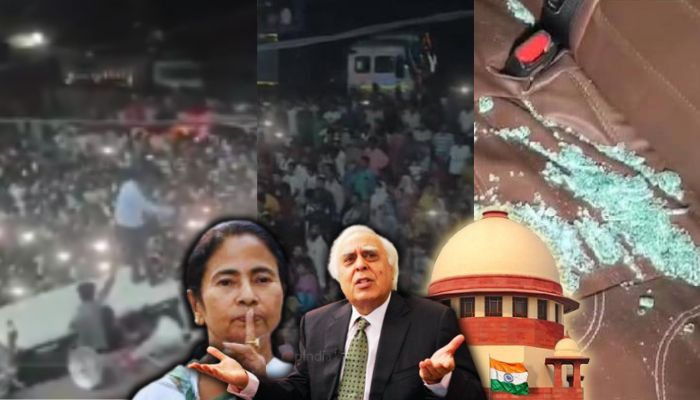
The 1st of April 2026, witnessed what could be described as a collapse of democracy and law and order in West Bengal’s Malda district as seven judicial officers, including three women, who were on election duty for the Special Intensive Revision (SIR) of electoral rolls, were gheraoed at a BDO office by a Muslim mob. Taking sou motu cognisance of the matter, the Supreme Court blasted the TMC for its abject failure in protecting the judicial officers. Among the lawyers who represented the Mamata Banerjee-led government was senior advocate Kapil Sibal.
The Supreme Court bench led by Chief Justice Suryakant came down heavily on the state government. The bench described the Malda violence and the failure of the TMC government to uphold law and order as a “complete breakdown of constitutional machinery.”
Kapil Sibal, however, requested the court to delete this strong observation.
Interestingly, Kapil Sibal has throughout his career been a part of landmark cases, many anti-Hindu, many anti-India. Sibal has consistently been on the “wrong side”.
Ram Janmabhoomi-Babri Masjid Title Dispute
The Janmabhoomi-Babri Masjid Title Dispute remains one of Kapil Sibal’s most controversial legal engagements. The ex-Congress leader and UPA Minister fought the Ram Janmabhoomi case for the Sunni Waqf Board, opposing the building of a magnificent Ram Mandir at the then-disputed site in Ayodhya. He also employed dilatory tactics and asked the Supreme Court to delay the decision in the Ram Janmabhoomi case till the 2019 general elections, assuming that a decision in the Hindu side’s favour could benefit the BJP. Despite the blatant politicisation of the issue concerning the Hindu faith and way above electoral politics, the Supreme Court’s 2019 ruling favoured the construction of Ram Mandir at the Ram Janmabhoomi site in Ayodhya.
The trauma of losing the case has stayed with Kapil Sibal, which reflected when Prime Minister Narendra Modi performed the Pran Pratishtha of Shri Ram Lalla in the newly-constructed Ram Mandir at the Janmbhoomi site in Ayodhya. Sibal had called the ceremony that essentially marked the triumphant culmination of a 500-year-long struggle, “a show off”.
Kapil Sibal represented Shafin Jahan in the Hadiya Love Jihad case
Kapil Sibal had represented Hadiya’s husband, Shafin Jahan, in the Supreme Court, challenging the annulment of Hadiya and Shafin’s marriage by the Kerala High Court in the Shafin Jahan vs KM Ashokan case, also known as the Hadiya Love Jihad case.
A Hindu girl named Akhila had changed her name to Hadiya after converting to Islam and marrying a muslim man named Shafin Jahan. Hadiya/Akhila’s father, a retired Indian Army soldier, had alleged that it was a case of love jihad. While the Supreme Court ruled in Jahan’s favour, upholding Hadiya’s right as an adult to choose her religion and spouse, it emerged that the now-outlawed Islamic terror outfit Popular Front of India (PFI) spent Rs 99,52,324 on the case. Of this, Rs 93,85,000 was reportedly paid to four senior lawyers, Kapil Sibal, Dushyant Dave, Indira Jaising and Marzook Bafaki who fought the case on Shafin Jahan’s behalf.
Back in 2020, the Enforcement Directorate alleged that the PFI received huge funding to fuel anti-CAA protests across the country following the passage of the Citizenship Amendment Act by both houses of the parliament in December 2019. It was reported that PFI spent about 120 crores in a month to orchestrate the violent riots in the country, naming eminent lawyers Kapil Sibal, Indira Jaising and Dushyant Dave also as the beneficiaries of PFI’s funding. Sibal was reported to have received Rs 77 lakh. However, the senior counsel issued a ‘clarification’ saying that the amount he received from the now-outlawed Islamic jihadist outfit was his fees for services as a lawyer in the Hadiya Love Jihad Case.
Kapil Sibal represented PFI member Siddique Kappan
Kapil Sibal’s association with the PFI was not confined to the Hadiya Love Jihad case alone. In 2020, a habeas corpus plea was filed in the Supreme Court seeking the release of Siddique Kappan, one of the four PFI members arrested by UP police for planning to create caste-based unrest and communal tension over the Hathras case. Appearing as a legal representative of Kerala Journalists’ Union, and Siddique Kappan, an active PFI member also working as a journalist, Sibal unsuccessfully requested the Supreme Court to let him approach them under Article 32 of the Constitution.
Sibal represented anti-Hindu Delhi Riots accused mastermind Umar Khalid in the Supreme Court
The legal eagle, Kapil Sibal, has, despite criticism, been consistent in taking up cases of anti-Hindu elements. Representing the 2020 anti-Hindu Delhi Riots accused mastermind Umar Khalid, in the Supreme Court, Kapil Sibal went overboard and allegedly indulged in forum shopping.
In February 2024, a bench of Justices Bela M Trivedi and Pankaj Mithal allowed Umar Khalid to withdraw the bail plea. Senior advocate Kapil Sibal, appearing for Khalid, told the bench that the petition is being withdrawn, given a “change in circumstances” and to seek bail afresh before the trial court. Kapil Sibal also withdrew a separate petition questioning the legality of certain sections of the UAPA, especially dealing with bail.
OpIndia highlighted earlier that out of the 14 adjournments in 2023 and 2024, 7 delays and adjournments were sought by Umar Khalid himself. This deliberate delay was caused by Khalid’s counsel, Kapil Sibal.
OpIndia reported earlier how the adjournments and the subsequent withdrawal were the result of a failed attempt at forum shopping by Kapil Sibal.
Former Chief Justice of India, DY Chandrachud had also said in 2025 that the real problem lies in the mindset of some lawyers and political groups who want their cases heard only by certain judges. Highlighting what OpIndia has reported multiple times, the former CJI said that court records showed that Khalid’s legal team, led by Sibal, had sought at least seven adjournments before finally withdrawing the bail plea in February 2024, citing “a change in circumstances.”
Kapil Sibal lied in court to peddle Muslim victimhood bogey
In 2022, Kapil Sibal lied in the Supreme Court and falsely claimed that BJP leader Parvesh Verma called for a boycott of the Muslim community, even as Verma did not name any community. When Justice KM Joseph asked Sibal whether Muslims have been making hate speeches, he denied knowledge of such a development, even as there were numerous incidents of Muslims delivering hate speeches that year against Hindus, including those by AIMIM leaders, Ajmer Dargah Khadim Syed Adil Chishti, Sawar Chishti, who gave open calls for an economic boycott of Hindus.
Kapil Sibal and other Rajya Sabha MPs moved impeachment motion against Allahabad HC judge for calling Islamic extremists “Kathmulla”
In December 2024, a motion to remove Allahabad High Court Judge Shekhar Kumar Yadav from office was submitted to the Rajya Sabha Secretary-General over his allegedly controversial comments at a Vishwa Hindu Parishad event. The motion was submitted by a delegation headed by Kapil Sibal and others, including Vivek Tankha, Digvijaya Singh, P. Wilson, John Brittas, KTS Tulsi, Manoj Kumar Jha and Saket Gokhale.
“But these kathmullah… this may not be the right word… but I won’t hesitate to say it because they are harmful to the country…they are detrimental, against the nation, and people who incite the public. They are the kind of people who do not want the country to progress, and we need to be cautious of them,” the judge had stated during the event.
According to the motion for impeachment, Justice Yadav broke “the secular ethos of the constitution and the judge’s oath of office.” Justice Shekhar Yadav’s judicial roster was altered by the Chief Justice of the Allahabad High Court four days after his statement, and the alterations took effect on 16th December. He was also summoned by the Supreme Court Collegium to clarify his position on the matter after the apex court took cognisance of his speech on 10th December. In January 2025, the Allahabad High Court dismissed the PIL seeking Justice Yadav’s impeachment.
Sibal defended NC leader who raised the Pakistan Zindabad slogan, sought referendum in Kashmir
In September 2023, the Supreme Court heard pleas challenging the abrogation of Article 370 and Article 35 of the Indian Constitution. One of the petitioners in the case was a National Conference (NC) leader named Mohammad Akbar Lone, who had raised pro-Pakistan slogans in the Jammu and Kashmir Assembly in 2018. The counsel representing Lone was none other than Kapil Sibal. Back then, CJI Chandrachud had pulled up Sibal for the pro-Pakistani remarks of Lone.
Kapil Sibal had shamelessly argued that raising the issue of ‘Pakistan Zindabad’ sloganeering by his client, Mohammad Akbar Lone, would lead to ‘unnecessary’ media coverage.
Sibal also represented other petitioners who challenged the constitutional legality of the abrogation of Article 370 and Article 35A. He had vehemently opposed the removal of these temporary provisions giving special status to Jammu and Kashmir. Even though these provisions granting special autonomy to Jammu and Kashmir obstructed full integration of J&K into India by allowing separate laws, restrictions on non-residents from settling or owning property, and perpetuating Jihadist separatism by curbing central authority. This fuelled decades of unrest, terrorism and discrimination against Kashmiri Hindus. OpIndia has reported time and again how Jammu and Kashmir has been witnessing an unprecedented wave of development and economic growth following the removal of Article 370.
While arguing against the abrogation of Article 370, Sibal called for a Brexit-like referendum in Kashmir. His outrageous and treacherous demand, however, was turned down by then CJI Chandrachud.
When Kapil Sibal represented the Karnataka Waqf Board and insinuated that Muslims would be ‘provoked’ if Hindu festivals were to be celebrated on ‘Waqf land’
Back in August 2022, the Supreme Court denied permission for Ganesh Chaturthi celebrations at the disputed Idgah Maidan in Bengaluru. The court ordered a status quo on the Maidan on a petition by the Karnataka Waqf Board
The Idgah Maidan’s ownership was contested as both the Karnataka Waqf Board and the Bruhat Bengaluru Mahanagara Palike laid their claim.
Representing the Waqf Board, Kapil Sibal had argued before the apex court that the Karnataka HC’s order violates the 1964 order passed by the Supreme Court. Sibal had put up a rhetorical question to the judges: If other religious festivals are allowed on the grounds owned by Waqf, where only Islamic religious festivals are held, ‘Your Lordships know what will happen’.
He also contended that the Karnataka HC’s order might change the ‘character of the maidan’ and that ‘nod to the puja at the maidan might hurt communal harmony.’ Sibal had put up a rhetorical question to the judges, that if other religious festivals are allowed on ground owned by Waqf, where only Islamic religious festivals are held, ‘Your Lordships know that what will happen’.
Interestingly, Sibal had also represented the Jamiat Ulema-i-Hind, which provides legal aid to accused Muslim rioters and criminals, in the Supreme Court against its plea challenging the constitutional validity of the Waqf Act (UMEED Act) passed in 2025.
When Kapil Sibal defended TMC govt’s insensitivity and prioritised the reputation of lawyers over justice for the RG Kar Medical College Rape and Murder Case victim
Notably, Sibal, representing the TMC government and making news for all the wrong reasons, is not new. In September 2024, Kapil Sibal, who represented the West Bengal government, objected to the live streaming of the SC proceedings in the brutal RG Kar Hospital rape and murder case. Sibal claimed the reputation built over 5 decades would be destroyed by the live streaming of the case. His request, however, was denied.
Sibal received a massive backlash at that time for defending the Mamata Banerjee-led West Bengal government despite allegations of delayed FIR filing and mishandling by the state authorities. Sibal’s claim that the FIR in this case was filed promptly was questioned by the court itself. Sibal’s insensitivity peaked when he blamed the victim’s parents for the delay in FIR filing.
From Ayodhya Ram Mandir case, Rafale Deal case, peddling the the infamous ‘zero-loss’ theory in the 2G spectrum scam case, pushing for reinstatement of the divisive Article 370 and 35a, representing Islamist organisation against Waqf Act, despite the track record of Waqf Boards arbitrarily laying claim over Hindu-majority villages, houses, colleges and land plots etc, representing anti-Hindu elements, to now representing TMC government in the Malda violence case, wherein a mockery of democracy continued for nine-long hours at the hands of a Muslim mob instigated by a present AIMIM and ex-TMC leader Moffakerul Islam, due to Mamata government’s nonfeasance, Kapil Sibal has been on the wrong side of the issues.
Gopal Sankaranarayanan: TMC’s legal representative, who previously fought the case of a Christian soldier who refused to enter a Gurudwara
Among the lawyers who represented the West Bengal government in the Malda violence case was senior advocate Gopala Sankarnarayanan.
Sankarnarayanan had last year represented Lieutenant Samuel Kamalesan, a Christian Army officer who challenged his termination for refusing to participate in regimental religious parades. In November 2025, the Supreme Court bench comprising Chief Justice of India Surya Kant and Justice Joymalya Bagchi refused to interfere with the Delhi High Court’s verdict that upheld his dismissal, making it clear that individual religious rigidity cannot override the collective discipline required in a fighting force.
Appearing for Kamalesan, advocate Gopal Sankaranarayanan had argued his client was punished for a single act of refusing to enter the sanctum sanctorum of a temple during a regimental parade. He claimed the officer was otherwise compliant and participated in multi-faith spaces but refrained from entering the innermost part of the temple because of his monotheistic Christian beliefs.
His argument, however, was dismissed with strong observations by CJI Suryakant. Advocate Sankaranarayanan had argued that Kamalesan was being forced to conduct Hindu rituals, which would violate his faith. But the bench noted that there was no obligation to perform any rituals, only to participate in the parade as a troop leader.
Interestingly, Gopala Sankarnarayanan had represented one of the petitioners in the Supreme Court in July last year in the plea seeking a stay on the SIR exercise in Bihar.
One of the main petitioners in this case was the NGO Association for Democratic Reforms (ADR), while opposition leaders had also approached the top court against the EC’s order, including RJD MP Manoj Jha, TMC MP Mahua Moitra, Congress leader KC Venugopal, NCP’s Supriya Sule, CPI’s D Raja, SP’s Harinder Singh Malik, Shiv Sena (UBT) MP Arvind Sawant, JMM’s Sarfaraz Ahmad, and CPI (ML) leader Dipankar Bhattacharya.
Representing one of the petitioners, Gopal Sankaranarayanan had contended that almost 7.9 crore individuals can be impacted and expressed puzzlement as to why Aadhaar and voter ID cards are being disregarded.
The court, however, refused to stay the SIR exercise and said that there’s nothing wrong with conducting such an exercise. The top court had also rejected the argument of the petitioner’s counsel, Sankarnarayanan, regarding the rejection of Aadhaar cards and voter ID cards as valid documents.
Advocate Gopal Sankarnarayanan has been a vocal critic of OBC reservation, particularly the inclusion of ‘dominant’ caste groups which “discriminated against SCs and STs”.
Gopal Sankarnarayanan had conceptualised the red and black leather pocket-sized constitution that Congress leader Rahul Gandhi often flashes as a prop while he acts as a self-declared champion of Dalits and defender of the constitution. Ironically, while Gandhi is a desperate advocate of breaching the 50% ceiling to give more reservations to SC, ST and OBCs, and cries ‘Jitni Aabadi Utna Haq, Sankarnarayanan is strongly opposed to breaching this ceiling.
In 2018, a plea was filed by Samta Andolan Samiti, the umbrella body of general and OBC government employees and nine people belonging to the SC/ST community. Sankaranarayanan represented the petitioners and sought the introduction of the creamy layer concept in SC/ST reservations to keep the rich among them out, to ensure that the benefits go to the poor and the needy.
Back in 2023, Sankarnarayanan gave an interview to a legal portal, Law School Policy Review & Kautilya Society, wherein he expressed dismay over the increasing demand for reservation by communities who supposedly did not face historical discrimination.
In 2022, Sankarnarayanan had represented an organisation named ‘Youth for Equality’ before the Supreme Court in the case challenging the constitutional validity of the amendment that provided 10% quota for the Economically Weaker Sections (EWS). The senior advocate had submitted that the EWS quota breaches the ceiling of 50% quota and is thus “unconstitutional”.
Menaka Guruswamy: TMC’s legal counsel, who previously represented Delhi Riots instigator and Islamist Tahir Hussain
Appearing for the state government in the Malda violence case on 1st April, advocate Menaka Guruswamy argued that the judicial officers who were gheraoed and harassed for hours were ECI-appointed and attempted to pass the blame to the poll body for the collapse of law and order that occurred due to the state government’s deliberate inaction.
TMC’s picks for legal representation are rather interesting. Back in 2023, Menaka Guruswamy appeared for 2020 anti-Hindu Delhi Riots instigator, and former AAP councillor Tahir Hussain in the Supreme Court. The Tahir Hussain, who had earlier confessed in a disclosure statement that he chose his own house as a launchpad for the riots.
She represented the same Tahir Hussain who also confessed that he and his co-conspirators had started collecting stones, bricks, and other ammunition, well in advance so that they could teach those, who were in support of the CAA, a lesson when the time was right.
She argued that anti-riot laws cannot be used to initiate money-laundering proceedings, saying that in the lack of an FIR for a money-laundering offence, the High Court had retrieved the prosecution case and relied on its simplicity.
In March 2026, CM Mamata-led Trinamool Congress government in West Bengal gave aRajya Sabha ticket to advocate Menaka Guruswamy, since she is a member of the LGBT community. While the TMC is notorious for Muslim appeasement and enjoys a massive Muslim votebank, its decision to give RS ticket to an LGBT community member had sparked backlash from Islamists who see homosexuality and related themes with absolute contempt as mandated by their religious texts.
In January this year, Guruswamy represented the West Bengal government in the I-PAC- coal smuggling and pilferage racket case. During a hearing on 14th January, Guruswamy, appearing for TMC, objected strongly when Additional Solicitor General SV Raju referred to West Bengal Chief Minister Mamata Banerjee as “Ms Banerjee.” Guruswamy insisted that Banerjee should be addressed by her position and even demanded that she be referred to as a “multiterm Chief Minister,” saying this was about showing proper respect in court.
However, the way the objection was raised drew wider attention. Guruswamy shouted at SV Raju and repeatedly told him to “mute yourself” while he was trying to present his arguments calmly. The incident had sparked online backlash against Guruswamy for her rude behaviour.