Indian freedom fighter Veer Savarkar supported Jewish nationhood decades before India recognised Israel: Revisiting history on his death anniversary
26th February marks the death anniversary of Veer Savarkar, one of Bharat’s most formidable revolutionaries, whose life and legacy remain deeply intertwined with the nation’s struggle for freedom and civilisational self-assertion. Today, the event is even more important, as Prime Minister Modi is visiting Israel to strengthen a partnership that has become India’s most crucial strategic ally. A degree of transparency and clarity that was not always apparent in India’s foreign policy during its early decades as an independent nation is reflected in the current India-Israel relationship, which is based on defence cooperation, intelligence sharing, and technology partnership. Often, people remember Veer Savarkar primarily through the lens of political controversy, but he was a thinker who was profoundly interested in issues of nationhood, civilisational identity, and geopolitical realism. In early 1923, Veer Savarkar had publicly supported the Jewish people’s right to regain their ancestral country. This was more than two decades before Israel was established in 1948. Savarkar’s stance demonstrated a steadfast confidence in national self-determination grounded in historical and civilisational continuity at a time when the Jewish question was still open and political opinion around the world was divided. However, Savarkar has always been portrayed by the left lobby as a sympathiser of Nazi Germany despite his proven support for Jewish nationhood, an allegation that tries to shape public perception without sufficient analysis of the historical background or his real works. To distinguish between historical reality and political narrative, it is vital to review Savarkar’s documented views on Jews, Zionism, and the geopolitical circumstances of his day as India intensifies its strategic engagement with Israel. Veer Savarkar: Revolutionary, scholar, and uncompromising nationalist On 28th May 1883, Veer Savarkar was born to Shrimati Radha and Shri Damodhar Savarkar in Bhagur, a village of Nashik district. From a young age, he loved to read and was skilled at poetry writing. He emerged as one of the first and most steadfast supporters of complete independence from British rule at a time when the concept of Purna Swaraj had not yet gained popularity in Indian political discourse. From an early age, Savarkar demonstrated extraordinary intellectual ability, showing a strong interest in history, literature, and political ideas. His scholastic prowess was matched by an equally fervent commitment to national liberation, which quickly turned into structured revolutionary activity. In 1904, Savarkar established the Abhinav Bharat Society as a covert revolutionary organisation dedicated to overthrowing British rule through armed resistance. When he arrived in London, where he assumed a prominent role at India House, a centre of the Indian nationalist movement, his efforts went beyond India’s borders. Through his writings, lectures, and organisational efforts, Savarkar encouraged a generation of young Indians to see independence as an urgent goal rather than a far-off dream. By portraying the 1857 rebellion as a cohesive national insurrection rather than a simple mutiny, his groundbreaking book The Indian War of Independence, 1857, questioned British colonial narratives. Savarkar’s revolutionary activities came at a high personal cost. When the British arrested him in 1910, he was placed in the Cellular Jail in the Andaman and Nicobar Islands, one of the worst prisons run by the colonial government, and given a life sentence of transportation. He endured years of solitary confinement, forced labour, and harsh treatment. Even under such oppressive conditions, he remained intellectually and politically active. His imprisonment came to represent colonial oppression as well as the unwavering spirit of defiance that characterised India’s liberation movement. In addition to his revolutionary work, Savarkar was a prolific writer who developed a holistic conception of national identity based on political sovereignty, cultural unity, and the continuation of civilisation. His opinions on world affairs, particularly his early and unwavering support for the Jewish people’s right to regain their ancient homeland, were shaped by this broader conceptual framework. Savarkar’s early and unequivocal support for Jews and the Jewish homeland Veer Savarkar had publicly stated his support for the Jewish people’s right to reclaim their ancestral country before even the establishment of Israel in 1948 and decades before India officially recognised the Jewish state. Savarkar was one of the first Indian political figures to acknowledge the legitimacy of Jewish national aspirations during a period when the nations were hesitant to endorse the Zionist movement. His stance was based on his broader conviction that nations are characterised by cultural identity, historical ties, and civilizational continuity, as well as by po
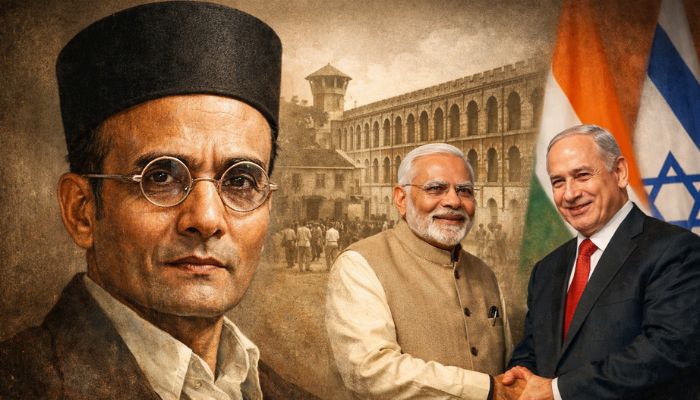
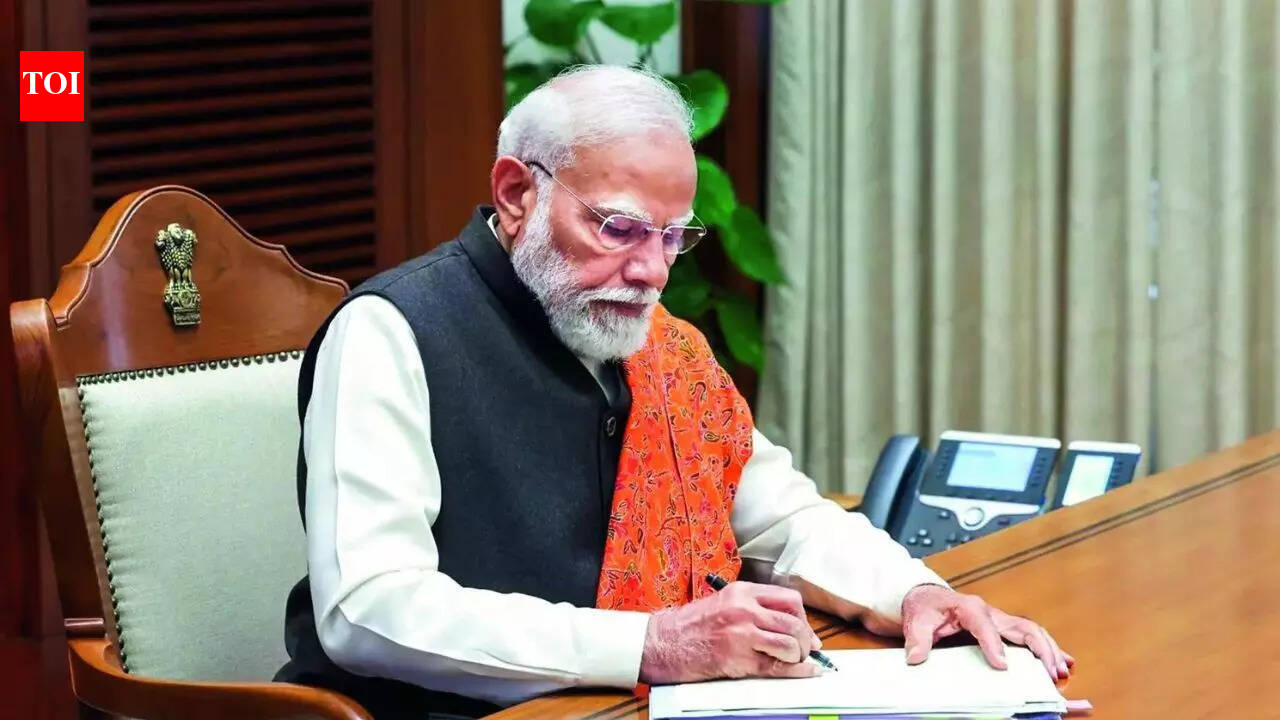
26th February marks the death anniversary of Veer Savarkar, one of Bharat’s most formidable revolutionaries, whose life and legacy remain deeply intertwined with the nation’s struggle for freedom and civilisational self-assertion. Today, the event is even more important, as Prime Minister Modi is visiting Israel to strengthen a partnership that has become India’s most crucial strategic ally.
A degree of transparency and clarity that was not always apparent in India’s foreign policy during its early decades as an independent nation is reflected in the current India-Israel relationship, which is based on defence cooperation, intelligence sharing, and technology partnership.
Often, people remember Veer Savarkar primarily through the lens of political controversy, but he was a thinker who was profoundly interested in issues of nationhood, civilisational identity, and geopolitical realism. In early 1923, Veer Savarkar had publicly supported the Jewish people’s right to regain their ancestral country. This was more than two decades before Israel was established in 1948. Savarkar’s stance demonstrated a steadfast confidence in national self-determination grounded in historical and civilisational continuity at a time when the Jewish question was still open and political opinion around the world was divided.
However, Savarkar has always been portrayed by the left lobby as a sympathiser of Nazi Germany despite his proven support for Jewish nationhood, an allegation that tries to shape public perception without sufficient analysis of the historical background or his real works. To distinguish between historical reality and political narrative, it is vital to review Savarkar’s documented views on Jews, Zionism, and the geopolitical circumstances of his day as India intensifies its strategic engagement with Israel.
Veer Savarkar: Revolutionary, scholar, and uncompromising nationalist
On 28th May 1883, Veer Savarkar was born to Shrimati Radha and Shri Damodhar Savarkar in Bhagur, a village of Nashik district. From a young age, he loved to read and was skilled at poetry writing. He emerged as one of the first and most steadfast supporters of complete independence from British rule at a time when the concept of Purna Swaraj had not yet gained popularity in Indian political discourse. From an early age, Savarkar demonstrated extraordinary intellectual ability, showing a strong interest in history, literature, and political ideas. His scholastic prowess was matched by an equally fervent commitment to national liberation, which quickly turned into structured revolutionary activity.
In 1904, Savarkar established the Abhinav Bharat Society as a covert revolutionary organisation dedicated to overthrowing British rule through armed resistance. When he arrived in London, where he assumed a prominent role at India House, a centre of the Indian nationalist movement, his efforts went beyond India’s borders. Through his writings, lectures, and organisational efforts, Savarkar encouraged a generation of young Indians to see independence as an urgent goal rather than a far-off dream. By portraying the 1857 rebellion as a cohesive national insurrection rather than a simple mutiny, his groundbreaking book The Indian War of Independence, 1857, questioned British colonial narratives.
Savarkar’s revolutionary activities came at a high personal cost. When the British arrested him in 1910, he was placed in the Cellular Jail in the Andaman and Nicobar Islands, one of the worst prisons run by the colonial government, and given a life sentence of transportation. He endured years of solitary confinement, forced labour, and harsh treatment. Even under such oppressive conditions, he remained intellectually and politically active. His imprisonment came to represent colonial oppression as well as the unwavering spirit of defiance that characterised India’s liberation movement.
In addition to his revolutionary work, Savarkar was a prolific writer who developed a holistic conception of national identity based on political sovereignty, cultural unity, and the continuation of civilisation. His opinions on world affairs, particularly his early and unwavering support for the Jewish people’s right to regain their ancient homeland, were shaped by this broader conceptual framework.
Savarkar’s early and unequivocal support for Jews and the Jewish homeland
Veer Savarkar had publicly stated his support for the Jewish people’s right to reclaim their ancestral country before even the establishment of Israel in 1948 and decades before India officially recognised the Jewish state. Savarkar was one of the first Indian political figures to acknowledge the legitimacy of Jewish national aspirations during a period when the nations were hesitant to endorse the Zionist movement. His stance was based on his broader conviction that nations are characterised by cultural identity, historical ties, and civilizational continuity, as well as by political arrangements.
In his work Hindutva: Who is a Hindu? In which was published in 1923, he clearly supported Zionism. He stated that “If the Zionists’ dreams are ever realised—if Palestine becomes a Jewish State—it will gladden us almost as much as our Jewish friends.” This statement came at a time when the creation of a Jewish state was far from certain, which actuallyreflects Savarkar’s clear and principled support for Jewish self-determination. He acknowledged Palestine as the Jewish people’s historical and cultural birthplace and saw their attempts to reestablish a national home as right and lawful.
Savarkar’s understanding of the past suffering and dislocation of the Jewish people also influenced his sympathy for the cause. He continuously praised the Jewish people’s tenacity in maintaining their national identity and culture in the face of centuries of persecution and exile. In the Indian context, Savarkar held Indian Jews in high regard, noting that they had lived in India for centuries without causing political or social conflict and had integrated peacefully into the broader fabric of Indian society.
Today, as India and Israel continue to deepen their strategic partnership through defence, intelligence, agriculture, and technological innovation, Savarkar’s early support for Jewish nationhood appears remarkably prescient. PM Modi ‘s visit to Israel reflects the full maturation of a relationship built on mutual respect and shared strategic interests. During the visit, Israeli Prime Minister Benjamin Netanyahu praised PM Modi, calling him not only a friend but also a brother. He also thanked India for its years-long friendship, saying that India is the only civilisation where Jews were welcomed and not persecuted. It also shows that a partnership whose moral and civilisational foundations had found recognition in Savarkar’s writings decades before it became formal state policy.
The Nazi myth: Understanding Savarkar’s position in its historical context
Even with his document support for Jewish nationhood and the sympathy for the Jewish people, Veer Savarkar has frequently portrayed as a sympathiser of Nazi Germany by the leftist gang. This assertion is mostly based on a few quotes from his August 1, 1938, presidential speech in Pune, in which he said that Germany had the right to embrace Nazism, just as other countries had done to adopt governmental structures appropriate to their own circumstances. A more thorough analysis of his speech, however, shows that Savarkar’s position was grounded in geopolitical realism rather than in ideological support. The central point of Veer Savarkar was that India’;s foreign policy should be based on its own national interests rather than emotional or ideological alignment with any particular political system abroad. He maintained that every country chooses its form of governance based on its unique historical and political circumstances, and it was neither practical nor strategically sound for India to dictate or interfere in those choices. Let’s understand his remark with proper historical context. In 1938, Nazi Germany’s authoritarian character and anti-Jewish policies were known, but the full extent of the Holocaust, the systematic extermination of millions of Jews, had not yet unfolded. The industrial genocide that later came to define Nazi Germany began during World War II and became fully known to the world only after Allied forces liberated concentration camps in 1945. Notably, Savarkar’s own writings explicitly rejected the core radical ideology that underpinned Nazism. In his work, Hindutva: Who is a Hindu?, he stated that “There is but one race—the human race,” which actually rejects the idea of racial purity and superiority that formed the foundation of Nazi doctrine. This philosophical position stood in direct contrast to the racial exclusivism propagated by Hitler’s regime.
When considered collectively, Savarkar’s writings, actions and larger intellectual framework paint a far more nuanced and complex picture than the oversimplified accusation of Nazi sympathies implies. His opinions were influenced more by geopolitical realism and civilizational thinking than by ideological affinities with Nazism, as evidenced by his early support for Jewish nationhood, rejection of racial purity beliefs, and strategic emphasis on national interest.
Nehru’s hesitation and India’s delayed embrace of Israel
While Savarkar advocated Jewish national restoration as early as the 1920s, India’s official posture toward Israel became significantly more cautious under Prime Minister Jawaharlal Nehru. When the United Nations voted in 1947 on the Partition Plan, which suggested establishing a Jewish state in Palestine, India voted against it. The Indian leadership at the time lobbied for a federal or unified arrangement.
This decision was influenced by numerous geopolitical reasons. Nehru was highly committed to placing India among the leaders of newly decolonised nations and strove to preserve close ties with Arab countries. There were also domestic factors, such as resentment from the country’s Muslim population. In that context, India’s foreign policy was crafted with caution toward issues that could potentially inflame internal or regional tensions.
India formally recognised Israel in September 1950. However, full diplomatic relations were not established for decades. In 1992, India and Israel opened embassies in each other’s capitals and normalised ties at a comprehensive diplomatic level. For over four decades after independence, the relationship remained limited and largely low-profile.
The contrast is notable. Savarkar had openly supported the idea of a Jewish homeland decades before Israel became a reality. Yet independent India, guided by greed to be happy to a particular community or fear of being offended, moved to embrace the Jewish state. Today, as India and Israel share a robust partnership spanning defence cooperation, intelligence collaboration, agriculture, and technology, the trajectory of this relationship reflects a strategic clarity that took time to mature within India’s official foreign policy framework.
Conclusion: Savarkar’s foresight and the evolution of India–Israel relations
On his death anniversary, Veer Savarkar remains one of the most crucial figures in the Indian freedom movement. His life was marked by an uncompromising dedication to national sovereignty and the preservation of civilisation, combining revolutionary courage with strategic thinking. Savarkar had publicly acknowledged the validity of Jewish national aspirations and backed their right to regain their ancestral country decades before Israel became a contemporary nation-state. His opinions aligned with a broader philosophy that holds that nations have an inalienable right to political self-determination because they are united by a common history and culture. Examining Savarkar’s opinions in the appropriate historical context is equally crucial. Geopolitical realism served as the foundation for his remarks on international political systems, which emphasised that national interest, rather than ideological alignment, should guide India’s foreign policy. His rejection of racial purity ideas further demonstrates that his main focus was on India’s strategic strength rather than loyalty to foreign ideological frameworks.
On the other hand, after independence, India’s formal relationship with Israel gradually changed. India recognised Israel in 1950, but it took decades for diplomatic ties to fully develop. Prime Minister Narendra Modi’s visit to Israel today represents a clear turn towards a more practical, interest-driven foreign policy, as it strengthens cooperation across military, technology, and shared strategic interests.