‘Islamic law allows polygamy’: Madhya Pradesh HC rules in favour of a man’s second marriage. Read how courts have leaned on Sharia for verdicts related to the Muslim community
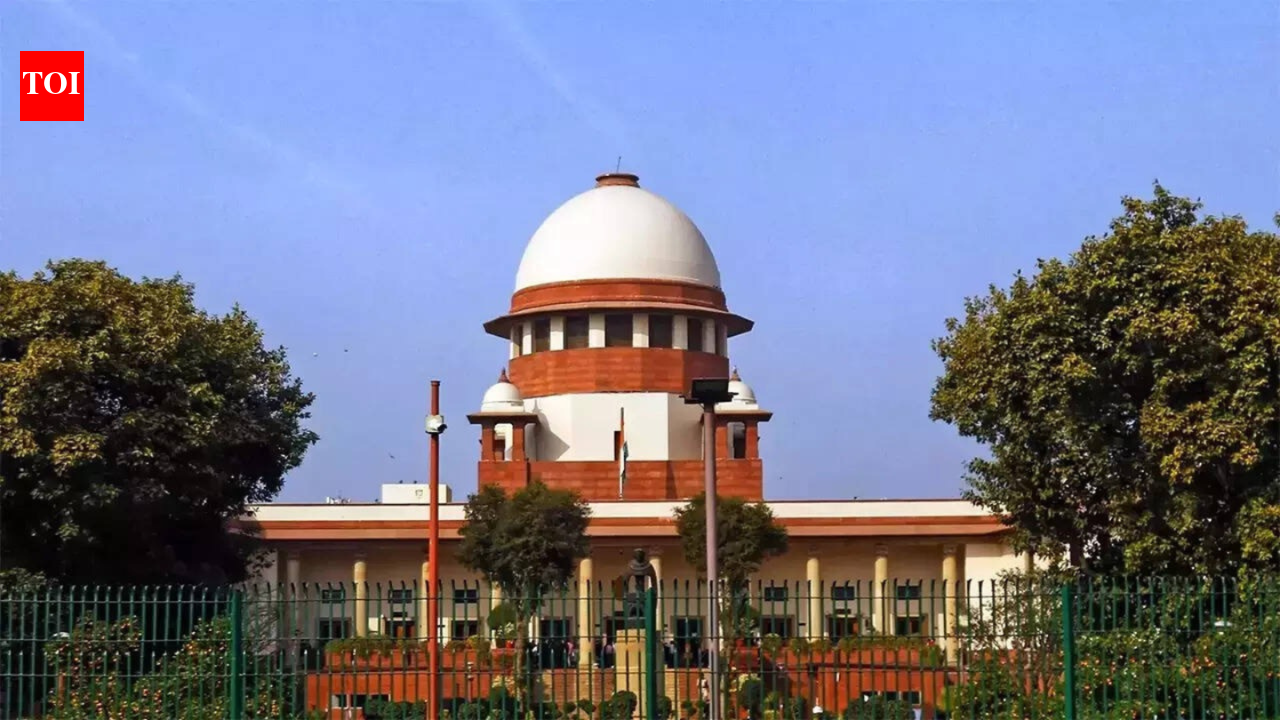
Justice BP Sharma of the Madhya Pradesh High Court determined that a Muslim man who weds a second time and takes another wife does not commit “bigamy,” as multiple marriages are permitted for his community and cannot be termed “void” under section 494 of the Indian Penal Code (IPC). Hence, a Muslim individual’s plea to have the accusation against him quashed was partially accepted, while the trial would go ahead for additional counts covered under sections 498-A, 342, 323 and 506 Part-II IPC. His first spouse had submitted a police report, asserting that following their December 2002 union, he abused her for failing to have a child and later entered into a second marriage in May 2022. The woman further stated that she was under pressure to grant him a “divorce” by mutual consent, or “Khula.” However, the petitioner’s attorney contended that Muslim Personal Law permits up to four spouses at once and hence section 494 cannot be invoked in the issue. Kerala High Court’s 2015 ruling was cited to support the prayer that the clause would only be effective in the event of a Muslim male’s fifth wedding. The court declared that “the applicability of section 494 IPC depends upon whether the second marriage is void by reason of the subsistence of the first marriage. In the present case, the parties are admittedly governed by Muslim Personal Law, which recognises the permissibility of plurality of marriages. Therefore, the essential ingredient of section 494 IPC, namely that the second marriage must be void on account of the subsistence of the earlier marriage, is not satisfied.” The complainant’s lawyer argued that the requirements of the Muslim Personal Law (Shariat) Application Act 1937 do not apply unless a declaration is made, and as a result, the husband cannot maintain four wives simultaneously under the statute. However, the bench conveyed that the aforementioned section is subject to this law, which authorises polygamy. It also relied upon 1995 and 2015 decisions from the Supreme Court. The court added that the man’s action would not meet the requisites of section 494, even if the allegations are taken at face value and concluded that pursuing the prosecution would be a misuse of the legal system. “Therefore, a second marriage contracted by a Muslim male during the lifetime of his first wife is not treated as void merely on the ground that the first marriage is still subsisting. In view of this legal position, the essential ingredient of Section 494 of IPC, namely that the subsequent marriage must be void on account of the subsistence of the first marriage, is not fulfilled in the present case,” it ruled. Afterwards, the bench acknowledged that the inquiry materials and claims prima facie revealed the commission of the other violations, such as criminal intimidation and cruelty. The trial court has been instructed to look into the remaining charges and deliver a judgment. How Islamic law impacts judicial rulings It is noteworthy that taking a second wife while the first is alive or without a divorce constitutes a punishable offence for other religious groups, including Hindus in India, as such regressive practices should not exist or be tolerated in any civilised society. However, it has been observed that the second largest community in the nation has been allowed to continue even the most repugnant and unlawful acts in the name of personal law, which is guided by the Sharia. Moreover, this premise has been embraced by the courts and verdicts are often rendered that enable Muslims to persist in otherwise illicit conduct. Interestingly, this special privilege is accorded just for civil matters and does not apply to criminal proceedings, entirely governed by the Bharatiya Nyaya Sanhita (BNS), which has replaced the Indian Penal Code (IPC) and the Criminal Procedure Code (CrPC). Thus, similar orders have been given by the Indian judiciary with respect to the Muslim community in light of the Sharia. Last May, the Allahabad High Court admitted that special religious provisions are exploited by the Muslims, but stated that a Muslim man cannot be penalised for bigamy if the rituals are performed in accordance with the Islamic law. According to Justice Arun Kumar Singh Deshwal, it would only be perceived as a crime if the second ceremony is carried out per this law after converting to Islam while the initial wedding took place under the Special Marriage Act, Foreign Marriage Act, Christian Marriage Act, Parsi Marriage and Divorce Act or Hindu Marriage Act. He then urged the government to adopt a Uniform Civil Code. Nonetheless, the statements from the court underscored how such infractions are seen as appropriate for a particular community under the guise of “freedom of religion.” Supreme Court opts not to extend ban on child marriage to encompass all religions On 18th October 2024, the Supreme Court refused to expand the restriction on child marriage to all relig
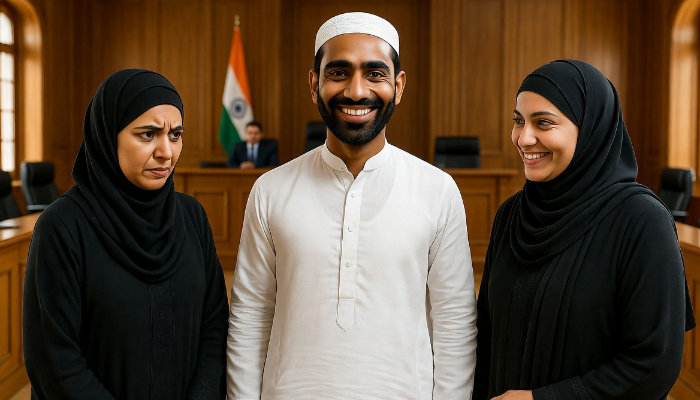
Justice BP Sharma of the Madhya Pradesh High Court determined that a Muslim man who weds a second time and takes another wife does not commit “bigamy,” as multiple marriages are permitted for his community and cannot be termed “void” under section 494 of the Indian Penal Code (IPC).
Hence, a Muslim individual’s plea to have the accusation against him quashed was partially accepted, while the trial would go ahead for additional counts covered under sections 498-A, 342, 323 and 506 Part-II IPC.
His first spouse had submitted a police report, asserting that following their December 2002 union, he abused her for failing to have a child and later entered into a second marriage in May 2022. The woman further stated that she was under pressure to grant him a “divorce” by mutual consent, or “Khula.”
However, the petitioner’s attorney contended that Muslim Personal Law permits up to four spouses at once and hence section 494 cannot be invoked in the issue. Kerala High Court’s 2015 ruling was cited to support the prayer that the clause would only be effective in the event of a Muslim male’s fifth wedding.
The court declared that “the applicability of section 494 IPC depends upon whether the second marriage is void by reason of the subsistence of the first marriage. In the present case, the parties are admittedly governed by Muslim Personal Law, which recognises the permissibility of plurality of marriages. Therefore, the essential ingredient of section 494 IPC, namely that the second marriage must be void on account of the subsistence of the earlier marriage, is not satisfied.”
The complainant’s lawyer argued that the requirements of the Muslim Personal Law (Shariat) Application Act 1937 do not apply unless a declaration is made, and as a result, the husband cannot maintain four wives simultaneously under the statute. However, the bench conveyed that the aforementioned section is subject to this law, which authorises polygamy.
It also relied upon 1995 and 2015 decisions from the Supreme Court. The court added that the man’s action would not meet the requisites of section 494, even if the allegations are taken at face value and concluded that pursuing the prosecution would be a misuse of the legal system.
“Therefore, a second marriage contracted by a Muslim male during the lifetime of his first wife is not treated as void merely on the ground that the first marriage is still subsisting. In view of this legal position, the essential ingredient of Section 494 of IPC, namely that the subsequent marriage must be void on account of the subsistence of the first marriage, is not fulfilled in the present case,” it ruled.
Afterwards, the bench acknowledged that the inquiry materials and claims prima facie revealed the commission of the other violations, such as criminal intimidation and cruelty. The trial court has been instructed to look into the remaining charges and deliver a judgment.
How Islamic law impacts judicial rulings
It is noteworthy that taking a second wife while the first is alive or without a divorce constitutes a punishable offence for other religious groups, including Hindus in India, as such regressive practices should not exist or be tolerated in any civilised society. However, it has been observed that the second largest community in the nation has been allowed to continue even the most repugnant and unlawful acts in the name of personal law, which is guided by the Sharia.
Moreover, this premise has been embraced by the courts and verdicts are often rendered that enable Muslims to persist in otherwise illicit conduct. Interestingly, this special privilege is accorded just for civil matters and does not apply to criminal proceedings, entirely governed by the Bharatiya Nyaya Sanhita (BNS), which has replaced the Indian Penal Code (IPC) and the Criminal Procedure Code (CrPC).
Thus, similar orders have been given by the Indian judiciary with respect to the Muslim community in light of the Sharia. Last May, the Allahabad High Court admitted that special religious provisions are exploited by the Muslims, but stated that a Muslim man cannot be penalised for bigamy if the rituals are performed in accordance with the Islamic law.
According to Justice Arun Kumar Singh Deshwal, it would only be perceived as a crime if the second ceremony is carried out per this law after converting to Islam while the initial wedding took place under the Special Marriage Act, Foreign Marriage Act, Christian Marriage Act, Parsi Marriage and Divorce Act or Hindu Marriage Act. He then urged the government to adopt a Uniform Civil Code.
Nonetheless, the statements from the court underscored how such infractions are seen as appropriate for a particular community under the guise of “freedom of religion.”
Supreme Court opts not to extend ban on child marriage to encompass all religions
On 18th October 2024, the Supreme Court refused to expand the restriction on child marriage to all religions, independent of personal laws. The central government had asked for an order that the Prohibition of Child Marriage Act (PCMA) be applied to all Indians, irrespective of their religious beliefs.
However, the court declined and pointed out that a bill concerning it was pending before a standing committee. On 21st December 2021, the Prohibition of Child Marriage (Amendment) Bill was introduced in Parliament and forwarded to the standing committee. The bill intended to amend the PCMA to explicitly stipulate that it shall take preference over multiple personal laws.
The bench of Chief Justice DY Chandrachud, Justice JB Pardiwala and Justice Manoj Misra also announced, “The issue of the interface of personal laws with the prohibition of child marriage under the PCMA has been a subject of some confusion.”
The Society for Enlightenment and Voluntary Action, a non-governmental organisation (NGO), lodged the petition, explaining that the disturbingly high number of child marriages in India endured even after the PCMA was passed 18 years ago.
It accused authorities of failing to curb child marriages and advocated for stronger enforcement mechanisms, awareness campaigns, the appointment of Child Marriage Prohibition Officers (CMPO), and comprehensive support systems for child brides, such as education, healthcare and compensation, to ensure the protection and well-being of vulnerable kids. It pressed the apex court to offer useful direction in this regard.
The centre also encouraged the latter to consider releasing directives stating that the PCMA would have precedence over the personal laws defining marriage in a note. It also mentioned contradictory findings by different high courts about the PCMA’s supremacy over the personal laws. However, the top court reported that it was not supplied with the specifics of the verdicts by the government.
Live-in relationships not permissible under Sharia
On 8th May of that year, the Allahabad High Court’s Lucknow bench decided that Muslims who have a living spouse cannot assert their rights in a live-in relationship since Islamic law forbids it. The observations were made by a bench of Justices AR Masoodi and AK Srivastava during the hearing of a writ petition filed by Sneha Devi and Muhammad Shadab Khan, who sought protection from police action.
The woman was directed to be returned to her parents under protection after they filed a kidnapping complaint against Kha,n who married Farida Khatoon in 2020 and had a child.
“Islamic tenets do not permit live-in relationships during a subsisting marriage. The position may be different if the two persons are unmarried and the parties being major choose to lead their lives in a way of their own,” the court emphasised. The pair wanted protection under Article 21 (life and personal liberty).
However, it insisted, “The constitutional morality may come to the rescue of such a couple and the social morality settled through the customs and usages over ages may give way to the constitutional morality and protection under Article 21 of the Constitution of India may step in to protect the cause. The case before us is, however, different.”
The bench further mentioned, “The constitutional protection under Article 21 of the Constitution of India would not lend an un-canalised support to such a right, once the usages and customs prohibit such a relationship between the two individuals of different faiths.”
Minor girls from the Muslim community are permitted to marry
The Punjab and Haryana High Court ruled that a Muslim girl who reaches the age of 15 is free to marry whoever she chooses. “Such a marriage would not be void in terms of section 12 of the Prohibition of Child Marriage Act 2006,” declared Justice Vikas Bahl in October 2022. Notably, the age of puberty is 15 based on Sharia.
Additionally, the court guaranteed that Islamic personal regulations would remain in force for Muslim girls. A 16-year-old girl had demanded clearance from a childcare agency to make amends with her 26-year-old spouse. The remark was delivered at the hearing of a habeas corpus case initiated by the husband, Javed, in which he challenged her “imprisonment” at the facility.
The girl told the court that she had left her household to stay with and marry the person of her desire, but she had been pressured into engagement with her maternal uncle by her family. It concluded that Javed had legal custody of the detainee as their relationship was lawful under Islamic law on the basis of a prior case. The union was willingly consummated and deemed as valid since both parties were Muslims, despite the fact that the girl was underage.
A month prior, the Delhi High Court pronounced that a 15-year-old girl was of “Marriageable Age” under Islamic law. It stated that a Muslim girl who has reached puberty but is under the age of 18 has the right to wed anyone without the approval of her family and reside with her husband under the religious law.
The statement was made by Justice Jasmeet Singh’s single bench while granting protection to a Muslim couple who were married in March 2022 in compliance with Islamic customs. The duo petitioned the court for orders to prevent anyone from separating them. The girl’s parents had disapproved of the union and registered a First Information Report (FIR) under sections 363 and 376 of the IPC. He was also booked under section 6 of Protection of Children from Sexual Offences (POCSO) Act.
The Punjab and Haryana High Court rendered a similar judgment on 20th June of the same year when a Muslim couple from Pathankot, aged 16 and 21, approached it for protection from their family members. The couple informed that they married on 8th June in conformity with Islamic rituals, but their family members were opposed to this move and had threatened them.
“As per Article 195 from the book ‘Principles of Mohammedan Law’ by Sir Dinshah Fardunji Mulla, the girl being over 16 years of age is competent to enter into a contract of marriage with a person of her choice. The boy is stated to be more than 21 years of age. Thus, both the petitioners are of marriageable age as envisaged by Muslim Personal Law,” expressed Justice Jasjit Singh Bedi.
“Merely because the petitioners have got married against the wishes of their family members, they cannot possibly be deprived of their fundamental rights as envisaged in the Constitution of India,” he added while instructing the Senior Superintendent of Police (SSP) Pathankot to set up appropriate security measures.
Justice Alka Sarin of the Punjab and Haryana High Court handed an identical ruling in February 2021 after considering a motion from a 17-year-old girl and a 36-year-old man. The verdict was based on several court decisions and Article 195 of “Principles of Mohammedan Law.” The bench stated that a Muslim girl is believed to have experienced puberty when she crosses the age of 15 in the absence of proof, quoting Article 15 of this law.
Conclusion
Judicial rulings have, in one way or another, been shaped by personal law or Sharia concerning the Muslim community. The judges also capitulated to their demands, as was the case when a local court in the Muslim-dominated Kishanganj district had to revoke its ban on wearing lungis within the premises following protests in 2018.
Likewise, the courts made peculiar judgments that have attracted attention, including directing a young woman to hand out copies of the Quran while allowing her bail for a Facebook post about Tabrez Ansari’s death and granting protection to a Hindu woman who intended to pray at the Piran Kaliyar mosque in Roorkee. Notably, she filed the plea alongside her Muslim friend and roommate.
Meanwhile, Salaam Centre, an Islamic organisation dedicated to “Dawah” (converting non-Muslims),s) boasted about distributing the Quran at the Karnataka High Court, including to judges and advocates in 2019. On one side, there are verdicts being pronounced that prioritise personal law, and on the other side, such events are becoming apparent.
Hence, this situation raises concerns among ordinary Indians about whether everyone is indeed equal in the eyes of the law, or if some people are allowed to disregard the rules and regulations in the country due to specific religious privileges that are not afforded to others.