MoA signed to establish Frontier Nagaland Territorial Authority: Read what the breakthrough agreement means for peace and development in the region
On 5th February (Thursday), the centre, Nagaland government and representatives of the Eastern Nagaland Peoples Organisation (ENPO), the highest authority representing eight identified Naga tribes in the six eastern districts of the state, signed a historic Memorandum of Agreement (MoA) in the national capital. The move has indicated another notable breakthrough in achieving Prime Minister Narendra Modi’s aspiration for a flourishing and peaceful Northeast. The tripartite agreement was inked in front of Nagaland Chief Minister Dr Neiphiu Rio, alongside Union Home Minister and Cooperation Minister Amit Shah. It will facilitate the establishment of the Frontier Nagaland Territorial Authority (FNTA) for the six districts of Nagaland, including Tuensang, Mon, Kiphire, Longleng, Noklak and Shamator. The pivotal step is set to result in the devolution of authority with regard to 46 FNTA subjects. Image via idsa.in Senior officials from the Union Ministry of Home Affairs and state government, including Yanth Ungo Patton, the deputy chief minister of Nagaland, his cabinet colleagues and other dignitaries were also present during the momentous event in New Delhi. The prime minsiter lauded the “historic agreement” which will improve the growth track of Eastern Nagaland and offer new opportunities and prosperity to its people. He added, “It reflects our unwavering commitment to peace, progress and inclusive growth in the North East.” This is a historic agreement indeed, which will enhance the development trajectory of Eastern Nagaland in particular. I am sure it will open new avenues of opportunity and prosperity for the people. It reflects our unwavering commitment to peace, progress and inclusive growth in… https://t.co/bKsHl8rWOn— Narendra Modi (@narendramodi) February 6, 2026 Amit Shah referred to the agreement as a measure for “resolving decades-long pending issues of Eastern Nagaland.” He remarked, “It is a giant step towards realising Modi Ji’s vision for a peaceful and prosperous Northeast by resolving all contentious issues.” Today a historic agreement was signed between Govt of India, Govt of Nagaland and ENPO resolving decades-long pending issues of Eastern Nagaland. It is a giant step towards realising Modi Ji's vision for a peaceful and prosperous Northeast by resolving all contentious issues. pic.twitter.com/sxt23lBX1n— Amit Shah (@AmitShah) February 5, 2026 The chief minister of Nagaland also shared the news of the important pact involving his government, the centre and ENPO. I am happy to announce that today, 5th Feb 2026, the Govt. of Nagaland signed the Memorandum of Agreement (MoA) with the Govt. of India and the Eastern Nagaland Peoples’ Organisation for the formation of the ‘Frontier Nagaland Territorial Authority’ within the State of Nagaland.” pic.twitter.com/xbfVbluj31— Neiphiu Rio (@Neiphiu_Rio) February 5, 2026 A substantial move towards a harmonious North East “PM Modi has envisioned a North East that is free from insurgency, violence, disputes and developed. Today, we have taken one more step forward in realising that vision,” Shah declared on the occasion. According to him, the accord is crucial to end conflict and informed that the Modi government has entered into 12 significant arrangements in the region since 2019. He assured the ENPO delegates that the centre will both support and bear responsibility for the development of Eastern Nagaland. He conveyed that a certain sum will be determined annually, and the Ministry of Home Affairs will also cover the establishment’s initial costs. Image via Freepik Shah further mentioned that he had assured the ENPO representatives in 2021-2022 that PM Modi is committed to the cause of a peaceful North East and will address their concerns, urging them to maintain faith and take part in the democratic process, as they are going to receive justice and the respect they deserve. He expressed happiness over the settlement of the dispute and highlighted how the officials from the Home Ministry served as a bridge between ENPO and the Nagaland government for a considerable amount of time. The home minister also emphasised the strategic importance of the ENPO area and congratulated the entire state, its citizens and government, including Rio and his cabinet, as well as the two parliamentarians from Nagaland, for their contributions in bringing the negotiations to a logical end. He stated that the governments of the state and India will join hands to accelerate Eastern Nagaland’s development. “Today’s agreement is a victory for Naga society, and I hope that mutual trust among all sections of people will increase. I also thank the Government of India for bringing the matter to a conclusion and hope we will keep on getting cooperation from the central government in the future,” Rio similarly voiced during the landmark program. Image via Mokokchung Times The agreement stipulates that Frontier Nagaland
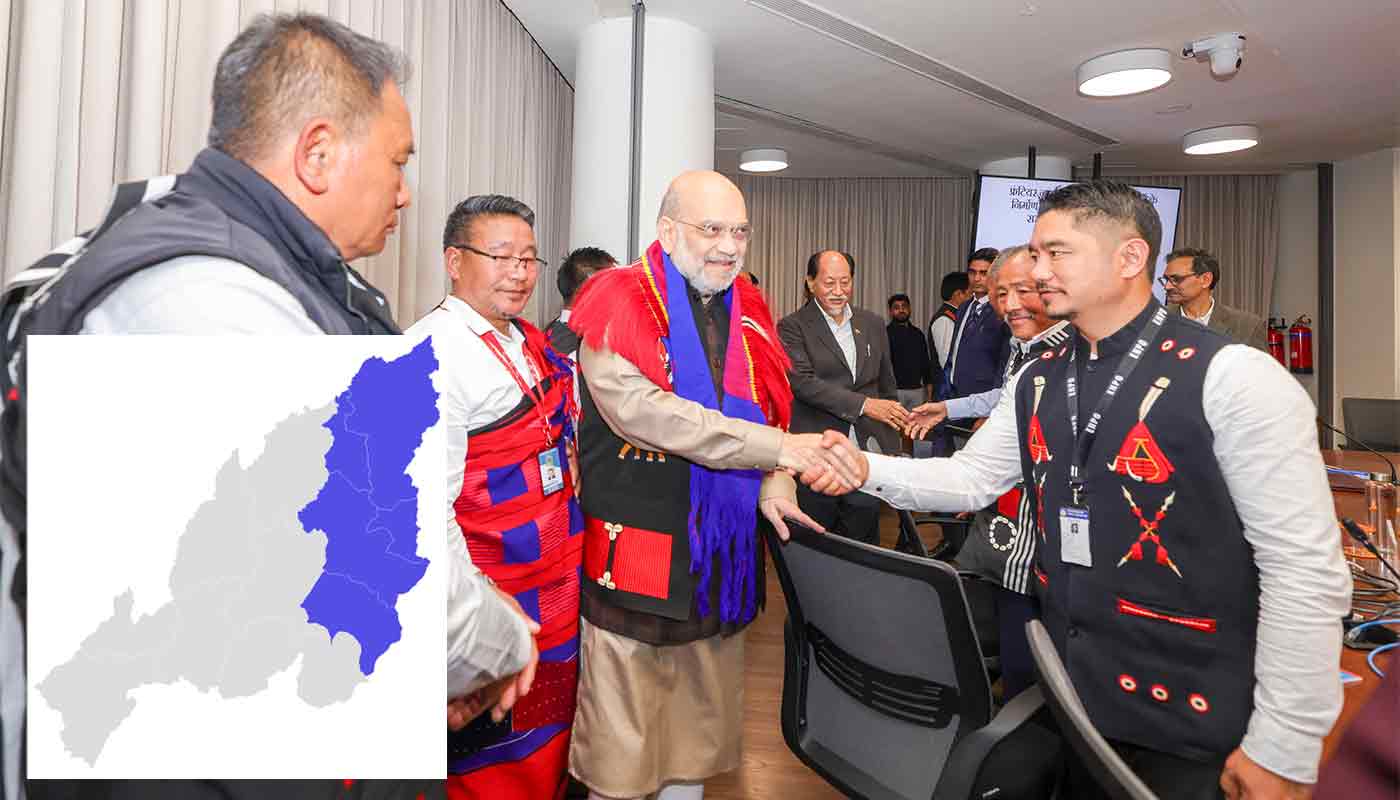

On 5th February (Thursday), the centre, Nagaland government and representatives of the Eastern Nagaland Peoples Organisation (ENPO), the highest authority representing eight identified Naga tribes in the six eastern districts of the state, signed a historic Memorandum of Agreement (MoA) in the national capital. The move has indicated another notable breakthrough in achieving Prime Minister Narendra Modi’s aspiration for a flourishing and peaceful Northeast.
The tripartite agreement was inked in front of Nagaland Chief Minister Dr Neiphiu Rio, alongside Union Home Minister and Cooperation Minister Amit Shah. It will facilitate the establishment of the Frontier Nagaland Territorial Authority (FNTA) for the six districts of Nagaland, including Tuensang, Mon, Kiphire, Longleng, Noklak and Shamator. The pivotal step is set to result in the devolution of authority with regard to 46 FNTA subjects.

Senior officials from the Union Ministry of Home Affairs and state government, including Yanth Ungo Patton, the deputy chief minister of Nagaland, his cabinet colleagues and other dignitaries were also present during the momentous event in New Delhi.
The prime minsiter lauded the “historic agreement” which will improve the growth track of Eastern Nagaland and offer new opportunities and prosperity to its people. He added, “It reflects our unwavering commitment to peace, progress and inclusive growth in the North East.”
This is a historic agreement indeed, which will enhance the development trajectory of Eastern Nagaland in particular. I am sure it will open new avenues of opportunity and prosperity for the people. It reflects our unwavering commitment to peace, progress and inclusive growth in… https://t.co/bKsHl8rWOn
— Narendra Modi (@narendramodi) February 6, 2026
Amit Shah referred to the agreement as a measure for “resolving decades-long pending issues of Eastern Nagaland.” He remarked, “It is a giant step towards realising Modi Ji’s vision for a peaceful and prosperous Northeast by resolving all contentious issues.”
Today a historic agreement was signed between Govt of India, Govt of Nagaland and ENPO resolving decades-long pending issues of Eastern Nagaland. It is a giant step towards realising Modi Ji's vision for a peaceful and prosperous Northeast by resolving all contentious issues. pic.twitter.com/sxt23lBX1n
— Amit Shah (@AmitShah) February 5, 2026
The chief minister of Nagaland also shared the news of the important pact involving his government, the centre and ENPO.
I am happy to announce that today, 5th Feb 2026, the Govt. of Nagaland signed the Memorandum of Agreement (MoA) with the Govt. of India and the Eastern Nagaland Peoples’ Organisation for the formation of the ‘Frontier Nagaland Territorial Authority’ within the State of Nagaland.” pic.twitter.com/xbfVbluj31
— Neiphiu Rio (@Neiphiu_Rio) February 5, 2026
A substantial move towards a harmonious North East
“PM Modi has envisioned a North East that is free from insurgency, violence, disputes and developed. Today, we have taken one more step forward in realising that vision,” Shah declared on the occasion. According to him, the accord is crucial to end conflict and informed that the Modi government has entered into 12 significant arrangements in the region since 2019.
He assured the ENPO delegates that the centre will both support and bear responsibility for the development of Eastern Nagaland. He conveyed that a certain sum will be determined annually, and the Ministry of Home Affairs will also cover the establishment’s initial costs.

Shah further mentioned that he had assured the ENPO representatives in 2021-2022 that PM Modi is committed to the cause of a peaceful North East and will address their concerns, urging them to maintain faith and take part in the democratic process, as they are going to receive justice and the respect they deserve.
He expressed happiness over the settlement of the dispute and highlighted how the officials from the Home Ministry served as a bridge between ENPO and the Nagaland government for a considerable amount of time.
The home minister also emphasised the strategic importance of the ENPO area and congratulated the entire state, its citizens and government, including Rio and his cabinet, as well as the two parliamentarians from Nagaland, for their contributions in bringing the negotiations to a logical end. He stated that the governments of the state and India will join hands to accelerate Eastern Nagaland’s development.
“Today’s agreement is a victory for Naga society, and I hope that mutual trust among all sections of people will increase. I also thank the Government of India for bringing the matter to a conclusion and hope we will keep on getting cooperation from the central government in the future,” Rio similarly voiced during the landmark program.

The agreement stipulates that Frontier Nagaland Territorial Authority will have a mini-secretariat led by an additional chief secretary or principal secretary, and its development expenditures will be shared proportionately by area and population. However, it remains completely compliant with the terms of Article 371(A) of the Indian Constitution.
This special framework aims to promote Eastern Nagaland through improved decision-making, financial autonomy, expedited growth of infrastructure, economic empowerment, and optimal resource use. According to Home Secretary Govind Mohan, the MoA will help in putting an end to protracted negotiations and guarantee that institutionalised governance, along with development mechanisms, fulfil the local expectations of eastern Nagaland.
Separation to inclusion: How the Modi administration addressed the prolonged dispute
There has been a persistent demand for the eastern Nagas to be separated since independence. The Tuensang Mon People’s Organisation, which was renamed the Eastern Naga People’s Organisation in 2005, started out in 1994 as a formal protest against the backwardness and alienation of the eastern Naga tribes.
The creation of a Frontier Nagaland Territorial Authority, which would include the six eastern districts of Kiphira, Longling, Mon, Noklang, Shamator and Tuensang, was initiated by the ENPO in 2010. They called for a separate political system to tackle development and governance imbalances in Eastern Nagaland and wanted financial, legislative and executive independence. They also complained about the under-representation of eastern Naga tribes in the government.
The confrontation was fraught with election boycotts, strikes, several meetings with the shareholders, assurances and more. Progress was made many times, only to encounter roadblocks. However, the Modi government continuously engaged in discussions and listened to the demands of ENPO.

A formal dialogue between the MHA and the ENPO was started in 2022 by a high-level committee in an effort to reach a consensus. However, the latter’s insistent demand for a separate state prevented the talks from reaching an agreement. However, the group eventually agreed upon the centre’s proposal for a territorial authority with more autonomy under the FNTA structure.
The ENPO provisionally nodded to the Modi government’s plan to create the FNTA under Article 371(A) during the inaugural meeting in December 2024, handing over executive, legislative and budgetary authority to the eastern Nagas. A series of meetings followed and the outfit cut down its demands.
Its desire for an independent state was ultimately suspended during last year’s final negotiations, and a proposition for founding a special autonomous administrative entity dubbed the FNTA within the state of Nagaland was approved. This is scheduled to be reviewed in ten years, and controversial issues will be worked out through democratic political processes.
Conclusion
The North East had been plagued by severe neglect under the Indian National Congress regime. However, the Modi government has brought about positive changes, undertaking extensive actions to mainstream and connect the entire region with the rest of the country while also promoting development in its most remote areas.
Furthermore, there have been repeated attempts to find an amicable solution to issues raised by opposing factions, which have helped to alleviate long-standing feelings of marginalisation, political upheaval, violence and unrest, thus delivering stability and a pathway to a better future.
It is due to the relentless efforts of the government that the ENPO’s quest for a distinct state drastically dropped and it welcomed a special administrative structure (FNTA) with restricted autonomy under Article 371(A). Now, an incredibly contentious segment of history has come to an end, giving way to a new dawn filled with hope and devoid of a drawn-out conflict in the region.