National Council of Churches moves SC to dilute anti-conversion laws: Read how the nation is plagued by the virus of illegal conversions by missionaries
On 2nd February (Monday), the National Council of Churches in India filed a writ petition in the Supreme Court contesting the constitutionality of anti-conversion laws introduced by multiple states throughout India, including Odisha, Chhattisgarh, Madhya Pradesh, Arunachal Pradesh, Gujarat, Himachal Pradesh, Jharkhand, Uttarakhand, Uttar Pradesh, Karnataka, Haryana and Rajasthan. The organisation claims to stand for over 14 million Indians and is composed of 32 member churches, 17 regional Christian councils, 18 all-India outfits and 7 related agencies. A panel made up of Justice Joymalya Bagchi and Chief Justice Surya Kant of India grouped the case with other similar petitions concerning pleas pertaining to religious conversions. “Issue notice. Let a copy of each be served on Advocate Generals (of states) also. Let a counter affidavit (of the centre and 12 states) be filed within four weeks. Let respondents file a common counter affidavit. Having regard to the importance, let it be placed before a three-judge bench,” the judges pronounced. NCCI was represented by senior counsel Meenakshi Arora, who alleged, “Their acts have been structured in such a manner that it incentivises certain vigilante groups to take action because there are rewards out there. So, even if there is no case at all against a person, someone would make a complaint, and that person would be arrested.” She declared that the current case is the only one that questions the laws of Arunachal Pradesh and Odisha. The Rajasthan Prohibition of Unlawful Religious Conversion Act, 2025, was the subject of a similar petition filed by the Catholic Bishops Conference of India. The notice was received by the court in December. Arora stated that she has also made a request for a stay of the laws and claimed, “In many states, there is an issue of huge abuse, there have been applications, and there is an application fora stay here also.” The statutory definitions of “conversion,” “allurement,” “inducement”, and “undue influence” were termed as ambiguous, overly general and lacking in objective standards. She accused that it breached the legality doctrine, gives authorities unrestricted power, permits discriminatory enforcement and stifles free speech as well as the promotion of religion. Arora added that without implementing procedural protections, the impugned acts broaden the class of complainants to include unaffiliated third parties. They place the burden of proof on the accused, compromising fundamental ideas of criminal jurisprudence. “Implementation of the impugned acts across states reveals a uniform pattern of misuse. Routine worship, prayer meetings, charitable activities and interfaith marriages are criminalised through expansive interpretations of allurement and inducement. Vigilante groups function as de facto enforcers, while police authorities act mechanically on complaints without independent scrutiny. This state-enabled vigilantism legitimises social hostility, instils fear among minority communities, thereby corroding the secular fabric of the Constitution,” she submitted. The petitioner requested directives to declare several such provisions in various state laws to be illegal and an interim stay on the acts. Furthermore, it prayed for instructions to police authorities not to make arrests or take actions in accordance with the acts and a stay on all criminal proceedings related to FIRs (First Information Reports) registered under Sections 3 and 5 of the same and the ensuing probes. Modi government’s firm rebuttal Tushar Mehta, the Solicitor General of India, strongly countered the assertions on behalf of the centre and highlighted that the government had “our answers.” He stated, “Our reply is ready and will be filed shortly.” Mehta cited the five-judge Constitution Bench verdict and charged that the petitioner’s arguments were not “factually correct” and invoked the Rev. Stainislaus v/s State of Madhya Pradesh case of 1977. Notably, the apex court had already affirmed the constitutional legitimacy of the Madhya Pradesh Dharma Swatantraya Adhiniyam, 1968 and the Orissa Freedom of Religion Act, 1967 at the time. The ruling noted that the term “propagate” in Article 25 of the Constitution did not grant “the right to convert another person to one’s own religion, but to transmit or spread one’s religion by an exposition of its tenets.” There was “no fundamental right to convert another person to one’s own religion,” according to the Constitution Bench, which had reasoned that freedom of religion applied to all religions, not just one. The ugly face of religious conversion India appears to be a peculiar anomaly where religious minorities advocate for the legalisation of conversion while the majority opposes it. The underlying reason for this is that Abrahamic religions are fundamentally proselytising, often attempting to compel others to submit to their beliefs. These actions, which involve fo
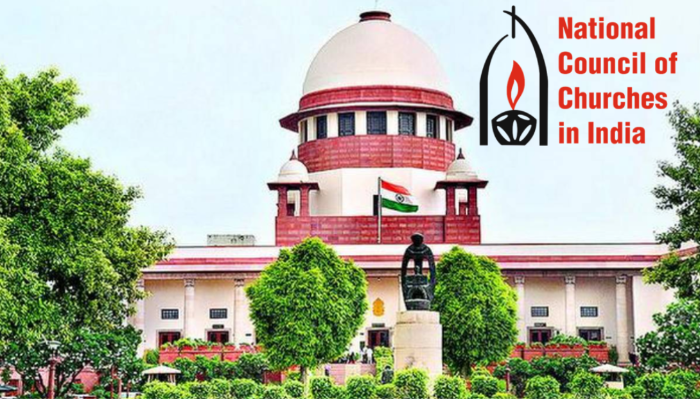

On 2nd February (Monday), the National Council of Churches in India filed a writ petition in the Supreme Court contesting the constitutionality of anti-conversion laws introduced by multiple states throughout India, including Odisha, Chhattisgarh, Madhya Pradesh, Arunachal Pradesh, Gujarat, Himachal Pradesh, Jharkhand, Uttarakhand, Uttar Pradesh, Karnataka, Haryana and Rajasthan.
The organisation claims to stand for over 14 million Indians and is composed of 32 member churches, 17 regional Christian councils, 18 all-India outfits and 7 related agencies. A panel made up of Justice Joymalya Bagchi and Chief Justice Surya Kant of India grouped the case with other similar petitions concerning pleas pertaining to religious conversions.
“Issue notice. Let a copy of each be served on Advocate Generals (of states) also. Let a counter affidavit (of the centre and 12 states) be filed within four weeks. Let respondents file a common counter affidavit. Having regard to the importance, let it be placed before a three-judge bench,” the judges pronounced.
NCCI was represented by senior counsel Meenakshi Arora, who alleged, “Their acts have been structured in such a manner that it incentivises certain vigilante groups to take action because there are rewards out there. So, even if there is no case at all against a person, someone would make a complaint, and that person would be arrested.”
She declared that the current case is the only one that questions the laws of Arunachal Pradesh and Odisha. The Rajasthan Prohibition of Unlawful Religious Conversion Act, 2025, was the subject of a similar petition filed by the Catholic Bishops Conference of India. The notice was received by the court in December.
Arora stated that she has also made a request for a stay of the laws and claimed, “In many states, there is an issue of huge abuse, there have been applications, and there is an application fora stay here also.” The statutory definitions of “conversion,” “allurement,” “inducement”, and “undue influence” were termed as ambiguous, overly general and lacking in objective standards.
She accused that it breached the legality doctrine, gives authorities unrestricted power, permits discriminatory enforcement and stifles free speech as well as the promotion of religion. Arora added that without implementing procedural protections, the impugned acts broaden the class of complainants to include unaffiliated third parties. They place the burden of proof on the accused, compromising fundamental ideas of criminal jurisprudence.
“Implementation of the impugned acts across states reveals a uniform pattern of misuse. Routine worship, prayer meetings, charitable activities and interfaith marriages are criminalised through expansive interpretations of allurement and inducement. Vigilante groups function as de facto enforcers, while police authorities act mechanically on complaints without independent scrutiny. This state-enabled vigilantism legitimises social hostility, instils fear among minority communities, thereby corroding the secular fabric of the Constitution,” she submitted.
The petitioner requested directives to declare several such provisions in various state laws to be illegal and an interim stay on the acts. Furthermore, it prayed for instructions to police authorities not to make arrests or take actions in accordance with the acts and a stay on all criminal proceedings related to FIRs (First Information Reports) registered under Sections 3 and 5 of the same and the ensuing probes.
Modi government’s firm rebuttal
Tushar Mehta, the Solicitor General of India, strongly countered the assertions on behalf of the centre and highlighted that the government had “our answers.” He stated, “Our reply is ready and will be filed shortly.” Mehta cited the five-judge Constitution Bench verdict and charged that the petitioner’s arguments were not “factually correct” and invoked the Rev. Stainislaus v/s State of Madhya Pradesh case of 1977.
Notably, the apex court had already affirmed the constitutional legitimacy of the Madhya Pradesh Dharma Swatantraya Adhiniyam, 1968 and the Orissa Freedom of Religion Act, 1967 at the time. The ruling noted that the term “propagate” in Article 25 of the Constitution did not grant “the right to convert another person to one’s own religion, but to transmit or spread one’s religion by an exposition of its tenets.”
There was “no fundamental right to convert another person to one’s own religion,” according to the Constitution Bench, which had reasoned that freedom of religion applied to all religions, not just one.
The ugly face of religious conversion
India appears to be a peculiar anomaly where religious minorities advocate for the legalisation of conversion while the majority opposes it. The underlying reason for this is that Abrahamic religions are fundamentally proselytising, often attempting to compel others to submit to their beliefs. These actions, which involve force, manipulation, enticement or other similar methods, have been quite prevalent in various regions of India, leading to the establishment of anti-conversion laws.
According to OpIndia’s Hinduphobia Tracker, 2026 has already seen 56 cases of Christian religious conversion reported from different regions of India. The majority of these cases have been identified in Uttar Pradesh and Chhattisgarh, with figures reaching 18 and 10, respectively.

The Hinduphobia Tracker similarly recorded an astonishing 477 cases from India last year. Uttar Pradesh had the highest number of these instances at 189, followed by Chhattisgarh with 84, Madhya Pradesh with 60, Rajasthan with 36 and Bihar with 21. The alarming factor is that these occurrences seem to progressively gain momentum, posing not only a significant demographic challenge and an assault on the nation’s roots and history but also a threat to national security.

A German couple, Swain Boz Bet Jaler and Sandra, as well as others, were arrested in Sri Ganganagar of Rajasthan in December after an unlawful church was found inside a house where people were pushed to embrace Christianity by offering financial assistance. Hindu deities and gurus were also abused there to coerce people to abandon their religion.
The German duo had even visited the sensitive Majhiwala border in Ganganagar, resulting in a high alert in the area as a massive police force was deployed to counter any potential problem. Foreign nationals are subjected to strict limitations in Sri Karanpur. According to a preliminary investigation, the Germans were secretly planning a religious meeting when they entered the region without authorisation, while the locals were oblivious.
The national security is evidently at risk due to these elements, especially in the critical context of India’s adversarial neighbours like Pakistan. These acts, which are performed under the pretext of prayer meetings, frequently involve the illicit occupation of houses and other places while vulnerable groups, such as underprivileged communities are targeted for their agenda.
Several organisations have persistently raised their voices about the same. The Punjab Bachao Morcha has declared its commitment to taking legal action against these programs associated with “miracle cures” in the state and has demanded the passage of an anti-conversion bill to halt the widespread and illegal religious conversions by “self-styled godmen and pastors.”
“Around 65,000 pastors are operating in the state and engaging in conversions through enticement, coercion, and fake miracle cures in violation of the Drugs and Magic Remedies (Objectionable Advertisements) Act, 1954 and several sections of the Bharatiya Nyaya Sanhita (BNS),” the leaders informed. They also pointed out, “The 2011 Census recorded the Christian population at 1.26 per cent (around 3.48 lakh people), which has risen to nearly 15 per cent, pointing to large-scale conversions in the last decade.”
Conclusion
The laws were introduced to address the fears expressed by the people who are being affected by these offensive deeds. The incidents of religious conversions by Christian missionaries and their Islamist counterparts regularly come to the fore from different parts of the nation. The alarming reality is also conveyed by the Hinduphobic Tracker. The more startling issue is that numerous cases remain unreported, allowing many such individuals to evade the law.
A Hindu-majority country, despite hundreds of years of outside rule and oppression, is already a bane for these entities and their allies in foreign lands. Hence, the petition in the Supreme Court is another attempt to mainstream these conversion tactics in the name of freedom of religion and victimhood to destroy the native population and their indigenous faith.