PM Modi’s Seychelles visit: Why this tiny island nation is central to India’s grand maritime strategy and Indian Ocean ambitions
On 27th June (Saturday), Prime Minister Narendra Modi arrived on a three-day visit to the Republic of Seychelles at the invitation of President Dr Patrick Herminie. He also attended the 50th Independence Day, popularly known as National Day, celebrations as the Guest of Honour on 29th June and was awarded the honorary title of “Guardian of the Blue Horizon” by the archipelagic island nation. The day coincided with the marking of 50 years of the establishment of diplomatic connection between the two sides. Contingents from the Indian armed forces took part in the national parade to commemorate these milestones as INS (Indian Naval Ship) Tarkash and INS Ikshak were docked at Port Victoria. Additionally, PM Modi spoke before the extraordinary session of the Seychelles National Assembly. Notably, he has returned to Seychelles for the second time since taking office. He became the first Indian Prime Minister to land there in 34 years during his earlier state visit in March 2015, which witnessed high-level bilateral meetings and major agreements. The decisive revival of the relationship happened after Herminie assumed power in October of last year after undergoing a slowdown between 2020 and 2025. He made a maiden trip to India in February, which turned out to be very significant and illustrated his ambition to advance the relations. The meeting between PM Modi and Herminie resulted in seven crucial accords about digital technology, exports, data exchange and maritime scientific research. The two leaders unveiled a Joint Vision for Sustainability, Economic Growth and Security via Enhanced Linkages (SESEL), highlighting the capabilities of each country and acknowledging the value of the partnership. They emphasised that the nations have a unique and enduring link founded on family and historical links, fostered by shared ideals of democracy and pluralism. Attention was also drawn to the essential role that Seychelles plays in India’s vision “Mahasagar” (Mutual and Holistic Advancement for Security and Growth Across Regions), an expanded global maritime doctrine under the present government. New Delhi had even announced a $175 million development assistance package for Victoria at the time. PM Modi’s historical 2nd visit to Seychelles PM Modi’s presence in the African country is expected to give the necessary impetus to further fortify the collaboration on many fronts. India is profoundly integrated into the security and capacity-building apparatus of the latter through multiple mechanisms. New Delhi will once again depute four military advisors to the country in a pivotal strategic reset. This arrangement had been discontinued by the previous government. This revival marks a significant boost to defence cooperation and institutional ties. India powers over 50% of the maritime and air assets of Seychelles, including Dornier aircraft and patrol vessels, among others. Moreover, its position as the most reliable security partner of Seychelles has been reinforced with the transfer of a “Made-in-India” Fast Patrol Vessel, laser radial boats and various utility vehicles and ambulances. India’s greatest strength still lies in capacity building as it provides over 70% of defence training and human resource development to the country, which contributes to the long-term development of indigenous capabilities. The alliance is also well-equipped for the future and goes beyond traditional defence with innovative joint ventures in artificial intelligence, cybersecurity and emerging technologies. The geographical vitality of Seychelles Seychelles is a scatter of 115 islands spread across a small landmass in the Western Indian Ocean. It is Africa’s smallest and least populated sovereign state, with a population under 1,10,000. However, it is situated across shipping lanes that link East Africa, West Asia, and the Indo-Pacific. It is near the busiest Sea Lines of Communication (SLOC) in the world, which connect Asia to Africa, Europe and the Middle East. These are the routes that daily transport Gulf oil and Asian cargo westward. Massive volumes of international trade, including raw materials, manufactured commodities, food supplies, crude oil and liquefied natural gas, are moved through there. Hence, stability along these stretches is a priority for India, whose economy is largely dependent on safe maritime trade. Seychelles has a vantage point over the access pathways to the Mozambique Channel and the Cape Route which joins the Atlantic and Indian Ocean. Global commerce has been dramatically diverted by growing Middle East tensions, turning these waterways from local passages into invaluable maritime channels that sustain global supply. An enormous number of ships sail close by the country. Furthermore, its Exclusive Economic Zone (EEZ) spans more than 1.3 million square kilometres which is over 3,000 times larger than its land size of only 455 square kilometres. Thus, it is susc
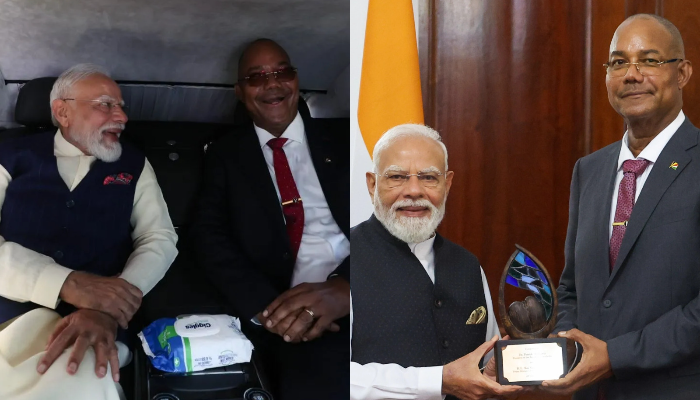
On 27th June (Saturday), Prime Minister Narendra Modi arrived on a three-day visit to the Republic of Seychelles at the invitation of President Dr Patrick Herminie. He also attended the 50th Independence Day, popularly known as National Day, celebrations as the Guest of Honour on 29th June and was awarded the honorary title of “Guardian of the Blue Horizon” by the archipelagic island nation.
The day coincided with the marking of 50 years of the establishment of diplomatic connection between the two sides. Contingents from the Indian armed forces took part in the national parade to commemorate these milestones as INS (Indian Naval Ship) Tarkash and INS Ikshak were docked at Port Victoria. Additionally, PM Modi spoke before the extraordinary session of the Seychelles National Assembly.
Notably, he has returned to Seychelles for the second time since taking office. He became the first Indian Prime Minister to land there in 34 years during his earlier state visit in March 2015, which witnessed high-level bilateral meetings and major agreements. The decisive revival of the relationship happened after Herminie assumed power in October of last year after undergoing a slowdown between 2020 and 2025.
He made a maiden trip to India in February, which turned out to be very significant and illustrated his ambition to advance the relations. The meeting between PM Modi and Herminie resulted in seven crucial accords about digital technology, exports, data exchange and maritime scientific research.
The two leaders unveiled a Joint Vision for Sustainability, Economic Growth and Security via Enhanced Linkages (SESEL), highlighting the capabilities of each country and acknowledging the value of the partnership. They emphasised that the nations have a unique and enduring link founded on family and historical links, fostered by shared ideals of democracy and pluralism.
Attention was also drawn to the essential role that Seychelles plays in India’s vision “Mahasagar” (Mutual and Holistic Advancement for Security and Growth Across Regions), an expanded global maritime doctrine under the present government. New Delhi had even announced a $175 million development assistance package for Victoria at the time.
PM Modi’s historical 2nd visit to Seychelles
PM Modi’s presence in the African country is expected to give the necessary impetus to further fortify the collaboration on many fronts. India is profoundly integrated into the security and capacity-building apparatus of the latter through multiple mechanisms. New Delhi will once again depute four military advisors to the country in a pivotal strategic reset. This arrangement had been discontinued by the previous government.
This revival marks a significant boost to defence cooperation and institutional ties. India powers over 50% of the maritime and air assets of Seychelles, including Dornier aircraft and patrol vessels, among others.
Moreover, its position as the most reliable security partner of Seychelles has been reinforced with the transfer of a “Made-in-India” Fast Patrol Vessel, laser radial boats and various utility vehicles and ambulances.
India’s greatest strength still lies in capacity building as it provides over 70% of defence training and human resource development to the country, which contributes to the long-term development of indigenous capabilities. The alliance is also well-equipped for the future and goes beyond traditional defence with innovative joint ventures in artificial intelligence, cybersecurity and emerging technologies.
The geographical vitality of Seychelles
Seychelles is a scatter of 115 islands spread across a small landmass in the Western Indian Ocean. It is Africa’s smallest and least populated sovereign state, with a population under 1,10,000. However, it is situated across shipping lanes that link East Africa, West Asia, and the Indo-Pacific. It is near the busiest Sea Lines of Communication (SLOC) in the world, which connect Asia to Africa, Europe and the Middle East. These are the routes that daily transport Gulf oil and Asian cargo westward.
Massive volumes of international trade, including raw materials, manufactured commodities, food supplies, crude oil and liquefied natural gas, are moved through there. Hence, stability along these stretches is a priority for India, whose economy is largely dependent on safe maritime trade.
Seychelles has a vantage point over the access pathways to the Mozambique Channel and the Cape Route which joins the Atlantic and Indian Ocean. Global commerce has been dramatically diverted by growing Middle East tensions, turning these waterways from local passages into invaluable maritime channels that sustain global supply. An enormous number of ships sail close by the country.
Furthermore, its Exclusive Economic Zone (EEZ) spans more than 1.3 million square kilometres which is over 3,000 times larger than its land size of only 455 square kilometres. Thus, it is susceptible to attacks from Somali pirates.
Whoever assists Seychelles in keeping an eye on that area has its sights set on extremely important water. India’s support in safeguarding the region contributes positively to its security and that of the larger western Indian Ocean area.
Seychelles is one of India’s smallest diplomatic allies in terms of both population and land area. However, its geographical placement and adjacency to prominent navigational lanes bestow paramount strategic relevance upon the nation. Therefore, it is very important to New Delhi’s Indian Ocean approach.
India’s maritime evolution
India is changing its status from “continental power with maritime interests” to “maritime power with continental responsibilities.” It is shaping itself into a wider maritime force to protect global trade, confront regional competitors and exert influence in the Indo-Pacific.
India’s shift to a maritime-first policy underscores a fundamental truth that the oceans determine its trade, climate resilience and national security. They are the prime site for both geopolitical influence and economic expansion.
The Indian Ocean has already proven to be one of the dominant geopolitical arenas in the world. Major powers have strengthened their naval deployments, made investments in ports and logistics infrastructure, as well as sought to exert more influence in the region throughout the last ten years.
This evolving scenario offers an indispensable backdrop for bilateral cooperation between India and Seychelles, but the pair has consistently highlighted that their engagement is not directed at any specific nation. However, Seychelles has surfaced as more than just a cordial friend for India.
It is an integral part of the latter’s Indian Ocean architecture. Seychelles, Mauritius and other western Indian Ocean islands offer the country strategic depth across a disputed maritime territory.
It is noteworthy that India is adopting the principle of prioritising geography over geopolitics, and while China’s aggressive presence might have expedited these initiatives, it did not instigate them.
MDA: The modern understanding of sea power
Maritime Domain Awareness (MDA) is considered a more important metric for measuring maritime strength than fleets, aircraft carriers or foreign bases alone. This security is effectively built on a foundation of coastal radar chains, satellites, undersea sensors, maritime reconnaissance aircraft, information exchange, and data fusion. Sea power is dictated by a nation’s comprehension of the waters rather than ability to exert control over them.
Therefore, Seychelles is a crucial information hub in India’s developing maritime infrastructure. It has regularly supplied Seychelles with defence equipment, training, surveillance technology and operational help as the latter has to monitor its EEZ. Real-time vessel movement tracking is made possible by the Coastal Surveillance Radar System, which adds to MDA and enables authorities to act swiftly in the event of suspicious activity.
The Seychelles People’s Defence Forces have obtained interceptor boats, Chetak helicopters, rapid patrol boats and Dornier maritime surveillance planes from India along with training of naval personnel. These resources improve the country’s potential to fight maritime smuggling, illegal fishing, piracy, drug and human trafficking.
The ports and surrounding waterways are regularly hydrographically surveyed by the Indian Navy. These measures promote safer navigation, updated nautical charts, better planning for maritime infrastructure and better handling of marine resources.
The western Indian Ocean has to deal with issues like organised crime at sea, piracy and maritime terrorism. India has joined hands with Seychelles to improve broader regional marine security, while the latter has taken an active diplomatic role by serving as the chair of regional anti-piracy contact groups.
The leap from Sagar to Mahasagar
The development of India’s marine strategy is one of the main themes of PM Modi’s visit, as the growing strategic vision of the nation is seen in the transition from the 2015 Sagar (Security and Growth for All in the Region) doctrine to Mahasagar (Mutual and Holistic Advancement for Security and Growth Across Regions).
The primary goal of Sagar was bolstering regional ties and ensuring collective maritime security, but the last decade has seen a great change in the strategic environment. Climate change, digital connectivity, resilient supply chains, renewable energy, food security, disaster preparedness and the blue economy are all directly related to maritime security today.
India has broadened its worldview through Mahasagar in response to these altering realities. This seeks to combine security with sustainable development and economic resilience rather than concentrating only on naval cooperation. Seychelles is one of the best illustrations of this comprehensive approach, where collaboration goes far beyond defence into digital governance, healthcare, renewable energy, fisheries, education, tourism, climate resilience and technological collaborations.
Cooperative efforts in maritime security
The creation of maritime surveillance and anti-piracy laws is a matter of national interest rather than internal politics. Hence, Seychelles formed a Supreme Court to prosecute suspected pirates, making it the first small island government to take such a step. However, the small nation cannot address the threat of piracy without multilateral action, including larger regional partners.
Together with anti-piracy escorts along the international transit avenues, the Indian Navy responded by continuing its mission-based deployment in the Gulf of Aden. It expands India’s operational reach by protecting the Sea Lanes of Communication (SLOCs) as a network security provider. India has set up the Information Fusion Centre-Indian Ocean Region effort to better analyse, improve, and share real-time marine information. India had dispatched naval ships in 2009 on the country’s request to patrol the EEZ against piracy.
The battle of influence between India and China
Beijing has left a booming economic footprint, infrastructural investments, port facilities and intensifying naval activities in the Indian Ocean. It promises rapid infrastructure development due to centralised funding connected to state-owned businesses, which results in less involvement from local businesses and helps the Chinese Communist Party (CCP) government to gain strategic leverage over the host nation.
On the other hand, India has positioned itself as a reliable partner by fusing military ties with development funds, institutional capacity building and technical expertise, rather than using huge infrastructural projects. Its strategy is essentially distinct, partner-oriented as well as concentrated on building human resources, local institutions and cooperation.
This will allow Seychelles to have independence and authority over the project gradually, which is not possible with China. Several Indian companies work in Seychelles, including Ashok Leyland, Tata Motors, Bharti Airtel and Bank of Baroda, while the latter applies “small state agency” and diversifies its external partnerships to protect national interests.
Trade between India and Seychelles
India is a significant trading partner of Seychelles, supplying a variety of essential commodities. Rice, processed food products, cement, textiles, cotton, automobiles and transportation equipment, and pharmaceuticals alongside medical and surgical instruments are among India’s main exports to the country.
Official statistics show that bilateral commerce reached ₹703 crore or $84.88 million in 2023-2024, representing an almost 15% increase over the previous fiscal year. India’s imports from the Seychelles totalled ₹72 crore or $8.69 million, while its exports touched ₹631 crore or $76.19 million.
The current fiscal year has also seen consistent trade. The entire amount of bilateral trade between April 2024 and February 2025 was ₹617 crore or $72.92 million, of which ₹580 crore or $68.64 million came from Indian exports and ₹36 crore or $4.28 million from Seychelles imports.
Renewable energy and blue economy
Clean energy has appeared as another strong pillar of India-Seychelles collaboration. Seychelles strengthened its commitment to renewable energy by ratifying the Framework Agreement of the International Solar Alliance (ISA) in 2017, making it one of its founding members.
Afterwards, the partnership has grown through several solar energy projects. A five-metric-ton solar-powered cold storage facility on Praslin Island was put into service by the island nation in October 2024 as part of an agreement made with the International Solar Alliance (ISA) during the Climate Change Conference (COP27) in Egypt.
It is anticipated that the project will promote clean energy solutions and help with food preservation. The Quad Climate Initiative also plans three other renewable energy projects in the Seychelles, such as solar rooftop systems, solar pumps, and solar chillers, which will further improve collaboration in sustainable infrastructure.
A 1-megawatt (MW) solar facility was also commissioned by a grant from India in April 2021 via the ISA to aid the nation in transitioning from diesel dependence, stabilise grid costs, benefit local livelihoods and achieve broader sustainable development goals.
Similarly, the two countries have prioritised collaboration in the blue economy as well. A foundation for partnership in sustainable marine resource management, ocean-based economic development and environmental conservation was established by means of the “Blue Economy Protocol” during PM Modi’s initial visit to Seychelles. The nations have also continuously backed one another’s stances in international forums on sustainable development and climate change.
India and the Seychelles even have a Tax Information Exchange Agreement (TIEA) that allows both countries to seek and share information that is reasonably relevant to the administration and enforcement of their respective domestic tax laws.
The attempts to counter the looming sword of climate change
For island nations like the Seychelles, climate change is not far off but rather a reality that will disturb their coastal settlements. The difficulties affecting fishing boats, trade, and tourism at the Port of Victoria were most effectively shown by the record rainfall in Mahe in 2023. The National Climate Change Strategy was adopted by the Seychellois government in recognition of its vulnerability to climate change.
Programs like the Seychelles Conservation and Climate Adaptation Trust and the Sovereign Blue Bond were solely concerned with offering financial assistance and maritime governance. However, these efforts have continued to be limited.
Seaports are the primary lifeline for Seychelles and face coastal erosion, elevated sea levels and other such issues. Thus, Infrastructure for Resilient Island States (IRIS), which is India’s flagship project within the Coalition for Disaster Resilient Infrastructure (CDRI), would use marine risk assessments planned for 2025-2027 to identify susceptible port-level facilities.
The intention is to offer expert guidance on early warning systems and flood defence techniques so the nation can be ready for future disasters. India protects vital infrastructure by strengthening the resilience of Seychelles ports with its resources.
Trust is the actual currency
India’s involvement has always focused on institution building, technical and economic cooperation, education, healthcare, capacity building, disaster relief, and human resource development, in contrast to transactional relationships that are mostly focused on infrastructure financing or military access.
Concerns regarding sovereignty and internal strife in the Seychelles were highlighted by the 2015 Assumption Island project, a cooperative coast guard base. India, however, showed patience and political awareness by refusing to allow this disagreement to harm the larger partnership. As a result, India’s reliability created “Trust Capital” that is more resilient than military access or infrastructure agreements.
Furthermore, India has assisted Seychelles, extending beyond just recent years. In June 1986, India used the INS Vindhyagiri at Victoria Port to thwart a coup attempt (Operation Flowers are Blooming), and in September of that year, Prime Minister Rajiv Gandhi lent President France-Albert Rene his personal aircraft during a second coup attempt.
Meanwhile, the ties have also been reinforced by the small, 13,000 to 15,000 but powerful Indian and Indo-Seychellois population.
Seychelles is vital for India’s grand scheme of affairs
Seychelles is very important for creating a stable, inclusive, rules-based maritime area based on trustworthy alliances rather than forceful supremacy. Thus, India has enhanced its credibility as a desirable partner for climate-vulnerable island states like the Seychelles by acting as a net security ally through its island diplomacy, maritime security and climate resilience programs.
It is striking a balance between strategic goals and local legitimacy by boosting support for the expansion of the blue economy and the security of the Seychelles. Therefore, New Delhi is implementing a civilisational maritime agenda through one of its most dependable Indian Ocean partners with this visit, which transcends conventional diplomacy.