Punch and the viral misunderstanding: How monkey social behaviour explains the heartbreaking video
For the past few days, a video of a baby macaque named Punch at Ichikawa City Zoo in Japan has been going viral online. In the video, a baby monkey is being dragged and scolded by an adult monkey inside its enclosure. Footage captured Punch being dragged across the ground and later retreating in fear, quickly spreading across social media platforms. Many social media viewers were deeply moved by the scene, especially after seeing the Punch run to the corner and cling to his stuffed toy for comfort. The emotional nature of the video led to widespread sympathy, with many people expressing sadness and concern for the orphaned baby monkey. Some even questioned whether Punch was being bullied or mistreated by other monkeys. I am not crying, you are. For those who aren’t familiar with Punch, he is a baby monkey from Japan who was separated from his mother shortly after birth. Since then, zookeepers have been raising him and hand-feeding him to help him survive.Because he did not have his mother,… pic.twitter.com/nXfVevaZcX— Crazy Moments (@Crazymoments01) February 22, 2026 Who is Punch Punch was born on July 26, 2025, at Ichikawa City Zoo, but his mother abandoned him immediately after the birth. Without maternal care, he was reared by zookeepers who supplied him with food, shelter, and emotional support. Because of a lack of mother’s connection and comfort, the Zoo offered him a plush orangutan toy to help him cope with loneliness and stress. Punch grew emotionally attached to the toy over time, frequently keeping it close and using it for comfort. His naive behaviour and obvious reliance on the toy made people fall in love with him. He became a famous and beloved animal online. What happened in the video In the viral reel, Punch was trying to approach and interact with another baby monkey. However, the interaction was quickly turned into violence. An adult monkey, believed to be the baby’s mother, reacted aggressively. As a protective or disciplinary response, the adult monkey dragged Punch across the ground and scolded him. Punch, who was obviously scared and upset, was able to escape and dash to a corner of the cage, where he promptly snatched up his stuffed animal and clung to it for safety and comfort. Due to the heartbreaking visuals, combined with Punch’s vulnerable background as an orphan, many viewers interpreted the incident as bullying, sparking strong feelings and heated discussions on social media. Zoo’s explanation: Understanding natural monkey behaviour In response to the viral reaction, the Ichikawa City Zoo issued an official statement to address public concern and provide clarification. According to the Zoo, Punch tried to engage with another baby monkey, but the adult monkey, who was probably the baby’s mother, retaliated by scolding Punch and dragging him as a form of protection and punishment. The zoo stressed that this kind of behaviour is typical of the macaque social structure, in which older monkeys set limits and instruct younger ones on appropriate social behaviour. That statement said that “While Punch is scolded, he shows resilience and mental strength. When you observe these disciplinary behaviours from other troop members toward Punch, when he tries to communicate with them, we would like you to support Punch’s efforts, rather than feel sorry for him.” Source: X The zoo went on to claim that Punch is still learning how to behave in a monkey colony after being abandoned and raised by humans. Even though they may appear harsh to human observers, these interactions are critical to his social development. These encounters provide Punch with the communication, structure, and social limits he requires to fit in with the group. Importantly, the zoo emphasised Punch’s perseverance, noting that despite being scolded, he continues to approach and socialise with other monkeys. This demonstrates that he is gradually adapting and learning the social skills required to live as part of the group. The zoo asked visitors not to see Punch as a victim, but as a young monkey learning and growing via natural social interactions. Scientific explanation: What research says about orphaned monkeys According to psychologist Harry Harlow’s scientific research, social interaction is crucial for infant monkeys. In research, young monkeys who were denied social interaction and maternal care later in life experienced extreme emotional anguish, social anxiety, and trouble connecting with other monkeys. His studies demonstrated the importance of social experience, physical comfort, and emotional bonding for healthy behavioural development. Monkeys, like Punch, are left behind or reared without their mums; they must interact with other group members to acquire social norms. Although it may seem harsh, these encounters can occasionally involve rejection, violence, or discipline, all of which are normal components of their social learning process. In order to set limits and im
For the past few days, a video of a baby macaque named Punch at Ichikawa City Zoo in Japan has been going viral online. In the video, a baby monkey is being dragged and scolded by an adult monkey inside its enclosure. Footage captured Punch being dragged across the ground and later retreating in fear, quickly spreading across social media platforms. Many social media viewers were deeply moved by the scene, especially after seeing the Punch run to the corner and cling to his stuffed toy for comfort. The emotional nature of the video led to widespread sympathy, with many people expressing sadness and concern for the orphaned baby monkey. Some even questioned whether Punch was being bullied or mistreated by other monkeys.
I am not crying, you are. For those who aren’t familiar with Punch, he is a baby monkey from Japan who was separated from his mother shortly after birth. Since then, zookeepers have been raising him and hand-feeding him to help him survive.Because he did not have his mother,… pic.twitter.com/nXfVevaZcX— Crazy Moments (@Crazymoments01) February 22, 2026
Who is Punch
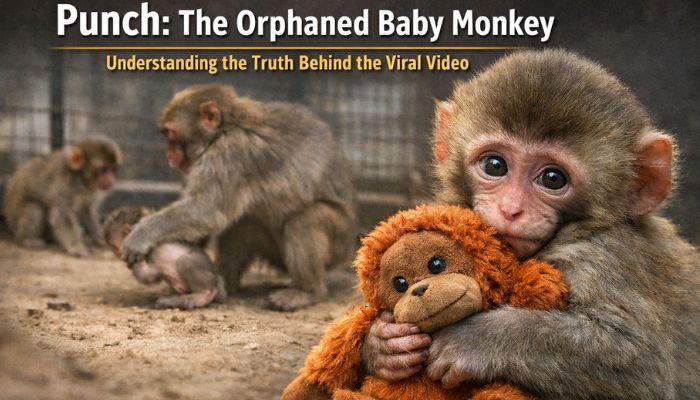
Punch was born on July 26, 2025, at Ichikawa City Zoo, but his mother abandoned him immediately after the birth. Without maternal care, he was reared by zookeepers who supplied him with food, shelter, and emotional support. Because of a lack of mother’s connection and comfort, the Zoo offered him a plush orangutan toy to help him cope with loneliness and stress. Punch grew emotionally attached to the toy over time, frequently keeping it close and using it for comfort. His naive behaviour and obvious reliance on the toy made people fall in love with him. He became a famous and beloved animal online.
What happened in the video
In the viral reel, Punch was trying to approach and interact with another baby monkey. However, the interaction was quickly turned into violence. An adult monkey, believed to be the baby’s mother, reacted aggressively. As a protective or disciplinary response, the adult monkey dragged Punch across the ground and scolded him. Punch, who was obviously scared and upset, was able to escape and dash to a corner of the cage, where he promptly snatched up his stuffed animal and clung to it for safety and comfort. Due to the heartbreaking visuals, combined with Punch’s vulnerable background as an orphan, many viewers interpreted the incident as bullying, sparking strong feelings and heated discussions on social media.
Zoo’s explanation: Understanding natural monkey behaviour
In response to the viral reaction, the Ichikawa City Zoo issued an official statement to address public concern and provide clarification. According to the Zoo, Punch tried to engage with another baby monkey, but the adult monkey, who was probably the baby’s mother, retaliated by scolding Punch and dragging him as a form of protection and punishment. The zoo stressed that this kind of behaviour is typical of the macaque social structure, in which older monkeys set limits and instruct younger ones on appropriate social behaviour. That statement said that “While Punch is scolded, he shows resilience and mental strength. When you observe these disciplinary behaviours from other troop members toward Punch, when he tries to communicate with them, we would like you to support Punch’s efforts, rather than feel sorry for him.”
Source: X
The zoo went on to claim that Punch is still learning how to behave in a monkey colony after being abandoned and raised by humans. Even though they may appear harsh to human observers, these interactions are critical to his social development. These encounters provide Punch with the communication, structure, and social limits he requires to fit in with the group.
Importantly, the zoo emphasised Punch’s perseverance, noting that despite being scolded, he continues to approach and socialise with other monkeys. This demonstrates that he is gradually adapting and learning the social skills required to live as part of the group. The zoo asked visitors not to see Punch as a victim, but as a young monkey learning and growing via natural social interactions.
Scientific explanation: What research says about orphaned monkeys
According to psychologist Harry Harlow’s scientific research, social interaction is crucial for infant monkeys. In research, young monkeys who were denied social interaction and maternal care later in life experienced extreme emotional anguish, social anxiety, and trouble connecting with other monkeys. His studies demonstrated the importance of social experience, physical comfort, and emotional bonding for healthy behavioural development.
Monkeys, like Punch, are left behind or reared without their mums; they must interact with other group members to acquire social norms. Although it may seem harsh, these encounters can occasionally involve rejection, violence, or discipline, all of which are normal components of their social learning process. In order to set limits and impart appropriate behaviour within the group hierarchy, adult monkeys frequently reprimand or chastise younger monkeys.
Such social correction helps orphaned monkeys gradually understand communication, social limits, and group structure. Over time, these experiences allow them to integrate into the troop, form social bonds, and function normally within their society. Without these interactions, orphaned monkeys risk remaining socially isolated and psychologically distressed.
Conclusion
Although Punch’s widely shared video may seem tragic, professional analysis and scientific knowledge indicate that he is not being mistreated. Rather, he is learning to survive in monkey society through a normal, essential process. His growth and long-term welfare depend on these social interactions, which include adult monkey discipline.
Punch’s journey demonstrates adaptability and resiliency as he progressively gains the ability to negotiate social situations and locate his position within the troop. His experience illustrates the difficulties faced by orphaned animals and their capacity to overcome them through organic social integration rather than being a tale of cruelty.