Rebel TMC MP faction merges with Nationalist Citizens Party of India: What is this Howrah-headquartered obscure party that has suddenly become the 5th largest party in the Lok Sabha
In a dramatic political development that has caught many by surprise, a significant faction of rebel Trinamool Congress (TMC) MPs, comprising around 20 members, over two-thirds of the party’s Lok Sabha strength, has announced its decision to merge with the Nationalist Citizens Party of India (NCPI). The rebels, including veteran leaders like Sudip Bandyopadhyay, Kakoli Ghosh Dastidar, and others such as Satabdi Roy, Saayoni Ghosh, and Arup Chakraborty, met Lok Sabha Speaker Om Birla and submitted necessary letters seeking recognition as members of the NCPI for separate seating arrangements in Parliament. The rebel faction, now members of NCPI, has also announced that they will join the NDA. While it was expected that the rebel faction would merge with an existing party, the choice of the party has surprised people. Almost no one knew about the existence of such a political party before Sunday afternoon, when the rebel TMC leaders mentioned its name. It is being said that the party has bases in Tripura and Meghalaya, but those bases are also extremely small. The development has sparked widespread curiosity and amusement, and as per a report by Anandabazar Patrika, several political leaders from Tripura said that they have never heard about the party. With 19 or 20 MPs, the Nationalist Citizens Party of India has suddenly become the 5th largest party in the Lok Sabha, behind DMK, which moves to 4th from 5th place. The Nationalist Citizens Party of India is a very obscure Registered Unrecognised Political Party, which had no media presence before 14th June. It is not recognised party by the Election Commission, and therefore it does not have allotted symbol. The Nationalist Citizens Party of India is one of India’s many obscure Registered Unrecognised Political Parties (RUPPs). Registered with the Election Commission of India in 2022-23, the party had remained virtually unknown to the public and even to seasoned political observers until this sudden spotlight. As per ECI documents, its headquarters is located at Jago Biswa, Holding No. 4719, Village Hatgacha, Post Office Banipur, Police Station Sankrail, District Howrah, Pin Code 711304 in West Bengal. Therefore, the party is based in Howrah in West Bengal, not Tripura as being reported by many. However, despite its West Bengal base, the party showed some political activity only in Tripura, where it contested two seats in the 2023 Assembly elections under the symbol of a pen nib with seven rays. Both candidates performed poorly, with negligible vote shares, reflecting the party’s minimal electoral footprint. Jahangir Ali from Kailashahar contested from Unakoti constituency and secured 286 votes, while Barjeda Tripura from Chawmanu polled just 536 votes. Details about the party’s origins, founders, and pre-existing leadership remain remarkably sparse. No prominent national or state-level figures are publicly associated with it in available records or media reports. It functions as a low-profile entity with a modest Facebook presence, where the latest post was posted in 2023. As per its Facebook page, it has a flag with vertical green, white and saffron stripes, with the symbol of pen nib with seven rays in the centre. Apart from some photographs and election posters from 2023 Tripura elections, the Facebook page does not have any other major content. The rebels’ choice to merge with this obscure party, rather than forming an entirely new one or joining an established major player like the BJP directly, is rooted in both legal strategy and political pragmatism. According to the law, legislators face disqualification if they voluntarily give up membership of their political party or vote against party directives. However, an exception is provided in cases of the merger of political parties. If not less than two-thirds of the members of the legislative party concerned agree to a merger with another political party, such members are protected from disqualification. This means rebel MPs or MLAs can’t form a new party, but the group can join an existing party. By merging their group, which comfortably crosses the two-thirds threshold, with the existing registered party NCPI instead of individual defections or forming a new party, the rebels have ensured that it will be a legitimate party merger rather than defection. Moreover, aligning with a virtually leaderless and obscure outfit like the NCPI allows the TMC rebels to effectively take over the party wholesale. Unlike joining the BJP or another established NDA constituent, where they would have had to operate under senior leaders and established hierarchies, the rebels can now steer the NCPI in their preferred direction. As the party already has its registered office in West Bengal, it becomes easy for the rebel faction to quickly turn it into a major political party. They can open a bigger party office in West Bengal and may eventually stake a claim to the “Trinamool” name and
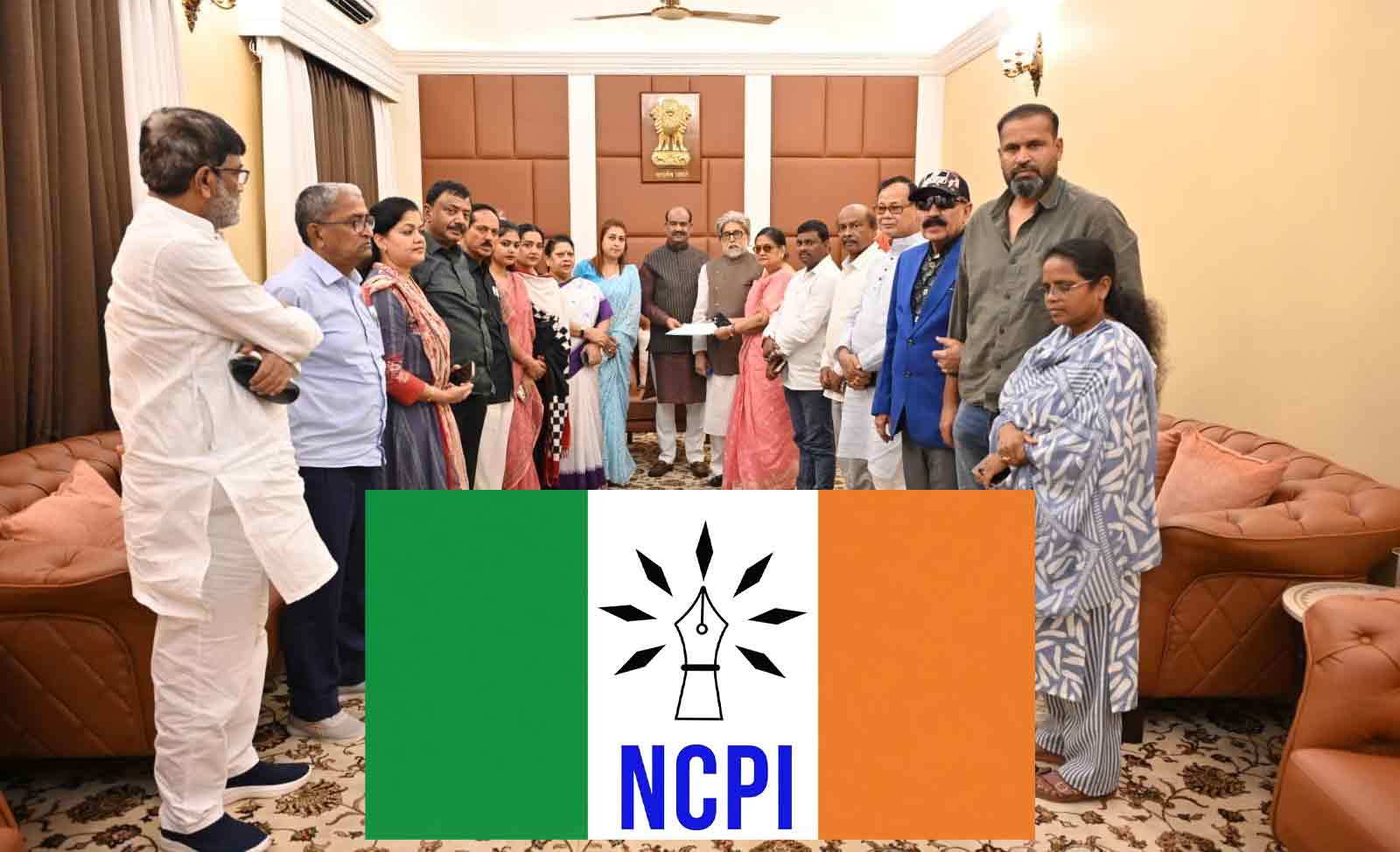
In a dramatic political development that has caught many by surprise, a significant faction of rebel Trinamool Congress (TMC) MPs, comprising around 20 members, over two-thirds of the party’s Lok Sabha strength, has announced its decision to merge with the Nationalist Citizens Party of India (NCPI). The rebels, including veteran leaders like Sudip Bandyopadhyay, Kakoli Ghosh Dastidar, and others such as Satabdi Roy, Saayoni Ghosh, and Arup Chakraborty, met Lok Sabha Speaker Om Birla and submitted necessary letters seeking recognition as members of the NCPI for separate seating arrangements in Parliament.
The rebel faction, now members of NCPI, has also announced that they will join the NDA. While it was expected that the rebel faction would merge with an existing party, the choice of the party has surprised people. Almost no one knew about the existence of such a political party before Sunday afternoon, when the rebel TMC leaders mentioned its name. It is being said that the party has bases in Tripura and Meghalaya, but those bases are also extremely small.
The development has sparked widespread curiosity and amusement, and as per a report by Anandabazar Patrika, several political leaders from Tripura said that they have never heard about the party. With 19 or 20 MPs, the Nationalist Citizens Party of India has suddenly become the 5th largest party in the Lok Sabha, behind DMK, which moves to 4th from 5th place.
The Nationalist Citizens Party of India is a very obscure Registered Unrecognised Political Party, which had no media presence before 14th June. It is not recognised party by the Election Commission, and therefore it does not have allotted symbol.
The Nationalist Citizens Party of India is one of India’s many obscure Registered Unrecognised Political Parties (RUPPs). Registered with the Election Commission of India in 2022-23, the party had remained virtually unknown to the public and even to seasoned political observers until this sudden spotlight.
As per ECI documents, its headquarters is located at Jago Biswa, Holding No. 4719, Village Hatgacha, Post Office Banipur, Police Station Sankrail, District Howrah, Pin Code 711304 in West Bengal. Therefore, the party is based in Howrah in West Bengal, not Tripura as being reported by many.
However, despite its West Bengal base, the party showed some political activity only in Tripura, where it contested two seats in the 2023 Assembly elections under the symbol of a pen nib with seven rays. Both candidates performed poorly, with negligible vote shares, reflecting the party’s minimal electoral footprint. Jahangir Ali from Kailashahar contested from Unakoti constituency and secured 286 votes, while Barjeda Tripura from Chawmanu polled just 536 votes.
Details about the party’s origins, founders, and pre-existing leadership remain remarkably sparse. No prominent national or state-level figures are publicly associated with it in available records or media reports. It functions as a low-profile entity with a modest Facebook presence, where the latest post was posted in 2023. As per its Facebook page, it has a flag with vertical green, white and saffron stripes, with the symbol of pen nib with seven rays in the centre. Apart from some photographs and election posters from 2023 Tripura elections, the Facebook page does not have any other major content.
The rebels’ choice to merge with this obscure party, rather than forming an entirely new one or joining an established major player like the BJP directly, is rooted in both legal strategy and political pragmatism. According to the law, legislators face disqualification if they voluntarily give up membership of their political party or vote against party directives. However, an exception is provided in cases of the merger of political parties. If not less than two-thirds of the members of the legislative party concerned agree to a merger with another political party, such members are protected from disqualification. This means rebel MPs or MLAs can’t form a new party, but the group can join an existing party.
By merging their group, which comfortably crosses the two-thirds threshold, with the existing registered party NCPI instead of individual defections or forming a new party, the rebels have ensured that it will be a legitimate party merger rather than defection.
Moreover, aligning with a virtually leaderless and obscure outfit like the NCPI allows the TMC rebels to effectively take over the party wholesale. Unlike joining the BJP or another established NDA constituent, where they would have had to operate under senior leaders and established hierarchies, the rebels can now steer the NCPI in their preferred direction.
As the party already has its registered office in West Bengal, it becomes easy for the rebel faction to quickly turn it into a major political party. They can open a bigger party office in West Bengal and may eventually stake a claim to the “Trinamool” name and symbol, leveraging their numerical majority from the original TMC. This effectively transforms the NCPI into its own vehicle, preserving autonomy and avoiding subordination to any external leadership while still extending support to the NDA under Prime Minister Narendra Modi’s guidance.
While NCPI has become the 5th largest party in Lok Sabha, more importantly, it has become the second largest party in the lower house in NDA, surpassing TDP with 16 MPs. However, the development is not expected to end in Lok Sabha. The revolt in TMC started in Kolkata, with over 60 MLAs opposing the party’s choice for the leader of the opposition. The rebel group is backing expelled MLA Ritabrata Banerjee for the post.
With the MPs merging with NCPI, it will be a natural choice for the rebel MLAs also to merge with the party. If that happens, TMC will turn into a very weak party in the state with less than 20 MLAs. In contrast, the BJP-led NDA government, which already has comfortable majority, will become much stronger with a new ally with over 60 MLAs.