The case of unaccounted 328 saroops of Sri Guru Granth Sahib Ji: FIR after 5 years sparks clash between SGPC and Punjab government – All you need to know
The case surrounding the alleged disappearance of 328 saroops of Sri Guru Granth Sahib Ji is not a routine criminal case. It revolves around Sikh religious consciousness, institutional authority, and the limits of state intervention, as per the established law. Sri Guru Granth Sahib is regarded as the eternal and living Guru by the Sikh community. Every physical saroop carries the same spiritual authority and sanctity, something which is exclusive to Sikhism. As a result, any unauthorised printing, mishandling, concealment, or disappearance is seen as a serious religious violation. It is not about administrative or financial lapse but is directly connected to faith. The issue remained dormant for many years. However, it has now resurfaced with high political intensity as the Punjab Police has registered an FIR in the matter. The FIR came despite the fact that it was decided not to file an FIR in the matter back in 2020, and it is being seen as an attack on the authority of the Sikh leadership in the matter. The case has resulted in a direct confrontation between the Punjab government led by CM Bhagwant Mann and the Shiromani Gurdwara Parbandhak Committee (SGPC). Notably, the SGPC is the apex Sikh body that manages gurdwaras and prints saroops of Sri Guru Granth Sahib Ji. No printing press can produce a saroop without the permission of the SGPC. Sikh religious authorities have warned against state interference. On the other hand, the Punjab government has insisted that law and accountability cannot stop at the gates of religious institutions. Interestingly, political parties are divided over the matter, and the courts have already weighed in by rejecting anticipatory bail pleas of the accused named in the FIR registered by the Punjab Police. What is happening now and why it matters On 7th December, the Punjab Police registered an FIR at Police Station C-Division, Amritsar. The FIR invoked IPC Sections 295 and 295A of the Indian Penal Code (IPC). These sections deal with acts hurting religious sentiments. Furthermore, Sections 408, 409, 465, and 120B have also been invoked, which are related to criminal breach of trust, forgery, and criminal conspiracy. In addition, Section 5 of the Punjab Jagat Jot Sri Guru Granth Sahib Satkar Act, 2008, has also been invoked. This Act governs the unauthorised printing, handling, and disposal of the Sikh scripture. The FIR has been lodged against 16 individuals. Most of these 16 people are former SGPC officials and employees linked to the publication, storage, and accounting of saroops at Gurdwara Ramsar Sahib in Amritsar. On 23rd December, the Punjab Director General of Police (DGP) constituted a Special Investigation Team (SIT) to probe the matter. Within days, several accused approached courts seeking anticipatory bail. These bail pleas were, however, rejected by trial courts in Amritsar. OpIndia accessed and examined multiple bail orders passed in the case, which provided crucial insight into the allegations, investigation, SGPC’s stand, and more. While rejecting the bail pleas, the court held that the accusations are serious in nature and involve the religious sentiments of the entire Sikh community. The court said that the matter requires custodial interrogation to trace missing saroops, recover forged or destroyed records, and uncover the full extent of the alleged conspiracy. What the case is actually about At the heart of the case is the allegation that 328 saroops of Sri Guru Granth Sahib Ji were printed and distributed from the SGPC’s printing facility at Gurdwara Ramsar Sahib during the financial years 2013–14 and 2014–15. These saroops were allegedly not properly recorded in official ledgers. The SGPC holds exclusive authority to print and distribute Sri Guru Granth Sahib. The process is governed by strict religious and administrative protocols. Each saroop must be serialised, entered into registers, and ceremonially delivered after verification of the place where it will be installed. According to the findings of the investigating officers, these protocols were bypassed on a large scale. Hundreds of saroops were allegedly printed and issued off the books. The present status of the saroops, their location, or method of disposal cannot be conclusively established. The case is not limited to the disappearance of physical copies of Sri Guru Granth Sahib. It concerns systematic manipulation of official records. These acts allegedly concealed unauthorised printing and distribution of saroops. Investigators also suspect financial irregularities linked to donations collected for issuing the sacred volumes. How the issue first surfaced The case first came to light in May 2020 when an employee of the SGPC, identified as Kanwaljeet Singh, conducted an audit of publication department records as part of his pension clearance process. During this audit, he reportedly found that hundreds of saroops were not properly accounted f

The case surrounding the alleged disappearance of 328 saroops of Sri Guru Granth Sahib Ji is not a routine criminal case. It revolves around Sikh religious consciousness, institutional authority, and the limits of state intervention, as per the established law.
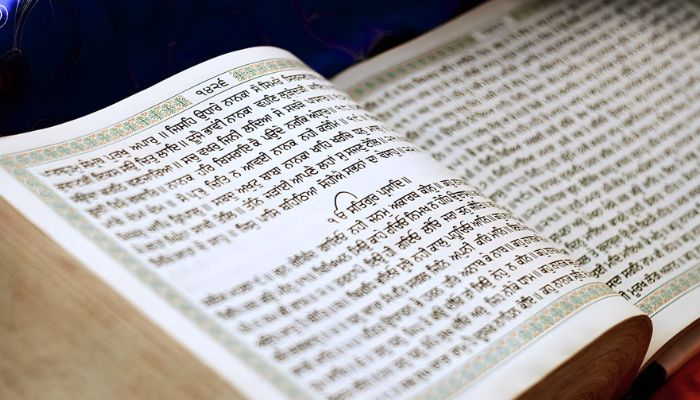
Sri Guru Granth Sahib is regarded as the eternal and living Guru by the Sikh community. Every physical saroop carries the same spiritual authority and sanctity, something which is exclusive to Sikhism. As a result, any unauthorised printing, mishandling, concealment, or disappearance is seen as a serious religious violation. It is not about administrative or financial lapse but is directly connected to faith.
The issue remained dormant for many years. However, it has now resurfaced with high political intensity as the Punjab Police has registered an FIR in the matter. The FIR came despite the fact that it was decided not to file an FIR in the matter back in 2020, and it is being seen as an attack on the authority of the Sikh leadership in the matter.
The case has resulted in a direct confrontation between the Punjab government led by CM Bhagwant Mann and the Shiromani Gurdwara Parbandhak Committee (SGPC). Notably, the SGPC is the apex Sikh body that manages gurdwaras and prints saroops of Sri Guru Granth Sahib Ji. No printing press can produce a saroop without the permission of the SGPC.
Sikh religious authorities have warned against state interference. On the other hand, the Punjab government has insisted that law and accountability cannot stop at the gates of religious institutions. Interestingly, political parties are divided over the matter, and the courts have already weighed in by rejecting anticipatory bail pleas of the accused named in the FIR registered by the Punjab Police.
What is happening now and why it matters
On 7th December, the Punjab Police registered an FIR at Police Station C-Division, Amritsar. The FIR invoked IPC Sections 295 and 295A of the Indian Penal Code (IPC). These sections deal with acts hurting religious sentiments. Furthermore, Sections 408, 409, 465, and 120B have also been invoked, which are related to criminal breach of trust, forgery, and criminal conspiracy. In addition, Section 5 of the Punjab Jagat Jot Sri Guru Granth Sahib Satkar Act, 2008, has also been invoked. This Act governs the unauthorised printing, handling, and disposal of the Sikh scripture.
The FIR has been lodged against 16 individuals. Most of these 16 people are former SGPC officials and employees linked to the publication, storage, and accounting of saroops at Gurdwara Ramsar Sahib in Amritsar.
On 23rd December, the Punjab Director General of Police (DGP) constituted a Special Investigation Team (SIT) to probe the matter. Within days, several accused approached courts seeking anticipatory bail. These bail pleas were, however, rejected by trial courts in Amritsar.
OpIndia accessed and examined multiple bail orders passed in the case, which provided crucial insight into the allegations, investigation, SGPC’s stand, and more. While rejecting the bail pleas, the court held that the accusations are serious in nature and involve the religious sentiments of the entire Sikh community. The court said that the matter requires custodial interrogation to trace missing saroops, recover forged or destroyed records, and uncover the full extent of the alleged conspiracy.
What the case is actually about
At the heart of the case is the allegation that 328 saroops of Sri Guru Granth Sahib Ji were printed and distributed from the SGPC’s printing facility at Gurdwara Ramsar Sahib during the financial years 2013–14 and 2014–15. These saroops were allegedly not properly recorded in official ledgers.
The SGPC holds exclusive authority to print and distribute Sri Guru Granth Sahib. The process is governed by strict religious and administrative protocols. Each saroop must be serialised, entered into registers, and ceremonially delivered after verification of the place where it will be installed.
According to the findings of the investigating officers, these protocols were bypassed on a large scale. Hundreds of saroops were allegedly printed and issued off the books. The present status of the saroops, their location, or method of disposal cannot be conclusively established.
The case is not limited to the disappearance of physical copies of Sri Guru Granth Sahib. It concerns systematic manipulation of official records. These acts allegedly concealed unauthorised printing and distribution of saroops. Investigators also suspect financial irregularities linked to donations collected for issuing the sacred volumes.
How the issue first surfaced
The case first came to light in May 2020 when an employee of the SGPC, identified as Kanwaljeet Singh, conducted an audit of publication department records as part of his pension clearance process. During this audit, he reportedly found that hundreds of saroops were not properly accounted for in official records. What initially appeared as a discrepancy of 267 saroops later expanded to 328 as further scrutiny was undertaken.
Initially, 267 saroops were believed to be missing. Later, the number rose to 328. As Sri Guru Granth Sahib Ji holds religious significance, even one saroop going missing raises serious concerns among the Sikh community. The scale of mismanagement in the printing and distribution of saroops alerted Sikh activists and organisations. They argued that the matter was significant and should not be brushed aside as clerical negligence.
The Akal Takht-mandated Ishar Singh inquiry
The Punjab Human Rights Organisation was the first to raise concerns in the matter. It is headed by former Punjab and Haryana High Court judge Ajit Singh Bains. They approached Sri Akal Takht Sahib to initiate an inquiry in the matter. A three-member committee was formed, headed by Advocate Ishar Singh. The committee examined the records, spoke to witnesses, and checked the internal processes involved in the printing and distribution of saroops. A report was submitted by the committee on 24th August 2020.
The report confirmed that 328 saroops printed during 2013–15 were indeed missing from official records. It also recorded that around 80 saroops were damaged or destroyed in a fire at the Ramsar Sahib printing press in 2016, but documentation relating to their disposal through prescribed religious ceremonies was inadequate. Notably, the inquiry pointed to deliberate acts of record fabrication, destruction of ledgers and vouchers, unauthorised printing and distribution, and possible misappropriation of donations collected for issuing saroops.
Responsibility was fixed on 16 individuals, ranging from lower-level staff to senior SGPC officials, including the then SGPC chief secretary Roop Singh and chartered accountant Satinder Singh Kohli. The report rejected the suggestion that the lapses were accidental or minor, instead describing them as systematic and serious.
SGPC’s response and the aborted FIR in 2020
In the immediate aftermath of the Ishar Singh report, the SGPC executive committee passed a resolution on 27th August 2020 to initiate action against the guilty and to lodge a police case. However, within days, the SGPC reversed its decision.
On 6th September 2020, the SGPC leadership of that time decided that no FIR would be filed. They decided to deal with the issue internally while citing the autonomy of Sikh institutions and the authority of Sri Akal Takht Sahib.
The SGPC swung into action, and some officers were either dismissed or suspended. The SGPC chief secretary also resigned. A financial recovery case against CA Satinder Singh Kohli was filed before the Sikh Gurdwara Judicial Commission. However, Sikh activists were not satisfied with the decision. They stated that the steps taken by the SGPC were merely damage control and did not establish accountability, especially since no effort was made to trace the missing saroops or involve criminal law enforcement.
Five years of protests and legal inertia
When the SGPC decided not to file an FIR in the matter, several Sikh religious leaders and organisations protested. Most notable among them was Bhai Baldev Singh Wadala. He sat on a protest near the Golden Temple and demanded that the matter be treated as a criminal act.
The protests continued for years. During that time, the Congress-led Punjab government maintained that it would not interfere in the matter. Even in court proceedings, the state filed affidavits suggesting that under the Sikh Gurdwara Act, the SGPC was competent to manage its administrative affairs and that there was no need for government interference.
This position effectively stalled police action and allowed the case to remain in limbo despite persistent public agitation and unresolved questions about the missing saroops.
Why the FIR was finally registered in 2025
In 2025, however, the situation changed. The reason for the shift was sustained pressure from Sikh organisations, fresh litigation, and judicial observations that emphasised the gravity of the allegations.
During a hearing on the matter in the Punjab and Haryana High Court in August 2025, the state told the court that the Home Secretary had written to the Director General of Police directing appropriate action. Though the court did not explicitly direct the registration of an FIR, it disposed of the matter noting that the government had initiated steps.
The Aam Aadmi Party-led Punjab government subsequently registered the FIR in December 2025, arguing that continued inaction risked future sacrilege incidents and that the state had a duty to trace the missing saroops. Chief Minister Bhagwant Mann publicly stated that if unaccounted saroops were desecrated, the police would be blamed for failing to act.
SGPC’s current stand
SGPC President Harjinder Singh Dhami has described the FIR as political interference in Sikh institutional affairs. He argued that the SGPC implemented the Ishar Singh inquiry recommendations fully, punished all guilty employees, and that jurisdiction lies with the Sikh Gurdwara Judicial Commission. Dhami also pointed out that the Punjab government had earlier acknowledged SGPC’s authority in court affidavits and accused the Mann government of acting contrary to its own legal stand.
In the case concerning 328 sacred saroops (scriptures) of Sri Guru Granth Sahib Ji, the Punjab Government is interfering in the affairs of Sikh institution, @SGPCAmritsar. Despite the government having accepted before the Punjab and Haryana High Court that the SGPC is a competent… pic.twitter.com/A1MS7HNK2S
— Harjinder Singh Dhami (@SGPCPresident) December 30, 2025
The SGPC further claimed that registering an FIR amounted to challenging the authority of Sri Akal Takht Sahib, since the inquiry was conducted on its directions. At the same time, the SGPC insisted it is not protecting any accused and continues internal proceedings, including recovery cases.
Punjab government’s position
The Punjab government has maintained that the FIR does not interfere with religious practice but addresses criminal conduct. The Mann government has argued that law enforcement has a duty to trace missing saroops and prevent potential sacrilege. It has accused the SGPC and Akali leadership of using religious sentiment as a shield to protect influential individuals and has repeatedly urged the SGPC to cooperate with the investigation.
BJP’s stand
The Punjab BJP has questioned the SGPC’s explanation and welcomed legal action. BJP Punjab spokesperson Sarchand Singh termed SGPC’s defense as “false, misleading, and a blatant betrayal of the Sikh community”. He said portraying the missing saroops as an “administrative lapse” is a “failed attempt to downplay a serious, criminal, panthic crisis”.
Why Sri Guru Granth Sahib Ji and its printing are sacred
Sikhs regard Sri Guru Granth Sahib Ji as the eternal Guru. Hence, every saroop is considered revered. Sikhs follow strict protocols around the printing, handling, and disposal of every saroop. Only authorised institutions can print and distribute it. There is a well-established protocol that must be followed to dispose of damaged saroops through religious ceremonies. In 2008, the Punjab Jagat Jot Sri Guru Granth Sahib Satkar Act was enacted to prevent unauthorised printing and mishandling of saroops.
The allegation that there are hundreds of saroops that were printed and distributed without record or protocol is a serious issue for Sikhs. It is not just about mismanagement but a breach of trust. Sikhs see it as an attack on their faith and belief system. That is why this case has resonated deeply within the Sikh community. The outcome of this case will have lasting implications for religious institutions, governance, and accountability in Punjab.