The Delhi Police did nothing wrong: Here is how Abhijit Dipke is lying to instigate violence against police personnel
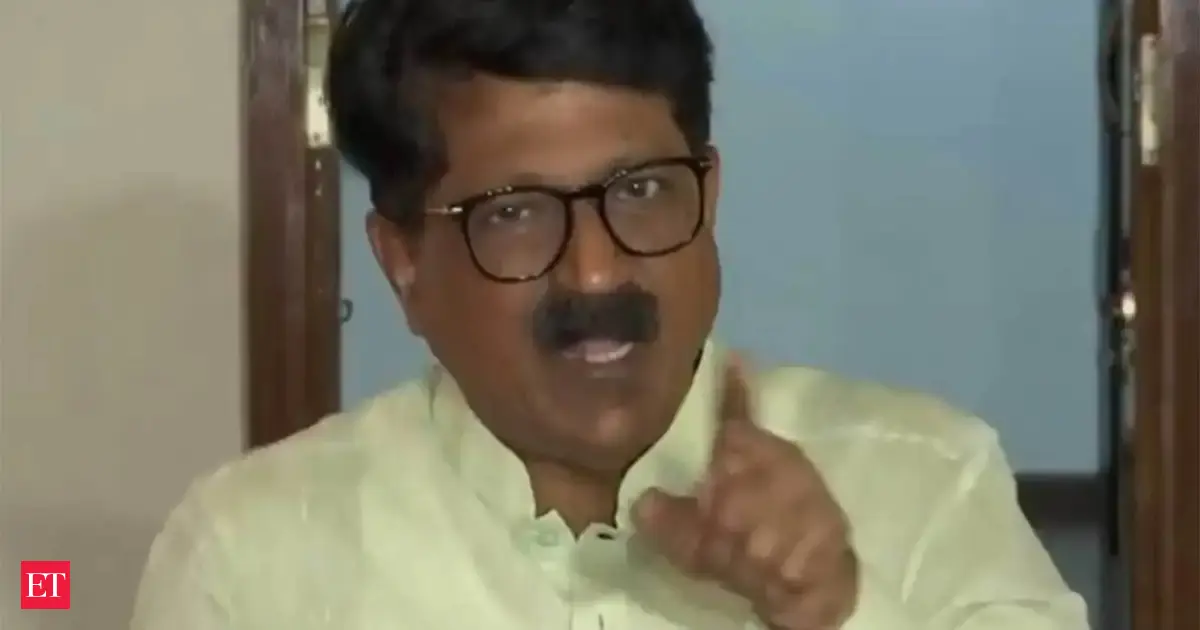
On 20th June, Abhijit Dipke, founder of the Cockroach Janta Party (CJP), published an alarming video on the social media platform X. “Police is about to arrest me. I appeal to you to not stop this peaceful protest nationwide even if I am arrested!” he said in the video. The message was designed to create a sense of urgency following the second round of the CJP protest at Jantar Mantar in Delhi. He claimed that the Delhi Police were about to crack down on a “peaceful protest” and arrest him merely for raising the “concerns of students”. Police is about to arrest me. I appeal to you to not stop this peaceful protest nationwide even if I am arrested! pic.twitter.com/P7ljEJkCzP— Abhijeet Dipke (@abhijeet_dipke) June 20, 2026 But there was one problem. Dipke was never arrested by the Delhi Police. Another video shared by CJP showed police personnel standing while the protestors shouting “Halla Bol”. इतना बल अगर पेपर लीक को रोकने में लगाया होता तो कॉक्रोचेस अपने घर पर ही होते आज! धर्मेंद्र प्रधान को बचाने के लिए इतनी पुलिस भेजी है – क्यों इस सरकार को युवाओं से ज़्यादा अपने एक incompetent मंत्री से प्यार है? pic.twitter.com/c4wTkF1TTo— Cockroach is Back (@Cockroachisback) June 20, 2026 Within a few hours of the video, another video surfaced on social media in which he was seen enjoying bread pakodas with fellow protesters. The Delhi Police neither dragged him away nor used force against any protester. In fact, despite the permission for the protest having expired, which appeared to be valid until the evening of 20th June, the police allowed Dipke and his supporters to remain at Jantar Mantar overnight. The sequence of events made it evident that the dramatic warning about his impending arrest was not borne out by what happened on the ground. It was clearly a false alarm used to portray the police as aggressors and mobilise more people against them. In a charged protest environment, such claims can create hostility towards police personnel, encourage crowds to disregard lawful instructions and prepare supporters to view every police action as an attack on democracy. Basically, such false alarms can easily turn the atmosphere hostile, pushing the police to take action to maintain law and order, and this is what appears to be the plan of the “cockroaches”. India has already witnessed the deadly consequences of sustained incitement against police personnel. Head Constable Ratan Lal was killed during the 2020 Delhi riots, while hundreds of police personnel were brutally attacked after protesting farmers violated the agreed conditions of their tractor rally on Republic Day in 2021. Any attempt to incite the public, including what Dipke has been doing, must be viewed in the context of such precedents. Permission was granted only until a specified time The police never denied permission to protest at Jantar Mantar. On 6th June, when Dipke and his supporters tried to put the Delhi Police in a bad light by seeking permission for the protest at the last minute, despite the Supreme Court’s ruling that a 7-day notice is necessary to protest at Jantar Mantar in the national capital, permission was granted at the airport itself, putting a hole in the plan to create chaos at the Parliament Street Police Station. On 20th June as well, permission must have been granted for a limited time. Any protest can take place at Jantar Mantar, but it cannot be continuous. Permission is always granted with a fixed closing time, and that too under specific conditions. Once that period expires, the police ask the protesters to disperse. This is what must have happened at Jantar Mantar during the CJP protest. There is nothing unusual, illegal or undemocratic about this. The police were merely enforcing the terms under which the protest must have been allowed. However, Dipke continued to stay at the protest site with his followers. A protest organiser cannot refuse to leave after the deadline and then accuse the police of repression for asking him to comply with the very conditions he had accepted while seeking permission. The right to protest does not include the right to unilaterally occupy a public space indefinitely. Delhi Police showed restraint The conduct of the Delhi Police completely contradicts Dipke’s attempt to portray himself as the victim of an impending crackdown. Almost 24 hours have passed since he claimed that the Delhi Police were going to arrest him at the protest site. By the time this report was published, he was still at the protest site amid a heavy police deployment, and he had not even been touched by the police, let alone arrested. Ideally, when an authorised protest period ends and the protesters refuse to leave, the police have every right to remove them in accordance with the law. However, Dipke stayed, his followers stayed, and the propagandists who came to join the protest to further their agendas also stayed with their daflis and thalis. This was far from the c
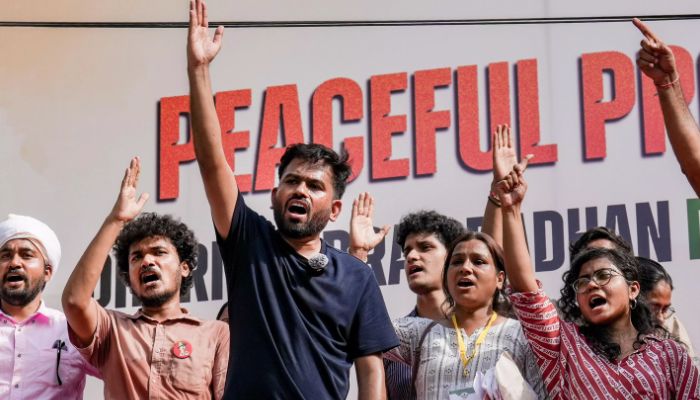
On 20th June, Abhijit Dipke, founder of the Cockroach Janta Party (CJP), published an alarming video on the social media platform X. “Police is about to arrest me. I appeal to you to not stop this peaceful protest nationwide even if I am arrested!” he said in the video. The message was designed to create a sense of urgency following the second round of the CJP protest at Jantar Mantar in Delhi. He claimed that the Delhi Police were about to crack down on a “peaceful protest” and arrest him merely for raising the “concerns of students”.
Police is about to arrest me. I appeal to you to not stop this peaceful protest nationwide even if I am arrested! pic.twitter.com/P7ljEJkCzP— Abhijeet Dipke (@abhijeet_dipke) June 20, 2026
But there was one problem. Dipke was never arrested by the Delhi Police. Another video shared by CJP showed police personnel standing while the protestors shouting “Halla Bol”.
इतना बल अगर पेपर लीक को रोकने में लगाया होता तो कॉक्रोचेस अपने घर पर ही होते आज! धर्मेंद्र प्रधान को बचाने के लिए इतनी पुलिस भेजी है – क्यों इस सरकार को युवाओं से ज़्यादा अपने एक incompetent मंत्री से प्यार है? pic.twitter.com/c4wTkF1TTo— Cockroach is Back (@Cockroachisback) June 20, 2026
Within a few hours of the video, another video surfaced on social media in which he was seen enjoying bread pakodas with fellow protesters. The Delhi Police neither dragged him away nor used force against any protester. In fact, despite the permission for the protest having expired, which appeared to be valid until the evening of 20th June, the police allowed Dipke and his supporters to remain at Jantar Mantar overnight.
The sequence of events made it evident that the dramatic warning about his impending arrest was not borne out by what happened on the ground. It was clearly a false alarm used to portray the police as aggressors and mobilise more people against them.
In a charged protest environment, such claims can create hostility towards police personnel, encourage crowds to disregard lawful instructions and prepare supporters to view every police action as an attack on democracy. Basically, such false alarms can easily turn the atmosphere hostile, pushing the police to take action to maintain law and order, and this is what appears to be the plan of the “cockroaches”.
India has already witnessed the deadly consequences of sustained incitement against police personnel. Head Constable Ratan Lal was killed during the 2020 Delhi riots, while hundreds of police personnel were brutally attacked after protesting farmers violated the agreed conditions of their tractor rally on Republic Day in 2021.
Any attempt to incite the public, including what Dipke has been doing, must be viewed in the context of such precedents.
Permission was granted only until a specified time
The police never denied permission to protest at Jantar Mantar. On 6th June, when Dipke and his supporters tried to put the Delhi Police in a bad light by seeking permission for the protest at the last minute, despite the Supreme Court’s ruling that a 7-day notice is necessary to protest at Jantar Mantar in the national capital, permission was granted at the airport itself, putting a hole in the plan to create chaos at the Parliament Street Police Station.
On 20th June as well, permission must have been granted for a limited time. Any protest can take place at Jantar Mantar, but it cannot be continuous. Permission is always granted with a fixed closing time, and that too under specific conditions.
Once that period expires, the police ask the protesters to disperse. This is what must have happened at Jantar Mantar during the CJP protest. There is nothing unusual, illegal or undemocratic about this. The police were merely enforcing the terms under which the protest must have been allowed.
However, Dipke continued to stay at the protest site with his followers. A protest organiser cannot refuse to leave after the deadline and then accuse the police of repression for asking him to comply with the very conditions he had accepted while seeking permission. The right to protest does not include the right to unilaterally occupy a public space indefinitely.
Delhi Police showed restraint
The conduct of the Delhi Police completely contradicts Dipke’s attempt to portray himself as the victim of an impending crackdown. Almost 24 hours have passed since he claimed that the Delhi Police were going to arrest him at the protest site. By the time this report was published, he was still at the protest site amid a heavy police deployment, and he had not even been touched by the police, let alone arrested.
Ideally, when an authorised protest period ends and the protesters refuse to leave, the police have every right to remove them in accordance with the law. However, Dipke stayed, his followers stayed, and the propagandists who came to join the protest to further their agendas also stayed with their daflis and thalis.
This was far from the conduct of an oppressive force. The Delhi Police showed considerable restraint and cooperation. However, the police cannot be expected to abandon all restrictions simply because an organiser has announced that he will not leave until a Union minister resigns. Cooperation from the police does not mean surrendering public spaces to political groups for an unlimited period.
The water supply claim further fuelled the narrative
Dipke did not stop at making claims about his arrest. On 21st June, he published a post at around 7 am in which he claimed that the water supply had been stopped at the public restrooms at Jantar Mantar since the previous night. He said, “I request the authorities not to cut off the water supply to the restrooms at the Jantar Mantar protest site. Since last night there’s no water supply at the public restrooms.”
I request the authorities not to cut off the water supply to the restrooms at the Jantar Mantar protest site.Since last night there’s no water supply at the public restrooms.— Abhijeet Dipke (@abhijeet_dipke) June 21, 2026
The statement again presented the authorities as deliberately mistreating protesters. He did not establish who was responsible for the lack of water, but he framed his message as a direct appeal to the authorities not to deprive protesters of a basic facility.
This post helped reinforce the impression that the police and the administration were collectively attempting to harass a “peaceful gathering”.
He urged the police not to stop additional protesters
Around 90 minutes after that video, he released another video asking the police not to prevent more people from reaching Jantar Mantar. In the video, he was seen standing in front of police personnel and making the request, with no response coming from the other side. On X, he wrote alongside the video, “I request the police to not stop people from coming at Jantar Mantar. We are not doing anything wrong, we are just seeking justice for the students who committed suicide.”
I request the police to not stop people from coming at Jantar Mantar. We are not doing anything wrong, we are just seeking justice for the students who committed suicide. pic.twitter.com/OHK8Bwro4L— Abhijeet Dipke (@abhijeet_dipke) June 21, 2026
Dipke was effectively telling his supporters that the police should step aside and allow unrestricted mobilisation at a protest that had already crossed its permitted deadline.
Farmers and workers were called in as reinforcements
Another problematic appeal made by Dipke came from the protest site stage later on Sunday, when he asked farmers and workers across the country to join the protest. He said, “We appeal to the farmers, workers, brothers and sisters across the country: Your children are struggling at Jantar Mantar for their rights. More than 12 children have already taken their own lives. Please come to Jantar Mantar, stand with us.”
Abhijeet Dipke appeals to farmers across India to come and stand with students at Jantar Mantar.When farmers were fighting for their rights, students stood shoulder to shoulder with them. Students need the same solidarity today. Please join us at Jantar Mantar. pic.twitter.com/kEJiue00qj— Cockroach is Back (@Cockroachisback) June 21, 2026
He further claimed that if the country’s farmers and workers stood with the youth, “no one can stop Dharmendra Pradhan’s resignation”.
हम देशभर के किसान, मज़दूर भाइयों और बहनों से अपील करते हैं:आपके बच्चे जंतर मंतर पर अपने हक के लिए संघर्ष कर रहे हैं। 12 से अधिक बच्चे आत्महत्या कर चुके हैं। Please जंतर मंतर आइए, हमारा साथ दीजिए।अगर देश का किसान और मज़दूर देश के युवाओं का साथ दे दे, धर्मेंद्र प्रधान का… pic.twitter.com/fk47scqmse— Cockroach is Back (@Cockroachisback) June 21, 2026
Dipke also invoked the previous farmers’ agitation, claiming that students had stood shoulder to shoulder with farmers when they were fighting for their rights and that students now needed the same solidarity.
This cannot be seen as a simple appeal for people to express support from their respective cities. It was a call for organised groups to converge at Jantar Mantar. Farmers and workers were effectively being summoned as political reinforcements to increase pressure on the government and overwhelm the restrictions imposed by the police.
Given Delhi’s history of protests turning violent, such mobilisation cannot be treated as harmless rhetoric.
Head Constable Ratan Lal was killed after police were demonised
The anti-Hindu Delhi riots of 2020 provide a grim reminder of what happens when police personnel are systematically portrayed as enemies of a community or movement. On 24th February 2020, a violent mob attacked police personnel near Chand Bagh. Head Constable Ratan Lal was among those who were on duty to control the mob. He was killed, while DCP Amit Sharma, an Assistant Commissioner of Police and several other police personnel suffered injuries.
Head Constable Ratan Lal was not sitting in an air-conditioned office making political decisions. He was on the streets performing his duty and attempting to control a violent mob that was instigated by the perpetrators behind the larger conspiracy. He never returned to his family.
The violence did not emerge in a vacuum. For weeks, provocative speeches, inflammatory mobilisation and calls to resist police action had created an atmosphere in which law-enforcement personnel were viewed as legitimate targets.
Once a crowd is persuaded that the police are oppressors, every lawful instruction is treated as provocation. Barricades become symbols of tyranny. Requests to disperse are described as attacks on democracy. Violence against police personnel is then rationalised as resistance.
Dipke’s posts follow the same dangerous pattern of delegitimising the police before a large audience.
He portrayed the possibility of enforcing a protest deadline as an impending arrest. He suggested that facilities were being deliberately denied. He asked the police not to regulate entry and appealed to farmers and workers to reach the site. His message to his supporters was clear: the police were standing between the protesters and justice.
Republic Day violence showed what happens when agreed conditions are discarded
A similar pattern was visible during the farmers’ protests. On Republic Day in 2021, protesters announced a tractor rally. Permission was granted by the police for a specific route, considering VIP movement on the day and the fact that Delhi is the national capital.
However, sections of the protesters entered Delhi before the agreed time, broke barricades and abandoned the authorised routes. The resulting chaos spread across the national capital. Protesters reached the Red Fort, attacked police personnel and engaged in clashes at several locations. Nearly 400 police personnel were injured.
Videos from the day showed protesters attacking policemen with sticks and swords, driving tractors dangerously through police barricades and chasing officers. Some police personnel were forced to jump from elevated structures to escape the mob.
The violence was not caused because the police had denied farmers the right to protest. It occurred after sections of the protesters violated the very conditions under which the rally had been allowed.
This parallels Dipke’s conduct at the CJP protest. This is precisely how authorised protests are pushed towards confrontation.
The police cannot be expected to surrender before every mob
India is a democracy, but the right to protest is not a licence to disregard rules, deadlines or restrictions imposed to maintain public order. A time-bound demonstration cannot become an indefinite occupation because organisers refuse to leave. Nor can they summon crowds to a site and then accuse the police of repression for regulating access.
While students have every right to raise concerns and protest, the gravity of those issues cannot be used to justify misinformation or hostility towards the police. A movement claiming to represent distressed students has a responsibility to remain truthful.
Despite the restraint shown by the Delhi Police during the 6th June protest and the 20th June protest, which continued into the next day, Dipke claimed that he was about to be arrested, claimed that the water had been cut off, asked the police not to stop more protesters and called on farmers and workers to reach the site. This was an attempt to manufacture police repression where none existed.
The rhetoric is dangerous. Such rhetoric can turn violent at any time and lead to a repeat of what happened during the Delhi riots and the tractor rally. Peace requires organisers to respect rules, avoid misinformation and prevent hostility towards the police. Dipke instead chose confrontation, leaving personnel to bear the risks created by his mobilisation.