The Rs 590 crore IDFC First Bank fraud: How insiders allegedly turned a government account into a private ATM
At first glance, this looks like just another banking scam. But peel back the layers of the Rs 590 crore fraud detected at IDFC First Bank’s Chandigarh branch, and what emerges is a textbook case of how insider access, weak oversight, and family-linked shell operations can be combined to quietly drain public money until a routine administrative request blows the cover. It began with a simple request and exposed a massive hole The entire scam came to light not because of a whistleblower or an audit, but because a Haryana government department asked for its account to be closed and the balance transferred elsewhere. When bank officials began the process, they noticed something that should never happen in a government account: the numbers didn’t match. The balance on paper and the actual money available were not the same. Once this discrepancy surfaced, other Haryana government-linked accounts at the same branch were checked. The result was multiple mismatches across accounts. What initially looked like a clerical issue quickly snowballed into the discovery of a suspected fraud running into hundreds of crores. That is when IDFC First Bank informed regulators that around Rs 590 crore had been siphoned off through unauthorised and fraudulent activities, allegedly involving its own employees and outside beneficiaries. The alleged architects: insiders who knew the system The Haryana Anti-Corruption Bureau has so far arrested four people in the case: Ribhav Rishi, the former branch head; Abhay, a former relationship manager at the same branch; Swati Singla, Rishi’s wife; and Abhishek Singla, Swati’s brother. According to investigators, Ribhav and Abhay were not minor functionaries but officers who understood the bank’s internal processes, controlled client relationships, and had access to sensitive systems. In other words, they allegedly knew exactly where the guardrails were and how to drive around them. Both had left the bank months before the scam became public, which suggests this was not a one-off act of opportunism but a scheme that may have been running quietly for a considerable period. Follow the money: from government accounts to a family-linked firm The most incriminating aspect of the case is the money trail uncovered so far. Investigators say around ₹300 crore was transferred from Haryana government-linked accounts to a private company called Swastik Desh Projects. On paper, it appears to be an ordinary firm, but its ownership structure immediately raises red flags. The company is largely owned by Swati Singla, the wife of the former branch head, with the remaining stake held by her brother Abhishek Singla. In simple terms, a massive chunk of public money allegedly moved from government accounts into a company controlled by the prime accused’s immediate family. From there, the money was reportedly routed further onwards, a classic layering technique commonly used in financial crimes to make tracing funds more difficult and to blur the audit trail. The geography puzzle: Chandigarh, Haryana, Mohali and blurred oversight Another detail that has drawn the attention of investigators is the unusual geographical spread of the transactions. The bank branch involved is in Chandigarh, the account holders are Haryana government departments, and at least some of the recipient transfers went through a bank branch in Mohali. On a map, these places are close to each other, but administratively they fall across different jurisdictions, involving two states and one Union Territory. Investigators have questioned how and why government accounts were being operated and routed in this manner without earlier scrutiny. In complex financial frauds, such jurisdictional grey zones often become convenient cover, not by accident but by design. Why this is not just another “bank scam” This case cannot be brushed aside as a routine instance of bank fraud. At its core, it involves public money allegedly being siphoned off from government departments, which means the ultimate victim is the taxpayer. It also points to a serious breach of trust, because the main accused were not outsiders breaking into the system but insiders who allegedly used their authority and access to manipulate it. Most importantly, it exposes systemic failures, because for such large sums to move without immediate detection, internal controls, audits, and supervisory mechanisms clearly did not function as they should have. The bank’s damage control: pay first, investigate later Amid the unfolding investigation, IDFC First Bank has said it has already repaid 100 per cent of the claimed amount, around ₹583 crore including principal and interest, to the Haryana government departments. The bank’s public stance is that depositors should not suffer because of wrongdoing that occurred within the system. While this step may limit the immediate financial damage to the state, it does not answer the more uncomfortable q
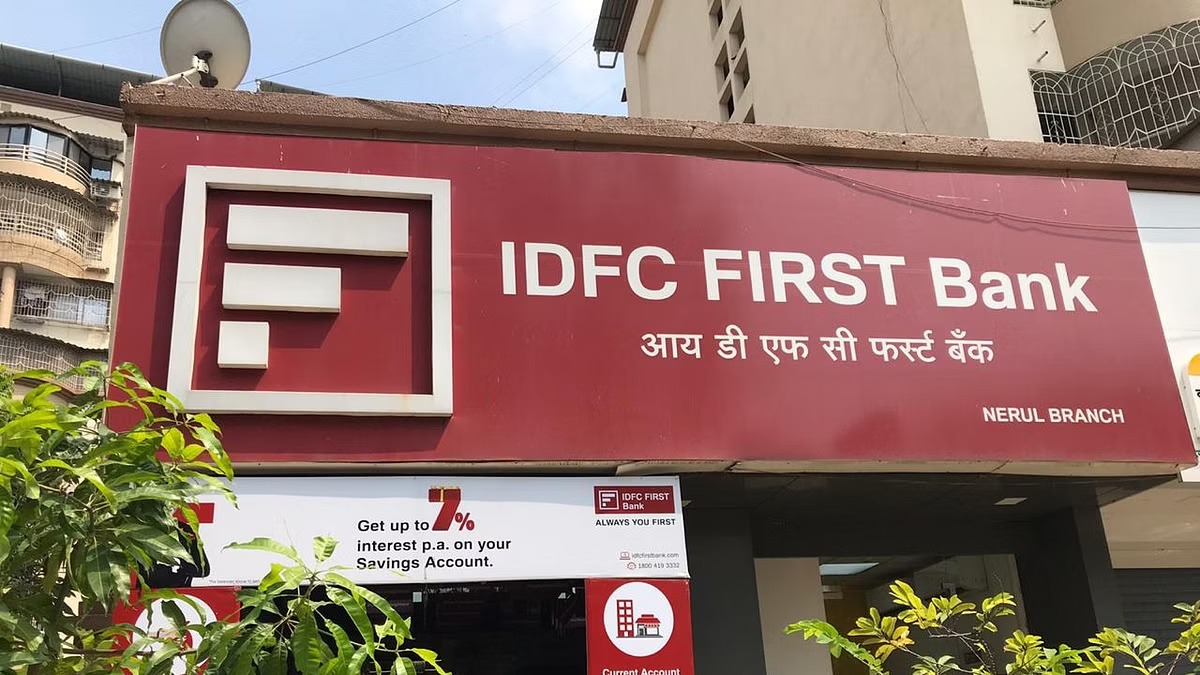
At first glance, this looks like just another banking scam. But peel back the layers of the Rs 590 crore fraud detected at IDFC First Bank’s Chandigarh branch, and what emerges is a textbook case of how insider access, weak oversight, and family-linked shell operations can be combined to quietly drain public money until a routine administrative request blows the cover.
It began with a simple request and exposed a massive hole
The entire scam came to light not because of a whistleblower or an audit, but because a Haryana government department asked for its account to be closed and the balance transferred elsewhere. When bank officials began the process, they noticed something that should never happen in a government account: the numbers didn’t match. The balance on paper and the actual money available were not the same.
Once this discrepancy surfaced, other Haryana government-linked accounts at the same branch were checked. The result was multiple mismatches across accounts. What initially looked like a clerical issue quickly snowballed into the discovery of a suspected fraud running into hundreds of crores. That is when IDFC First Bank informed regulators that around Rs 590 crore had been siphoned off through unauthorised and fraudulent activities, allegedly involving its own employees and outside beneficiaries.
The alleged architects: insiders who knew the system
The Haryana Anti-Corruption Bureau has so far arrested four people in the case: Ribhav Rishi, the former branch head; Abhay, a former relationship manager at the same branch; Swati Singla, Rishi’s wife; and Abhishek Singla, Swati’s brother. According to investigators, Ribhav and Abhay were not minor functionaries but officers who understood the bank’s internal processes, controlled client relationships, and had access to sensitive systems.
In other words, they allegedly knew exactly where the guardrails were and how to drive around them. Both had left the bank months before the scam became public, which suggests this was not a one-off act of opportunism but a scheme that may have been running quietly for a considerable period.
Follow the money: from government accounts to a family-linked firm
The most incriminating aspect of the case is the money trail uncovered so far. Investigators say around ₹300 crore was transferred from Haryana government-linked accounts to a private company called Swastik Desh Projects. On paper, it appears to be an ordinary firm, but its ownership structure immediately raises red flags. The company is largely owned by Swati Singla, the wife of the former branch head, with the remaining stake held by her brother Abhishek Singla.
In simple terms, a massive chunk of public money allegedly moved from government accounts into a company controlled by the prime accused’s immediate family. From there, the money was reportedly routed further onwards, a classic layering technique commonly used in financial crimes to make tracing funds more difficult and to blur the audit trail.
The geography puzzle: Chandigarh, Haryana, Mohali and blurred oversight
Another detail that has drawn the attention of investigators is the unusual geographical spread of the transactions. The bank branch involved is in Chandigarh, the account holders are Haryana government departments, and at least some of the recipient transfers went through a bank branch in Mohali.
On a map, these places are close to each other, but administratively they fall across different jurisdictions, involving two states and one Union Territory. Investigators have questioned how and why government accounts were being operated and routed in this manner without earlier scrutiny. In complex financial frauds, such jurisdictional grey zones often become convenient cover, not by accident but by design.
Why this is not just another “bank scam”
This case cannot be brushed aside as a routine instance of bank fraud. At its core, it involves public money allegedly being siphoned off from government departments, which means the ultimate victim is the taxpayer. It also points to a serious breach of trust, because the main accused were not outsiders breaking into the system but insiders who allegedly used their authority and access to manipulate it. Most importantly, it exposes systemic failures, because for such large sums to move without immediate detection, internal controls, audits, and supervisory mechanisms clearly did not function as they should have.
The bank’s damage control: pay first, investigate later
Amid the unfolding investigation, IDFC First Bank has said it has already repaid 100 per cent of the claimed amount, around ₹583 crore including principal and interest, to the Haryana government departments. The bank’s public stance is that depositors should not suffer because of wrongdoing that occurred within the system. While this step may limit the immediate financial damage to the state, it does not answer the more uncomfortable question of how a scheme of this scale was allowed to operate undetected in the first place.
What happens next
The Anti-Corruption Bureau has made it clear that the investigation is still at an early stage. In the coming weeks, more details are expected to emerge about how internal controls were bypassed, whether more people were involved, where the remaining money went, and how long the alleged operation had been running. What already seems evident, however, is that this was not an accidental error or a one-off lapse. If the allegations hold, this was a carefully structured, insider-driven operation that treated a government account like a private cash pipeline, until a routine transfer request finally pulled the curtain back.
The bigger takeaway
The Rs 590 crore IDFC First Bank fraud is a reminder of an uncomfortable reality in financial systems: the most dangerous breaches often do not come from outsiders forcing their way in, but from insiders who already have the keys and know exactly which doors do not squeak.