The Soros Boardroom and India’s shadow diplomats: A network worth examining
The International Crisis Group (ICG) portrays itself as a noble enterprise: a globally known conflict prevention think tank with offices on five continents, staffed by former leaders of state, seasoned diplomats, and high-minded intellectuals. Its website, crisisgroup.org, features a Board of Trustees that reads like a who’s who of world foreign policy elites. However, a close look at who sits on that board and who funds the company raises a number of legitimate concerns. Shivshankar Menon, India’s National Security Advisor under Prime Minister Manmohan Singh from 2010 to 2014, and Nirupama Rao, India’s Foreign Secretary and later Ambassador to the United States during the UPA era, are two names among the 47 trustees selected from more than 30 nations that should cause any student of recent Indian diplomatic history to pause. George Soros, the founder of Open Society Foundations, and his son, Alexander Soros, the Deputy Chair of its Global Board, join them on that same board. There is no conspiracy here. This is merely a public record, and public records frequently give rise to uncomfortable questions. The Soros factor One must first understand George Soros’s public remarks toward India to comprehend the significance of these board memberships. In January 2020, Soros pledged $1 billion to combat nationalism worldwide at the World Economic Forum in Davos, citing India as the biggest and most frightening setback. He stated that Prime Minister Narendra Modi was creating a Hindu nationalist state. He predicted that the Adani group would significantly weaken Modi’s hold on power and intervened in India’s domestic political discussion during the Munich Security Conference in February 2023. India’s External Affairs Minister, S Jaishankar, publicly referred to him as ‘an old, rich, opinionated’ person interfering with sovereign countries. As early as 2016, the Indian government had actually put Soros’s Open Society Foundations on a watch list. In 1994, Open Society Foundations gave the ICG $200,000 in seed money. In April 2022, the organisation announced that OSF granted it a $20 million grant to support its conflict prevention mission. Soros co-founded the ICG, and his family’s foundation continues to be one of its key sources of funding; it is more than just a platform in which he takes part. Because of this, the question of who shares that boardroom with the Soros family is no longer just a matter of institutional membership. Shivshankar Menon: The NSA who chose his platform During his tenure as Prime Minister Manmohan Singh’s National Security Advisor from January 2010 to May 2014, Shivshankar Menon was regarded as one of Singh’s most dependable aides. Menon has been vocal in his criticism of the government that followed his patrons ever since he left office. Menon said that India was ‘in violation of our international commitments,’ that the Citizenship Amendment Act had caused India to be isolated globally, and that even long-standing allies had become critical during a public event in 2020. He went on to claim that India had hyphenated its image with Pakistan as a religiously driven and intolerant state, a description that would have been unusual from an official in office but seemed acceptable from a man currently serving alongside George Soros on an international board. He voiced concern about the repeal of Article 370, which many Indians believed to be a discriminatory clause that denied minorities, Dalits, and Kashmiri women equal rights. The trend is consistent: a former NSA who previously oversaw the country’s most sensitive security brief now uses his reputation on international forums to support viewpoints that are quite similar to those that a worldview supported by Soros would deem acceptable. Alignment can be observed without claiming coordination. And the most straightforward question is this: which direction did that alignment flow during the UPA years, when Menon wielded great control over India’s strategic decisions? Nirupama Rao: The diplomat and the ceasefire narrative In 2024, Nirupama Rao, a former Foreign Secretary and the country’s first female ambassador to China and spokeswoman for the Ministry of External Affairs, became a member of the ICG Board of Trustees. She is now firmly in the Soros family’s institutional network thanks to that board appointment. Given the current situation between the two countries, many people found Rao’s post on X startling, ‘The women of India and Pakistan need to deploy our ingrained common sense and suggest ways forward in our relationship.’ A women’s caucus is necessary. Instead of accusing one another, we should consider the future with composure and reason. for the benefit of our kids. The sentiment may come across as well-intentioned. However, keep in mind that it was posted during a time when India was still processing the blood of 26 civilians killed in Pahalgam by terrorists with ties to Pakistan, when Operation Sin
The International Crisis Group (ICG) portrays itself as a noble enterprise: a globally known conflict prevention think tank with offices on five continents, staffed by former leaders of state, seasoned diplomats, and high-minded intellectuals. Its website, crisisgroup.org, features a Board of Trustees that reads like a who’s who of world foreign policy elites. However, a close look at who sits on that board and who funds the company raises a number of legitimate concerns.
Shivshankar Menon, India’s National Security Advisor under Prime Minister Manmohan Singh from 2010 to 2014, and Nirupama Rao, India’s Foreign Secretary and later Ambassador to the United States during the UPA era, are two names among the 47 trustees selected from more than 30 nations that should cause any student of recent Indian diplomatic history to pause. George Soros, the founder of Open Society Foundations, and his son, Alexander Soros, the Deputy Chair of its Global Board, join them on that same board. There is no conspiracy here. This is merely a public record, and public records frequently give rise to uncomfortable questions.
The Soros factor
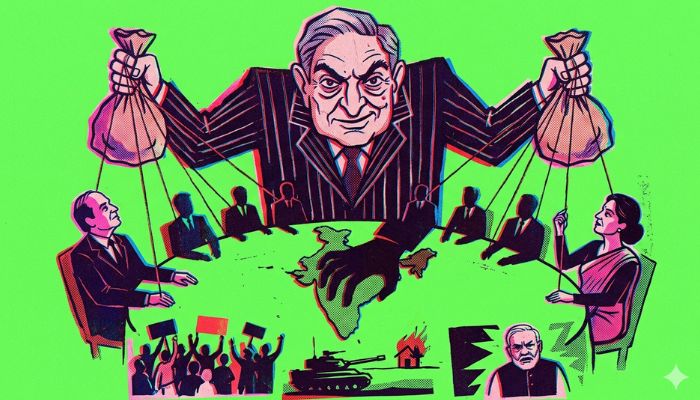
One must first understand George Soros’s public remarks toward India to comprehend the significance of these board memberships. In January 2020, Soros pledged $1 billion to combat nationalism worldwide at the World Economic Forum in Davos, citing India as the biggest and most frightening setback. He stated that Prime Minister Narendra Modi was creating a Hindu nationalist state. He predicted that the Adani group would significantly weaken Modi’s hold on power and intervened in India’s domestic political discussion during the Munich Security Conference in February 2023. India’s External Affairs Minister, S Jaishankar, publicly referred to him as ‘an old, rich, opinionated’ person interfering with sovereign countries. As early as 2016, the Indian government had actually put Soros’s Open Society Foundations on a watch list.
In 1994, Open Society Foundations gave the ICG $200,000 in seed money. In April 2022, the organisation announced that OSF granted it a $20 million grant to support its conflict prevention mission. Soros co-founded the ICG, and his family’s foundation continues to be one of its key sources of funding; it is more than just a platform in which he takes part. Because of this, the question of who shares that boardroom with the Soros family is no longer just a matter of institutional membership.
Shivshankar Menon: The NSA who chose his platform
During his tenure as Prime Minister Manmohan Singh’s National Security Advisor from January 2010 to May 2014, Shivshankar Menon was regarded as one of Singh’s most dependable aides. Menon has been vocal in his criticism of the government that followed his patrons ever since he left office.
Menon said that India was ‘in violation of our international commitments,’ that the Citizenship Amendment Act had caused India to be isolated globally, and that even long-standing allies had become critical during a public event in 2020. He went on to claim that India had hyphenated its image with Pakistan as a religiously driven and intolerant state, a description that would have been unusual from an official in office but seemed acceptable from a man currently serving alongside George Soros on an international board. He voiced concern about the repeal of Article 370, which many Indians believed to be a discriminatory clause that denied minorities, Dalits, and Kashmiri women equal rights.
The trend is consistent: a former NSA who previously oversaw the country’s most sensitive security brief now uses his reputation on international forums to support viewpoints that are quite similar to those that a worldview supported by Soros would deem acceptable. Alignment can be observed without claiming coordination. And the most straightforward question is this: which direction did that alignment flow during the UPA years, when Menon wielded great control over India’s strategic decisions?
Nirupama Rao: The diplomat and the ceasefire narrative
In 2024, Nirupama Rao, a former Foreign Secretary and the country’s first female ambassador to China and spokeswoman for the Ministry of External Affairs, became a member of the ICG Board of Trustees. She is now firmly in the Soros family’s institutional network thanks to that board appointment.
Given the current situation between the two countries, many people found Rao’s post on X startling, ‘The women of India and Pakistan need to deploy our ingrained common sense and suggest ways forward in our relationship.’ A women’s caucus is necessary. Instead of accusing one another, we should consider the future with composure and reason. for the benefit of our kids. The sentiment may come across as well-intentioned. However, keep in mind that it was posted during a time when India was still processing the blood of 26 civilians killed in Pahalgam by terrorists with ties to Pakistan, when Operation Sindoor was still fresh in the country’s memory, and when the Indian government had maintained a firm stance of no talks without accountability. It does not seem like statesmanlike moderation for a former foreign secretary to publicly advocate for cross-border women’s caucuses with Pakistan at this time. It seems like pressure, the kind that erodes determination.
Then, on February 23, 2026, Rao shared her most recent article on X, writing Managing crises in the absence of dialogue. Today, political limitations, a harsher regional environment, and strategic mistrust all influence India-Pakistan ties. Grand diplomatic breakthroughs are unlikely in such circumstances. Instead, calibrated steadying mechanisms, quiet barriers that manage risk, prevent miscalculation, and keep intense animosity contained even when communication is frozen, become crucial. X Critics claim that the framing that the relationship must be managed and bounded through back channel safeguards is the exact reasoning that kept India in constant contact with a Pakistan that, during the ten years she and her colleagues were in office, never fulfilled a single counterterrorism commitment. Dialogue evolved from a tool to a destination. And now, from her ICG boardroom, she is selling the same framework again.
The architecture of influence
The current government in India has not held back when identifying this phenomenon. The BJP has contended, supported by solid evidence, that a web of foreign-funded institutions, intellectuals, and media proxies strives to soften India’s strategic stance, internationalise its domestic affairs, and undermine an elected government’s mandate. This is dismissed by critics as delusional. However, pattern recognition and delusion are not the same thing.
Shivshankar Menon and Nirupama Rao held the top positions in India’s foreign and security apparatus during the UPA decade, which is being closely examined for the results it produced. A Pakistani policy based on repeated discussions yielded no accountability for cross-border terrorism. An institutional culture in the foreign policy establishment that frequently seems more at ease justifying India’s behaviour to the West than explaining the West’s double standards to India.
The current leadership has shifted its stance, sometimes controversially, always assertively. Contested decisions include the revocation of Article 370, the CAA, the strong reaction to Pahalgam, and the rejection of regular third-party mediation on Kashmir. However, these are the decisions of a government with a wider democratic mandate than India has seen in thirty years.
Conclusion
All of this does not prove any wrongdoing. Both Shivshankar Menon and Nirupama Rao are successful diplomats with illustrious careers. It is not criminal to serve on an international board. It is not treason to disagree with the existing leadership.
Institutions, however, have ideological weight. Alignments are reflected in boardrooms. The least a curious citizen can do is take notice when two of the most powerful individuals from a period of Indian foreign policy now sit on the same governing body as a man who has publicly stated his intention to oppose Indian nationalism, and when their public interventions regularly contradict the most consequential choices made by the current government.
The International Crisis Group is a legitimate organisation. The queries it poses are not. In a democracy, the people have the right to inquire about who influences the perspectives of those who once influenced their fate, as well as who provides funding for the establishments where these discussions take place.