The Wire questions SIR process in Uttar Pradesh over deletion of over 2 crore names: Here is how there is no “Riddle” and the voter list is now cleaner and stronger
An article published by The Wire on April 21, 2026, has raised questions about the massive deletion of nearly 2.05 crore names from Uttar Pradesh’s electoral rolls during the Special Intensive Revision (SIR). The piece suggests doubts over whether more than two crore ineligible voters had cast ballots in the 2024 Lok Sabha elections, or if large numbers of genuine voters- especially women-were wrongly removed. It also highlights concerns regarding population growth, the declining sex ratio in the voter list, and the non-public availability of certain internal formats. According to the Election Commission of India (ECI) and Uttar Pradesh Chief Electoral Officer Navdeep Rinwa, the SIR exercise was neither a mystery nor a political conspiracy. It is a routine yet essential constitutional process under Article 326 of the Indian Constitution aimed at making electoral rolls pure, accurate, and error-free. The sole objective is simple and non-negotiable: no eligible Indian citizen should be left out, and no ineligible, duplicate, deceased, or shifted person should remain on the list. Here is a point-by-point response to the main arguments in the article, based on the Election Commission’s official position and facts: 1. In 2024, there were 15.44 crore voters in UP. After SIR, the number dropped to 13.39 crore (about 2.05 crore names deleted)- Does this mean over two crore ineligible voters had voted in 2024? The Election Commission’s answer is clear- no. The 2024 elections were conducted on the basis of the electoral rolls as they existed at that time. The SIR in 2025-26 involved intensive door-to-door verification to remove long-accumulated irregularities from the old lists. The main reasons for deletions were: Permanently shifted or absent persons- nearly 2.17 crore Deceased persons- nearly 46 lakh Duplicate entries- nearly 25.5 lakh These names had been lingering in the rolls for years without proper verification. Booth Level Officers carried out field checks using death certificates, transfer records, and other documents. This was a genuine cleanup exercise. During the claims and objections period, as many as 70.69 lakh Form-6 applications (for inclusion of names) were received, with more applications coming from women than men. 2. The population of people aged 18 and above is increasing (around 15.58 crore in 2024 and 16.12 crore in 2026), so why did the number of voters decrease? Population projections are only estimates. The SIR was based on actual ground-level door-to-door verification. Old rolls had accumulated a large number of dead, shifted, duplicate, and untraceable entries. Once these were removed after proper verification, the accurate figure emerged. Moreover, in the final list, 84.28 lakh new names were added, taking the total to 13,39,84,792 voters. The total number of names deleted from the roll was actually 2.89 crore, and the net deletions became after the addition of 84.28 lakh new names. This means that youths who became voters recently were added to the voter list. The Election Commission involved all political parties, appointed Special Roll Observers, and conducted verification through Booth Level Officers. The qualifying date was set as January 1, 2026. The entire process was carried out strictly as per Section 21(3) of the Representation of the People Act, 1950, and Article 324 of the Constitution. 3. There is no significant immigration from Bangladesh, so why were so many names deleted? Deletions were primarily due to death, permanent migration to other states or districts, duplicate registrations, and failure to submit forms during verification. The Election Commission never targeted any particular community. Across the second phase of SIR covering 9 states and 3 Union Territories, there was an average reduction of about 10 percent, depending on the level of irregularities present in each state’s old rolls. 4. The sex ratio in the voter list is very low (834), while the estimated population sex ratio is 943- Does this mean large-scale deletion of women’s names? In the draft roll, the sex ratio was 824, which improved to 834 in the final list. Women now number 6.09 crore, accounting for about 45.46 percent of the total voters. During the claims period, more women applied for inclusion than men. Deletions were carried out only after issuing notices and proper verification. If any eligible woman was left out, she can still apply through Form-6. The Election Commission’s clear directive is that no eligible voter should be excluded. The gap existed in previous rolls as well; the SIR has taken steps to correct it. 5. Formats 1 to 8 (elector-population ratio, sex ratio, deletions, etc.) are not publicly available for Uttar Pradesh – Is something being hidden? These formats are internal analytical tools of the Election Commission as per its Manual on Electoral Rolls 2023. They are not mandatorily required to be made public in ever
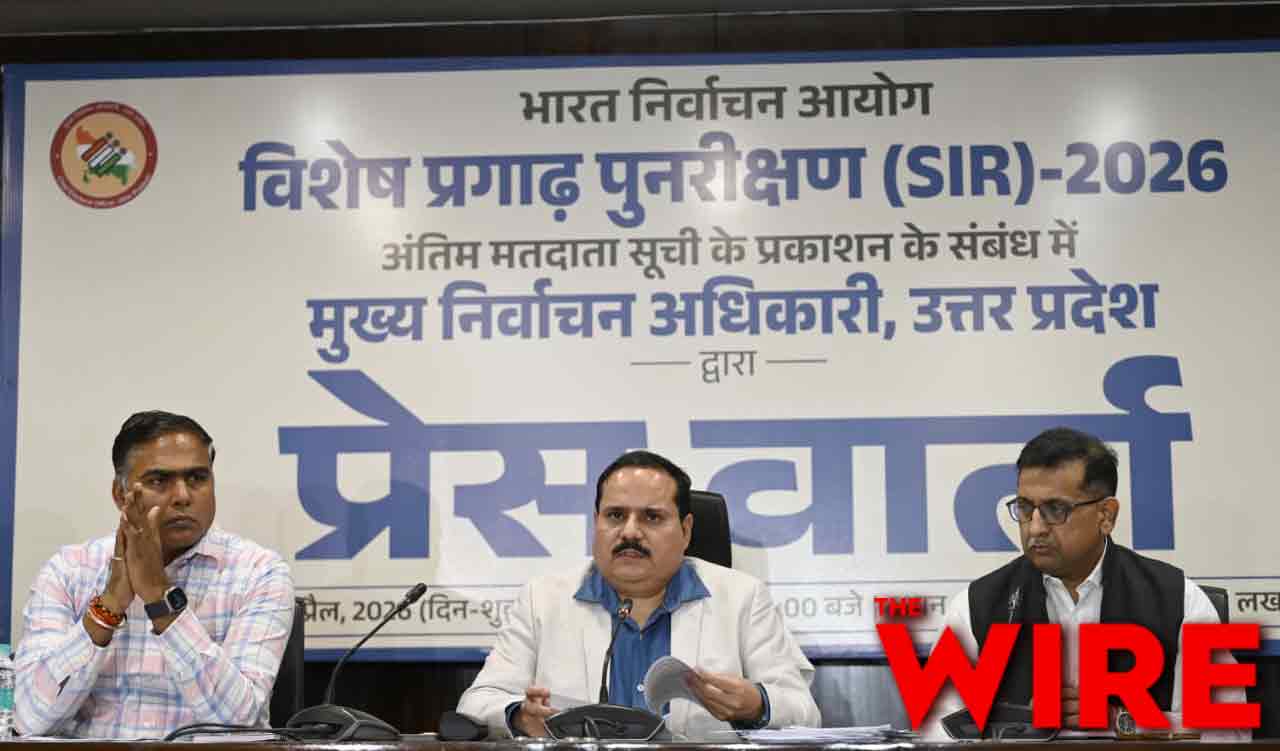
An article published by The Wire on April 21, 2026, has raised questions about the massive deletion of nearly 2.05 crore names from Uttar Pradesh’s electoral rolls during the Special Intensive Revision (SIR). The piece suggests doubts over whether more than two crore ineligible voters had cast ballots in the 2024 Lok Sabha elections, or if large numbers of genuine voters- especially women-were wrongly removed. It also highlights concerns regarding population growth, the declining sex ratio in the voter list, and the non-public availability of certain internal formats.
According to the Election Commission of India (ECI) and Uttar Pradesh Chief Electoral Officer Navdeep Rinwa, the SIR exercise was neither a mystery nor a political conspiracy. It is a routine yet essential constitutional process under Article 326 of the Indian Constitution aimed at making electoral rolls pure, accurate, and error-free. The sole objective is simple and non-negotiable: no eligible Indian citizen should be left out, and no ineligible, duplicate, deceased, or shifted person should remain on the list.
Here is a point-by-point response to the main arguments in the article, based on the Election Commission’s official position and facts:
1. In 2024, there were 15.44 crore voters in UP. After SIR, the number dropped to 13.39 crore (about 2.05 crore names deleted)- Does this mean over two crore ineligible voters had voted in 2024?
The Election Commission’s answer is clear- no. The 2024 elections were conducted on the basis of the electoral rolls as they existed at that time. The SIR in 2025-26 involved intensive door-to-door verification to remove long-accumulated irregularities from the old lists. The main reasons for deletions were:
Permanently shifted or absent persons- nearly 2.17 crore
Deceased persons- nearly 46 lakh
Duplicate entries- nearly 25.5 lakh
These names had been lingering in the rolls for years without proper verification. Booth Level Officers carried out field checks using death certificates, transfer records, and other documents. This was a genuine cleanup exercise.
During the claims and objections period, as many as 70.69 lakh Form-6 applications (for inclusion of names) were received, with more applications coming from women than men.
2. The population of people aged 18 and above is increasing (around 15.58 crore in 2024 and 16.12 crore in 2026), so why did the number of voters decrease?
Population projections are only estimates. The SIR was based on actual ground-level door-to-door verification. Old rolls had accumulated a large number of dead, shifted, duplicate, and untraceable entries. Once these were removed after proper verification, the accurate figure emerged.
Moreover, in the final list, 84.28 lakh new names were added, taking the total to 13,39,84,792 voters. The total number of names deleted from the roll was actually 2.89 crore, and the net deletions became after the addition of 84.28 lakh new names. This means that youths who became voters recently were added to the voter list.
The Election Commission involved all political parties, appointed Special Roll Observers, and conducted verification through Booth Level Officers. The qualifying date was set as January 1, 2026. The entire process was carried out strictly as per Section 21(3) of the Representation of the People Act, 1950, and Article 324 of the Constitution.
3. There is no significant immigration from Bangladesh, so why were so many names deleted?
Deletions were primarily due to death, permanent migration to other states or districts, duplicate registrations, and failure to submit forms during verification. The Election Commission never targeted any particular community. Across the second phase of SIR covering 9 states and 3 Union Territories, there was an average reduction of about 10 percent, depending on the level of irregularities present in each state’s old rolls.
4. The sex ratio in the voter list is very low (834), while the estimated population sex ratio is 943- Does this mean large-scale deletion of women’s names?
In the draft roll, the sex ratio was 824, which improved to 834 in the final list. Women now number 6.09 crore, accounting for about 45.46 percent of the total voters. During the claims period, more women applied for inclusion than men.
Deletions were carried out only after issuing notices and proper verification. If any eligible woman was left out, she can still apply through Form-6. The Election Commission’s clear directive is that no eligible voter should be excluded. The gap existed in previous rolls as well; the SIR has taken steps to correct it.
5. Formats 1 to 8 (elector-population ratio, sex ratio, deletions, etc.) are not publicly available for Uttar Pradesh – Is something being hidden?
These formats are internal analytical tools of the Election Commission as per its Manual on Electoral Rolls 2023. They are not mandatorily required to be made public in every state. The entire SIR process was conducted with full transparency under the Commission’s supervision. Political parties were actively involved, and a complete window for claims and objections was provided.
The Election Commission has repeatedly stated that the SIR is a constitutional duty and that “no eligible voter should be excluded, and no ineligible voter should be included.”
Uttar Pradesh’s Special Intensive Revision is not a riddle. It was a 166-day massive door-to-door verification drive involving enumeration forms, lakhs of claims and objections (over 70 lakh for inclusions), and due process. After the exercise, the final electoral roll with 13.39 crore voters has been published. Removing irregularities that had built up in the 2024 rolls was the constitutional responsibility of the Election Commission.
If any eligible citizen’s name is still missing, they can immediately apply online at voters.eci.gov.in or through the local election office or Uttar Pradesh CEO portal using Form-6. The Election Commission’s process includes full transparency and safeguards.
Keeping electoral rolls clean and accurate strengthens democracy — it does not harm anyone. The SIR is an important step in that direction.