‘Victims being Hindus was not a mere coincidence’: Gujarat HC says 2008 Ahmedabad serial blasts were planned to target Hindus
In its detailed judgment upholding the trial court’s verdict in the 2008 Ahmedabad serial blasts case, the Gujarat High Court observed that the fact that all those killed in the attacks were Hindus “cannot be treated as a mere coincidence” and concluded that the conspiracy itself was designed to target Hindus. In February 2022, a special trial court convicted 49 accused in the case, sentencing 38 to death and 11 to life imprisonment. The Gujarat government approached the High Court for confirmation of the death sentences, while the convicts challenged their convictions. After hearing the matter for four years, the High Court, on July 7, 2026, upheld the trial court’s verdict in its entirety. The 2,223-page judgment has now been made public. A premeditated conspiracy aimed at Hindus The High Court held that the serial blasts that rocked Ahmedabad on the evening of July 26, 2008, were not isolated or spontaneous incidents but the result of a meticulously planned terrorist conspiracy. It noted that similar serial blasts had taken place in several Indian cities during that period, indicating that the Ahmedabad attacks formed part of a broader terror campaign intended to spread fear and destabilise the country. The court referred to the prosecution’s case that the accused, associated with the banned terrorist organisation SIMI (Students Islamic Movement of India), carried out the blasts to avenge the 2002 post-Godhra riots and the demolition of the Babri structure. According to the evidence, SIMI members assembled in December 2007 and established two terror training camps, one in Kerala and another in the forests near Pavagadh in Gujarat, where they allegedly received training in bomb-making, weapons handling and terrorist operations. The judgment records that speeches delivered at these camps revolved around “jihad” and the establishment of “Islamic rule” in India. The conspirators allegedly resolved to target large numbers of Hindus through coordinated bomb blasts in Ahmedabad, Surat and Vadodara. The court noted that the attacks killed 56 innocent people, seriously injured over 240 others, caused extensive damage to public and private property, and disrupted normal life for weeks. Significantly, the High Court observed: “With utmost restraint, but this Court considers it necessary to record that the fact that the deceased were Hindus was not a mere coincidence.” Bombs deliberately planted in Hindu-majority localities The High Court held that the coordinated nature of the explosions itself demonstrated the existence of a criminal conspiracy. It observed that the bicycles carrying the bombs were not placed randomly but at carefully selected locations in Ahmedabad and Surat. According to the judgment, the conspirators had adopted a clear criterion while selecting targets—they chose Hindu or non-Muslim localities and deliberately avoided Muslim-majority areas. During the trial, defence lawyers argued that one of the explosions took place in an AMTS bus passing through Juhapura, a Muslim-majority locality. However, relying on the prosecution’s evidence, the High Court accepted the finding that the bomb had originally been intended to explode near the bus’s point of origin, which was located in a Hindu-majority area. It detonated later in Juhapura only because of a timing malfunction. The court also noted that the word “jihad” repeatedly surfaced during meetings among the accused and in witness testimonies. In the context in which the conspirators used the term, the court said it referred to carrying out terrorist acts intended to spread fear and inflict large-scale casualties upon a particular section of society—namely Hindus. The judgment further records that intercepted conversations and witness testimonies consistently indicated that the accused intended to carry out explosions in Hindu localities with the objective of causing maximum harm to Hindus. Summarising its findings, the High Court observed: “All the facts and evidence available on record clearly establish that the target of the terrorist attacks was the Hindu community. The prosecution has successfully proved through eyewitnesses and witnesses connected with the conspiracy that the attacks were primarily directed at Hindus and non-Muslim localities. Such attacks not only amount to terrorism but also strike at the very foundation of the constitutional vision of a peaceful and orderly society.” Death penalty upheld as a ‘rarest of rare’ case The High Court also upheld the death sentences awarded to 38 convicts, holding that the case squarely falls within the “rarest of rare” category, the constitutional standard governing the award of capital punishment in India. It observed that the trial court had thoroughly examined whether the convicts had any possibility of reformation before awarding the death penalty and had rightly concluded that no such possibility existed. The High Court
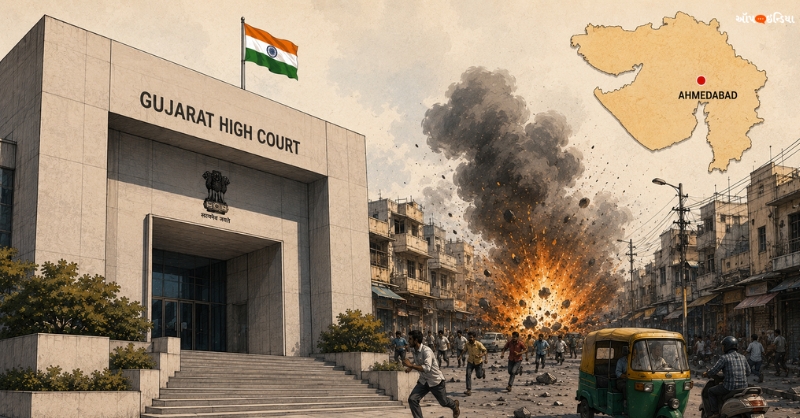
In its detailed judgment upholding the trial court’s verdict in the 2008 Ahmedabad serial blasts case, the Gujarat High Court observed that the fact that all those killed in the attacks were Hindus “cannot be treated as a mere coincidence” and concluded that the conspiracy itself was designed to target Hindus.
In February 2022, a special trial court convicted 49 accused in the case, sentencing 38 to death and 11 to life imprisonment. The Gujarat government approached the High Court for confirmation of the death sentences, while the convicts challenged their convictions. After hearing the matter for four years, the High Court, on July 7, 2026, upheld the trial court’s verdict in its entirety. The 2,223-page judgment has now been made public.
A premeditated conspiracy aimed at Hindus
The High Court held that the serial blasts that rocked Ahmedabad on the evening of July 26, 2008, were not isolated or spontaneous incidents but the result of a meticulously planned terrorist conspiracy. It noted that similar serial blasts had taken place in several Indian cities during that period, indicating that the Ahmedabad attacks formed part of a broader terror campaign intended to spread fear and destabilise the country.
The court referred to the prosecution’s case that the accused, associated with the banned terrorist organisation SIMI (Students Islamic Movement of India), carried out the blasts to avenge the 2002 post-Godhra riots and the demolition of the Babri structure. According to the evidence, SIMI members assembled in December 2007 and established two terror training camps, one in Kerala and another in the forests near Pavagadh in Gujarat, where they allegedly received training in bomb-making, weapons handling and terrorist operations.
The judgment records that speeches delivered at these camps revolved around “jihad” and the establishment of “Islamic rule” in India. The conspirators allegedly resolved to target large numbers of Hindus through coordinated bomb blasts in Ahmedabad, Surat and Vadodara.
The court noted that the attacks killed 56 innocent people, seriously injured over 240 others, caused extensive damage to public and private property, and disrupted normal life for weeks.
Significantly, the High Court observed:
“With utmost restraint, but this Court considers it necessary to record that the fact that the deceased were Hindus was not a mere coincidence.”
Bombs deliberately planted in Hindu-majority localities
The High Court held that the coordinated nature of the explosions itself demonstrated the existence of a criminal conspiracy. It observed that the bicycles carrying the bombs were not placed randomly but at carefully selected locations in Ahmedabad and Surat.
According to the judgment, the conspirators had adopted a clear criterion while selecting targets—they chose Hindu or non-Muslim localities and deliberately avoided Muslim-majority areas.
During the trial, defence lawyers argued that one of the explosions took place in an AMTS bus passing through Juhapura, a Muslim-majority locality. However, relying on the prosecution’s evidence, the High Court accepted the finding that the bomb had originally been intended to explode near the bus’s point of origin, which was located in a Hindu-majority area. It detonated later in Juhapura only because of a timing malfunction.
The court also noted that the word “jihad” repeatedly surfaced during meetings among the accused and in witness testimonies. In the context in which the conspirators used the term, the court said it referred to carrying out terrorist acts intended to spread fear and inflict large-scale casualties upon a particular section of society—namely Hindus.
The judgment further records that intercepted conversations and witness testimonies consistently indicated that the accused intended to carry out explosions in Hindu localities with the objective of causing maximum harm to Hindus.
Summarising its findings, the High Court observed:
“All the facts and evidence available on record clearly establish that the target of the terrorist attacks was the Hindu community. The prosecution has successfully proved through eyewitnesses and witnesses connected with the conspiracy that the attacks were primarily directed at Hindus and non-Muslim localities. Such attacks not only amount to terrorism but also strike at the very foundation of the constitutional vision of a peaceful and orderly society.”
Death penalty upheld as a ‘rarest of rare’ case
The High Court also upheld the death sentences awarded to 38 convicts, holding that the case squarely falls within the “rarest of rare” category, the constitutional standard governing the award of capital punishment in India.
It observed that the trial court had thoroughly examined whether the convicts had any possibility of reformation before awarding the death penalty and had rightly concluded that no such possibility existed. The High Court found no evidence or legal ground to interfere with that conclusion.
Accordingly, it dismissed the appeals filed by the convicts and confirmed the death sentences of 38 accused while also upholding life imprisonment for the remaining 11.
However, on the request of the defence, the High Court stayed the execution of the sentences for three months to enable the convicts to approach the Supreme Court.
The court also directed the Gujarat government to pay compensation of ₹10 lakh to the families of each deceased victim, ₹5 lakh to those who suffered grievous injuries, and ₹1 lakh to victims with simple injuries, fixing March 31, 2027, as the deadline for disbursing the compensation.